
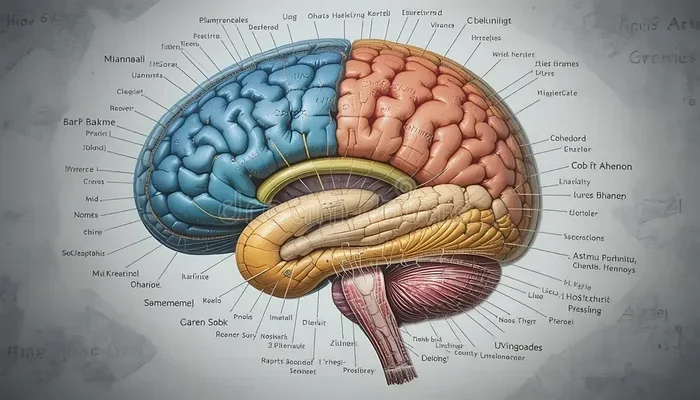
The brain controls intelligence through a complex network of regions working together. The prefrontal cortex, cerebral cortex, and neural pathways play the biggest roles in cognitive abilities, reasoning, and learning. Understanding how your brain drives intelligence helps you unlock your full mental potential.
Have you ever wondered what part of the brain controls intelligence? It is a question that scientists have studied for decades. The truth is, intelligence is not controlled by just one single spot in your brain. Instead, it emerges from a complex team of brain regions working together.
Your brain is made up of billions of neurons that form intricate networks. These networks power everything from solving math problems to recognizing a friend’s face. When we talk about intelligence, we are really talking about how well these brain regions communicate and cooperate.
In this article, we will break down exactly which parts of the brain drive your cognitive abilities. You will learn about the key brain structures, how they work together, and what you can do to keep your brain sharp. Whether you are curious about brain science or looking to boost your own mental performance, this guide has you covered.
Key Takeaways
- The prefrontal cortex is the command center for reasoning, planning, and decision-making.
- The cerebral cortex handles higher-order thinking, memory, and language processing.
- Neural networks and synaptic connections determine how fast and efficiently your brain processes information.
- Brain plasticity means you can improve your intelligence through learning and habits throughout life.
- Gray matter and white matter each play distinct roles in cognitive performance and brain communication.
- Emotional intelligence involves separate brain regions like the amygdala and anterior cingulate cortex.
- Lifestyle factors such as sleep, exercise, and nutrition directly impact brain function and intelligence.
📑 Table of Contents
- The Prefrontal Cortex: The Command Center Of Intelligence
- The Cerebral Cortex: The Outer Layer Of Genius
- Neural Networks And Synaptic Connections
- Gray Matter Versus White Matter
- Emotional Intelligence And The Brain
- Brain Plasticity: You Can Improve Your Intelligence
- Common Myths About Intelligence And The Brain
- What To Do When Your Brain Feels Stuck
- Final Thoughts On Brain Intelligence
The Prefrontal Cortex: The Command Center Of Intelligence
The prefrontal cortex sits right behind your forehead. It is often called the command center of the brain. This region handles some of the most advanced cognitive abilities humans possess.
What Does The Prefrontal Cortex Do?
This part of your brain manages several critical functions:
- Planning and organizing your thoughts and actions
- Making decisions based on careful reasoning
- Controlling impulses and managing your behavior
- Solving problems by thinking through multiple steps
- Working memory, which holds information temporarily while you use it
Without a healthy prefrontal cortex, it would be very hard to plan your day, solve conflicts, or set long-term goals. This region is also one of the last parts of the brain to fully develop. That is why teenagers often make impulsive choices. Their prefrontal cortex is still growing.
Interestingly, the prefrontal cortex is also deeply connected to your ability to figure out what to do with your life. When you set goals and make plans, this region lights up with activity. If you want to strengthen your reasoning skills, activities like puzzles, strategic games, and learning new skills can help.
The Cerebral Cortex: The Outer Layer Of Genius
The cerebral cortex is the outer layer of the brain. It is folded and wrinkled, which gives it a large surface area. This region is responsible for the highest levels of brain function. It plays a major role in intelligence, awareness, and thought.
How The Cerebral Cortex Supports Intelligence
The cerebral cortex handles several processes that define human intelligence:
- Language and communication — understanding and producing speech
- Abstract thinking — understanding concepts that are not physical
- Creative problem-solving — finding new solutions to challenges
- Memory storage and retrieval — remembering facts and experiences
- Attention and focus — filtering out distractions
The cerebral cortex is divided into four lobes. Each lobe has its own specialization. The frontal lobe manages reasoning and planning. The parietal lobe processes sensory information. The temporal lobe handles memory and language. The occipital lobe controls vision. Together, these lobes create the foundation of human intelligence.
When you are trying to figure out a difficult situation, your cerebral cortex is working hard behind the scenes. This is also the part of the brain that helps you process information when you do not know what to do. It analyzes the situation, pulls up past experiences, and suggests possible actions.
Neural Networks And Synaptic Connections
Brain regions alone do not make you smart. The real magic happens in the connections between neurons. These connections form neural networks that transmit signals across your brain at incredible speed.
How Neural Pathways Affect Your Thinking
Every time you learn something new, your brain creates new synaptic connections. The more you use a pathway, the stronger it becomes. This is why practice makes perfect. Your brain literally rewires itself based on your experiences.
Here is how neural efficiency impacts your intelligence:
- Faster processing — well-connected brains solve problems quicker
- Better memory recall — strong pathways make it easier to retrieve information
- Creative thinking — diverse connections allow for novel ideas and combinations
- Adaptability — flexible neural networks help you adjust to new situations
Think of your neural networks like roads. A well-maintained highway lets traffic flow smoothly. A road full of potholes slows everything down. The same principle applies to your brain. The quality of your synaptic connections directly affects how efficiently you think and learn.
Gray Matter Versus White Matter
Your brain contains two main types of tissue: gray matter and white matter. Both are essential for intelligence, but they serve very different purposes.
What Is Gray Matter?
Gray matter is made up of neuron cell bodies. It is found on the surface of the brain and in deep structures. Gray matter is where information is processed. More gray matter in certain brain regions has been linked to higher cognitive abilities.
What Is White Matter?
White matter lies beneath the gray matter. It is made of long nerve fibers called axons. These fibers are coated in a fatty substance called myelin. White matter acts like the wiring that connects different brain regions. It allows signals to travel quickly between areas.
When gray matter and white matter work together, your brain can process information efficiently. If white matter is damaged, even healthy gray matter struggles to communicate. This is why both types of brain tissue are so important for overall intelligence.
Emotional Intelligence And The Brain
Intelligence is not just about IQ scores or problem-solving. Emotional intelligence plays a huge role in how smart you are in real life. Several brain regions power your ability to understand and manage emotions.
The Amygdala And Emotional Processing
The amygdala is a small, almond-shaped structure deep in the brain. It processes emotions like fear, anger, and joy. A healthy amygdala helps you read social situations and respond appropriately. It is a key player in emotional awareness.
The Anterior Cingulate Cortex
This region sits between the two hemispheres of the brain. It helps you manage conflicts between emotions and logic. It also plays a role in empathy and self-regulation. Together with the amygdala, it forms the emotional intelligence network.
People with strong emotional intelligence tend to do better in relationships and careers. They can navigate social challenges with ease. This type of intelligence is just as important as raw cognitive ability.
Brain Plasticity: You Can Improve Your Intelligence
One of the most exciting discoveries in brain science is neuroplasticity. This is the brain’s ability to change and grow throughout your entire life. You are not stuck with the intelligence level you were born with.
How To Boost Your Brain Power
Here are proven ways to support brain health and improve your cognitive abilities:
- Exercise regularly — physical activity increases blood flow to the brain
- Get quality sleep — sleep helps the brain consolidate memories and clear toxins
- Eat brain-healthy foods — omega-3 fatty acids, berries, and leafy greens support brain function
- Learn new skills — challenging your brain builds new neural pathways
- Stay socially active — social interaction exercises your emotional and cognitive networks
- Practice mindfulness — meditation has been shown to increase gray matter density
Your brain energy levels also matter a lot. Mental fatigue can significantly reduce your cognitive performance. Just like your body needs fuel, your brain needs proper energy to function at its best. Understanding what energy has to do with mental health is a key part of maintaining sharp intelligence over time.
Childhood experiences also shape brain development in lasting ways. Early mental health and learning environments build the foundation for adult cognitive capacity. This is why supporting young people’s mental health has such a powerful long-term impact on their work and life capabilities.
Common Myths About Intelligence And The Brain
There are many misconceptions about intelligence and brain function. Let us clear up a few of the most common ones.
Myth 1: You Only Use 10 Percent Of Your Brain
This is simply not true. Brain imaging studies show that virtually all parts of the brain have known functions. Even during sleep, your brain is active and processing information.
Myth 2: Intelligence Is Fixed At Birth
While genetics play a role, your environment, habits, and experiences shape your intelligence just as much. Brain plasticity proves that you can continue to grow and develop cognitive abilities throughout life.
Myth 3: Smart People Use Only The Left Side Of Their Brain
Both hemispheres of the brain work together during almost every task. Creativity and logic both require coordination between the left and right sides. The idea of being purely “left-brained” or “right-brained” is an oversimplification.
What To Do When Your Brain Feels Stuck
Everyone experiences mental blocks from time to time. When you feel stuck and do not know what to do, it is often because your brain is overloaded or fatigued. Here are some practical steps to reset your thinking:
- Step away from the problem — take a short walk or do something completely different
- Write down your thoughts — externalizing your thinking frees up mental space
- Change your environment — a new setting can spark fresh neural connections
- Talk to someone — explaining your problem out loud activates different brain regions
- Get moving — physical activity boosts brain energy and creativity
Sometimes the brain just needs a break to reset. This is completely normal and not a sign of low intelligence. It is simply your brain managing its limited resources.
Final Thoughts On Brain Intelligence
So what part of the brain controls intelligence? The answer is your entire brain working as a team. The prefrontal cortex leads the charge with reasoning and planning. The cerebral cortex handles complex thought and memory. Neural networks carry signals between regions at lightning speed. And emotional centers add depth and social awareness to your intelligence.
The most important takeaway is that intelligence is not fixed. Your brain has the remarkable ability to change and grow. By taking care of your mental and physical health, you can continuously strengthen your cognitive abilities. Every new skill you learn, every book you read, and every challenge you face builds stronger neural connections.
Start today. Give your brain the fuel, rest, and stimulation it needs. The more you invest in your brain health, the more your intelligence will flourish. Your brain is your greatest asset, and it is worth taking care of.
Frequently Asked Questions
Is intelligence determined by genetics or the brain?
Both play a role. Genetics set the foundation for your brain structure, but your environment, habits, and experiences shape how your brain develops. Brain plasticity means you can improve your cognitive abilities throughout life by engaging in challenging activities and maintaining healthy habits.
Can you increase your intelligence by exercising your brain?
Yes, absolutely. Activities like learning new skills, solving puzzles, reading, and practicing mindfulness can strengthen neural pathways and increase gray matter density. Consistent mental exercise leads to measurable improvements in cognitive function over time.
Which brain region is most important for problem-solving?
The prefrontal cortex is the primary region responsible for problem-solving and decision-making. However, it works closely with the parietal lobe for spatial reasoning and the temporal lobe for memory recall. Intelligence is always a team effort across brain regions.
Does sleep affect brain intelligence?
Yes, sleep is critical for brain health. During sleep, your brain consolidates memories, clears toxins, and restores energy. Poor sleep significantly reduces cognitive performance, attention, and reasoning ability the next day.
How does emotional intelligence relate to brain function?
Emotional intelligence involves the amygdala, anterior cingulate cortex, and prefrontal cortex working together. These regions help you process emotions, show empathy, and regulate your behavior. Emotional intelligence is just as important as cognitive intelligence in daily life.
Can brain injuries affect intelligence?
Yes, brain injuries can impact intelligence depending on the location and severity. Damage to the prefrontal cortex may affect decision-making and planning. Injuries to the cerebral cortex can impact memory, language, and reasoning. Rehabilitation and brain plasticity can help recovery over time.
