What Part Of The Brain Controls Hearing And Why It Matters
What part of the brain controls hearing? The answer lies primarily in the temporal lobe and the auditory cortex. These remarkable areas transform sound waves into meaningful signals, allowing us to enjoy music, understand speech, and connect with the world around us.
Have you ever stopped to think about how incredible your hearing really is? One moment, you are sitting in a quiet room, and the next, a song comes on that takes you right back to your high school days. Or maybe you hear a familiar voice across a crowded room, and your brain instantly picks it out from the noise. But have ever wondered exactly what part of the brain controls hearing?
It is a fascinating process that happens in the blink of an eye. Sound waves travel through the air, enter your ears, and get transformed into electrical signals your brain can understand. Without this complex system, the world would be silent. Understanding how this works not only satisfies curiosity but also highlights just how important it is to protect your hearing. After all, your ability to hear shapes how you learn, communicate, and build relationships. Let us dive into the amazing science behind how you hear.
Key Takeaways
- The Temporal Lobe: This is the primary brain region responsible for processing auditory information.
- The Auditory Cortex: Located within the temporal lobe, it decodes pitch, volume, and rhythm.
- Brain Relay Stations: The brainstem and thalamus filter and route sound signals before they reach the cortex.
- Speech and Language: Wernicke’s area works alongside the auditory cortex to help us understand spoken words.
- Emotional Connection: Hearing is deeply tied to memory and emotion, which is why certain sounds trigger strong feelings.
- Protecting Your Hearing: Auditory damage is often permanent, making prevention crucial for long-term brain health.
- Relationship Impact: How we process sound directly affects how we communicate and connect with others.
📑 Table of Contents
- The Journey of Sound: From Ear to Brain
- What Part Of The Brain Controls Hearing?
- The Relay Stations: Thalamus and Brainstem
- Comparison Table: Brain Regions Involved in Hearing
- Beyond Basic Hearing: Speech and Music
- The Emotional Side of Hearing
- Hearing and Relationships: Listening vs. Hearing
- What Happens When the Hearing Pathway is Damaged?
- Common Mistakes People Make with Their Hearing
- Expert Insights: How to Protect Your Hearing
- Quick Tips for Better Auditory Health
- The Social Impact of Hearing Loss
- Conclusion
The Journey of Sound: From Ear to Brain
Before we explore what part of the brain controls hearing, we need to look at the journey sound takes to get there. Hearing is not just about your ears. It is a full-body team effort, with your brain acting as the star player.
The Outer and Middle Ear
Sound starts as invisible waves moving through the air. Your outer ear, the part you can see, acts like a funnel. It catches these waves and channels them down your ear canal. At the end of that canal, the sound waves hit your eardrum.
When the eardrum vibrates, it sets three tiny bones in your middle ear into motion. These bones are the smallest in the human body. They are called the hammer, anvil, and stirrup. Think of them like a tiny lever system. They take the vibrations from your eardrum and amplify them. Then, they push those amplified vibrations into your inner ear.
The Inner Ear and Cochlea
This is where the magic really begins. Your inner ear contains a snail-shaped organ called the cochlea. The cochlea is filled with fluid and lined with thousands of tiny hair cells. When the vibrations enter the cochlea, the fluid inside begins to wave.
These waves bend the tiny hair cells. When the hair cells bend, they create electrical signals. This is a crucial step. Your ears have just transformed mechanical sound waves into electrical impulses. These impulses are now ready to travel to your brain via the auditory nerve.
What Part Of The Brain Controls Hearing?
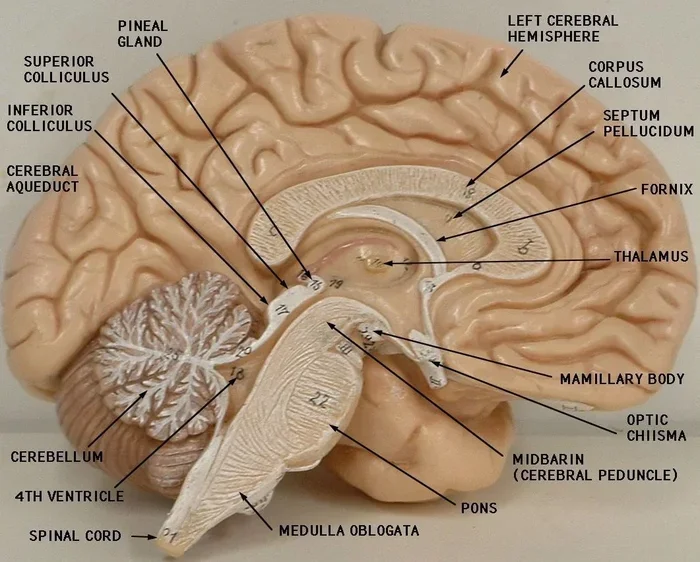
Visual guide about human brain anatomy
Image source: i.pinimg.com
Now that the sound has been converted into electrical signals, where do they go? The answer to what part of the brain controls hearing is not just one single spot. It is a network of areas, but the main hub is the temporal lobe.
The Temporal Lobe: Your Hearing Headquarters
The temporal lobe sits on the sides of your brain, just above your ears. If you want to know what part of the brain controls hearing, this is the star of the show. The temporal lobe is primarily responsible for processing auditory information.
But it does more than just hear sounds. The temporal lobe helps you understand language, interpret emotions in people’s voices, and store memories associated with sounds. When you hear a dog bark, your temporal lobe recognizes it as a bark. When you hear a baby cry, it recognizes the distress. It is your brain’s personal sound librarian.
The Auditory Cortex: Decoding the Signal
Deep inside the temporal lobe lies the auditory cortex. This is the specific area that processes the electrical signals sent from your cochlea. Think of the auditory cortex as a highly trained translator.
It takes the raw data and figures out what it means. It tells you how loud a sound is, how high or low the pitch is, and where the sound is coming from. The auditory cortex has different sections that specialize in different types of sounds. Some parts focus on steady tones, while others focus on sudden changes in volume.
The Relay Stations: Thalamus and Brainstem

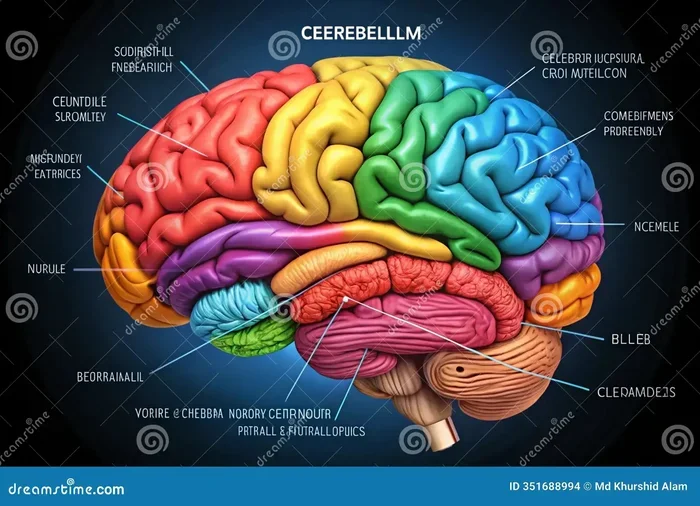
Visual guide about human brain anatomy
Image source: thumbs.dreamstime.com
The auditory cortex does not work alone. Before sound signals ever reach the cortex, they make stops at two important relay stations: the brainstem and the thalamus.
The Role of the Brainstem
The brainstem connects your brain to your spinal cord. It controls many automatic functions like breathing and heart rate. But it also plays a big role in hearing.
The brainstem processes the timing and location of sounds. If someone calls your name from your left side, your brainstem figures out that the sound is coming from the left. It also helps you filter out background noise so you can focus on what matters.
The Thalamus Gatekeeper
The thalamus is like a busy airport control tower. It receives signals from all your senses, decides which ones are important, and routes them to the right part of the brain.
When it comes to hearing, the thalamus takes the signals from the brainstem and sends them to the auditory cortex. It also helps regulate your attention. If you are deeply focused on a book, your thalamus might dampen the sound of a ticking clock. If someone says your name, it immediately flags that sound as important and sends it straight to your cortex.
Comparison Table: Brain Regions Involved in Hearing

Visual guide about human brain anatomy
Image source: thumbs.dreamstime.com
To better understand what part of the brain controls hearing, it helps to see how each area contributes to the process.
| Brain Region | Primary Function in Hearing | What Happens if Damaged |
|---|---|---|
| Cochlea (Inner Ear) | Converts sound waves into electrical signals | Sensorineural hearing loss |
| Brainstem | Processes sound location and timing | Difficulty locating sounds |
| Thalamus | Routes sound signals to the cortex | Auditory attention deficits |
| Temporal Lobe | Processes auditory information | Difficulty recognizing sounds |
| Auditory Cortex | Decodes pitch, volume, and rhythm | Cortical deafness |
| Wernicke’s Area | Comprehends spoken language | Receptive aphasia (cannot understand speech) |
Beyond Basic Hearing: Speech and Music
Hearing is about more than just detecting noise. Your brain is incredibly good at pulling meaning out of complex sounds. This is where specialized areas of the brain step in.
Wernicke’s Area and Speech Comprehension
If you want to understand what part of the brain controls hearing in relation to language, look at Wernicke’s area. It is usually located in the left temporal lobe, right next to the auditory cortex.
The auditory cortex hears the sounds of a word. Wernicke’s area figures out what that word means. When someone tells you “I love you,” your auditory cortex processes the sound of those words. Wernicke’s area gives them meaning. If Wernicke’s area is damaged, a person can still hear perfectly well, but the words will sound like a foreign language.
The Brain and Music
Music is a full-brain workout. While the auditory cortex processes the notes, other areas light up too. The cerebellum helps you tap your foot to the beat. The amygdala triggers emotional reactions to a sad or happy song.
This is why music is so powerful. It bypasses the logical parts of your brain and speaks directly to your emotions. A random collection of notes can make you cry or fill you with joy. It all depends on how your brain interprets the patterns.
The Emotional Side of Hearing
Have you ever heard a song and suddenly felt like you were reliving a memory? That is because hearing is deeply tied to your limbic system, the emotional center of your brain.
How Sounds Trigger Memories and Emotions
When you hear a sound, it does not just go to the auditory cortex. It also travels to the hippocampus and amygdala. The hippocampus stores your memories. The amygdala processes your emotions.
This is why the smell of rain or the sound of a specific voice can instantly transport you back in time. Maybe you hear a certain tone of voice and feel comforted because it reminds you of a loved one. Or perhaps you hear a loud crash and immediately feel anxious. Your brain is constantly linking sounds to your past experiences. In fact, when you dream, your brain often replays these auditory memories. If you are curious about why certain sounds or voices show up in your sleep, you can learn more about what it means when you dream about someone.
Hearing and Relationships: Listening vs. Hearing
Now, let us bring this back to your everyday life. Understanding what part of the brain controls hearing is not just a science lesson. It has real-world implications for your relationships.
The Impact of Poor Listening
There is a big difference between hearing and listening. Hearing is a passive biological process. Listening is an active, conscious choice. You can hear someone talking while scrolling on your phone, but you are not truly listening.
In relationships, this distinction matters immensely. When a partner feels unheard, it creates distance. Sometimes, people struggle with this because they confuse silence with understanding. For example, knowing the difference between the silent treatment and giving space is crucial. Giving space allows for processing. The silent treatment shuts down communication entirely.
When Communication Breaks Down
When partners stop truly listening to one another, resentment builds up. One person might hear the words, but miss the emotion behind them. This often happens when people are stressed or distracted.
Over time, this lack of deep listening can erode intimacy. If one partner consistently feels ignored, they may eventually shut down. Recognizing why stonewalling is the most overlooked form of emotional abuse is important because it starts with refusing to listen or engage. Healthy communication requires both people to actively process what the other is saying, moving beyond just the auditory cortex to genuine empathy.
What Happens When the Hearing Pathway is Damaged?
Because hearing relies on such a complex chain of events, many things can go wrong. Damage can occur at any point along the pathway, from the ear to the brain.
Types of Hearing Loss
There are three main types of hearing loss. Conductive hearing loss happens when sound cannot get through the outer or middle ear. This is often caused by ear infections or wax buildup. Sensorineural hearing loss occurs when the cochlea or auditory nerve is damaged. This is usually permanent.
Finally, there is auditory processing disorder. In this case, the ears work perfectly fine, but the brain has trouble making sense of the signals. The sound enters the brain, but it gets scrambled along the way.
Neuroplasticity and the Brain
The good news is that the brain is incredibly adaptable. This ability is called neuroplasticity. If one part of the brain is damaged, sometimes another part can take over its job.
For example, people who lose their hearing often find that their vision or sense of touch becomes sharper. The brain reallocates the unused auditory cortex to help process other senses. This is a testament to how resilient and flexible our brains truly are.
However, holding onto auditory memories of a past relationship can be just as powerful. Sometimes, you might hear a song or a phrase and feel stuck. Learning how not letting go of a relationship affects yourself shows that the brain holds onto emotional sounds just as tightly as physical ones.
Common Mistakes People Make with Their Hearing
We often take our hearing for granted until it is too late. Here are some common mistakes that can damage your auditory system:
- Listening to Loud Music: Cranking up the volume on your headphones is one of the fastest ways to kill hair cells in your cochlea.
- Ignoring Ear Protection: Failing to wear earplugs at concerts or when using power tools exposes your ears to dangerous decibel levels.
- Prolonged Exposure: It is not just about volume. Listening to moderate noise for hours on end can cause just as much damage as a short blast of loud noise.
- Using Cotton Swabs: Putting cotton swabs in your ears often pushes wax deeper against the eardrum, causing impaction and potential damage.
- Ignoring Infections: Untreated ear infections can spread and cause permanent structural damage to the middle ear.
Expert Insights: How to Protect Your Hearing
Protecting your hearing is one of the best things you can do for your long-term brain health. Studies have shown that hearing loss is linked to a faster rate of cognitive decline. When your brain has to work overtime just to hear, it has less energy for memory and thinking.
Here are expert-backed strategies to keep your ears and brain healthy:
- Follow the 60/60 Rule: Listen to headphones at no more than 60% volume for no more than 60 minutes at a time.
- Wear Protection: Always use earplugs or earmuffs in noisy environments. Custom-fit earplugs are great for musicians or concert-goers.
- Take Listening Breaks: Give your ears a rest. Step away from noisy environments to let your hair cells recover.
- Get Regular Checkups: Just like you get your eyes tested, you should get your hearing tested, especially if you notice any changes.
- Manage Cardiovascular Health: Good blood flow is essential for the tiny hair cells in your cochlea. Exercise and a healthy diet support your hearing.
Quick Tips for Better Auditory Health
If you want to put this knowledge into action right now, try these quick tips:
- Turn it Down: Lower the volume on your TV, car radio, and personal devices.
- Use Noise-Canceling Headphones: These block out background noise, so you do not have to crank the volume to hear your music.
- Dry Your Ears: After swimming or showering, gently dry your outer ear to prevent infections.
- Monitor Your Environment: Use a sound level meter app on your phone to check if your surroundings are too loud (anything over 85 decibels is risky).
- Stay Hydrated: Proper hydration helps maintain the fluid levels in your inner ear.
The Social Impact of Hearing Loss
Hearing loss does not just affect your ears. It affects your entire life. When you cannot hear well, social situations become exhausting. You have to work so hard to follow conversations that you might start avoiding them altogether.
This isolation can lead to depression and anxiety. In relationships, hearing loss can create a wedge between partners. One partner feels like they are constantly repeating themselves. The other partner feels frustrated and unheard. If you are noticing that your partner seems distant or disengaged, it might be worth exploring signs your wife has checked out of the marriage or if your partner is struggling with similar communication barriers. Often, the root cause is simply that they cannot hear you clearly.
Conclusion
So, what part of the brain controls hearing? It is a team effort, but the temporal lobe and the auditory cortex are the undeniable stars of the show. From the moment sound waves enter your ear to the second your brain interprets a loved one’s voice, an incredibly complex and beautiful process is taking place.
Your hearing connects you to the world. It allows you to learn, share experiences, and build deep relationships. By understanding how this system works, you can take better care of it. Protect your ears from loud noises, give them breaks, and never take the gift of sound for granted. After all, a healthy brain and healthy ears are the foundation of a vibrant, connected life.
Frequently Asked Questions
Can the brain hear if the ears are damaged?
It depends on the damage. If the ears are damaged but the auditory nerve is intact, a cochlear implant can bypass the damaged parts and send signals directly to the brain. However, if the auditory nerve or the brain’s hearing centers are damaged, restoring hearing is much more difficult.
What part of the brain controls hearing in humans?
The temporal lobe is the primary area responsible for hearing. Inside the temporal lobe, the auditory cortex specifically processes the electrical signals sent from the ears, allowing us to perceive pitch, volume, and location.
How fast does the brain process sound?
The brain processes sound incredibly fast. It takes only about 0.05 seconds for a sound signal to travel from the ear to the auditory cortex. This rapid processing allows us to react to dangers, like a car horn, almost instantly.
Can stress affect how the brain hears?
Yes, stress can significantly impact hearing. High stress levels can cause a condition called tinnitus, which is a ringing or buzzing in the ears. Stress also makes it harder for the brain to filter out background noise, making it difficult to focus on conversations.
What happens to the hearing part of the brain when you go deaf?
When a person loses their hearing, the brain undergoes a process called neuroplasticity. The unused auditory cortex does not just sit idle; it gets rewired to help process other senses, like vision and touch. This is why people who are deaf often have heightened visual awareness.
Why do I hear things that are not there?
Hearing things that are not there, known as auditory hallucinations, can happen for various reasons. It can be caused by extreme stress, lack of sleep, or certain medications. If it happens frequently, it is important to speak with a healthcare professional to rule out underlying conditions.