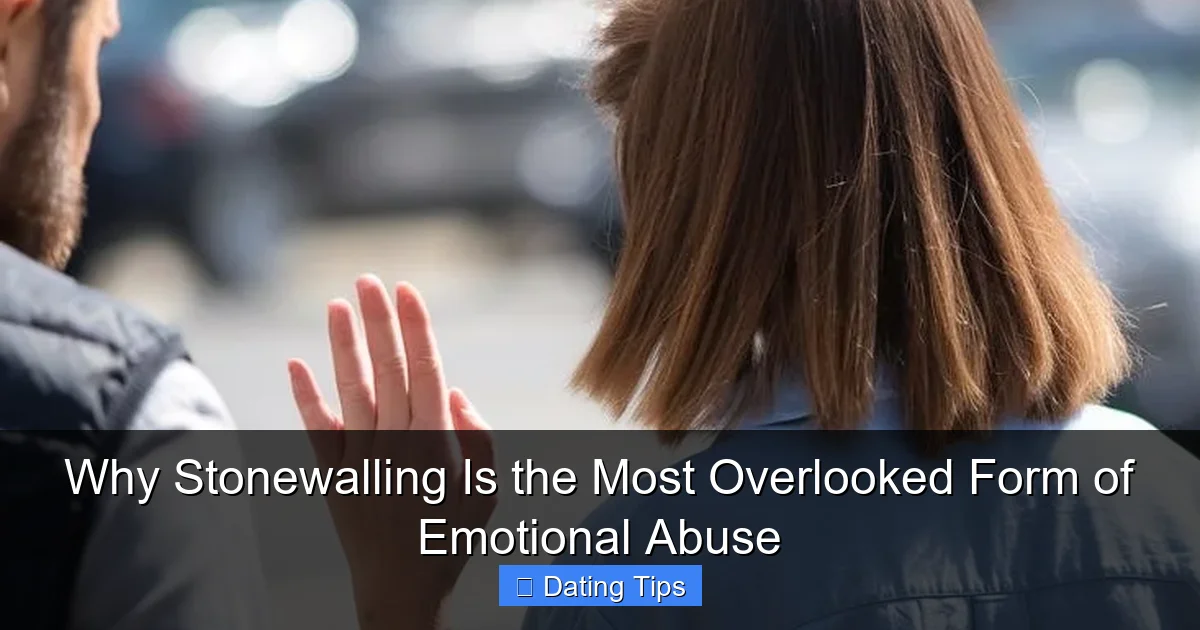
Why Stonewalling Is the Most Overlooked Form of Emotional Abuse
Stonewalling—the silent treatment used to punish or control—is a subtle but powerful tool in emotional abuse. It creates confusion, erodes trust, and leaves victims feeling invisible and worthless. Unlike overt aggression, stonewalling is often dismissed as “just being upset,” making it especially dangerous.
Key Takeaways
- Stonewalling is a manipulation tactic: It’s not just quiet—it’s strategic silence used to gain power in a relationship.
- It mimics healthy conflict resolution: Because it avoids yelling, people often mistake it for maturity, not abuse.
- It causes deep emotional harm: Chronic stonewalling leads to anxiety, low self-esteem, and emotional numbness.
- It prevents real communication: When one partner withdraws, problems go unsolved and resentment builds.
- It can be unintentional but still abusive: Some people stonewall without realizing the damage they cause.
- Breaking the cycle requires awareness: Recognizing stonewalling is the first step toward healthier communication.
📑 Table of Contents
- Why Stonewalling Is the Most Overlooked Form of Emotional Abuse
- The Psychology Behind Stonewalling
- The Hidden Damage of Stonewalling
- How Stonewalling Mimics Healthy Behavior
- Signs You Might Be Stonewalling (or Being Stonewalled)
- Breaking Free: How to Stop Stonewalling and Rebuild Connection
- When Stonewalling Signals Deeper Issues
- How to Spot Stonewalling Before It Ruins Your Relationship
- Final Thoughts: Silence Shouldn’t Be a Weapon
Why Stonewalling Is the Most Overlooked Form of Emotional Abuse
Imagine coming home after a long day, excited to share your thoughts with someone you love, only to be met with radio silence. No response. No eye contact. Just cold indifference. You reach out, ask if everything’s okay, and get nothing. Not anger. Not frustration. Just… nothing. This is stonewalling. And while it might seem harmless at first glance, it’s actually one of the most insidious forms of emotional abuse in relationships.
Unlike physical aggression or verbal attacks, stonewalling doesn’t leave obvious scars. There are no bruises, no raised voices—just a void where connection used to be. That’s why it’s so often misunderstood. Many people believe that staying quiet during an argument is a sign of emotional control or maturity. But when silence becomes a weapon, it crosses the line into manipulation and emotional abuse. In this article, we’ll explore what stonewalling really is, why it’s so damaging, and how to recognize and heal from it.
The Psychology Behind Stonewalling
Stonewalling isn’t just about being upset. It’s a deliberate choice—often made out of fear, insecurity, or a desire to regain control. When someone feels overwhelmed, threatened, or emotionally unsafe during a conflict, they may shut down completely. This isn’t healthy emotional regulation; it’s emotional withdrawal designed to de-escalate tension—but at a steep cost.
Visual guide about Why Stonewalling Is the Most Overlooked Form of Emotional Abuse
Image source: shunspirit.com
Why Do People Stonewall?
There are several reasons someone might choose silence over dialogue:
- Fear of escalation: They’ve learned that yelling leads to worse outcomes, so they retreat instead.
- Lack of emotional vocabulary: They don’t know how to express their feelings, so they say nothing.
- Learned behavior: They grew up in environments where expressing emotions was punished.
- Control through absence: By withdrawing, they make the other person beg for attention or change their behavior.
While these motivations might explain why someone stonewalls, they don’t excuse the harm it causes. Emotional safety isn’t achieved by creating emotional isolation.
The Cycle of Silent Treatment
Stonewalling rarely happens in a vacuum. It often follows a pattern:
- A disagreement arises.
- One partner becomes overwhelmed or defensive.
- They withdraw—stop responding, avoid eye contact, shut down physically or emotionally.
- The other partner feels confused, hurt, or anxious, trying to “fix” the silence.
- Eventually, the stonewaller re-engages—sometimes with guilt, sometimes with coldness.
- The cycle repeats.
This creates a toxic feedback loop. The more you try to reconnect, the more the silence intensifies. Over time, both partners learn to dread conflict—not because they want peace, but because they fear the withdrawal that follows.
The Hidden Damage of Stonewalling
Because stonewalling doesn’t involve shouting or insults, its effects are often underestimated. But the emotional toll can be profound and long-lasting.

Visual guide about Why Stonewalling Is the Most Overlooked Form of Emotional Abuse
Image source: bonobology.com
Emotional Numbness and Anxiety
When you’re consistently ignored or shut out, your brain begins to associate intimacy with danger. You start walking on eggshells, never knowing when the other person will withdraw. This constant state of uncertainty triggers chronic anxiety—a condition known as relational hypervigilance.
Over time, this can lead to emotional numbness. You stop sharing your thoughts, fears, or joys because you’ve learned that your vulnerability leads to disconnection. Your sense of self erodes. You begin to doubt your worth, wondering, “If I were enough, would they talk to me?”
Erosion of Trust
Trust is built on predictability and reliability. When one partner consistently disappears during disagreements, trust shatters. You can’t trust that your needs matter. You can’t trust that your words will be heard. Eventually, you stop trying to communicate altogether.
Physical Health Consequences
The stress of living with chronic stonewalling doesn’t just affect your mind—it affects your body. Studies show that prolonged exposure to emotional neglect can increase cortisol levels, weaken the immune system, and contribute to conditions like insomnia, high blood pressure, and digestive issues.
Impact on Children
If you have kids, stonewalling can teach them unhealthy relationship patterns. Children exposed to parental silence during conflicts may grow up believing that love means withdrawal, not presence. They might internalize the idea that expressing emotions leads to abandonment—a belief that can haunt them in future relationships.
How Stonewalling Mimics Healthy Behavior
Here’s the tricky part: stonewalling often looks like emotional intelligence. In therapy circles, Dr. John Gottman, a renowned relationship researcher, identified stonewalling as one of the “Four Horsemen” of relationship breakdown—alongside criticism, contempt, and defensiveness. He found that couples who frequently stonewalled were far more likely to divorce.

Visual guide about Why Stonewalling Is the Most Overlooked Form of Emotional Abuse
Image source: cdn2.psychologytoday.com
But here’s the irony: many people think taking a “time-out” during an argument is a mature strategy. And in moderation, it can be. The key difference lies in intent and duration.
Healthy Time-Outs vs. Unhealthy Silence
A healthy time-out is:
- Temporary: Lasts minutes, not hours or days.
- Agreed upon: Both partners agree on when to pause the conversation.
- Re-engagement: The person who withdrew returns to continue the discussion.
- Non-punitive: It’s not used to punish or manipulate.
Unhealthy stonewalling, on the other hand, is:
- Prolonged: Days, weeks, or even months of silence.
- Unilateral: One person decides when the “time-out” ends.
- Punitive: Used to make the other person feel guilty or unworthy.
When silence becomes a punishment, it’s no longer about managing emotions—it’s about control.
Signs You Might Be Stonewalling (or Being Stonewalled)
Recognizing stonewalling in yourself or your partner is crucial for breaking the cycle.
Are You the Stonewaller?
Ask yourself:
- Do I shut down during arguments and refuse to talk for hours or days?
- Do I use silence to make my partner beg for my attention?
- When I do respond, do I do so with sarcasm, coldness, or indifference?
- Do I feel relieved when the other person stops pushing for a response?
If you answered yes to any of these, you may be using stonewalling as a coping mechanism—even if you don’t realize it.
Are You Being Stonewalled?
Look for these red flags:
- You feel like you’re talking to a wall during conflicts.
- Your attempts to resolve issues are met with silence or minimal responses.
- You’ve started avoiding difficult conversations because you know they’ll end in withdrawal.
- You feel increasingly anxious around your partner.
- You catch yourself rehearsing what to say, fearing it will trigger silence.
If this sounds familiar, you’re not alone. Stonewalling is shockingly common—and deeply damaging.
Breaking Free: How to Stop Stonewalling and Rebuild Connection
Healing from stonewalling starts with awareness. Once you recognize the pattern, you can take steps to change it—for yourself and your relationship.
For the Stonewaller: Why You Need to Change
If you’re the one withdrawing, consider this: silence might feel like protection right now, but it’s actually pushing you further away. Here’s how to start breaking the habit:
- Name the fear: Ask yourself, “What am I afraid will happen if I speak?” Often, it’s rejection, anger, or losing control.
- Practice small disclosures: Start with low-stakes topics. Share a funny memory, a worry, or a small need. Notice how it feels to be vulnerable.
- Use “I” statements: Instead of saying, “You never listen,” try, “I feel unheard when I’m interrupted.”
- Set boundaries around silence: Decide ahead of time, “If I’m overwhelmed, I’ll say, ‘I need five minutes to collect myself.’”
- Seek therapy: A therapist can help you understand the root of your withdrawal and develop healthier communication skills.
For the Person Being Stonewalled: Protecting Your Emotional Wellbeing
If you’re on the receiving end of silence, your instinct might be to chase, plead, or beg for attention. But chasing often backfires. Instead:
- Acknowledge your pain: It’s okay to feel hurt. Don’t minimize your emotions.
- Stop trying to fix the silence: Saying, “Please talk to me,” repeatedly often makes things worse.
- Focus on your own needs: Spend time with friends, pursue hobbies, and rebuild your sense of self outside the relationship.
- Communicate your boundaries clearly: Try saying, “I need us to talk when we’re both ready. If you’re not, I’ll give you space—but I also need to know when we’ll revisit this.”
- Consider couples counseling: A neutral third party can help both partners learn to communicate without withdrawal or attack.
Building Emotional Safety
At its core, stonewalling thrives in environments where emotional safety is absent. To prevent it:
- Celebrate vulnerability, not just strength.
- Create rituals of connection—daily check-ins, shared meals, non-verbal affection.
- Practice active listening: repeat back what you hear to ensure understanding.
- Apologize sincerely when you’ve hurt your partner—even if you didn’t mean to.
Relationships aren’t about winning arguments—they’re about building trust, one honest moment at a time.
When Stonewalling Signals Deeper Issues
In some cases, chronic stonewalling isn’t just a communication style—it’s a symptom of deeper psychological struggles.
Attachment Trauma
People with insecure attachment styles—especially those with avoidant tendencies—may withdraw to protect themselves from perceived rejection. Childhood experiences of emotional neglect or abuse can shape this response, making it automatic rather than conscious.
Mental Health Conditions
Conditions like depression, anxiety, or PTSD can make emotional regulation extremely difficult. A person struggling with mental health might shut down not out of malice, but because they’re overwhelmed by their own pain.
Autism Spectrum Differences
Individuals on the autism spectrum may process conflict differently. What seems like stonewalling might be sensory overload, difficulty finding words, or a need for processing time. Understanding neurodiversity is key to compassionate communication.
In all these cases, empathy and professional support are essential. Stonewalling rooted in trauma or mental illness still harms—but it also signals a need for healing, not blame.
How to Spot Stonewalling Before It Ruins Your Relationship
Prevention is always better than cure. Here’s how to spot early warning signs:
- Notice if conflicts consistently end with one person walking away without resolution.
- Pay attention to how quickly your partner shuts down when challenged.
- Observe whether your attempts to connect are met with increasing distance.
- Ask trusted friends or family if they’ve noticed changes in your dynamic.
If you see any of these patterns, address them early. Use “I” statements to express concern: “I’ve noticed that we often stop talking during disagreements. I miss connecting with you. Can we figure out a way to talk through tough moments together?”
Final Thoughts: Silence Shouldn’t Be a Weapon
Stonewalling is a quiet epidemic in modern relationships. It hides in plain sight, disguised as calm, maturity, or respect. But beneath the surface, it’s a cry for help—or a demand for control. Either way, it deserves attention.
Healing begins when we stop normalizing silence as a solution. True intimacy isn’t found in avoidance—it’s forged in honesty, even when it’s uncomfortable. If you’re stuck in a cycle of withdrawal and silence, remember: you deserve to be seen, heard, and valued. So does your partner.
Break the cycle. Choose connection over control. Talk—even when it’s hard. Because love shouldn’t require you to disappear.
Frequently Asked Questions
Is stonewalling considered emotional abuse?
Yes, stonewalling is widely recognized as emotional abuse, particularly when used intentionally to punish, control, or manipulate a partner. It creates emotional isolation and undermines trust.
How can I tell if my partner is stonewalling me?
If your partner consistently withdraws during conflicts—refusing to talk, respond, or engage—and uses silence to punish or avoid responsibility, they may be stonewalling you.
Can stonewalling be healed?
Absolutely. With self-awareness, therapy, and mutual effort, both partners can learn healthier ways to communicate during disagreements.
Does everyone who stonewalls mean to hurt their partner?
Not necessarily. Some people stonewall due to trauma, anxiety, or poor emotional regulation. However, the impact remains harmful, and understanding the root cause is important for healing.
What should I do if my partner won’t talk to me?
Give them space, but set clear boundaries. Let them know you value communication and need to discuss important matters. If the silence continues, consider couples counseling.
Is it normal to take breaks during arguments?
Short, agreed-upon pauses can be healthy. But if the silence lasts hours, days, or is used to punish, it’s not normal and may indicate stonewalling.