
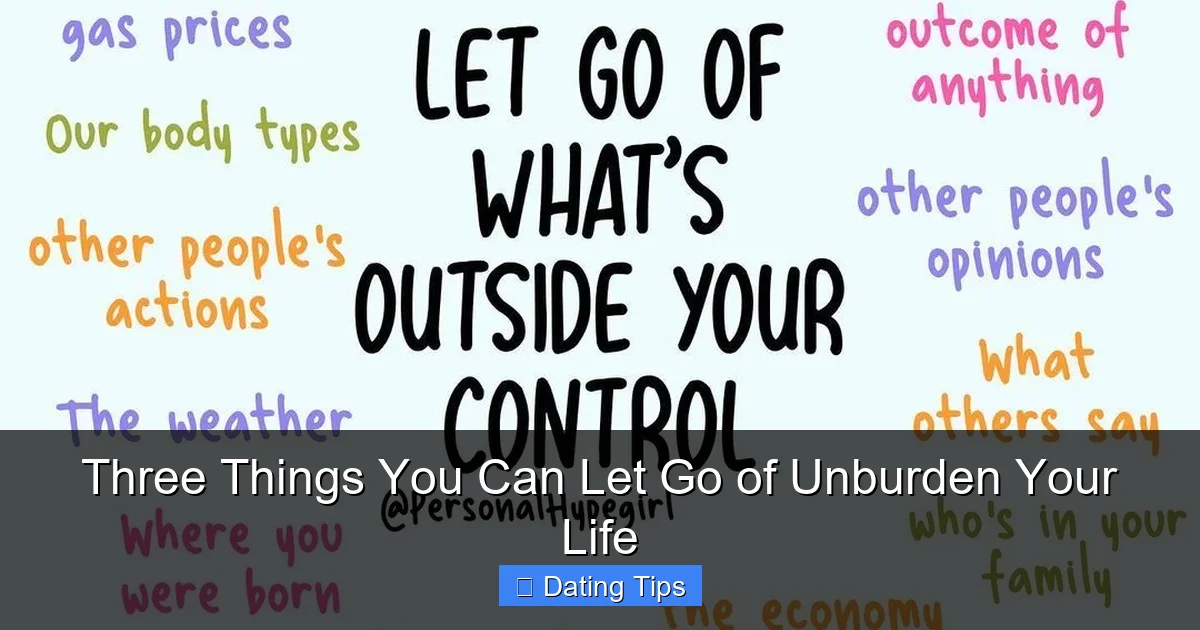
Letting go doesn’t mean giving up—it means choosing peace over struggle. When it comes to love and relationships, holding onto certain mental or emotional burdens only keeps you stuck. By releasing what no longer serves you, you create space for healthier connections and a lighter heart. This article reveals three essential things to release so you can live freely and attract meaningful relationships.
Have you ever felt like no matter how hard you try in dating, something’s always holding you back? Maybe you keep replaying that breakup, second-guessing every text, or worrying if you’re “enough” for someone new. You’re not alone. So many of us carry invisible weights—emotional baggage that slows us down, dims our joy, and keeps us from fully showing up in love.
The truth is, some things we cling to aren’t serving us anymore. In fact, they might be standing in the way of the very relationships we crave. Letting go isn’t about forgetting or moving on overnight—it’s about choosing freedom over fear. It’s releasing what no longer fits so you can make space for what does.
In this article, we’ll explore three powerful things you can let go of to unburden your life. These aren’t just abstract ideas—they’re practical shifts that can transform how you date, relate, and ultimately, find lasting happiness. Whether you’re healing from a breakup, struggling with low self-esteem, or feeling stuck in patterns of anxiety, this guide will help you step into a lighter, freer version of yourself.
So take a deep breath. Ready to drop what’s weighing you down?
—
Key Takeaways
- Holding onto past relationship wounds prevents emotional availability. Dwelling on heartbreak or betrayal traps you in cycles of fear and self-doubt, making it hard to trust again. Healing means acknowledging the pain but not letting it define your future.
- Perfectionism in dating sabotages real connection. Expecting ideal partners or flawless interactions sets you up for constant disappointment. Relationships thrive on authenticity, not perfection.
- Fear of vulnerability keeps love at bay. If you’re afraid to be seen or rejected, you’ll avoid intimacy. Embracing vulnerability is where real closeness begins.
- You don’t need validation from others to feel worthy. Relying on external approval for self-worth makes you emotionally dependent. True confidence comes from within.
- Releasing control gives love room to grow. Trying to control every outcome—like when someone will text back or say “I love you”—only creates stress. Trust the process and focus on being present.
- Forgiveness frees you more than it frees them. Holding grudges against exes or even current partners drains your energy. Forgiveness isn’t about reconciliation—it’s about your peace.
- Letting go opens space for soulmate energy. When your heart is light and open, you become magnetically attractive to the right kind of love. Clarity follows release.
📑 Table of Contents
1. The Weight of Past Heartbreak
One of the heaviest burdens many people carry is the emotional residue from past relationships. That first love that ended badly, the toxic partner who broke your trust, or even a casual fling that left you confused—these experiences shape how you view love today. But here’s the catch: holding onto those wounds doesn’t protect you—it keeps you prisoner.
When you constantly replay memories of rejection or betrayal, your brain starts treating every new connection as potentially dangerous. You may unconsciously push people away, sabotage good moments, or expect the worst. This cycle is exhausting—and it prevents real intimacy from ever forming.
Why We Hold On
We cling to old pain because it feels familiar. Even though it hurts, the known pain is easier than risking new hurt. But familiarity isn’t safety. It’s stagnation.
Think about it: if you still believe “all men/women are liars” because of one bad experience, you’re filtering out potential love based on a single story. That’s not wisdom—that’s limitation.
How to Release It
Start by acknowledging the pain without judgment. Write it down: “This hurt me deeply, and I’m allowed to feel it.” Then ask yourself: “Does this belief still serve me?” If not, consciously choose to release it.
Practice self-compassion. Remind yourself that healing takes time. Consider therapy or journaling to process emotions safely. And remember: you deserve love that honors your worth, not fear that protects your scars.
If you’ve been wondering whether you can truly move forward after heartbreak, know this: yes, you can. And letting go of the past is the first step.
—
2. Perfectionism in Love & Dating
Visual guide about Three Things You Can Let Go of Unburden Your Life
Image source: mrherrera.com
Do you find yourself scrolling endlessly through dating apps, waiting for the perfect match? Or do you avoid going out altogether because you’re “not ready yet”? Perfectionism in dating is a quiet thief—it steals your chances before they even begin.
Many people believe that if they don’t meet every ideal—height, job, hobbies, looks—then dating isn’t worth trying. But here’s the reality: no one is perfect. Not even the most compatible person has zero flaws. Yet couples build beautiful lives together precisely because they accept each other’s imperfections.
The Myth of the Perfect Partner
Society sells us the idea that there’s one “right” person out there who will complete us. But completion doesn’t come from finding someone—it comes from becoming whole yourself. When you wait for perfection, you miss opportunities to connect with real, messy, wonderful humans.
Ask yourself: “Am I looking for a soulmate, or am I avoiding discomfort?” Soulmates don’t eliminate challenges—they help you grow through them.
Practical Tips to Beat Perfectionism
– Set small goals: Instead of “find my dream guy/girl,” aim to go on three dates with different people.
– Reframe rejection: A “no” isn’t a reflection of your worth—it’s just a mismatch.
– Focus on compatibility over perfection: Shared values, kindness, humor matter far more than Instagram-worthy photos.
Remember, love isn’t found in fairy tales—it’s built in ordinary moments. And those moments start when you stop waiting for magic and show up for real life.
—
3. Fear of Vulnerability
Visual guide about Three Things You Can Let Go of Unburden Your Life
Image source: res.cloudinary.com
Vulnerability is often misunderstood. We think being vulnerable means being weak, but actually, it’s the opposite. Vulnerability is courage. It’s showing up as your true self—flaws and all—and inviting someone else to do the same.
Yet most of us hide behind walls. We change the subject when asked about our dreams, pretend everything’s fine when it’s not, or play games to seem mysterious. These defenses protect us from pain—but they also block love.
Why We Hide
We fear rejection, judgment, or abandonment. We worry that if we let someone see our real thoughts, feelings, or vulnerabilities, they won’t stay. But here’s the truth: authentic relationships require honesty. You can’t build trust by pretending.
Think about your last crush or early date. Did you share your deepest fears or wildest hopes? Probably not—and that distance made it hard to connect.
Embracing Vulnerability Safely
Start small. Share something personal with a friend first. Notice how it feels—scared, yes, but also liberating. Then gradually open up in new relationships.
Use “I” statements: “I feel nervous when…” instead of “You always…” This reduces defensiveness and invites understanding.
And when someone responds with kindness instead of judgment? That’s proof vulnerability works. Over time, it becomes easier—and more natural.
—
4. Needing External Validation
Visual guide about Three Things You Can Let Go of Unburden Your Life
Image source: res.cloudinary.com
Ever felt a surge of happiness when someone liked your photo—or crushed when they didn’t reply to your message? If so, you’ve experienced the trap of external validation. Relying on others to make you feel worthy is like drinking water from a firehose: fleeting, overwhelming, and ultimately empty.
People pleasing, seeking approval, chasing likes—these habits keep you off-balance. You’re constantly reacting to others’ actions rather than living your own life.
The Cost of Approval Seeking
It leads to people-pleasing, which erodes self-respect. It causes anxiety around social media, texts, or dates. And worst of all, it disconnects you from your inner voice.
True confidence isn’t loud—it’s calm. It doesn’t depend on anyone’s opinion. When you stop needing validation, you become free to choose who you spend time with—not because they approve of you, but because you enjoy them.
Building Internal Worth
Practice daily affirmations grounded in truth: “I am enough,” “My value isn’t tied to performance.” Celebrate your strengths—even small ones like resilience or empathy.
Surround yourself with supportive people who see your worth without conditions. And when you catch yourself seeking approval, pause and ask: “Is this coming from me… or them?”
—
5. Trying to Control Outcomes
Love isn’t a script you can follow line by line. Trying to control how fast someone texts back, when they’ll say “I love you,” or whether they’ll commit—is like trying to hold sand: the harder you grip, the more slips through your fingers.
Control is an illusion. What you can control is your behavior, your energy, and your choices. Everything else? Leave it.
The Danger of Micromanaging Relationships
Constant checking of phones, analyzing every word, or demanding reassurance creates tension. It signals insecurity and drains both partners’ energy.
Instead, focus on building trust. Trust that if someone is meant to be in your life, they will show up—on their own terms.
Living in Alignment with Your Values
Date with intention: Are you seeking connection, growth, fun? Stay aligned with what matters to you. If a person respects that, great. If not, that’s okay too.
And remember: sometimes the best thing you can do is nothing at all. Step back, breathe, and allow things to unfold naturally.
—
6. Grudges Against Exes or Current Partners
Holding onto anger toward your ex—or even your current partner—drains your soul. Forgiveness isn’t about excusing hurtful behavior; it’s about freeing yourself from the prison of resentment.
When you forgive, you reclaim your power. You stop feeding old wounds with fresh pain.
How to Practice Forgiveness
Write a letter (you don’t have to send it) expressing your feelings. Then deliberately choose to release the anger. It’s a gift to yourself.
For current partners: Address issues directly but kindly. Use “I feel…” language instead of blame. Healthy conflict leads to growth—not destruction.
—
Conclusion: Lightness Is Your Superpower
Letting go isn’t easy. It requires courage, patience, and self-love. But the payoff? Unbelievable. When you release these burdens, you don’t just feel lighter—you become magnetic. People notice your confidence, your peace, your authenticity. And that’s how real love finds you.
So today, pick one thing from this list to release. Maybe it’s forgiveness, maybe it’s perfectionism, maybe it’s fear. Start small. Be gentle with yourself. And trust that every release brings you closer to the freedom—and the love—you deserve.
You are worthy of joy. Now go live it.
—
Frequently Asked Questions
What does it mean to “let go” in the context of relationships?
Letting go means releasing emotional attachments, expectations, or judgments that no longer serve you. It’s not about forgetting or condoning harm—it’s about choosing your peace over pain. For example, releasing the need to control your partner’s actions allows both of you space to grow independently.
Can I truly move on after a painful breakup?
Yes, absolutely. Moving on doesn’t mean you forget the past—it means you stop letting it dictate your present. Healing happens when you acknowledge the hurt, process your emotions, and redirect your energy toward self-growth and openness to new love.
How do I overcome fear of being vulnerable?
Start by practicing vulnerability in low-stakes situations—share a personal thought with a trusted friend. Gradually expand to dating contexts. Remember, vulnerability builds connection, not weakness. And if rejection happens, it says more about them than about you.
Is perfectionism really harmful in dating?
Absolutely. Perfectionism sets unrealistic standards that block real connections. No one is flawless, and relationships thrive on authenticity, not ideals. Focusing on shared values and mutual respect matters far more than superficial traits.
Should I forgive my ex even if they hurt me deeply?
Forgiveness is for your benefit, not theirs. It doesn’t mean you must reconcile or trust them again. But by forgiving, you stop poisoning your own heart with bitterness. You reclaim your power and open space for healthier relationships in the future.
How long does it take to unburden myself from emotional baggage?
There’s no fixed timeline. Healing is personal and nonlinear. Some days you’ll feel strong; others, triggered by small things. Be patient. Seek support when needed—therapy, journaling, or talking to a counselor can accelerate the process significantly.
