
Breaking the cycle of broken promises is about more than just keeping your word—it’s a conscious choice to prioritize integrity, emotional maturity, and mutual respect in every relationship. When someone consistently fails to follow through on their commitments, it creates a pattern of disappointment that can damage self-esteem and erode trust over time. By recognizing these patterns early and taking deliberate steps to change them, you open the door to healthier, more fulfilling connections.
What Does Breaking the Cycle of Broken Promises Mean?
Have you ever made a promise to someone—maybe to show up on time, to listen without judgment, or to support them through a tough time—and then failed to follow through? It happens. We all do it sometimes. But what happens when those broken promises start happening over and over again? Maybe it’s your partner who says they’ll plan a date night but never does. Or maybe it’s a friend who keeps promising to lend a hand but always seems “too busy.” Over time, these little letdowns pile up, creating a sense of instability, mistrust, and emotional distance.
Breaking the cycle of broken promises isn’t just about fixing one mistake—it’s about changing the whole pattern. It means stepping back and asking: Why am I (or someone I care about) making these promises and not keeping them? And more importantly, it’s about taking real, measurable steps to stop repeating this behavior. In the world of dating and relationships, where emotional vulnerability runs high, this kind of consistency becomes the foundation of real connection.
This article dives deep into what it truly means to break the cycle of broken promises. You’ll learn how to spot unhealthy patterns, understand the emotional toll they take, and—most importantly—how to build trust through action instead of words. Whether you’re trying to heal a relationship, protect your heart from future hurt, or simply become more reliable in all areas of life, this guide offers practical tools and insights to help you move forward with confidence.
Key Takeaways
- Recognize the signs: Broken promises often come with patterns like vague excuses, forgetting important plans, or making commitments without intent to follow through.
- Understand emotional impact: Repeated letdowns can lead to anxiety, low self-worth, and difficulty trusting others in future relationships.
- Communicate clearly: Setting realistic expectations and being specific about timelines helps prevent misunderstandings and builds credibility.
- Take ownership: Apologizing sincerely when you fail to deliver shows accountability and strengthens your character—not weakness.
- Build trust gradually: Trust is rebuilt through consistency over time, not grand gestures or empty apologies.
- Seek support if needed: Therapy or coaching can help uncover deeper issues like fear of commitment, avoidance behaviors, or communication blocks.
- Model healthy behavior: When you consistently keep your word, you teach others how to treat you and create safe spaces for intimacy.
📑 Table of Contents
- Understanding the Emotional Toll of Repeated Letdowns
- Identifying Common Patterns Behind Broken Promises
- The Psychological Impact of Chronic Unreliability
- How to Break the Cycle: Practical Steps Toward Consistency
- Rebuilding Trust After Multiple Failures
- Creating Healthy Relationship Dynamics Moving Forward
Understanding the Emotional Toll of Repeated Letdowns
When someone repeatedly breaks promises, whether big or small, it sends a powerful message: “You don’t matter enough to me to follow through.” This isn’t just frustrating—it’s deeply damaging to your sense of self-worth and security. Imagine telling your best friend you’d help move furniture this weekend. They show up late, leave early, and don’t even bring the promised snacks. Now imagine that same dynamic playing out in your romantic relationship—your partner says they’ll cook dinner, but orders takeout instead; they vow to be more present emotionally, but disappear during moments when you need them most.
Over time, repeated letdowns train your brain to expect disappointment. You might start second-guessing yourself: *Am I asking too much?* *Maybe I’m just too needy.* These thoughts feed into a cycle of low self-esteem and emotional exhaustion. You begin to question your own judgment and feel powerless in your relationships.
The irony is that people who frequently break promises aren’t usually doing it out of malice. Often, it stems from deeper issues—like poor time management, fear of confrontation, avoidance of responsibility, or even undiagnosed mental health challenges such as ADHD or anxiety. But regardless of intent, the effect remains the same: erosion of trust and emotional distance.
That’s why breaking the cycle isn’t just about doing better next time. It’s about healing the wounds caused by past failures and building new habits that honor both your needs and the needs of those around you.
Identifying Common Patterns Behind Broken Promises
Visual guide about What Does Breaking the Cycle of Broken Promises Mean
Image source: americanworthy.com
Not all broken promises are created equal. Some are honest oversights—you forgot because life got busy. Others reflect a deeper issue: a habit of avoiding accountability or setting unrealistic expectations. Learning to distinguish between the two is key to breaking the cycle.
One common pattern is making commitments without considering capacity. Think of the person who agrees to organize a surprise party, host a family dinner, and plan a vacation all within a week—then cancels everything at the last minute with vague explanations like “I’m just overwhelmed.” This isn’t just poor planning; it’s a red flag for someone who struggles with boundaries or delegation.
Another pattern involves using promises as manipulation tools. For example, a partner might say, “If I go to therapy, we’ll fix our marriage,” only to drop out after two sessions. Or a friend might promise to introduce you to their single cousin, then “forget” every time you ask. These aren’t genuine offers of help—they’re tactics to gain favor or silence criticism.
Then there’s the pattern of broken promises born from avoidance. Someone may agree to talk about serious topics like finances or future plans but shut down or change the subject whenever discomfort arises. They promise honesty but retreat behind deflections. This kind of avoidance prevents real intimacy and often leads to resentment.
Finally, some people operate under a mindset of perfectionism or control issues, believing they must handle everything themselves to meet their own standards. When they inevitably fall short, they blame external factors rather than acknowledging their role in the failure.
Recognizing these patterns early allows you to address root causes instead of just patching surface-level problems. And if you’re on the receiving end of these behaviors, knowing what to look for empowers you to set firmer boundaries or walk away from toxic dynamics.
The Psychological Impact of Chronic Unreliability

Visual guide about What Does Breaking the Cycle of Broken Promises Mean
Image source: diyseattle.com
Repeatedly being let down by someone you trust doesn’t just affect your mood—it rewires your brain. Studies in psychology show that chronic stress from betrayal or unreliability activates the amygdala, the part of the brain responsible for fear and threat response. Over time, this can lead to heightened anxiety, hypervigilance (always expecting the worst), and even symptoms similar to PTSD.
For example, imagine you’ve been in three long-term relationships where each partner promised fidelity, emotional availability, or shared responsibilities—but none delivered. Each time, you felt hopeful until reality hit. Now, even before entering a new relationship, your mind races with warnings: *Don’t get attached. They’ll disappoint you again.* That’s not paranoia—it’s trauma response.
This psychological armor makes it hard to open up again. You might start dating someone genuinely kind and reliable, but old wounds kick in. You test them constantly: *Will they really call when they said they would?* *Do they mean it when they say they care?* If they pass the test, great! But if not—even slightly—you spiral into self-doubt.
Moreover, chronic exposure to broken promises teaches the brain that relationships are unsafe. This undermines attachment theory principles, which suggest that secure bonds form when caregivers (or partners) are consistently responsive and dependable. Without that foundation, forming healthy attachments becomes nearly impossible.
Breaking the cycle isn’t selfish—it’s necessary for healing. It means retraining your nervous system to associate love and trust with safety, not fear. And it starts with you: choosing to value yourself enough to demand better, and to model reliability so others feel safe returning to you.
How to Break the Cycle: Practical Steps Toward Consistency
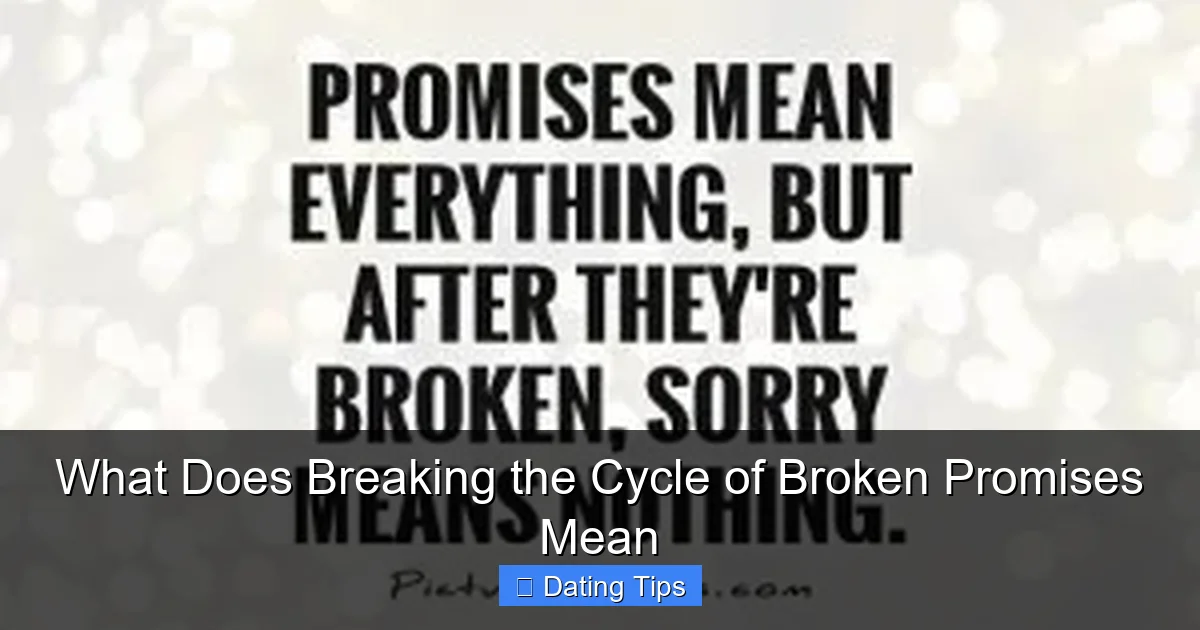
Visual guide about What Does Breaking the Cycle of Broken Promises Mean
Image source: cdn.quotesgram.com
So how do you actually break the cycle? It starts with awareness, moves into intentionality, and culminates in consistent action. Here’s a roadmap:
1. Audit Your Commitments Honestly
Before you can change, you need to see the full picture. Write down every promise you’ve made in the past six months—big and small. Then mark whether you kept it, broke it, or partially delivered. Look for trends: Do you struggle with deadlines? Emotional check-ins? Physical presence?
This audit reveals hidden patterns. Maybe you always promise to “text later” but never do. Or maybe you agree to help friends move houses but cancel at the last second due to anxiety. Seeing these patterns laid bare removes denial and fuels motivation.
2. Practice Saying “No” Without Guilt
Many people break promises because they can’t say no. They take on too much, fearing rejection or disappointing others. But saying yes to everything guarantees failure. Start small: decline low-priority requests politely but firmly. Practice responses like, “I wish I could, but I’m already committed,” or “Let me think about it and get back to you.”
Saying no isn’t selfish—it’s self-respect. And when you honor your limits, others learn to respect yours too.
3. Follow Through—Even on Small Things
Trust is built incrementally. Don’t wait for a grand gesture to prove your reliability. Return texts promptly. Show up when you say you will. Complete tasks without reminders. These micro-consistencies compound into macro-trust.
For instance, if your partner says they’ll pick up groceries on their way home, actually do it—even if it’s inconvenient. Or if a friend asks for help studying, block off time and stick to it. Over time, these actions signal that you’re trustworthy.
4. Communicate Proactively About Challenges
Sometimes, you won’t keep a promise—and that’s okay. What matters is transparency. If you know you’ll miss a deadline, tell the other person immediately. Explain why (without making excuses) and propose a solution: “I’m running late because traffic was worse than expected. Can I reschedule for tomorrow evening?”
Proactive communication shows empathy and accountability. It turns potential conflicts into opportunities to strengthen trust.
5. Seek Feedback and Adjust
Ask trusted friends or partners how they perceive your reliability. Be open to constructive criticism without becoming defensive. Use their input to refine your approach.
If someone says, “You always forget our plans,” instead of arguing, respond with curiosity: “I hear that. How does that make you feel?” This opens dialogue and repairs relational cracks.
Breaking the cycle isn’t a one-time fix—it’s an ongoing practice. Like learning a new language or building muscle, consistency requires repetition and patience. But the payoff? Deep, lasting connections built on mutual respect and unshakable trust.
Rebuilding Trust After Multiple Failures
If you’ve experienced repeated broken promises—either as the breaker or the breaker—rebuilding trust takes time, effort, and radical honesty. There’s no magic shortcut. But here’s what works:
First, acknowledge the harm. A simple apology isn’t enough. Say something like, “I realize I’ve let you down multiple times, and that’s hurt you. I want you to know I see that, and I’m sorry.” Own your actions without blaming circumstances.
Second, demonstrate change through sustained behavior. If you promised to be more punctual, arrive five minutes early—every single time. If you vowed to communicate better, send daily updates even when nothing major is happening.
Third, give the other person space to process. Healing isn’t linear. They may test you again. That’s normal. Respond with calm patience: “I understand you’re skeptical. I’ll keep proving myself through my actions.”
Finally, consider couples counseling or individual therapy if the cycle feels unbreakable. A professional can help uncover subconscious barriers—like fear of abandonment or perfectionism—that sabotage efforts to be reliable.
Remember: trust isn’t rebuilt in a day. It’s rebuilt in weeks, months, even years of showing up, consistently and authentically. And when trust returns, it’s far more meaningful because it’s earned—not assumed.
Creating Healthy Relationship Dynamics Moving Forward
Once you’ve broken the cycle, the goal shifts from repair to prevention. How do you ensure broken promises stay in the past? By establishing systems and mindsets that prioritize mutual respect and clarity.
Start by discussing expectations openly during early stages of dating or friendship. Ask questions like:
– “How do you prefer to handle scheduling changes?”
– “What does emotional availability look like to you?”
– “Are there topics you avoid discussing? Why?”
These conversations prevent assumptions and reduce friction later.
Also, cultivate self-awareness. Reflect regularly: *What drains my energy? What triggers my avoidance?* Journaling or talking to a therapist can reveal blind spots.
Surround yourself with people who model reliability. Notice how your friends or mentors show up consistently. Emulate their behavior. And don’t tolerate chronic unreliability from others—set boundaries early.
Lastly, celebrate progress. When you keep a promise you previously struggled with, acknowledge it. Say, “I did it! I followed through,” and share that win with someone supportive. Positive reinforcement strengthens the new habit.
Healthy relationships thrive on predictability, not perfection. You’ll still mess up—but now you’ll catch yourself, apologize, and try again. That’s growth.
Frequently Asked Questions
Can broken promises ever be forgiven?
Yes, but forgiveness requires genuine remorse, consistent change, and time. One apology isn’t enough—trust must be rebuilt through repeated trustworthy actions over months or even years.
How do I know if someone is just forgetful or truly unreliable?
If they remember small details about your life, express regret when they forget things, and actively work to improve, they’re likely just struggling with organization—not character flaws. Unreliables often deflect blame and repeat patterns despite consequences.
Is it okay to break a promise sometimes?
Occasional exceptions happen—illness, emergencies, etc. The issue arises when broken promises become habitual or used to manipulate. Context matters, but consistency should remain the rule.
What if my partner refuses to acknowledge their pattern of broken promises?
This indicates low accountability. If they deny responsibility, minimize your feelings, or gaslight you, consider ending the relationship. Healthy partners accept feedback and commit to growth.
How long does it take to rebuild trust after repeated betrayals?
There’s no fixed timeline. Some people regain trust in weeks; others need years. Patience, transparency, and measurable change are essential. Avoid pressuring yourself or others to “move on” prematurely.
Can therapy help break cycles of broken promises?
Absolutely. Therapists help identify root causes—like attachment wounds, anxiety, or avoidance—and develop strategies for healthier communication and boundary-setting. Couples therapy also improves mutual understanding.
