
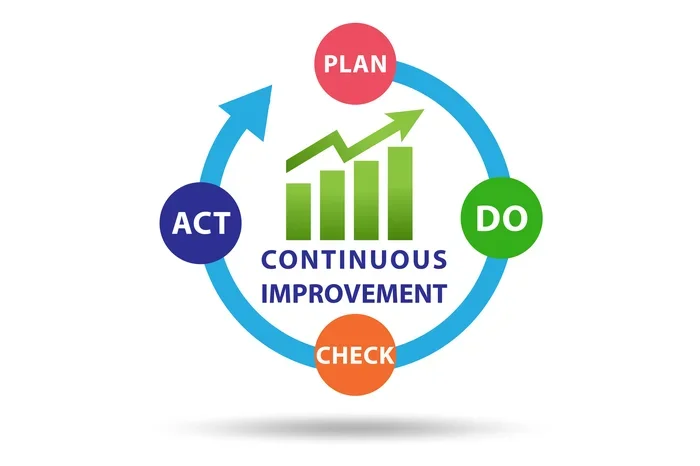
The Plan Do Check Act cycle is a powerful four-step framework for continuous improvement and problem-solving. This guide breaks down each phase with practical examples, common mistakes to avoid, and actionable strategies to help you master this proven methodology for lasting results.
The Plan Do Check Act cycle is one of the most enduring and practical frameworks for continuous improvement ever developed. Whether you’re trying to improve a business process, solve a recurring problem, or make personal growth more intentional, this four-step method gives you a clear roadmap. It’s simple enough to remember yet powerful enough to transform how you approach challenges. In this guide, we’ll walk through every phase of the PDCA cycle, share real-world examples, and show you how to start applying it today for measurable, lasting improvement.
Key Takeaways
- The PDCA cycle is iterative: It’s not a one-time process but a continuous loop that drives ongoing improvement and refinement.
- Planning is the foundation: A solid plan with clear objectives and measurable goals sets the stage for successful execution.
- Small-scale testing matters: The “Do” phase works best when you test changes on a small scale before full implementation.
- Data drives decisions: The “Check” phase relies on measurable results, not assumptions, to evaluate progress.
- Acting on insights closes the loop: The “Act” phase ensures that lessons learned are standardized or used to refine the next cycle.
- Anyone can use PDCA: From personal growth to business operations, this framework applies to virtually any improvement effort.
- Common mistakes include skipping phases: Rushing through Check or Act undermines the entire cycle and limits long-term success.
📑 Table of Contents
- What Is the Plan Do Check Act Cycle?
- Why Continuous Improvement Matters
- The Four Phases of the PDCA Cycle Explained
- Real-World Examples of the PDCA Cycle
- Common Mistakes When Using the PDCA Cycle
- How to Implement the PDCA Cycle in Your Organization
- PDCA vs. Other Improvement Frameworks
- Applying PDCA to Personal Growth
- Expert Insights on Making PDCA Work
- Measuring the Success of Your PDCA Cycles
- Advanced PDCA Techniques
- Conclusion
What Is the Plan Do Check Act Cycle?
The Plan Do Check Act cycle, also known as the PDCA cycle or Deming cycle, is a systematic framework for continuous improvement. It was popularized by Dr. W. Edwards Deming, a pioneer in quality management, though it was originally developed by Walter Shewhart. The beauty of this model lies in its simplicity. It breaks down improvement into four logical phases that repeat in a cycle, each iteration building on the last.
Think of it like a compass for problem-solving. Instead of guessing what might work, you follow a structured process. You plan your approach, execute it on a small scale, check the results, and then act on what you learned. This creates a feedback loop that drives steady, measurable progress over time.
The PDCA cycle is sometimes called the Shewhart cycle or the Deming wheel. It’s widely used in manufacturing, healthcare, software development, education, and even personal development. Its versatility is what makes it so enduring. No matter what you’re trying to improve, the same four steps apply.
Why Continuous Improvement Matters
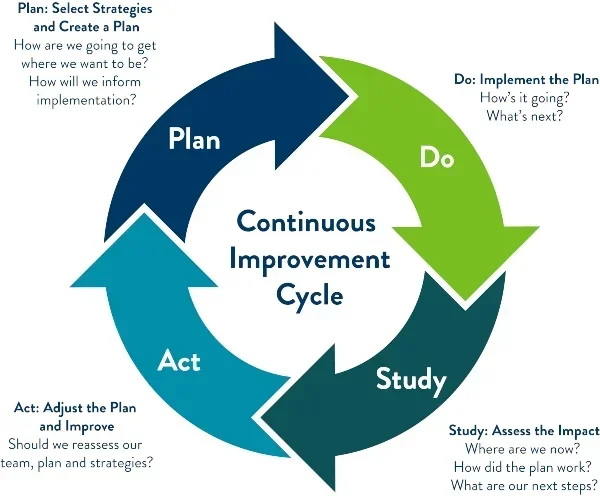
Visual guide about continuous improvement cycle
Image source: education.mn.gov
Before diving into the mechanics of the Plan Do Check Act cycle, it’s worth understanding why continuous improvement is so important. In a world that changes rapidly, standing still means falling behind. Organizations and individuals who embrace ongoing improvement stay adaptable, competitive, and resilient.
Continuous improvement isn’t about making massive overhauls overnight. It’s about making small, consistent changes that compound over time. This approach reduces risk because you’re testing ideas before committing fully. It also builds a culture of learning where mistakes become data points rather than failures.
Many people struggle with improvement because they try to change everything at once. They burn out or get overwhelmed. The PDCA cycle solves this by breaking improvement into manageable steps. It gives you permission to start small, learn from experience, and adjust as you go. This makes sustainable progress possible.
The Four Phases of the PDCA Cycle Explained
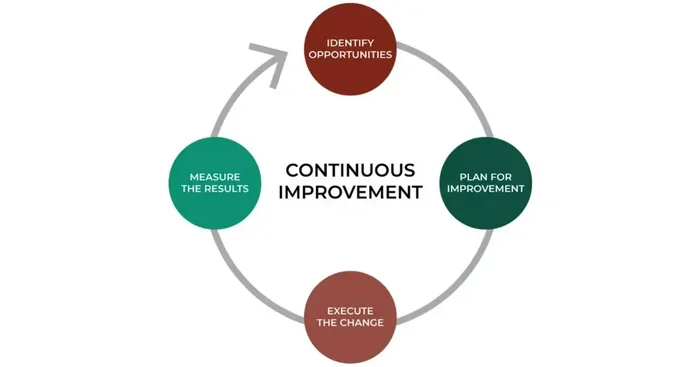
Visual guide about continuous improvement cycle
Image source: mapsly.com
Let’s break down each phase of the Plan Do Check Act cycle in detail. Understanding what happens in each step is crucial for applying the framework effectively.
Phase 1: Plan — Identify the Problem and Develop a Strategy
The Plan phase is where you lay the groundwork for everything that follows. This is arguably the most important phase because a weak plan leads to weak results. Here’s what happens during planning:
- Define the problem clearly: What exactly are you trying to improve? Be specific. Instead of “customer service is bad,” try “average response time to customer inquiries is 48 hours.”
- Analyze the current situation: Gather data about where things stand now. This gives you a baseline to measure against later.
- Identify root causes: Don’t just treat symptoms. Use tools like the 5 Whys or fishbone diagrams to dig deeper.
- Set measurable objectives: What does success look like? Define clear, quantifiable goals.
- Develop an action plan: Outline the specific steps you’ll take, who’s involved, and what resources you need.
The key to a good plan is specificity. Vague plans produce vague results. Take the time to research, analyze, and think critically before moving to the next phase.
Phase 2: Do — Implement the Plan on a Small Scale
The Do phase is where you put your plan into action. But here’s the critical part: you should test your changes on a small scale first. This minimizes risk and allows you learn without major consequences.
For example, if you’re improving a manufacturing process, test the new method on one production line before rolling it out company-wide. If you’re trying a new personal habit, commit to it for one week before making it a permanent routine.
During the Do phase:
- Execute the plan as designed: Follow your action plan closely so you can accurately measure results.
- Document everything: Keep records of what you did, what happened, and any unexpected observations.
- Collect data: Gather the metrics you identified during the Plan phase.
- Stay flexible: If something clearly isn’t working, note it, but don’t abandon the test prematurely.
Phase 3: Check — Evaluate Results Against Objectives
The Check phase is where you analyze the data you collected during the Do phase. This is where you determine whether your plan actually worked. It’s tempting to skip this phase or rush through it, but doing so undermines the entire cycle.
During the Check phase:
- Compare results to your objectives: Did you achieve the goals you set in the Plan phase?
- Identify what worked and what didn’t: Be honest about both successes and failures.
- Look for unexpected outcomes: Sometimes the most valuable insights come from surprises.
- Analyze the data objectively: Don’t let biases influence your interpretation.
This phase is all about learning. Even if your test failed, you’ve gained valuable information about what doesn’t work. That’s progress. Many people experience emotional reactions when things don’t go as planned, and understanding those feelings is part of the process. If you’ve ever felt frustrated when a plan falls apart, you’re not alone. Learning to process those emotions constructively is key to maintaining momentum through multiple PDCA cycles.
Phase 4: Act — Standardize Success or Adjust and Repeat
The Act phase is where you take action based on what you learned in the Check phase. There are two possible paths here:
- If the plan worked: Standardize the change. Implement it on a larger scale and make it the new normal. Document the new process so others can follow it.
- If the plan didn’t work: Adjust your approach. Go back to the Plan phase with your new insights and start the cycle again.
The Act phase closes the loop and sets up the next iteration. This is what makes the Plan Do Check Act cycle truly continuous. Each cycle builds on the knowledge gained from the previous one, creating a spiral of improvement.
Real-World Examples of the PDCA Cycle
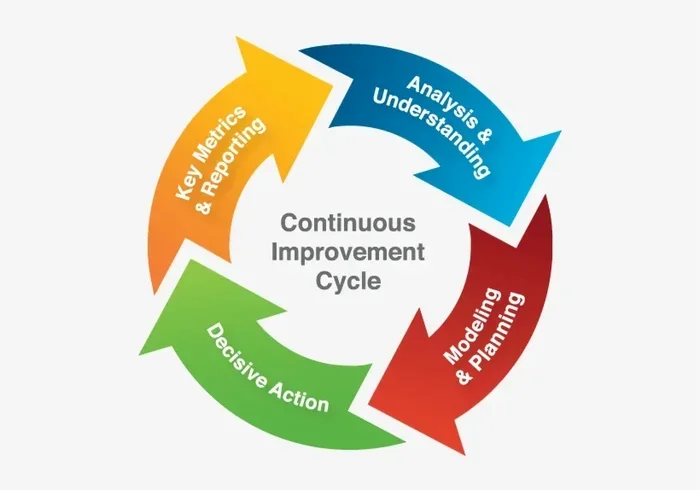
Visual guide about continuous improvement cycle
Image source: nicepng.com
Let’s look at some practical examples to see how the PDCA cycle works in different contexts.
Example 1: Improving Customer Response Time
Plan: A company notices that customer complaints about slow response times have increased by 30%. They set a goal to reduce average response time from 48 hours to 24 hours. They plan to implement a new ticketing system and retrain the support team.
Do: They test the new system with one support team for two weeks while the rest of the team continues with the old process.
Check: After two weeks, the test team’s average response time dropped to 20 hours. Customer satisfaction scores for that team improved by 15%.
Act: The company rolls out the new ticketing system to all support teams and updates their training materials accordingly.
Example 2: Personal Health Improvement
Plan: Someone wants to improve their energy levels. After tracking their habits for a week, they identify poor sleep as a key factor. They plan to establish a consistent bedtime routine and eliminate screen time one hour before bed.
Do: They follow the new routine for two weeks, tracking their sleep quality and energy levels each day.
Check: Their average sleep quality score improved from 5/10 to 7/10. Energy levels increased noticeably in the afternoons.
Act: They make the bedtime routine a permanent habit and start the next PDCA cycle to address another health factor, like nutrition.
Example 3: Software Development
Plan: A development team wants to reduce the number of bugs in their releases. They plan to implement automated testing for their most critical features.
Do: They write automated tests for one module and run them alongside their existing manual testing process.
Check: The automated tests caught 40% of bugs before they reached the QA team, significantly reducing the manual testing burden.
Act: The team expands automated testing to all critical modules and updates their development workflow to include automated testing as a standard step.
Common Mistakes When Using the PDCA Cycle
Even though the Plan Do Check Act cycle is straightforward, there are several common pitfalls that can undermine its effectiveness.
Skipping the Check Phase
This is perhaps the most frequent mistake. People implement a change and then immediately move to the next project without evaluating results. Without the Check phase, you have no way of knowing whether your plan actually worked. You’re just guessing.
Planning Without Data
Jumping into the Plan phase without gathering data leads to solutions based on assumptions rather than evidence. Always start with a clear understanding of the current situation.
Testing on Too Large a Scale
The Do phase is meant to be a small-scale test. When you implement changes across the entire organization at once, you increase risk and make it harder to identify what caused the results.
Quick Tip: Start Smaller Than You Think
When in doubt, make your test smaller. A smaller test gives you clearer data and less risk. You can always scale up in the next cycle.
Ignoring the Act Phase
The Act phase is where the real value of the PDCA cycle is realized. If you don’t standardize successful changes or adjust unsuccessful ones, you’re leaving improvement on the table. The cycle remains incomplete.
Treating PDCA as a One-Time Process
The PDCA cycle is designed to be iterative. One cycle leads to the next, each one building on the insights from the last. Treating it as a one-and-done exercise misses the point entirely.
How to Implement the PDCA Cycle in Your Organization
Implementing the Plan Do Check Act cycle across an organization requires more than just understanding the framework. It requires a cultural shift toward continuous improvement.
Build a Culture of Learning
For PDCA to work, people need to feel safe sharing honest results, including failures. If employees fear punishment for negative outcomes, they’ll hide problems rather than surface them for improvement. Leaders must model vulnerability and treat failures as learning opportunities.
Train Your Team
Make sure everyone understands the PDCA framework and how to apply it. Provide training on root cause analysis, data collection, and basic problem-solving tools. The more comfortable people are with the process, the more effectively they’ll use it.
Start with a Pilot Project
Don’t try to implement PDCA everywhere at once. Choose one team or process as a pilot. Let them work through a few cycles, document their results, and share their learnings. Success stories from the pilot will build momentum for broader adoption.
Use Visual Management Tools
Make PDCA cycles visible. Use Kanban boards, dashboards, or simple whiteboards to track which phase each project is in. Visibility creates accountability and helps teams stay focused.
Celebrate Progress, Not Just Results
Recognize teams for completing cycles, sharing learnings, and applying insights. This reinforces the behavior you want to see and keeps momentum going.
PDCA vs. Other Improvement Frameworks
The Plan Do Check Act cycle isn’t the only improvement framework out there. Here’s how it compares to some alternatives:
| Framework | Best For | Key Difference | |
|---|---|---|---|
| PDCA Cycle | Continuous, iterative improvement | Simple four-step cycle that repeats indefinitely | |
| Six Sigma (DMAIC) | Reducing defects and variability | More structured and data-intensive with five phases | |
| Lean Manufacturing | Eliminating waste | Focuses specifically on value stream and waste reduction | |
| Kaizen | Small, incremental changes | Emphasizes employee-driven improvement at all levels | |
| Agile/Scrum | Software development | Uses sprints and iterative delivery with defined roles |
The PDCA cycle is often the foundation that other frameworks build upon. Its simplicity makes it accessible to everyone, regardless of industry or experience level.
Applying PDCA to Personal Growth
One of the most powerful aspects of the Plan Do Check Act cycle is that it’s not limited to business. You can use it for personal development, relationship improvement, and virtually any area of life.
Setting Personal Goals
Instead of setting a New Year’s resolution and hoping for the best, use PDCA. Plan your approach with specific, measurable goals. Do the work on a small scale. Check your progress regularly. Act by adjusting your strategy or doubling down on what works.
Improving Relationships
Relationships benefit from continuous improvement too. If you want to strengthen a partnership, you might plan a weekly check-in to discuss what’s working and what isn’t. After trying it for a month, check whether communication has improved. Then act by making it a permanent habit or adjusting the format. In fact, regular relationship check-in questions can be a powerful tool for ongoing connection and growth.
Managing Stress and Energy
If you’re feeling overwhelmed or emotionally drained, PDCA can help you identify patterns and test solutions. Plan a new stress management technique. Try it for two weeks. Check how you feel. Act by incorporating what works into your routine. Understanding what energy has to do with mental health can provide valuable insights during this process.
Expert Insights on Making PDCA Work
Experts in quality management and continuous improvement offer several key recommendations for getting the most out of the PDCA cycle:
- Be patient: Meaningful improvement takes time. Don’t expect dramatic results from a single cycle.
- Focus on one problem at a time: Trying to improve everything simultaneously dilutes your effort and confuses your data.
- Involve the people doing the work: Those closest to the problem often have the best insights into solutions.
- Document everything: Written records of each cycle create an organizational knowledge base that accelerates future improvement.
- Commit to the full cycle: The power of PDCA comes from completing all four phases, not just the ones that feel comfortable.
Measuring the Success of Your PDCA Cycles
To know whether your PDCA efforts are working, you need to measure the right things. Here are some key metrics to track:
- Cycle time: How long does it take to complete one full PDCA cycle?
- Success rate: What percentage of cycles result in measurable improvement?
- Adoption rate: How many teams or individuals are actively using PDCA?
- Cumulative improvement: What’s the total impact of multiple cycles over time?
- Engagement: Are people actively participating and contributing ideas?
Tracking these metrics helps you demonstrate the value of continuous improvement and identify areas where the process itself needs refinement.
Advanced PDCA Techniques
Once you’re comfortable with the basics, you can enhance your PDCA practice with these advanced approaches.
Nested PDCA Cycles
Run smaller PDCA cycles within larger ones. For example, your organization might have a high-level PDCA cycle for annual strategic goals, while individual teams run their own cycles for quarterly objectives. This creates alignment across all levels.
PDCA with A3 Problem Solving
The A3 methodology combines PDCA with a structured reporting format on a single sheet of paper. It forces clarity and conciseness while documenting the entire problem-solving process.
Integrating PDCA with Data Analytics
Modern data tools can supercharge the Check phase. Use dashboards, statistical analysis, and visualization tools to evaluate results more rigorously and identify patterns that might otherwise go unnoticed.
Conclusion
The Plan Do Check Act cycle is a timeless framework that anyone can use to drive meaningful, lasting improvement. Its four phases — Plan, Do, Check, and Act — create a simple yet powerful loop for solving problems, testing ideas, and building on what works. Whether you’re leading a team, running a business, or working on personal growth, PDCA gives you a structured approach to continuous improvement that reduces risk and maximizes learning.
The key is to start. Pick one problem or goal, work through the four phases, and let each cycle inform the next. Over time, these small iterations compound into transformative results. Remember that improvement is not a destination but a journey. The PDCA cycle is your compass for that journey, keeping you focused, learning, and moving forward.
Frequently Asked Questions
What is the difference between PDCA and PDSA?
PDCA stands for Plan-Do-Check-Act, while PDSA stands for Plan-Do-Study-Act. The main difference is in the third phase: “Check” focuses on inspecting results, while “Study” emphasizes deeper analysis and learning. Dr. Deming actually preferred PDSA, arguing that “Study” better captures the depth of evaluation needed for meaningful improvement.
How long should one PDCA cycle take?
There’s no fixed timeline for a PDCA cycle. It depends on the complexity of the problem and the scope of the test. A simple personal improvement cycle might take one to two weeks, while an organizational change could take several months. The key is to keep cycles short enough to maintain momentum but long enough to gather meaningful data.
Can individuals use the PDCA cycle for personal development?
Absolutely. The PDCA cycle is highly effective for personal growth. You can use it to build new habits, improve health, develop skills, or work toward any personal goal. The structured approach helps you move beyond wishful thinking and into measurable, iterative progress.
What tools work well with the PDCA cycle?
Several tools complement PDCA effectively. The 5 Whys and fishbone diagrams help with root cause analysis during the Plan phase. Control charts and dashboards are useful during the Check phase. Kanban boards help visualize progress across all phases. Choose tools that match your context and comfort level.
Why do some PDCA cycles fail?
PDCA cycles often fail when teams skip phases, especially Check and Act. Other common reasons include poor problem definition, testing on too large a scale, lack of data collection, and insufficient follow-through. Success requires discipline to complete all four phases honestly and thoroughly.
How does PDCA relate to Kaizen?
PDCA and Kaizen are closely related. Kaizen is a philosophy of continuous, incremental improvement driven by employees at all levels. PDCA is the practical methodology that makes Kaizen work. You can think of Kaizen as the mindset and PDCA as the process that brings that mindset to life.
