
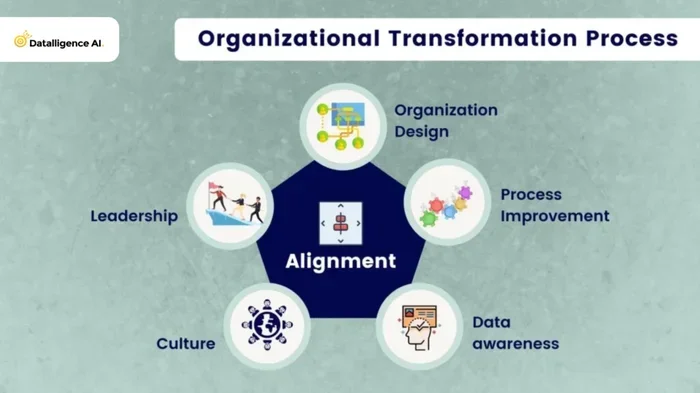
Kotter’s 8 Step Change Model is a powerful framework for leading transformation in organizations and personal life. This guide breaks down each step with practical examples, showing you how to overcome resistance, build momentum, and create lasting change in your relationships and career.
Change is hard. Whether you’re trying to transform a company culture or improve your personal relationships, the process feels overwhelming. That’s where Kotter’s 8 Step Change Model comes in. Developed by Harvard professor John Kotter, this framework has helped thousands of organizations navigate complex transformations. But here’s the thing — it works just as well for personal growth and relationship improvement. Let’s break down each step so you can start applying it today.
Key Takeaways
- Urgency drives action: People won’t change until they feel a compelling reason to do so.
- Coalitions matter: Lasting change requires support from trusted allies and mentors.
- Vision clarifies direction: A clear picture of the future motivates consistent effort.
- Small wins build momentum: Early successes prove change is possible and fuel continued progress.
- Barriers must be removed: Obstacles that block progress need to be identified and eliminated.
- Sustainability requires persistence: Change sticks only when it becomes part of your culture and identity.
- The model applies everywhere: From corporate transformations to personal relationship growth.
📑 Table of Contents
- What Is Kotter’s 8 Step Change Model?
- Step 1: Create a Sense of Urgency
- Step 2: Build a Guiding Coalition
- Step 3: Form a Strategic Vision and Initiatives
- Step 4: Enlist a Volunteer Army
- Step 5: Enable Action by Removing Barriers
- Step 6: Generate Short-Term Wins
- Step 7: Sustain Acceleration
- Step 8: Institute Change
- Applying Kotter’s Model to Relationship Challenges
- Frequently Asked Questions About Kotter’s Model
- Conclusion
What Is Kotter’s 8 Step Change Model?
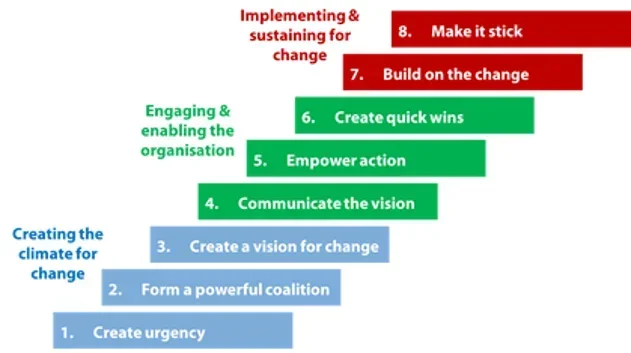
Kotter’s 8 Step Change Model is a structured approach to managing change. Kotter developed it after studying over 100 organizations undergoing transformation. He noticed that most change efforts failed because they skipped critical steps. His model fixes that by providing a clear roadmap.
The eight steps build on each other. You can’t jump to step five without doing steps one through four. Think of it like building a house — you need a solid foundation before adding walls and a roof.
Why This Model Matters for Personal Growth
Most people think change management is only for businesses. That’s a mistake. The same principles that help companies transform can help you improve your dating life, strengthen your marriage, or become a better version of yourself.
If you’ve ever wondered will a man change for the right woman, Kotter’s model explains exactly how that process works. Change doesn’t happen by accident. It follows a predictable pattern.
Step 1: Create a Sense of Urgency
Every successful change starts with urgency. People need a reason to act now, not someday. Without urgency, complacency takes over and nothing changes.
How Urgency Works in Organizations
In business, urgency might come from a competitor gaining market share or a new technology disrupting the industry. Leaders must make the status quo feel riskier than change.
How Urgency Works in Relationships
The same principle applies to personal life. Maybe you’ve noticed your partner pulling away. Perhaps you’re stuck in patterns that keep leading to the same arguments. That discomfort? That’s urgency.
Think about it like this. If you’re unhappy in your relationship but comfortable enough to stay, you won’t change. But if you realize you could lose something valuable — that sparks action.
Quick Tips for Building Urgency
- Identify what you’re risking by staying the same
- Talk honestly with trusted friends about your situation
- Write down the consequences of inaction
- Set a deadline for making a decision
Step 2: Build a Guiding Coalition
Change is a team sport. You can’t do it alone. Kotter emphasizes forming a group of people who share your commitment to change and have the influence to drive it forward.
Finding Your Support System
In a company, this might be a cross-functional team of managers and influencers. In your personal life, it could be a close friend, a mentor, a therapist, or a support group.
The key is finding people who will tell you the truth, not just what you want to hear. You need allies who challenge you and hold you accountable.
Common Mistakes to Avoid
- Going it alone because you’re embarrassed to ask for help
- Surrounding yourself with people who enable bad habits
- Ignoring expert advice because it feels uncomfortable
- Choosing allies based on convenience rather than credibility
Step 3: Form a Strategic Vision and Initiatives
A clear vision acts as your North Star. It tells you where you’re going and why it matters. Without vision, change efforts scatter in different directions.
What Makes a Strong Vision?
Kotter says a good vision is imaginable, desirable, feasible, focused, and communicable. In other words, you can picture it, you want it, it’s realistic, it’s specific, and you can explain it simply.
Applying Vision to Personal Change
Let’s say you want to improve your dating life. A vague vision is “find someone better.” A strong vision is “build a healthy relationship with someone who shares my values, communicates openly, and supports my growth.”
See the difference? The second version gives you something concrete to work toward.
Expert Insight
Dr. Kotter found that organizations with clear visions were three times more likely to succeed in their change efforts. The same holds true for individuals. Clarity creates motivation.
Step 4: Enlist a Volunteer Army
This step is about getting buy-in from the people affected by the change. In business, that means employees. In personal life, it means the people around you who will be impacted by your transformation.
Why Volunteers Matter
You can’t force people to support your change. They have to choose it. When people volunteer their energy and commitment, change happens faster and sticks longer.
Communicating Your Vision
Keep it simple. Keep it emotional. People connect with stories, not spreadsheets. Share why this change matters to you. Be vulnerable. Let others see your genuine desire to grow.
Quick Tips for Building Momentum
- Share your goals with people who will encourage you
- Join communities of people working toward similar goals
- Celebrate others’ wins to create positive energy
- Be open about your struggles — authenticity attracts support
Step 5: Enable Action by Removing Barriers
Even with urgency, a vision, and support, change stalls when obstacles block the way. This step focuses on identifying and eliminating those barriers.
Types of Barriers
Barriers come in different forms:
- Structural barriers: Systems or processes that prevent progress
- Psychological barriers: Fear, self-doubt, limiting beliefs
- Relational barriers: People who undermine your efforts
- Skill barriers: Lack of knowledge or ability to execute
Removing Barriers in Relationships
If you’re trying to change relationship patterns, your barriers might include poor communication habits, unresolved past trauma, or friends who normalize toxic behavior.
Sometimes the barrier is internal. You might believe you don’t deserve better. Or you might fear being alone more than you fear staying stuck.
Comparison Table: Barriers and Solutions
| Barrier Type | Example | Solution |
|---|---|---|
| Structural | No time for self-improvement | Schedule dedicated time weekly |
| Psychological | Fear of rejection | Therapy or coaching |
| Relational | Partner resists change | Couples counseling |
| Skill | Poor communication | Read books, take courses |
Step 6: Generate Short-Term Wins
Big changes take time. But humans need quick wins to stay motivated. This step is about creating early successes that prove your effort is working.
Why Short-Term Wins Matter
They build confidence. They silence critics. They give you evidence that the hard work is paying off. Without them, people lose faith and give up.
Creating Wins in Personal Growth
Let’s say you’re working on being more patient with your partner. A short-term win might be going a full week without snapping at them. That’s measurable. That’s real. That’s worth celebrating.
Common Mistakes
- Setting goals so big that early wins are impossible
- Ignoring small progress because it doesn’t feel significant
- Comparing your timeline to someone else’s
- Waiting for perfection before acknowledging improvement
Expert Insight
Kotter’s research showed that organizations generating visible short-term wins were significantly more likely to complete their transformation. The psychology is universal — progress fuels motivation.
Step 7: Sustain Acceleration
Here’s where most people fail. They get a few wins, feel good, and then slack off. Kotter warns against declaring victory too soon. Real change requires sustained effort.
The Danger of Complacency
After initial success, it’s tempting to think you’ve “made it.” But change is a marathon, not a sprint. The middle is where most transformations die.
Keeping Momentum in Relationships
If you’ve improved your relationship, don’t stop doing what got you there. Keep communicating. Keep showing up. Keep working on yourself.
This is especially relevant if you’ve experienced significant life changes. Big ways married men change after having kids often require ongoing adjustment, not a one-time fix.
Quick Tips for Sustaining Change
- Regularly review your progress and adjust your approach
- Set new goals as you achieve old ones
- Stay connected to your support system
- Remind yourself why you started
Step 8: Institute Change
The final step is making change stick. This means embedding new behaviors into your culture, habits, and identity. Change becomes “the way we do things around here.”
What Institutionalization Looks Like
In organizations, this means updating policies, rewarding new behaviors, and aligning systems with the new vision. In personal life, it means your new habits become automatic.
Making Personal Change Permanent
You know change has stuck when you don’t have to think about it anymore. It becomes part of who you are. You’re not “trying to be more patient” — you just are.
Common Mistakes in This Step
- Assuming change will maintain itself without reinforcement
- Not addressing underlying beliefs that caused old patterns
- Isolating yourself from people who support the new you
- Ignoring warning signs of backsliding
Key Takeaway
Institutionalization requires ongoing attention. Even after change feels permanent, you need to nurture it. Think of it like fitness — you can’t work out once and stay in shape forever.
Applying Kotter’s Model to Relationship Challenges
Let’s bring this full circle. How does Kotter’s 8 Step Change Model apply specifically to dating and relationships?
When You Need to Change Yourself
Maybe you keep attracting the same type of partner. Perhaps you sabotage relationships when they get serious. Kotter’s model gives you a framework for breaking those patterns.
Start with urgency. What are you losing by staying stuck? Build a coalition. Find a therapist or trusted friend. Create a vision. What does a healthy relationship look like to you? Then work through each step systematically.
When Your Partner Needs to Change
You can’t force someone else to change. But you can model it. You can create urgency by honestly sharing how their behavior affects you. You can remove barriers by offering support rather than criticism.
However, there’s a limit. If you’re dealing with a partner who refuses to acknowledge problems, you might need to recognize the signs. 8 clear signs your husband is disgusted by you can help you assess whether the relationship is salvageable.
When the Relationship Itself Needs to Change
Sometimes the dynamic between two people needs transformation. Maybe communication has broken down. Perhaps trust was broken. Kotter’s model applies here too.
Create urgency by acknowledging the relationship is in trouble. Build a coalition through couples counseling. Form a vision for what the relationship could become. Take small steps toward rebuilding. Celebrate progress. Keep going even when it’s hard. And finally, make the new dynamic your default.
Frequently Asked Questions About Kotter’s Model
How long does each step take?
There’s no fixed timeline. Some steps take weeks, others take months. The complexity of the change and the resistance you face will determine the pace. Personal changes might move faster than organizational ones, but don’t rush the process.
Visual guide about leading organizational transformation
Image source: sp-ao.shortpixel.ai
Visual guide about leading organizational transformation
Image source: slideteam.net
Visual guide about leading organizational transformation
Image source: disruptiveleadership.institute
Can I skip steps if I’m in a hurry?
No. Each step builds on the previous one. Skipping steps creates weak foundations that collapse later. Kotter’s research showed that failed change efforts almost always skipped critical steps.
What if I lose momentum after initial success?
That’s normal. Step 7 specifically addresses this challenge. When momentum fades, return to your vision, reconnect with your support system, and set new short-term wins to reignite progress.
Does this model work for small personal changes?
Absolutely. While Kotter developed it for organizational change, the psychology applies to any transformation. Whether you’re changing a habit or transforming your career, the same principles hold true.
How do I handle people who resist my change?
Resistance is natural. Listen to concerns, address valid points, and keep communicating your vision. Some people will come around when they see results. Others won’t, and that’s okay. Focus on those who support your growth.
What’s the biggest mistake people make with this model?
Declaring victory too early. Step 7 and 8 exist because most people stop too soon. They get a few wins and assume the work is done. Lasting change requires sustained effort long after the initial excitement fades.
Conclusion
Kotter’s 8 Step Change Model isn’t just a business tool. It’s a blueprint for any meaningful transformation. Whether you’re leading a company through restructuring or trying to become a better partner, this framework gives you the structure you need.
The key insight is that change follows a pattern. It starts with urgency, builds through support and vision, accelerates through quick wins, and sticks through persistence. Skip any piece, and the whole thing falls apart.
So here’s your challenge. Pick one area of your life that needs change. Apply these eight steps. Start today. Not next week. Not next month. Today.
Because the best time to plant a tree was twenty years ago. The second best time is now. The same goes for change. Start building your future one step at a time.
