
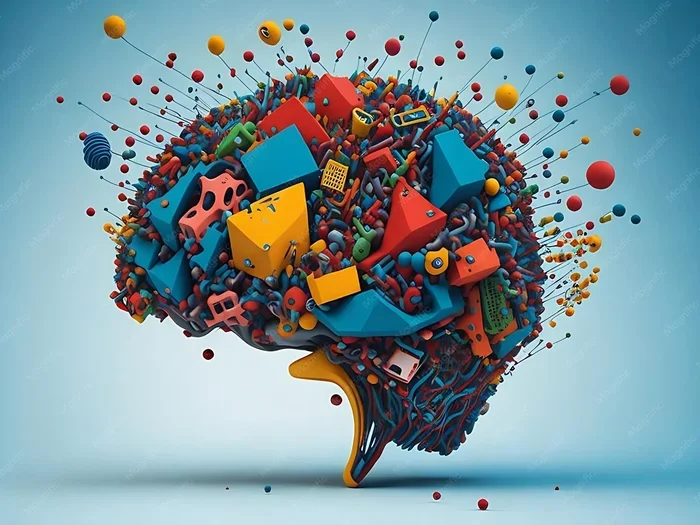
Your brain is not built to multitask — and neuroscientists have the research to prove it. When you’re distracted, your focus breaks apart, your memory weakens, and your productivity takes a serious hit. In this article, we explore what science reveals about distraction, how it physically changes your brain, and practical steps you can take to take back your attention.
Neuroscientists Reveal What Happens When Youre Distracted
Weve all been there. You sit down to work on something important, and within minutes, your mind starts wandering. You reach for your phone. You start thinking about what to eat for dinner. Suddenly, twenty minutes have vanished, and youve accomplished nothing. Neuroscientists have been studying this exact phenomenon, and what they found might surprise you.
When you get distracted, your brain undergoes a complex chain of events that affects your memory, productivity, and even your emotional well-being. Its not just a minor annoyance. Its a neurological process with real consequences. In this article, well break down exactly what happens inside your brain when your attention drifts, and well share science-backed strategies to help you stay on track.
Whether you struggle with staying focused at work, find yourself easily pulled away by notifications, or just want to understand why your brain behaves this way, this guide has you covered. Lets dive into what the latest research tells us about distraction and how you can take back control of your attention.
Key Takeaways
- Your brain physically rewires itself when you frequently give in to distraction.
- Multitasking splits your attention and significantly reduces both quality and productivity.
- Attention is a limited resource that requires deliberate protection and practice.
- Mindfulness exercises can retrain your brain to resist distractions effectively.
- Phone notifications are major culprits that fragment your focus throughout the day.
- Chronic distraction impairs memory formation and weakens your ability to learn.
- Deep focus leads to better retention, creativity, and higher-quality work output.
📑 Table of Contents
What Your Brain Does When You Get Distracted
Your brain is a remarkable organ. It processes millions of pieces of information every second. But it wasnt designed to handle the constant barrage of stimuli we face today. When something pulls your attention away from the task at hand, a specific sequence of brain events kicks in.
The Attention Switch Mechanism
When you get distracted, your brain switches from focused mode to a scanning mode. This is called the default mode network (DMN). Its the part of your brain that activates when youre not concentrating on a specific task. Think of it as your brains idle state. Its not lazy. Its actually doing important work like processing memories and imagining future scenarios.
But here is the problem. When the DMN activates at the wrong time, it pulls you away from what matters. Your prefrontal cortex, the part of your brain responsible for decision-making and focus, has to fight to regain control. This tug-of-war between your focus networks and your default mode is what makes distraction feel so exhausting.
The Role of Dopamine
Every time you check your phone or switch tasks, your brain releases a small burst of dopamine. This feel-good chemical reinforces the behavior. Over time, your brain starts craving these little dopamine hits. That is why reaching for your phone feels almost automatic. You are literally addicted to the distraction.
Neuroscientists call this the reward prediction error. Your brain learns that distractions deliver quick rewards, so it starts prioritizing them over deeper, more meaningful work. Understanding this cycle is the first step toward breaking free from it.
The Science Behind Distraction: What Neuroscientists Found
Recent studies have shed light on exactly what happens in the brain during episodes of distraction. Researchers at leading universities have used brain imaging technology to observe how attention shifts in real time.
Key Findings from Brain Research
Scientists have discovered several important facts about how distraction affects the brain:
- It takes an average of 23 minutes to fully regain focus after an interruption.
- Multitasking reduces your cognitive performance by up to 40 percent.
- Your working memory can only hold about four items at once. Distractions push out the information you need.
- Chronic distraction can physically shrink areas of the brain associated with memory and learning.
These findings come from peer-reviewed research published in journals like Nature Neuroscience and Journal of Cognitive Neuroscience. The science is clear. Distraction is not just a minor inconvenience. It is a significant threat to your cognitive abilities.
How Distraction Changes Neural Pathways
One of the most alarming discoveries is how distraction rewires your brain. When you constantly switch attention, your neural pathways adapt to favor shallow processing over deep thinking. This means your brain gets better at skimming the surface and worse at sustained, focused work.
The good news is that neuroplasticity also works in your favor. You can retrain your brain to focus better. It just takes consistent effort and the right strategies. For people who struggle with attention challenges, exploring adhd-friendly ways to get shit done when your brain says nope can offer practical approaches grounded in neuroscience.
How Distraction Affects Your Daily Life
The effects of distraction go far beyond lost productivity. It touches every area of your life, from your relationships to your mental health. Understanding these impacts can motivate you to take action.
Impact on Work and Productivity
When you get distracted at work, you make more errors. You take longer to complete tasks. Your creativity suffers because deep thinking requires uninterrupted time. Studies show that employees who check email or social media frequently report higher stress levels and lower job satisfaction.
Here is what happens step by step when distraction strikes during work:
- Your focus breaks. You lose your place in your thoughts.
- Your brain scrambles to remember where you were. This taxes your working memory.
- You spend time re-reading or re-reading material to regain context.
- The stress of lost time creates anxiety, which leads to more distraction.
Effects on Relationships and Emotional Health
Distraction doesnt just affect your work. When you are distracted during conversations, your loved ones notice. Active listening requires full attention. When your mind wanders, you miss emotional cues. Over time, this erodes trust and connection.
Research also shows that chronic distraction contributes to mental fatigue and emotional burnout. Your brain never gets a chance to rest and recover when it is constantly pulled in different directions. This is why many people feel exhausted even after a full day of seemingly doing nothing.
If you find that distraction is affecting your ability to think clearly, you might want to explore how energy has to do with mental health. The connection between mental focus and overall energy levels is stronger than most people realize.
The Hidden Cost of Constant Switching
Many people believe they are good at multitasking. They are not. What feels like multitasking is actually rapid task-switching. And every switch comes with a cognitive cost. Scientists call this the switch cost effect. Each time you shift your attention, your brain loses efficiency.
| Task Type | Focus Required | Impact of Distraction | Recovery Time |
|---|---|---|---|
| Deep Work (writing, coding) | High | Severe loss of quality | 15-23 minutes |
| Routine Tasks (emails, admin) | Medium | More errors, slower pace | 5-10 minutes |
| Conversations | High | Missed details, poor listening | Varies |
| Learning New Skills | Very High | Reduced retention and recall | 20+ minutes |
This table shows why distraction is especially harmful during tasks that require deep thinking or learning. The recovery time adds up quickly throughout the day.
Why Some People Get Distracted More Easily
Not everyone gets distracted at the same rate. Some people can focus through chaos while others lose their train of thought at the slightest noise. Why is that? Several factors play a role.
Genetics and Brain Chemistry
Research suggests that attention regulation has a genetic component. Some people are born with stronger prefrontal cortex function, making it easier for them to maintain focus. Others have naturally lower levels of neurotransmitters like dopamine and norepinephrine, which are essential for sustained attention.
This doesnt mean people with weaker focus are doomed. It simply means they may need to work harder or use different strategies to stay on track.
Environmental Triggers
Your environment plays a huge role in how easily you get distracted. Open offices, constant notifications, social media feeds, and even background noise can all pull your attention away. The modern world is designed to be distracting. Tech companies invest billions in keeping your eyes on their screens.
Understanding your personal distraction triggers is key. Do you get pulled away by sounds? By visual clutter? By the urge to check your phone? Once you identify your triggers, you can start building a more focused environment.
The Connection Between Stress and Distraction
Stress and distraction have a bidirectional relationship. Stress makes it harder to focus, and being distracted increases stress. Its a vicious cycle. When your mind is racing with worries, your brain has fewer resources available for the task in front of you.
People who are overwhelmed often find themselves wandering off task not because they lack discipline, but because their brains are overloaded. If you are in this situation, knowing what to do when you dont know what to do can help you break the cycle and regain a sense of control.
Practical Tips to Stay Focused
The science is clear. Distraction has real consequences. But the good news is that you can train your brain to stay focused. Neuroscientists recommend several evidence-based strategies.
1. Practice Single-Tasking
Instead of trying to do everything at once, give your full attention to one task at a time. Close unnecessary tabs. Put your phone in another room. Tell yourself you will only work on this one thing for 25 minutes. This technique, known as the Pomodoro method, works because it gives your brain a clear structure.
2. Create a Distraction-Free Environment
Design your workspace to minimize interruptions. Use noise-canceling headphones if needed. Keep your desk clean. Use website blockers during work hours. The goal is to remove the temptation before it appears, because willpower alone is not enough to fight distraction.
3. Train Your Attention Like a Muscle
Meditation is one of the most powerful tools for improving focus. Even five minutes of daily mindfulness practice can strengthen your ability to notice when your mind has wandered and bring it back. Over time, this builds the neural pathways that support sustained attention.
Studies show that people who meditate regularly have better working memory and faster recovery from distractions. You do not need to become a monk. Just a few minutes a day can make a measurable difference.
4. Use Visual Cues and Reminders
Sometimes your brain needs a nudge to stay on track. Set visual reminders like sticky notes or timers. Use the two-minute rule: if a thought or task pops up and it takes less than two minutes, do it immediately. Otherwise, write it down and return to your work.
This simple habit prevents small distractions from snowballing into full-blown attention breaks. It also frees up mental space so your brain can focus on what truly matters.
5. Take Strategic Breaks
Your brain is not designed to focus for hours on end. Taking short, intentional breaks actually improves your ability to concentrate. Step away from your desk. Take a walk. Look at something green or natural. These micro-breaks help reset your attention and reduce mental fatigue.
For those dealing with persistent focus challenges, it may be helpful to understand how what you believe shapes your reality. Your mindset about focus and distraction can either reinforce the problem or help you overcome it.
When Distraction Becomes a Serious Problem
Occasional distraction is normal. Everyone gets distracted sometimes. But when it happens constantly and starts interfering with your daily life, it may be time to seek help. Chronic inability to focus can be a sign of underlying conditions like ADHD, anxiety, or depression.
Signs That Distraction Has Become a Problem
Watch for these warning signs:
- You consistently miss deadlines or forget important commitments.
- You feel overwhelmed by simple tasks that used to be easy.
- Your relationships suffer because you cannot stay present.
- You feel guilty or frustrated about your inability to focus.
- You avoid tasks that require sustained mental effort.
If these sound familiar, you are not alone. Millions of people struggle with focus issues every day. The important thing is to recognize the pattern and take steps to address it. Reaching out to a mental health professional can provide clarity and support. If you know someone who is struggling, learning how to get someone mental help when they refuse can be a valuable resource.
Professional Help and Support
Cognitive behavioral therapy (CBT) has been shown to be effective for improving attention and reducing the impact of distraction. Some people also benefit from medication or coaching. The key is finding the right approach for your unique situation.
Remember that asking for help is a sign of strength, not weakness. Your brain health matters just as much as your physical health. Taking care of your attention is an investment in your overall quality of life.
Key Takeaways
Let us recap the most important points from what neuroscientists have revealed about distraction:
- Distraction triggers a neurological chain reaction that involves your default mode network and dopamine reward system.
- It takes an average of 23 minutes to regain full focus after an interruption.
- Chronic distraction can physically change your brain, weakening areas responsible for memory and learning.
- Some people are more susceptible to distraction due to genetics, brain chemistry, and environment.
- Evidence-based strategies like single-tasking, meditation, and environment design can significantly improve focus.
- Persistent distraction may signal an underlying condition that warrants professional attention.
The bottom line is this. Getting distracted is not a personal failure. It is a natural brain response to a world full of stimuli. But understanding the science behind it gives you power. You can take practical steps to protect your attention and live a more focused, fulfilling life.
Start small. Pick one strategy from this article and try it today. Notice how your brain responds. Over time, these small changes add up to a remarkable difference. Your attention is your most valuable resource. Protect it wisely.
Frequently Asked Questions
Why Does It Become So Hard to Focus When You’re Distracted?
When you’re distracted, your brain shifts its attention away from the primary task and starts processing irrelevant information. Neuroscientists explain that this happens because the brain’s attention networks get hijacked by external or internal triggers. As a result, your focus breaks and it takes significant mental effort to return to what you were doing.
What Actually Happens in the Brain When You’re Distracted?
When you’re distracted, the prefrontal cortex, which controls decision-making and focus, gets overloaded with competing signals. The brain releases dopamine each time you switch tasks, which reinforces the habit of distraction over time. This constant switching weakens your ability to sustain attention and can even alter brain structure with repeated exposure.
Does Being Distracted Affect Your Memory and Learning?
Yes, being distracted significantly impairs your ability to form new memories and retain information. When your mind is pulled away during learning, the hippocampus struggles to encode experiences into long-term storage. This means you’re more likely to forget what you just read, heard, or experienced if your attention was elsewhere.
How Does Distraction Impact Workplace Productivity?
Studies show that getting distracted at work can cost you up to 23 minutes of refocusing time per interruption. Each distraction breaks your flow state, which is the deep concentration needed for high-quality output. Over a full workday, these small interruptions add up and dramatically reduce overall productivity.
Can Being Distracted Ever Be Good for Your Brain?
Surprisingly, short periods of being distracted can boost creativity by allowing the brain to make new connections between unrelated ideas. Mind-wandering gives your brain a chance to rest and process information subconsciously. However, chronic distraction is harmful, so balance is key to keeping your mind sharp and healthy.
What Are the Most Common Causes of Distraction in Daily Life?
The biggest culprits include smartphone notifications, multitasking, lack of sleep, and emotional stress. Environmental factors like noise, clutter, and constant email alerts also play a major role in pulling your attention away. Neuroscientists recommend identifying your personal triggers so you can proactively minimize them and protect your focus.
