
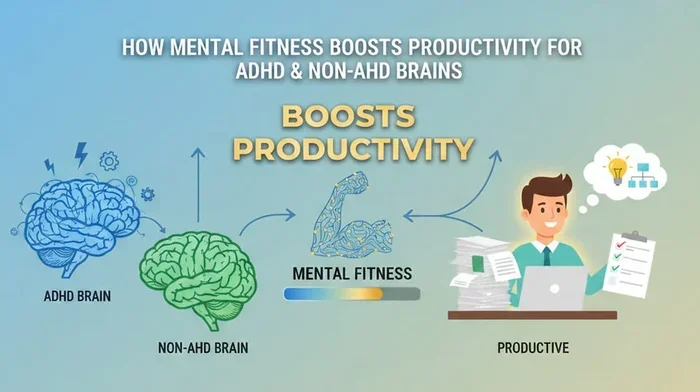
ADHD is not a weakness — it is a different way of processing the world. This guide shows you how to use ADHD to your advantage by harnessing hyperfocus, creative thinking, and high energy. You will learn actionable strategies to turn challenges into superpowers and build a life that works with your brain, not against it.
Living with ADHD can feel like riding a rollercoaster with no seatbelt. Some days, your brain fires on all cylinders and you accomplish more than most people do in a week. Other days, even starting a simple task feels like climbing a mountain.
But here is the truth that most people miss. ADHD is not just a set of challenges. It is also a unique wiring that comes with powerful strengths. The same brain that struggles with focus can also lock in with hyperfocus for hours on end. The same mind that races with thoughts can generate ideas that others never see.
This article will show you how to use ADHD to your advantage. You will learn practical strategies to turn your neurodivergent brain into your greatest asset. Whether you were diagnosed recently or have known your whole life, these tips will help you thrive every single day.
Key Takeaways
- ADHD strengths include hyperfocus, creativity, and quick thinking — these can fuel career success and personal growth.
- Building routines and systems helps manage executive function challenges while amplifying your natural abilities.
- Dopamine management is key — understanding how your ADHD brain seeks stimulation helps you design a productive life.
- Embracing a strengths-based mindset shifts your focus from what you struggle with to what you excel at.
- Self-care and energy management are essential tools for thriving with ADHD every single day.
- Small, consistent habits create massive momentum when you work with your ADHD brain instead of fighting it.
📑 Table of Contents
Understanding Your ADHD Brain
Before you can use ADHD to your advantage, you need to understand how it actually works. The ADHD brain is not broken. It simply operates differently from a neurotypical brain. The differences lie in how you process dopamine, manage attention, and handle executive function tasks.
The Dopamine Connection
Dopamine is a chemical in your brain that drives motivation and reward. In people with ADHD, the dopamine system works differently. Your brain seeks novelty and excitement more intensely than others do. This is why you might lose yourself in a project for hours but struggle to start something boring.
This same dopamine-seeking behavior can be a superpower. It drives curiosity, creativity, and the willingness to take risks. When you learn to channel this energy, you open doors that others walk right past.
Executive Function and Working Memory
Executive function skills include planning, organizing, and managing time. Working memory is your brain’s short-term storage system. Both of these tend to be weaker in people with ADHD. But here is what most people do not realize.
These weaknesses do not define your entire brain. They are just parts of the picture. Your strengths in pattern recognition, quick thinking, and problem-solving often compensate and even surpass those of neurotypical peers. Understanding this balance helps you stop blaming yourself and start building systems that work for you.
If you are looking for practical ways to get things done despite ADHD challenges, check out ADHD-friendly ways to get shit done when your brain says nope. It is a great companion to the strategies below.
Turning Hyperfocus Into Your Secret Weapon
Hyperfocus is one of the most misunderstood aspects of ADHD. People often think it means you can focus on everything intensely. In reality, hyperfocus means you can lock into something that interests you for hours without noticing time passing.
What Hyperfocus Really Looks Like
When you are in hyperfocus, your brain filters out everything else. Distractions disappear. Time melts away. You become completely absorbed in the task at hand. This state is incredibly productive and can lead to outstanding work.
The challenge is that hyperfocus is unpredictable. You cannot always control what triggers it. And sometimes it kicks in at the worst times — like when you should be doing something else entirely.
How to Harness Hyperfocus
You can learn to use hyperfocus strategically. Start by identifying what triggers it for you. Do certain tasks, topics, or environments make it easier to enter that state? Pay attention to these patterns.
Next, design your schedule around your peak focus times. If you know you focus best in the morning, protect that time for your most important work. If you tend to hyperfocus on creative projects, schedule creative work deliberately.
Another powerful technique is to break large tasks into smaller chunks that feel novel. Your ADHD brain craves new stimulation. When a task feels fresh and interesting, you are much more likely to enter hyperfocus naturally.
Leveraging ADHD Strengths in Daily Life
ADHD comes with a unique set of strengths that can transform your daily life. The key is to stop trying to fix what you see as weaknesses and instead amplify what already works well for you.
Creative Thinking and Problem Solving
Many people with ADHD are highly creative thinkers. Your brain makes connections that others miss. You see patterns, imagine possibilities, and come up with unconventional solutions. This is a tremendous advantage in work, relationships, and personal projects.
Use this strength by pursuing creative outlets regularly. Writing, art, music, design, or even problem-solving at work can channel your natural creativity into something productive and fulfilling.
High Energy and Enthusiasm
ADHD often comes with bursts of high energy and genuine enthusiasm. When you care about something, you care deeply and intensely. This passion can be contagious and inspiring to others.
Channel this energy into projects and goals that truly matter to you. Passion-driven work does not feel like a chore when you have ADHD. It feels like play. And that is where your best work happens.
Resilience and Adaptability
People with ADHD often develop incredible resilience out of necessity. You have likely faced challenges most people never understand. You have learned to adapt, pivot, and keep going even when things get tough.
This resilience is a life skill that serves you in every area. Whether you are navigating career changes, relationship challenges, or personal growth, your ability to bounce back is one of your greatest assets.
To build on this foundation, it helps to maintain your overall well-being. Check out how to stay healthy and positive in personal challenges for strategies that support both your mental and physical health while managing ADHD.
Building Systems That Work With Your Brain
One of the most effective ways to thrive with ADHD is to build external systems that support your natural brain chemistry. Instead of relying on willpower alone, you create structures that make success easier and more automatic.
Designing ADHD-Friendly Routines
Routines are powerful for everyone, but they are especially helpful for people with ADHD. A routine reduces the number of decisions you need to make each day. It creates a rhythm that your brain can follow without constant effort.
Start small. Pick one or two routines to build first. A morning routine and an evening routine are excellent starting points. Keep them simple and repeatable. The goal is not perfection. The goal is consistency over time.
Using Visual Cues and Reminders
Your ADHD brain responds well to visual stimuli. Use this to your advantage by creating visual reminders for important tasks and goals. Sticky notes, whiteboards, phone alarms, and calendar alerts all serve as external memory aids.
Color-coding systems work especially well. Assign colors to different categories of tasks. Use timers to create visual urgency. The more senses you engage, the easier it becomes for your brain to stay on track.
Embracing the Power of Novelty
Your ADHD brain craves novelty. Instead of fighting this, use it to your advantage. Change up your environment when you feel stuck. Work from a new location. Try a different time of day. Use a new tool or method for an old task.
Novelty triggers dopamine, which boosts motivation and focus. By strategically introducing variety into your routines, you keep your brain engaged without burning out.
Managing Overwhelm With the Right Approach
Overwhelm is one of the biggest challenges for people with ADHD. When too many things compete for your attention, your brain can freeze up completely. The solution is to break everything down into tiny, manageable steps.
Write down every task, no matter how small. Then pick just one to start. Completing even a tiny step creates momentum and dopamine, which makes the next step easier. This approach turns overwhelming projects into simple, actionable sequences.
If you are feeling stuck and unsure where to begin, explore how to figure out what to do with your life. It offers guidance for cutting through the noise and finding clarity when everything feels chaotic.
Mindset Shifts That Change Everything
The way you think about ADHD shapes your experience of it. Shifting your mindset from a deficit-focused view to a strengths-based perspective can completely transform your daily life.
From Broken to Different
For years, ADHD has been framed as a disorder. A deficit. Something that needs to be fixed. But this perspective ignores the real strengths that come with an ADHD brain. You are not broken. You are different. And different can be incredibly powerful.
When you stop viewing yourself as someone who struggles and start seeing yourself as someone with unique abilities, everything changes. Your confidence grows. Your motivation increases. And you become more willing to take risks and pursue what you truly want.
Embracing Imperfection
Perfectionism is a trap that many people with ADHD fall into. You might overwork yourself trying to compensate for perceived flaws. But perfection is impossible, and chasing it only leads to burnout and frustration.
Instead, embrace the concept of good enough. Done is better than perfect. Progress matters more than polish. When you release the need for perfection, you free up energy to focus on what truly matters.
Celebrating Small Wins
People with ADHD often dismiss their accomplishments because they feel small compared to their goals. But every small win counts. Every completed task, every finished project, every day you showed up — these are all victories worth celebrating.
Create a habit of acknowledging your progress. Keep a win journal. Write down three things you accomplished each day. Over time, this practice rewires your brain to notice your strengths instead of your struggles.
For more on cultivating a positive and resilient mindset, read is it normal to dislike silence when you have ADHD. It explores the sensory experiences that many people with ADHD navigate daily and how to work with them.
Practical Daily Strategies for Thriving
Now that you understand your ADHD brain and have shifted your mindset, here are practical strategies you can use every day to thrive.
Energy Management Over Time Management
Traditional time management advice often fails people with ADHD because it ignores energy levels. Instead of managing the clock, manage your energy. Identify when you have the most mental fuel and protect that time for your most important work.
Schedule rest and recovery just as carefully as you schedule tasks. Your ADHD brain needs downtime to recharge. Pushing through without breaks leads to crashes and decreased productivity.
The Two-Minute Rule
If a task takes less than two minutes, do it immediately. This simple rule prevents small tasks from piling up and overwhelming you. It also gives your brain quick dopamine hits, which build momentum for larger tasks.
Body Doubling
Body doubling means working alongside someone else, even if you are not directly interacting. The presence of another person helps your ADHD brain stay focused and engaged. You can find body doubling partners in person or through online communities.
Movement as Medicine
Physical movement is one of the most effective tools for managing ADHD symptoms. Exercise boosts dopamine and norepinephrine, which improve focus and mood. Even a short walk can reset your brain and boost your productivity for the next hour.
Build movement into your daily routine. Stretch between tasks. Take walking meetings. Use a standing desk. Any physical activity that gets your body moving supports your ADHD brain in powerful ways.
Nutrition and Sleep for Brain Health
Your ADHD brain is sensitive to what you put into it. Eating balanced meals with protein, healthy fats, and complex carbohydrates helps stabilize your energy and focus throughout the day.
Sleep is equally important. Poor sleep worsens ADHD symptoms significantly. Aim for a consistent sleep schedule. Create a calming bedtime routine. Your brain needs rest to function at its best.
When to Seek Extra Support
Using ADHD to your advantage does not mean doing it all alone. Sometimes you need professional support to unlock your full potential.
Therapy, especially cognitive behavioral therapy designed for ADHD, can help you develop personalized strategies. Coaching provides accountability and structure. And if medication is part of your treatment plan, it can be a valuable tool that makes other strategies more effective.
Remember that seeking help is a sign of strength, not weakness. The most successful people with ADHD are the ones who build a support system and use every tool available to them.
Conclusion
Learning how to use ADHD to your advantage is a journey, not a destination. It takes time, patience, and experimentation to find what works best for your unique brain. But the rewards are enormous.
You have strengths that most people do not possess. Your creativity, energy, and ability to hyperfocus are genuine superpowers. When you build systems that support your brain, shift your mindset toward your strengths, and take care of your basic needs, you can thrive in ways you never thought possible.
Start with one small change today. Pick one strategy from this article and try it this week. Notice how it feels. Adjust as needed. Keep building. Over time, these small changes add up to a life that truly works with your ADHD brain instead of against it.
You are not limited by your ADHD. You are empowered by it. And every day is a new opportunity to use your unique mind to create the life you want.
Frequently Asked Questions
Can ADHD really be an advantage?
Yes, absolutely. ADHD comes with real strengths like hyperfocus, creative thinking, high energy, and resilience. When you understand your brain and build systems that work with it, these traits become powerful advantages in work, relationships, and personal growth.
How do I stop ADHD from holding me back?
Start by shifting your mindset from deficit to strengths. Build external systems like routines, visual reminders, and body doubling. Manage your energy instead of just your time. And remember that small, consistent changes create big results over time.
Is hyperfocus the same as normal focus?
No, hyperfocus is different. It is an intense, involuntary state where you become completely absorbed in a task for hours. Normal focus is controlled and steady. Hyperfocus is powerful but unpredictable, and learning to channel it is a key ADHD advantage.
What are the best daily habits for people with ADHD?
The best habits include morning and evening routines, physical movement, visual task lists, the two-minute rule, and scheduled breaks. These habits support your ADHD brain by reducing decision fatigue and creating external structure.
Should I tell my employer about my ADHD?
This is a personal decision. Many people find that sharing their ADHD with a supportive employer opens the door to accommodations that help them thrive at work. Focus on what you need to do your best and how your strengths contribute to the team.
Can lifestyle changes really make a difference with ADHD?
Yes, lifestyle changes like regular exercise, proper nutrition, quality sleep, and stress management can significantly reduce ADHD symptoms. These habits support your brain’s chemistry and make other strategies like therapy and medication more effective.
