
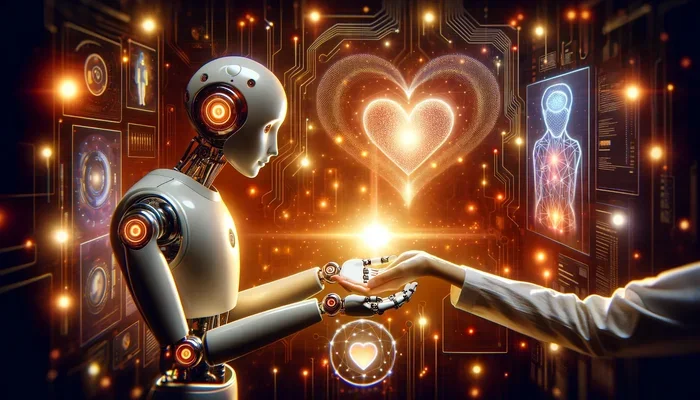
Can AI decode how we soothe others? This question is at the heart of a fascinating new field where artificial intelligence meets emotional intelligence. Researchers are building systems that can read our emotional cues and even suggest the best ways to comfort someone in distress. From sentiment analysis to affective computing, AI is learning to understand the subtle ways humans express care and compassion. This article explores what science says, how the technology works, and what it means for interpersonal relationships and emotional well-being.
Can AI decode how we soothe others? It sounds like something out of a science fiction movie. But the truth is, artificial intelligence is getting closer to understanding the ways we comfort the people around us. Think about the last time a friend was upset. You probably knew exactly what to say — or what not to say. That kind of emotional awareness feels effortless. But for a machine, it is incredibly complex.
Scientists and engineers are working hard to teach computers how to recognize emotional cues and respond with appropriate comfort. They call this field affective computing. It combines sentiment analysis, machine learning, and emotional intelligence to build systems that can sense how we feel. And the goal is not just to understand emotions. It is to help soothe others in meaningful ways.
This article dives deep into the science, the technology, and the real-world impact of AI empathy. Whether you are curious about emotional AI or wondering how this affects your interpersonal relationships, you will find clear answers here.
Key Takeaways
- AI can now detect emotional cues: Modern systems analyze voice tone, facial expressions, and text patterns to understand how people feel.
- Soothing is a complex human skill: AI is still learning the nuances of compassion, empathy, and context-aware comfort.
- Emotional AI has real-world uses: From mental health support to relationship coaching, AI tools are helping people connect better.
- Limitations exist: AI cannot fully replace human intuition, lived experience, or genuine emotional connection.
- The future is promising: As machine learning improves, AI will become a better companion in understanding and responding to human emotions.
📑 Table of Contents
What Does It Mean to Soothe Someone?
Before we explore AI, let us understand what soothing really means. When someone is upset, soothing is the act of helping them feel calmer, safer, or understood. It is not just about saying the right words. It involves nonverbal communication, timing, tone, and genuine care.
The Science Behind Soothing
Human beings are wired for connection. When we see someone in pain, our brain activates mirror neurons. These neurons help us feel what the other person feels. This is the foundation of empathy. We naturally adjust our behavior to help the other person feel better.
Soothing can take many forms:
- A gentle touch on the shoulder
- Listening without judgment
- Offering words of encouragement
- Simply being present and quiet
- Sharing a personal story that shows understanding
Each of these actions sends a powerful message: You are not alone. The challenge for AI is that soothing is deeply personal. What works for one person may not work for another. And context matters enormously.
How AI Reads Human Emotions
So how does AI emotion detection actually work? It relies on several technologies working together. Each one helps the system pick up on different emotional signals.
Facial Expression Analysis
AI systems can be trained to read facial expressions. They look at tiny muscle movements around the eyes, mouth, and forehead. These micro-expressions often reveal how a person truly feels, even when they are trying to hide it. Computer vision algorithms can detect a furrowed brow or a slight smile with remarkable accuracy.
However, facial expressions are not universal. Culture, personal history, and individual differences all shape how people express emotions. An AI system trained on one group of people might misinterpret the signals of another group.
Voice Tone and Speech Patterns
The way we speak carries a lot of emotional weight. AI sentiment analysis tools can examine pitch, speed, volume, and rhythm. A trembling voice might signal sadness. A sharp, rapid tone could indicate anger or anxiety. By analyzing these patterns, AI can build a picture of someone’s emotional state.
This technology is already being used in customer service. Companies use emotion AI to detect when a caller is frustrated. The system can then alert a human agent to step in and provide emotional support.
Text and Language Analysis
When we type messages, we leave behind emotional clues too. AI can analyze word choice, sentence length, punctuation, and even emojis to gauge mood. Natural language processing models can detect sadness, anger, joy, or fear in written text with impressive precision.
For example, if someone types “I just cannot deal with this anymore,” an AI system flags this as a potential distress signal. It can then suggest a supportive response or alert a caregiver.
Can AI Actually Suggest How to Soothe Others?
This is where things get really interesting. Can AI not only detect emotions but also recommend the best soothing techniques? The answer is yes — to a degree.
AI-Powered Coaching Tools
Several apps and platforms now offer AI-powered emotional coaching. These tools analyze a situation and suggest ways to respond. For instance, if you are chatting with a friend who is going through a breakup, the AI might suggest:
- “Try acknowledging their feelings first before offering solutions.”
- “A simple ‘I am here for you’ can go a long way.”
- “Avoid saying ‘everything happens for a reason’ — it can feel dismissive.”
These suggestions are based on patterns learned from thousands of compassionate conversations. The AI studies what works and what does not, then offers guidance accordingly.
Real-World Applications
The applications go beyond personal relationships. AI emotional support is being used in:
- Therapy and counseling: AI tools help therapists understand patient emotions between sessions
- Education: Teachers use emotion-aware systems to support struggling students
- Healthcare: Hospital systems detect patient distress and alert staff
- Workplace wellness: Companies monitor team morale and suggest interventions
Each of these areas benefits from AI’s ability to process large amounts of emotional data quickly and consistently.
Where AI Struggles With Soothing
Despite impressive progress, AI still has significant limitations when it comes to comforting others. Understanding these gaps is just as important as celebrating the advances.
Lack of Lived Experience
AI has never felt heartbreak. It has never grieved a loss or felt the relief of a friend’s kind words. This lack of lived emotional experience means AI can suggest the right words but cannot truly feel the weight behind them. People often need to know that the person comforting them understands from the inside, not just from data.
Context Is Everything
Soothing someone requires deep context. You need to know the history between the people involved, the specific situation, and the person’s unique needs. AI often misses these layers. It might suggest a generic response that feels hollow or even hurtful in a specific context.
For example, telling someone “just stay positive” might feel helpful in one moment and deeply dismissive in another. AI struggles with these subtle distinctions. This is why human judgment remains irreplaceable in emotional care.
Cultural and Individual Differences
Different cultures have different norms around emotional expression and comfort. In some cultures, direct physical comfort is expected. In others, giving space is more respectful. AI systems trained on limited data can easily make cultural missteps that cause more harm than good.
Similarly, each individual has unique attachment styles and emotional needs. Some people need reassurance. Others need solutions. AI systems are still learning to navigate this diversity with sensitivity.
The Future of AI and Emotional Comfort
Where is all of this heading? The future of AI empathy is both exciting and cautious. Researchers are working on more sophisticated models that can understand not just what people feel, but why they feel that way.
Hybrid Human-AI Support Systems
One promising direction is the human-AI partnership. Instead of replacing human comfort, AI can enhance it. A therapist might use AI insights to better understand a client’s emotional patterns. A friend might use AI suggestions to find the right words during a difficult conversation. The technology becomes a tool, not a replacement.
This approach respects the irreplaceable value of genuine human connection while leveraging AI’s speed and pattern recognition. It is a balanced path forward.
Ethical Considerations
As emotional AI grows, so do the ethical questions. Who owns the emotional data? How do we protect privacy? Can AI manipulation of emotions ever be justified? These are critical questions that the industry must address. Responsible development requires transparency, consent, and strong privacy protections.
Experts also warn against over-reliance on AI for emotional needs. Mental health is too important to outsource entirely to a machine. The goal should always be to use AI as a supplement to human care, not a substitute.
How This Affects Your Relationships
You might wonder, “What does all of this have to do with my daily life?” The answer is more relevant than you think. As emotional AI becomes more accessible, it will increasingly shape how we communicate and connect.
Imagine a tool that gently reminds you to listen more than you speak during a tough conversation. Or an app that helps you recognize when your partner needs space instead of advice. These are not distant fantasies. Many of these tools already exist in early forms.
But technology should never replace the core skills of compassionate communication. The best relationships are built on trust, presence, and genuine understanding. AI can support these efforts, but it cannot create them on its own.
If you want to strengthen your relationships without technology, start with simple practices. Practice active listening. Validate the other person’s feelings before jumping to solutions. And remember that sometimes the most powerful thing you can do is simply be present. For more on building healthy relationships, check out this article on how to deal with miscommunication and different love languages — understanding communication styles is a cornerstone of emotional connection.
Also, if you are navigating difficult family dynamics, learning to manage emotional responses is essential. You might find value in reading about how to manage homophobic family members toward a child, which explores how emotional awareness and patience can transform challenging relationships.
Finally, staying healthy and positive during personal challenges is key to being there for others. Check out how to stay healthy and positive in personal challenges for practical strategies that help you maintain your own emotional well-being while supporting those around you.
Final Thoughts
Can AI decode how we soothe others? The answer is a qualified yes. AI is making remarkable progress in detecting emotional signals and suggesting comforting responses. But true soothing goes beyond data and algorithms. It requires human warmth, lived experience, and genuine care.
The most powerful approach combines the best of both worlds. Use AI to sharpen your emotional awareness. Lean on technology to recognize patterns you might miss. But always trust your own heart to lead the way in moments that truly matter. The goal of emotional AI is not to replace human compassion. It is to help us become more mindful, more attentive, and more effective comforters in the lives of people we care about.
As this technology evolves, one thing remains constant: the human need to be understood and comforted. AI can help us meet that need more thoughtfully. But the soul of soothing will always be human.
Frequently Asked Questions
Can AI really understand human emotions?
AI can detect emotional patterns in data like facial expressions, voice tone, and text. However, it does not truly “understand” emotions the way humans do. It recognizes signals and makes predictions based on patterns, but it lacks genuine emotional experience and deep contextual awareness.
How accurate is AI at detecting emotions?
Current AI emotion detection systems achieve accuracy rates of around 70 to 85 percent in controlled settings. Accuracy drops in real-world scenarios due to cultural differences, individual variation, and subtle emotional cues that are hard to capture with sensors and algorithms alone.
Will AI replace human therapists or counselors?
No. AI can support mental health professionals by providing data insights and suggesting interventions. But it cannot replace the empathy, trust, and human connection that are essential to effective therapy. AI is a tool, not a substitute for genuine human care.
What are the risks of using AI for emotional support?
Key risks include privacy concerns, emotional manipulation, cultural misunderstandings, and over-reliance on technology for emotional needs. There is also the danger of AI giving inappropriate advice in sensitive situations, which is why human oversight remains critical.
How can I use AI to improve my emotional intelligence?
You can use AI-powered apps that provide feedback on your communication patterns, suggest empathetic responses, and help you recognize emotional cues in conversations. Use these tools as a learning aid, not a replacement for real-world practice and self-reflection.
Is emotional AI being used in everyday products right now?
Yes. Many customer service chatbots, mental health apps, and educational platforms already use basic forms of emotion AI. These systems analyze user input to detect mood and tailor responses accordingly. The technology is becoming more common and more sophisticated every year.
