

Navigating relationship conflicts effectively requires emotional intelligence, active listening, and a willingness to understand your partner’s perspective. This guide reveals expert-backed strategies for resolving disagreements constructively, transforming fights into opportunities for deeper connection and lasting intimacy.
Every couple experiences disagreements. It’s not the presence of conflict that damages relationships—it’s how partners navigate those difficult moments together. Learning the art of navigating relationship conflicts can transform your connection from fragile to unshakeable.
Think about the last time you and your partner disagreed. Did you feel heard? Did the conversation end with both of you feeling closer, or did it leave walls between you? The difference lies in approach. Most couples never learn healthy conflict resolution skills, so they repeat the same painful patterns over and over.
The good news? Anyone can learn these skills. Whether you’ve been together for six months or sixteen years, understanding how to handle disagreements constructively will change everything about your relationship. Let’s explore the strategies that actually work.
Key Takeaways
- Conflict is normal: Disagreements don’t signal a broken relationship—they’re opportunities for growth when handled with care and respect.
- Communication is the foundation: Active listening and “I” statements prevent defensiveness and create space for genuine understanding.
- Emotional regulation matters: Taking breaks during heated moments prevents escalation and allows both partners to respond thoughtfully.
- Patterns reveal root causes: Identifying recurring conflict themes helps couples address underlying issues rather than surface arguments.
- Repair attempts are essential: Small gestures of connection during disagreement can prevent long-term damage to the relationship.
- Professional help is valuable: Couples therapy provides tools and neutral guidance for persistent conflict patterns.
- Boundaries protect the relationship: Establishing ground rules for fighting fair keeps conflicts productive rather than destructive.
📑 Table of Contents
- Why Conflict Happens in Every Relationship
- The Communication Foundation for Resolving Disagreements
- Emotional Regulation During Heated Moments
- Identifying Your Conflict Patterns and Triggers
- Proven Strategies for Constructive Conflict Resolution
- When Conflict Signals Deeper Problems
- Building a Conflict-Resilient Relationship
- Conclusion: Conflict as a Pathway to Deeper Connection
Why Conflict Happens in Every Relationship
Conflict isn’t a sign that something is wrong. It’s a natural result of two different people sharing a life together. You have different backgrounds, different personalities, and different ways of seeing the world. Those differences create friction sometimes.
The Real Sources of Disagreement
Most couples think they argue about money, chores, or in-laws. But those are just the surface topics. The real conflicts usually run deeper:
- Unmet emotional needs — feeling unappreciated, unseen, or unsupported
- Different communication styles — one partner wants to talk immediately while the other needs space
- Fear of vulnerability — protecting yourself instead of opening up honestly
- Unspoken expectations — assuming your partner should just “know” what you need
- Past hurt and resentment — old wounds that never fully healed
When you understand what’s really driving the disagreement, you can address the root cause instead of fighting about the same thing forever. Many partners discover that their emotional needs you should never ignore are at the heart of recurring arguments.
Why Avoiding Conflict Makes Things Worse
Some couples pride themselves on “never fighting.” But silence isn’t peace—it’s avoidance. When you sweep issues under the rug, resentment builds quietly. Eventually, that resentment explodes over something trivial.
Healthy conflict actually strengthens relationships. It creates opportunities for deeper understanding, clearer boundaries, and genuine intimacy. The goal isn’t to eliminate disagreement. It’s to handle it in ways that bring you closer together.
The Communication Foundation for Resolving Disagreements

Visual guide about couple resolving conflict
Image source: cdn.psychologytoday.com
Communication sits at the heart of every conflict resolution strategy. Without it, even the best techniques fall apart. Building strong communication habits gives couples the foundation they need to work through difficult moments.
Active Listening: The Most Underrated Skill
Most people listen to respond, not to understand. Active listening flips that entirely. It means giving your full attention, putting aside your rebuttal, and truly trying to see things from your partner’s perspective.
Here’s how to practice active listening:
- Make eye contact and put your phone away completely
- Nod and use verbal cues like “I hear you” or “Tell me more”
- Reflect back what you heard — “So what I’m hearing is that you felt ignored when I worked late without telling you”
- Ask clarifying questions before sharing your own viewpoint
- Validate their feelings even if you disagree with their interpretation
When people feel genuinely heard, their defensiveness drops significantly. They become more open to hearing your side too.
Using “I” Statements Instead of “You” Accusations
The words you choose during conflict matter enormously. “You” statements put your partner on the defensive immediately. Compare these two approaches:
- “You” statement: “You never help around the house. You’re so lazy.”
- “I” statement: “I feel overwhelmed when I handle all the household tasks alone. I need us to share the responsibilities more equally.”
The second approach expresses your feelings without attacking character. It opens the door to collaboration instead of combat. This is one of the most important relationship communication mistakes to avoid if you want a healthy partnership.
Timing and Setting Matter More Than You Think
Not every moment is right for a difficult conversation. Trying to resolve a conflict when one partner is exhausted, hungry, or stressed rarely ends well. Choose a time when both of you are calm and can give the conversation your full attention.
Avoid having serious discussions:
- Right before bed when you’re both tired
- During work hours when stress is already high
- In public places where you can’t speak freely
- When either of you has been drinking
Emotional Regulation During Heated Moments
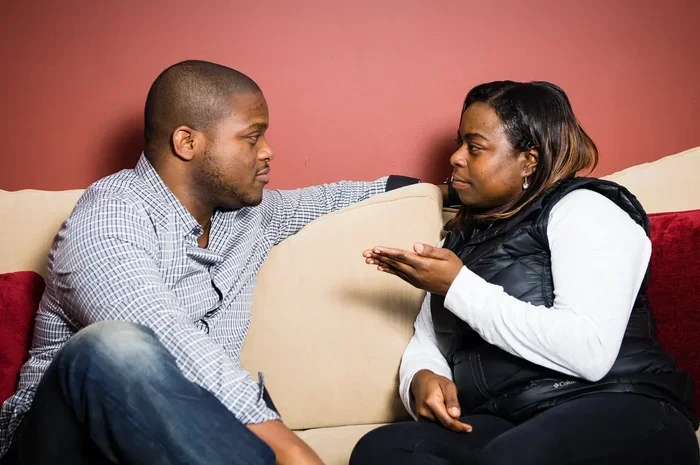
Visual guide about couple resolving conflict
Image source: gymbag4u.com
When conflict escalates, your nervous system kicks into fight-or-flight mode. Your heart rate increases, your thinking brain shuts down, and your emotional brain takes over. In this state, productive conversation becomes nearly impossible.
Recognizing When You’re Flooded
Emotional flooding happens when feelings become so intense that rational thinking disappears. Signs include:
- Rapid heartbeat and shallow breathing
- Feeling overwhelmed or unable to think clearly
- Urge to attack, defend, or shut down completely
- Saying things you don’t mean or will regret later
When you notice these signs, it’s time to pause. Not to avoid the conversation, but to return to it when you can actually engage productively.
The Power of the Strategic Break
Taking a break during heated conflict isn’t running away—it’s a mature strategy. Agree on a signal or phrase that either partner can use when they need space. Something like “I need twenty minutes to calm down so I can really hear you.”
During the break:
- Don’t rehearse your arguments or plan your counterattack
- Do take a walk, breathe deeply, or journal your feelings
- Focus on calming your nervous system, not winning the argument
- Return to the conversation when you feel ready to listen
Breathing Techniques That Actually Work
Simple breathing exercises can bring your nervous system back to baseline within minutes:
- Box breathing: Inhale for 4 counts, hold for 4, exhale for 4, hold for 4
- Extended exhale: Inhale for 4 counts, exhale for 8 counts
- Grounding breath: Focus on the physical sensation of air moving through your body
These techniques activate your parasympathetic nervous system, which calms your body’s stress response. They’re simple but incredibly effective.
Quick Tip: The 24-Hour Rule for Minor Issues
Not every disagreement needs immediate resolution. For minor annoyances, give yourself 24 hours before bringing it up. Often, you’ll realize the issue wasn’t as significant as it felt in the moment. If it still bothers you after 24 hours, address it calmly.
Identifying Your Conflict Patterns and Triggers

Visual guide about couple resolving conflict
Image source: focusonthefamily.com
Every couple has recurring themes in their disagreements. One argument about dishes might actually be about feeling respected. A fight about spending might really be about security and trust.
Mapping Your Recurring Arguments
Grab a notebook and answer these questions together:
- What topics do we argue about most frequently?
- What emotions come up during these disagreements?
- What patterns do we notice in how conflicts start and escalate?
- What unresolved issues keep resurfacing in different forms?
Understanding these patterns helps you address root causes instead of endlessly debating surface topics. Many couples find that regular relationship check-in questions help them identify patterns before they escalate into major conflicts.
Understanding Your Personal Triggers
Your triggers are emotional buttons that, when pushed, cause intense reactions. They’re often connected to past experiences—childhood wounds, previous relationship trauma, or deep insecurities.
Common triggers include:
- Feeling dismissed or ignored — connected to past experiences of being unheard
- Feeling controlled — rooted in experiences of losing autonomy
- Feeling abandoned — linked to attachment wounds from early relationships
- Feeling criticized — connected to perfectionism or childhood conditional love
When you understand your triggers, you can communicate them to your partner. Instead of reacting explosively, you might say “I’m feeling triggered right now because this reminds me of feeling dismissed in my family. Can we slow down?”
The Role of Attachment Styles in Conflict
Your attachment style significantly influences how you handle disagreement:
- Secure: Comfortable with conflict, able to express needs directly
- Anxious: May pursue and escalate to get reassurance and connection
- Avoidant: May withdraw and shut down to protect themselves
- Fearful: May alternate between pursuing and withdrawing unpredictably
Understanding both your attachment styles helps you make sense of seemingly irrational reactions. It creates compassion instead of frustration.
Proven Strategies for Constructive Conflict Resolution
Once you have the communication foundation and emotional awareness in place, specific strategies can help you resolve disagreements effectively.
The Speaker-Listener Technique
This structured approach ensures both partners feel heard:
- One person speaks while the other listens without interrupting
- The listener paraphrases what they heard: “What I’m hearing you say is…”
- The speaker confirms or clarifies: “Yes, that’s right” or “Not exactly, what I meant was…”
- Switch roles and repeat the process
- Only after both feel heard do you move toward problem-solving
This technique slows down the conversation and prevents the common pattern of both people talking past each other.
Finding the Third Option
Most couples approach conflict as if there are only two outcomes: I win or you win. But healthy resolution seeks a third option where both partners get their core needs met.
Ask yourselves together:
- What do I really need here? (Not what do I want, but what do I need?)
- What does my partner really need?
- What solution could honor both of our needs?
Sometimes this requires creative thinking. Maybe you can’t both get exactly what you want, but you can find an approach that respects both perspectives.
The Importance of Repair Attempts
Repair attempts are small gestures that de-escalate tension during conflict. They might be:
- A gentle touch on the arm
- A moment of humor to break the tension
- Saying “I love you even when we disagree”
- Admitting “I’m sorry I raised my voice”
- Acknowledging “You have a point about that”
Research shows that successful couples make and accept repair attempts regularly. These small moments of connection during disagreement prevent conflicts from causing lasting damage.
Common Mistake: Bringing Up Past Issues
During heated moments, it’s tempting to bring up every past grievance. But this overwhelms the conversation and prevents resolution of the current issue. Stay present-focused. If past issues keep resurfacing, they deserve their own dedicated conversation—not to be weaponized during unrelated disagreements.
When Conflict Signals Deeper Problems
Sometimes persistent conflict indicates that something more serious is happening in the relationship. Recognizing these signs early can prevent further damage.
Signs That Conflict Has Become Destructive
Healthy conflict builds understanding. Destructive conflict tears down connection. Watch for these warning signs:
- Contempt: Mocking, eye-rolling, or treating your partner with disrespect
- Stonewalling: Completely shutting down and refusing to engage
- Defensiveness: Never accepting any responsibility for problems
- Personal attacks: Attacking character instead of addressing behavior
- Bringing up issues in public: Humiliating your partner in front of others
These patterns, especially contempt, are among the strongest predictors of relationship breakdown. If you recognize these patterns in your relationship, it’s important to address them seriously.
When to Seek Professional Help
Couples therapy isn’t just for relationships in crisis. It’s valuable whenever you feel stuck in patterns you can’t break alone. Consider seeking help when:
- You have the same argument repeatedly with no resolution
- One or both partners have stopped trying to communicate
- Conflict is affecting your mental or physical health
- You’re considering separation but want to explore all options
- There’s been infidelity, addiction, or other major betrayals
li>Trust has been significantly damaged
A skilled couples therapist provides tools, perspective, and a safe space for difficult conversations. There’s no shame in getting help—it shows commitment to your relationship.
Knowing When to Walk Away
Sometimes the healthiest form of conflict resolution is recognizing that the relationship itself is the problem. If your partner refuses to engage in healthy communication, if there’s abuse or persistent contempt, or if you’ve grown in fundamentally different directions, leaving might be the right choice.
Walking away from a relationship that’s not working takes courage. But staying in a situation that consistently damages your wellbeing helps no one. If you’re facing this difficult decision, understanding how to walk away from a relationship that’s not working with dignity and self-respect is essential.
Building a Conflict-Resilient Relationship
The ultimate goal isn’t to never disagree—it’s to build a relationship strong enough to weather any storm. That resilience comes from daily practices, not just crisis management.
Daily Practices That Prevent Major Conflicts
Small consistent actions create a foundation of goodwill that makes conflicts easier to navigate:
- Express appreciation daily — notice and acknowledge what your partner does
- Ask about their day and actually listen to the answer
- Physical affection — hugs, kisses, and touch maintain connection
- Check in regularly about how the relationship is going
- Assume positive intent — give your partner the benefit of the doubt
These practices build up emotional reserves. When conflict arises, you’re drawing from a well of goodwill instead of resentment.
Creating Your Relationship’s Conflict Guidelines
Every couple should establish their own ground rules for fighting fair. Sit down during a calm moment and agree on boundaries:
- No name-calling or character attacks
- No threatening to leave during arguments
- No involving family or friends in private disagreements
- Take breaks when needed but always return to the conversation
- Stay on one topic at a time
- No physical intimidation — ever
Having agreed-upon rules removes ambiguity during heated moments. You can reference them: “Remember, we agreed no name-calling. Let’s try that again.”
Expert Insight: The Magic Ratio
Relationship researcher John Gottman discovered that stable, happy couples maintain a ratio of at least five positive interactions for every negative one during conflict. This doesn’t mean avoiding disagreement—it means balancing difficult conversations with genuine warmth, humor, and affection.
Those five positives can be:
- A compliment or expression of appreciation
- A shared laugh
- A gentle touch
- Expressing empathy or understanding
- A small act of service or kindness
Conclusion: Conflict as a Pathway to Deeper Connection
Navigating relationship conflicts isn’t about winning arguments or avoiding disagreements. It’s about creating a relationship where both partners feel safe enough to be honest, brave enough to be vulnerable, and committed enough to work through difficult moments together.
The couples who thrive aren’t the ones who never fight. They’re the ones who fight fair, repair quickly, and use every disagreement as an opportunity to understand each other more deeply.
Start implementing these strategies today. Practice active listening in your next conversation. Take a break when you feel flooded. Express appreciation for something small. These seemingly simple actions compound over time, creating a relationship that doesn’t just survive conflict—it grows stronger because of it.
Your next disagreement doesn’t have to damage your relationship. With the right tools and mindset, it could be the moment that brings you closer than ever before.
Frequently Asked Questions
What is Navigating Relationship Conflicts?
Navigating Relationship Conflicts is an important topic with many practical applications.
