

Jane Elliott’s blue eyes brown eyes experiment remains one of the most powerful demonstrations of how prejudice works and how quickly discrimination can divide people. This groundbreaking classroom exercise, conducted the day after Martin Luther King Jr.’s assassination, showed third-grade children the devastating effects of racism in just one afternoon. In this article, you’ll learn exactly how the experiment worked, why it still matters today, and what we can all learn from it about combatting bias in our own lives.
Imagine walking into your classroom on a Friday morning, sitting with your best friend, and within minutes being told you’re either better or worse than them — not because of anything you did, but simply because of your eye color. That’s exactly what happened in a small town in Iowa in 1968, and the ripple effects of that single day continue to shape how we understand prejudice, discrimination, and bias more than fifty years later.
Jane Elliott’s blue eyes brown eyes experiment wasn’t just a classroom activity. It was a radical act of teaching that proved how easily humans adopt discriminatory behavior when given permission by authority. Her simple yet profound exercise demonstrated that racism isn’t natural — it’s learned, and it can be taught in a matter of minutes. Whether you’re a teacher, a parent, or someone trying to understand how bias works in everyday life, this story has powerful lessons for everyone.
Key Takeaways
- The experiment began in 1968: Jane Elliott conducted her famous exercise the day after Martin Luther King Jr. was assassinated in her all-white third-grade class in Riceville, Iowa.
- Children transformed within hours: Kids who played together minutes earlier became cruel and divided based solely on eye color.
- Academic performance shifted: Children in the “superior” group performed better on tests, while the “inferior” group’s scores dropped dramatically.
- The lesson went global: Elliott later adapted the exercise for adults in corporate diversity training and anti-racism workshops worldwide.
- It reveals how arbitrary prejudice is: The experiment proves that discrimination has nothing to do with actual ability and everything to do with perceived status.
- Empathy is the antidote: By experiencing discrimination firsthand, participants develop deep empathy for those who face it daily.
- The exercise remains controversial: Critics question the ethics of using children, while supporters argue its impact justifies the approach.
📑 Table of Contents
- Who Is Jane Elliott?
- How the Blue Eyes Brown Eyes Experiment Worked
- Why the Experiment Became Famous
- The Exercise Goes Corporate: Diversity Training for Adults
- What Science Says About the Experiment
- Criticisms and Ethical Concerns
- What We Can Learn From the Experiment Today
- Jane Elliott’s Lasting Legacy
Who Is Jane Elliott?
Jane Elliott was an ordinary third-grade teacher in Riceville, Iowa, who became an extraordinary force for social change. In 1968, she taught in an all-white, small-town classroom where her students had little exposure to people of different races or backgrounds. She was, by her own admission, not particularly aware of racial issues herself — until one tragic event changed everything.
The Night That Changed Everything
On April 4, 1968, Martin Luther King Jr. was assassinated in Memphis, Tennessee. Elliott remembers trying to explain to her eight-year-old students why this important leader had been killed. She struggled to make them understand the depth of racial hatred in America. Her students, living in a nearly all-white community, simply couldn’t grasp why someone would be murdered because of their skin color.
The next morning, Elliott made a decision that would define her career and impact millions of lives. She decided that talking about discrimination wasn’t enough. Her students needed to experience it firsthand. She needed to find a way to make prejudice tangible, personal, and unforgettable for children who had never encountered racism in their daily lives.
This decision came from frustration, yes, but also from a deep conviction that silence and ignorance were part of the problem. Elliott believed that if she could make her students feel what discrimination was like, even for a few hours, they would carry that understanding with them for the rest of their lives.
How the Blue Eyes Brown Eyes Experiment Worked
The mechanics of the exercise were deceptively simple, which is part of what made it so powerful. Elliott didn’t need special equipment, a laboratory, or complex materials. She just needed authority, a classroom, and the willingness to be bold.
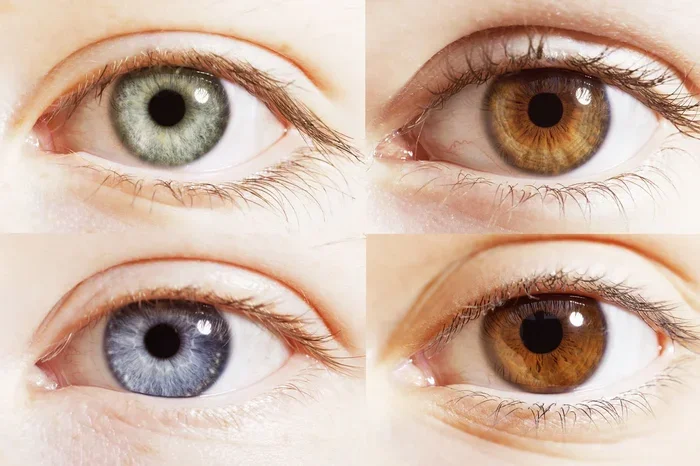
Visual guide about children different eye colors
Image source: facts.net
Day One: Blue Eyes Superior
On that Friday morning, Elliott told her class that scientists had discovered something important. She announced that children with blue eyes were smarter, cleaner, and better than children with brown eyes. She explained this as scientific fact, delivering it with the same confidence and authority she used when teaching math or reading.
At first, the children were skeptical. Some laughed. But Elliott was persistent and firm. She told the brown-eyed children they couldn’t use the water fountain. They had to use paper cups instead. She told them they couldn’t play with blue-eyed children on the playground. She gave the blue-eyed children extra recess time and let them go through the lunch line first.
The blue-eyed children quickly embraced their new status. They became bossy, arrogant, and exclusionary. They reminded brown-eyed children of their “inferiority” at every opportunity. Meanwhile, the brown-eyed children became withdrawn, sad, and submissive. Even the smartest brown-eyed students began doubting themselves.
The Academic Results Were Staggering
Perhaps the most disturbing finding came from academic performance. When the brown-eyed children took a timed reading test, they took longer and made more errors than they had previously. When the blue-eyed children took the same test, they finished faster and performed better than before. The only thing that had changed was how they perceived themselves based on Elliott’s arbitrary declaration.
This proved something profound about how stereotype and social expectation shape actual ability. When children were told they were inferior, their performance dropped. When told they were superior, their performance rose. The exercise showed that discrimination doesn’t just hurt feelings — it actively diminishes human potential.
Day Two: The Tables Turn
The following Monday, Elliott reversed the exercise. She told the class that she had made a mistake. Actually, brown-eyed children were superior. The same dynamics played out in reverse, with the former “inferior” group now treating the former “superior” group with the same cruelty they had just experienced.
When Elliott finally revealed the truth — that eye color meant nothing, and the whole exercise was a lesson about discrimination — the children hugged each other and cried. They had learned something no textbook could teach them. They had felt the sting of prejudice in their own bodies and hearts.
Why the Experiment Became Famous
The exercise might have remained a local classroom story if not for one pivotal moment. A local newspaper covered the story, and it was picked up by the Associated Press. Soon, Jane Elliott appeared on The Tonight Show with Johnny Carson. The response was intense and divided.
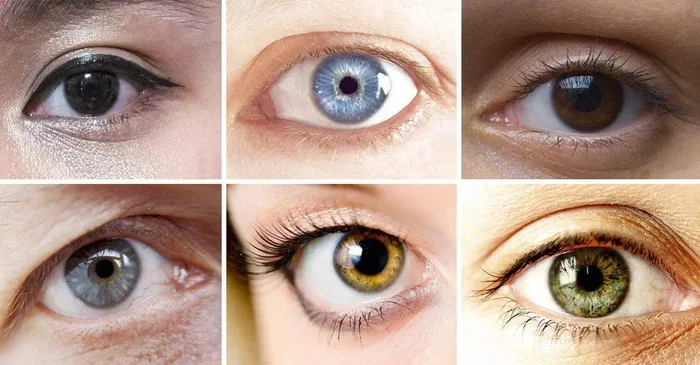
Visual guide about children different eye colors
Image source: cdn.zmescience.com
National Attention and Backlash
Many viewers were outraged. They called Elliott cruel and accused her of traumatizing children. Her community in Riceville turned against her. Parents were angry. Fellow teachers shunned her. She received hate mail and threats. But the attention also brought something else — recognition that this exercise worked.
Elliot had documented the results. She could show that children who went through the exercise scored better on empathy measures and showed greater awareness of discrimination. The children themselves reported that they understood racism in a way they never could have through lectures or textbooks.
The Famous ABC Documentary
In 1970, ABC produced a documentary called “The Eye of the Storm” that captured the original exercise on film. This documentary brought Elliott’s work to an even wider audience and cemented the experiment in American cultural memory. It showed the world exactly how quickly children could be turned against each other — and how powerfully they responded when the truth was revealed.
The documentary remains one of the most powerful educational films ever made. It has been used in schools, universities, and training programs for decades. Its impact lies in its raw authenticity — these weren’t actors. They were real children experiencing real emotions, and that authenticity makes the lesson impossible to ignore.
The Exercise Goes Corporate: Diversity Training for Adults
In 1985, Elliott adapted her exercise for adults in a now-famous scene from a PBS Frontline documentary called “A Class Divided.” This time, the participants weren’t children — they were adult employees at a state correctional facility in New York.

Visual guide about children different eye colors
Image source: i.dailymail.co.uk
Adults React the Same Way
The results were remarkably similar to the children’s exercise. Within minutes, the blue-eyed adults began dominating conversations, dismissing brown-eyed colleagues, and exhibiting the same arrogance the children had shown. The brown-eyed adults became passive, frustrated, and visibly upset. Many reported feeling genuinely distressed.
One of the most striking findings was that educated, well-meaning adults were just as susceptible to discriminatory behavior as children. Despite knowing intellectually that prejudice was wrong, when placed in a system that rewarded one group over another, they fell into the same patterns. This challenged the assumption that racism was primarily a problem of ignorance or malice.
Corporate and Government Adoption
Following the Frontline documentary, Elliott’s exercise was adopted by corporations, government agencies, military organizations, and nonprofits around the world. Companies like General Electric, Exxon, IBM, and the FBI brought her in to conduct workshops with their employees. The exercise became a cornerstone of diversity and inclusion training in America.
Elliott argued that traditional diversity training often failed because it appealed only to the intellect. People could sit through a presentation about bias and agree it was wrong, then go back to their daily lives unchanged. Her exercise bypassed the intellect and went straight to the emotional and experiential. People didn’t just understand discrimination — they felt it.
What Science Says About the Experiment
While Elliott’s exercise is primarily experiential rather than controlled scientific research, its findings align closely with established principles in social psychology and educational research.
Stereotype Threat and Performance
The decline in brown-eyed children’s test scores mirrors what psychologist Claude Steele identified as “stereotype threat” — the phenomenon where people perform worse when they’re aware of negative stereotypes about their group. Steele’s research, conducted at Stanford University, showed that simply reminding people of their group identity before a test could significantly impact their scores.
Elliott’s experiment was essentially a dramatic demonstration of stereotype threat in action. When children were labeled inferior, their performance suffered. When the label was removed or reversed, their performance recovered. This showed that expectations and social labels have measurable effects on cognitive performance.
The Power of Authority
The exercise also demonstrated the power of authority figures in shaping behavior. This aligns with Stanley Milgram’s famous obedience experiments, which showed that ordinary people would administer what they believed were dangerous electric shocks simply because an authority figure told them to. In Elliott’s classroom, the children accepted the eye color hierarchy because their teacher — a trusted authority — presented it as fact.
This finding has profound implications for how we think about systemic discrimination. When institutions, leaders, and authority figures endorse or reinforce prejudice, ordinary people follow along, often without questioning it. The exercise showed that discrimination isn’t just about individual hatred — it’s about systems and authority.
In-Group and Out-Group Dynamics
The rapid formation of in-group and out-group behavior in Elliott’s exercise reflects what social psychologists call “social identity theory.” This theory suggests that people naturally categorize themselves and others into groups, and they favor their own group over others. What Elliott’s exercise showed is how quickly and arbitrarily these groups can form — even based on something as meaningless as eye color.
This research helps explain why discrimination can emerge so rapidly in any context. Given even the smallest distinction and the slightest permission from authority, humans will create hierarchies and treat others differently. The exercise was a mirror held up to human nature, and what it reflected was both uncomfortable and essential to understand.
Criticisms and Ethical Concerns
Despite its powerful impact, the blue eyes brown eyes experiment has faced significant criticism over the decades. These concerns deserve honest examination.
Was It Ethical to Use Children?
The most common criticism centers on the ethics of subjecting children to distress without their informed consent. The children didn’t know they were participating in an experiment. They genuinely believed they were inferior or superior based on their eye color. Some psychologists argue that this caused real emotional harm, even if the long-term effects were positive.
Elliott has consistently defended her approach, arguing that the lesson’s value outweighed the temporary discomfort. She points to follow-up studies showing that former participants retained the empathy and awareness they gained. Many of her original students have publicly stated that the exercise was the most important lesson of their lives.
Does the Lesson Last?
Some critics question whether the emotional impact of the exercise translates into lasting behavioral change. Can a two-day experience really change deeply held attitudes and lifelong patterns of behavior? Research on this question is mixed. Some studies suggest that experiential learning creates more lasting change than passive instruction. Others argue that without ongoing reinforcement, the effects fade over time.
Elliott herself acknowledges that the exercise alone isn’t enough. She advocates for ongoing education and dialogue about race, bias, and discrimination. The exercise is a beginning, not an end — a catalyst for deeper learning rather than a complete solution.
Oversimplification Concerns
Some scholars worry that the exercise oversimplifies racism by reducing it to individual prejudice. Real-world discrimination involves historical, economic, institutional, and systemic factors that can’t be captured in a classroom exercise. By focusing on individual behavior, the exercise might give participants the impression that racism is simply a matter of personal attitudes rather than embedded structural inequality.
This is a valid concern. The exercise works best as part of a broader educational program that addresses systemic and historical dimensions of racism. Used in isolation, it might leave participants with an incomplete understanding of how discrimination actually operates in society.
What We Can Learn From the Experiment Today
More than fifty years after that Friday morning in Riceville, Iowa, the lessons of Elliott’s exercise remain urgently relevant. Here’s what we can take away from this powerful demonstration.
Bias Is Learned Quickly
The exercise proves that prejudice doesn’t require years of indoctrination. Children adopted discriminatory behavior within minutes of being told to do so. This should make us all more aware of the messages we send — through our words, our policies, and our institutions — about who matters and who doesn’t.
Authority Shapes Behavior
When people in power endorse prejudice, others follow. This means that leaders, teachers, managers, and public figures have a responsibility to be conscious of the messages they send. The experiment shows that silence and neutrality in the face of bias are not neutral — they’re complicity.
Empathy Can Be Taught
Perhaps the most hopeful finding is that empathy can be cultivated through experience. People who went through Elliott’s exercise reported deeper understanding and greater compassion for those who face discrimination. This suggests that well-designed experiences can be powerful tools for building a more just and compassionate society.
Small Differences Create Big Divides
The fact that eye color — a completely meaningless distinction — was enough to create hostility and hierarchy should make us question all the arbitrary categories we use to divide people. Race, ethnicity, gender, religion, and other social categories function in much the same way. They’re real in their consequences, but the hierarchies we build on them are human inventions, not natural laws.
Jane Elliott’s Lasting Legacy
Jane Elliott continued conducting her exercise well into her eighties, adapting it for new generations and new contexts. She became one of the most recognized diversity trainers in the world, speaking to audiences across the globe. Her work inspired countless educators, activists, and organizations to take experiential approaches to teaching about bias.
In 2019, the United States Postal Service honored her with a stamp in the Distinguished Americans series. In 2016, she was named one of BBC’s 100 Women. Her original students, now in their sixties, have reunited multiple times to reflect on the experience and its lasting impact on their lives.
Elliott’s legacy isn’t just about one classroom exercise. It’s about the principle that real understanding requires more than information — it requires experience, empathy, and the willingness to confront uncomfortable truths. Her work challenges all of us to look at our own biases, question the systems we participate in, and take personal responsibility for creating a more equitable world.
The blue eyes brown eyes experiment remains one of the most powerful demonstrations ever created of how prejudice works and why it matters. It reminds us that discrimination is not natural, inevitable, or excusable. It’s a choice — and because it’s a choice, it can be unlearned. That’s a lesson worth teaching, worth learning, and worth remembering every single day.
Frequently Asked Questions
What exactly did Jane Elliott do in the blue eyes brown eyes experiment?
Jane Elliott divided her all-white third-grade class into two groups based on eye color. She told them that blue-eyed children were superior, giving them privileges while restricting brown-eyed children. The next day, she reversed the roles to give both groups the experience of being discriminated against.
Where did the blue eyes brown eyes experiment take place?
The experiment took place in Riceville, Iowa, in a small, predominantly white farming community. Elliott taught third grade at the local elementary school, and her students had very little exposure to people of different racial backgrounds.
Why did Jane Elliott create this exercise?
Elliott created the exercise the day after Martin Luther King Jr. was assassinated in 1968. She struggled to explain racism to her students and realized they needed to experience discrimination firsthand to truly understand its impact and cruelty.
Did the children’s academic performance really change?
Yes. When children were labeled inferior, their test scores dropped and they took longer to complete work. When labeled superior, their performance improved. This demonstrated how social expectations and stereotypes directly affect cognitive ability and academic achievement.
Is the blue eyes brown eyes experiment still used today?
Yes. Jane Elliott continued conducting versions of the exercise with adults for decades. The exercise has been adapted for corporate diversity training, government agencies, military organizations, and educational institutions worldwide. However, its use has become more selective due to ethical concerns.
What are the main criticisms of the experiment?
Main criticisms include concerns about the ethics of subjecting children to distress without informed consent, questions about whether the lesson creates lasting behavioral change, and worries that it oversimplifies racism by focusing on individual prejudice rather than systemic inequality.
