
Piagets Theory Of Moral Development explains how children progress from rigid rule-following to understanding fairness, intentions, and ethical principles. This groundbreaking framework by Jean Piaget reveals that moral reasoning evolves through distinct stages shaped by cognitive growth and social interaction. Understanding these stages helps us build healthier relationships and make better decisions.
Have you ever wondered why some people seem stuck in black-and-white thinking while others embrace nuance and empathy? The answer might trace back to childhood moral development. Piagets Theory Of Moral Development offers a fascinating lens for understanding how we learn right from wrong.
This isn’t just academic knowledge. It directly impacts how we form relationships, resolve conflicts, and connect with others. When you understand how moral reasoning develops, you gain powerful insight into human behavior.
Jean Piaget didn’t just study how children think. He uncovered how they develop their entire moral compass. His discoveries remain profoundly relevant for anyone seeking deeper self-awareness and stronger connections.
Key Takeaways
- Two Main Stages: Piaget identified heteronomous morality (ages 4-7) and autonomous morality (ages 10+) as the primary phases of moral development.
- Intentions Matter: Young children judge actions by outcomes, while older children consider intentions and circumstances.
- Peer Influence: Interactions with peers accelerate moral development more than adult authority alone.
- Cognitive Growth Required: Moral advancement depends on overall cognitive maturation and perspective-taking abilities.
- Practical Applications: This theory improves parenting, education, and how we navigate ethical dilemmas in relationships.
- Foundation for Future Research: Piaget’s work inspired Lawrence Kohlberg and modern moral psychology studies.
- Relevance Today: Understanding moral stages helps decode conflict patterns and communication breakdowns in adult relationships.
📑 Table of Contents
- Who Was Jean Piaget And Why Does His Theory Matter?
- The Two Stages Of Moral Development According To Piaget
- How Piaget Studied Moral Development In Children
- Key Concepts In Piagets Theory Of Moral Development
- Practical Applications Of Piagets Theory Today
- Criticisms And Limitations Of Piagets Theory
- How Piaget’s Theory Connects To Modern Moral Psychology
- Applying Moral Development Insights To Everyday Life
- Common Misconceptions About Moral Development
- Conclusion: The Enduring Value Of Understanding Moral Development
Who Was Jean Piaget And Why Does His Theory Matter?
Jean Piaget was a Swiss psychologist who revolutionized our understanding of childhood cognitive development. Born in 1896, he spent decades observing how children think, reason, and make sense of the world around them.
His work changed everything we assumed about young minds. Children aren’t just miniature adults. They think in fundamentally different ways at different ages.
The Foundation of Piaget’s Moral Research
Piaget’s interest in moral development began with a simple observation. He watched children playing marbles and noticed something fascinating. Younger children followed rules rigidly. Older children adapted rules collaboratively.
This observation sparked years of research. Piaget studied how children judged lying, cheating, fairness, and punishment. He presented children with moral dilemmas and listened carefully to their reasoning.
His methodology was revolutionary. Rather than asking right-or-wrong questions, he explored why children made their judgments. This approach revealed the underlying logic of moral thinking.
Why This Theory Still Resonates
You might wonder why a theory from the 1930s matters today. The answer is simple. Piaget identified patterns that remain consistent across cultures and generations.
Understanding Piagets Theory Of Moral Development helps in countless practical situations:
– Parenting: Knowing what moral concepts children can grasp at different ages
– Education: Creating age-appropriate discussions about ethics and fairness
– Relationships: Understanding why partners sometimes clash over moral issues
– Self-growth: Recognizing your own moral reasoning patterns
Many people struggle with relationship conflicts rooted in different moral perspectives. When one partner sees situations in absolute terms while another considers context and intent, frustration follows. Understanding these developmental differences creates empathy and better communication.
The Two Stages Of Moral Development According To Piaget
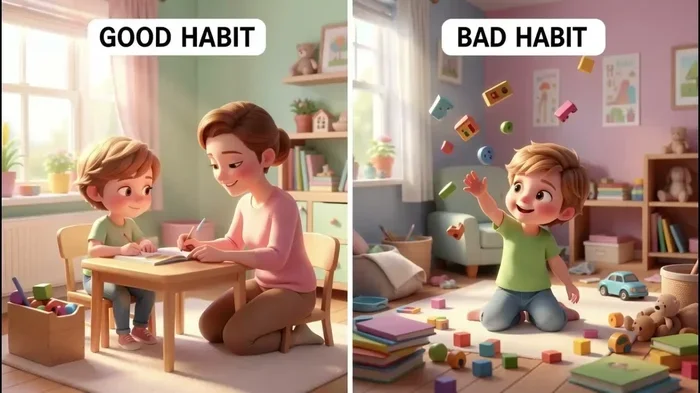
Visual guide about children learning right wrong
Image source: i.ytimg.com
Piaget identified two major stages of moral development. Each stage represents a fundamentally different way of understanding rules, justice, and ethical behavior.
Stage One: Heteronomous Morality (Ages 4-7)
The first stage is called heteronomous morality, also known as moral realism. During this phase, children view rules as fixed, unchangeable, and handed down by authority figures.
Key characteristics of this stage include:
– Rules are sacred: Children believe rules come from parents, teachers, or God and cannot be modified
– Outcome-based judgment: Actions are judged by their consequences, not intentions
– Immanent justice: Children believe punishment automatically follows wrongdoing
– Egocentric perspective: Difficulty seeing situations from others’ viewpoints
– Severity equals wrongness: Bigger consequences mean bigger moral violations
A Classic Example
Piaget presented children with this scenario: One boy accidentally breaks fifteen cups while trying to help his mother. Another boy breaks one cup while sneaking cookies.
Young children consistently judged the first boy as naughtier. He broke more cups. The intention behind the action didn’t matter yet. This reveals how heteronomous morality focuses entirely on outcomes.
Stage Two: Autonomous Morality (Ages 10 and Older)
The second stage is called autonomous morality, or morality of cooperation. This stage emerges as children develop cognitive abilities and gain more peer interactions.
Key characteristics include:
– Rules are flexible: Children understand rules are created by people and can be changed through mutual agreement
– Intent matters: Judgments consider motives, circumstances, and context
– Reciprocal justice: Fairness means considering everyone’s needs and perspectives
– Relativism: Recognizing that different situations may require different approaches
– Equality over authority: Valuing peer equality more than blind obedience
The Same Example Revisited
Older children presented with the cup-breaking scenario reach different conclusions. They understand the boy trying to help made an accident. The boy sneaking cookies was doing something wrong intentionally.
This shift represents profound cognitive growth. Children now weigh intentions alongside outcomes. They grasp context, motivation, and circumstance.
The Transition Between Stages
The shift between stages doesn’t happen overnight. It occurs gradually between ages 7 and 10. Several factors drive this transition:
– Cognitive maturation: Developing ability to consider multiple perspectives simultaneously
– Peer interactions: Learning through cooperation, negotiation, and conflict with equals
– Decentering: Moving beyond egocentric thinking to understand others’ viewpoints
– Experience: Accumulating real-world situations that challenge rigid moral thinking
This transition period is crucial. Children begin questioning absolute rules. They notice inconsistencies in how adults enforce fairness. They experience peer relationships where cooperation requires flexibility.
How Piaget Studied Moral Development In Children
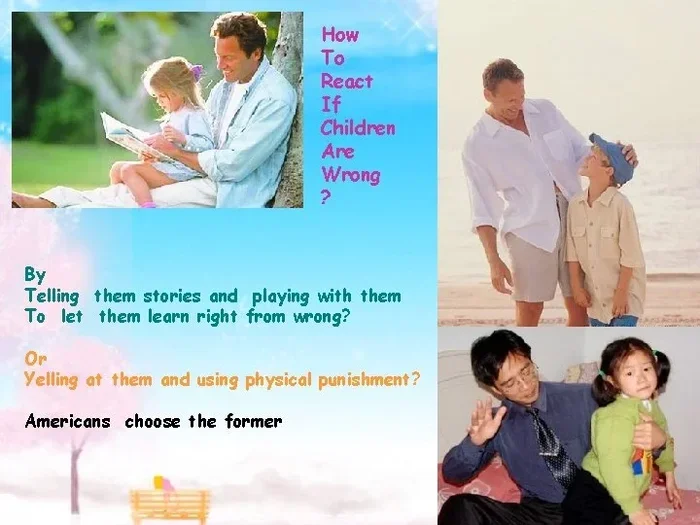
Visual guide about children learning right wrong
Image source: slidetodoc.com
Understanding Piaget’s research methods helps us appreciate why his findings remain influential. He didn’t rely on surveys or questionnaires. He observed children in natural settings.
The Marble Game Studies
Piaget’s most famous research involved watching children play marbles. This universal game exists across cultures, making it perfect for cross-cultural comparison.
He didn’t just watch. He actively participated. He asked children to teach him the rules. He pretended to play incorrectly and observed their reactions. He questioned them about the origins and flexibility of rules.
What he discovered was remarkable. Young children insisted rules were ancient and unchangeable. They believed God or their great-grandfathers created the rules. Older children understood rules were invented and could be modified if everyone agreed.
The Moral Dilemma Stories
Piaget also used paired stories to probe moral reasoning. These stories systematically varied intentions and outcomes. Children’s responses revealed their underlying moral logic.
The stories were carefully designed:
– One story featured good intentions with bad outcomes
– Another featured bad intentions with minor outcomes
– Children had to determine who was naughtier
This method uncovered the developmental shift from outcome-based to intention-based moral judgment.
Research On Lying And Stealing
Piaget explored how children understood lies and theft. Young children defined lies as simply “naughty words.” They judged bigger lies as worse regardless of context.
Older children developed sophisticated understanding. They distinguished between jokes, exaggerations, and deliberate deception. They considered whether lies protected or harmed others.
Similar patterns emerged with stealing. Young children judged stealing based on amount stolen. Older children considered whether stealing was motivated by need or greed.
Key Concepts In Piagets Theory Of Moral Development
Visual guide about children learning right wrong
Image source: quotefancy.com
Several core concepts underpin Piaget’s framework. Understanding these concepts provides deeper insight into moral reasoning.
Heteronomy Vs. Autonomy
The distinction between heteronomy and autonomy is central to the entire theory. Heteronomy means being ruled by external forces. Autonomy means self-governance based on internal principles.
In moral terms, heteronomous individuals follow rules because authorities demand it. Autonomous individuals follow principles because they understand and endorse them.
This distinction has profound implications for relationships. Partners operating from heteronomous morality may rigidly enforce relationship “rules.” Those with autonomous morality understand that healthy relationships require flexibility and mutual agreement.
Immanent Justice
Young children believe in immanent justice—the idea that wrongdoing is automatically punished. If you break a rule, something bad will happen to you immediately.
Piaget tested this by telling stories where wrongdoing went unpunished. Young children refused to accept this. They insisted the person must have been punished somehow, even if the story didn’t mention it.
This belief gradually fades as children observe real life. They notice that wrongdoers sometimes escape consequences. They develop more sophisticated understanding of justice.
Moral Relativism Vs. Moral Absolutism
The shift from absolutism to relativism marks moral maturation. Moral absolutism sees right and wrong as fixed categories. Moral relativism recognizes context and complexity.
Neither extreme is ideal. Pure absolutism creates rigidity. Pure relativism can undermine ethical standards. Healthy moral reasoning balances principles with context.
This balance is essential in relationships. Rigid moral absolutism creates conflict when partners disagree. Thoughtful moral relativism allows for understanding different perspectives while maintaining core values.
The Role Of Peer Relationships
Piaget emphasized that peer relationships drive moral development. Interactions with equals create opportunities for cooperation, negotiation, and perspective-taking.
With adults, children experience power imbalance. Rules flow downward. With peers, children must negotiate, compromise, and consider others’ viewpoints. This egalitarian interaction accelerates moral growth.
This insight applies to adult relationships too. Healthy partnerships function as peer relationships where both parties negotiate rules and expectations. Power imbalances hinder moral and emotional growth.
Practical Applications Of Piagets Theory Today
Understanding Piagets Theory Of Moral Development offers practical benefits across many areas of life.
Parenting Applications
Parents can use Piaget’s insights to set appropriate expectations and guide moral growth:
– Match consequences to development: Young children need clear, consistent consequences. Older children benefit from discussions about intentions and context
– Encourage perspective-taking: Ask children how they think others feel in different situations
– Allow rule negotiation: As children mature, involve them in creating family rules
– Model autonomous reasoning: Explain your moral decisions rather than just issuing commands
– Facilitate peer interaction: Provide opportunities for cooperative play and conflict resolution
Educational Applications
Teachers can create environments that promote moral development:
– Use cooperative learning: Group projects require negotiation and shared decision-making
– Discuss moral dilemmas: Age-appropriate ethical discussions develop reasoning skills
– Create democratic classrooms: Student input in rules promotes autonomous morality
– Encourage debate: Respectful disagreement helps children consider multiple perspectives
– Focus on process: Praise reasoning and effort, not just correct answers
Relationship Applications
Piaget’s theory illuminates many relationship dynamics. Understanding moral development stages helps partners communicate better.
When conflicts arise, partners often operate from different moral frameworks. One partner may focus on outcomes (“You forgot our anniversary”). The other may emphasize intentions (“I was stressed about work”).
Recognizing these different orientations reduces conflict. Partners can learn to appreciate both perspectives. They can move toward more nuanced discussions that consider both intentions and outcomes.
Research shows that stonewalling is the most overlooked form of emotional abuse. This often stems from rigid moral thinking where one partner feels morally superior and shuts down communication.
Personal Growth Applications
Understanding your own moral development promotes self-awareness:
– Identify your default patterns: Do you tend toward rigid rule-following or flexible consideration?
– Recognize growth areas: Where could you develop more nuanced moral reasoning?
– Practice perspective-taking: Deliberately consider others’ viewpoints in moral situations
– Embrace complexity: Resist the urge to reduce moral questions to simple right-or-wrong answers
– Challenge your assumptions: Question whether your moral judgments consider intentions and context
People who develop strong moral reasoning skills often exhibit characteristics of people who don’t beat themselves up for mistakes. They understand that good intentions matter and that errors don’t define moral character.
Criticisms And Limitations Of Piagets Theory
No theory is perfect. Understanding Piaget’s limitations provides balanced perspective.
Underestimating Young Children
Research suggests Piaget underestimated young children’s moral capabilities. Studies show that even three-year-olds distinguish between moral violations and social conventions.
When researchers use simplified methods, young children demonstrate more sophisticated reasoning than Piaget observed. They can consider intentions when stories are clear and concrete.
Cultural Limitations
Piaget’s research was conducted primarily in Switzerland. Cross-cultural studies reveal variations in moral development. Some cultures emphasize community obligations over individual rights. Others prioritize respect for authority differently.
These cultural differences don’t invalidate Piaget’s framework. But they remind us that moral development is shaped by cultural context.
Gender Considerations
Carol Gilligan criticized Piaget’s theory for focusing on justice while neglecting care. She argued that moral development includes an ethic of care and relationships, not just abstract justice.
This critique highlights that moral reasoning encompasses more than rule-following and fairness. Empathy, compassion, and relationship maintenance are equally important moral capacities.
The Gap Between Reasoning And Behavior
Piaget focused on moral reasoning, not moral behavior. People don’t always act according to their moral judgments. Knowing right from wrong doesn’t guarantee doing right.
This gap between knowing and doing is important. Moral development involves not just reasoning but also emotional regulation, habit formation, and situational factors.
How Piaget’s Theory Connects To Modern Moral Psychology
Piaget’s work laid groundwork for contemporary moral psychology. Understanding these connections shows his lasting influence.
Kohlberg’s Expansion
Lawrence Kohlberg extended Piaget’s work into a six-stage model of moral development. He identified three levels: preconventional, conventional, and postconventional morality.
Kohlberg’s research confirmed Piaget’s basic insight. Moral reasoning develops in predictable stages. But he expanded the framework to include adult moral development.
Social Intuitionist Theory
Jonathan Haidt proposed that moral judgments are often intuitive rather than rational. People feel moral reactions first, then construct reasoning to justify them.
This doesn’t contradict Piaget. It adds emotional and intuitive dimensions to moral psychology. Both reasoning and intuition shape moral responses.
Developmental Systems Theory
Modern developmental psychology views moral growth as emerging from complex interactions between biology, environment, and culture. This systems perspective builds on Piaget’s constructivist foundation.
Moral development isn’t just individual construction. It emerges through relationships, cultural practices, and social institutions.
Neuroscience Of Morality
Brain research reveals neural foundations of moral reasoning. The prefrontal cortex, which matures through adolescence, supports the perspective-taking and abstract reasoning Piaget described.
This biological grounding confirms Piaget’s insight that moral development depends on cognitive maturation. Brain development enables the moral reasoning shifts he observed.
Applying Moral Development Insights To Everyday Life
Understanding Piagets Theory Of Moral Development isn’t just academic. It offers practical wisdom for daily living.
Navigating Moral Disagreements
When you disagree morally with someone, consider their developmental perspective. Are they focusing on outcomes or intentions? Are they applying rigid rules or considering context?
This understanding doesn’t mean accepting harmful behavior. But it helps you communicate more effectively. You can address the underlying reasoning rather than just the surface disagreement.
Building Empathy
Moral development involves learning to see from others’ perspectives. This skill is fundamental to empathy. When you understand that others may reason differently about moral questions, you become more compassionate.
Empathy doesn’t require agreement. It requires understanding. Piaget’s framework helps you appreciate why good people sometimes reach different moral conclusions.
Making Better Decisions
Autonomous moral reasoning leads to better decision-making. When you consider intentions, context, and multiple perspectives, you make more nuanced choices.
This applies to personal decisions, professional ethics, and social issues. Rigid thinking produces simplistic solutions. Flexible reasoning generates creative, fair responses.
Supporting Others’ Growth
Understanding moral development helps you support others’ growth. Whether parenting, teaching, or mentoring, you can provide appropriate challenges and support.
People grow morally through experience, reflection, and dialogue. You can facilitate this growth by asking questions, sharing perspectives, and creating safe spaces for moral exploration.
Learning to let go of unburdening beliefs about absolute right and wrong can actually free you to develop more mature moral reasoning. Holding too tightly to rigid moral rules often creates unnecessary suffering.
Common Misconceptions About Moral Development
Several misunderstandings surround Piaget’s theory. Clarifying these prevents misapplication.
Myth: Moral Development Stops In Childhood
Piaget focused on childhood, but moral development continues throughout life. Adults can and do develop more sophisticated moral reasoning. Life experiences, education, and reflection promote ongoing growth.
Myth: Older Always Means More Moral
Age doesn’t guarantee moral maturity. Some adults remain stuck in heteronomous thinking. Others develop sophisticated reasoning early. Development varies based on experience, education, and cognitive abilities.
Myth: Moral Reasoning Equals Moral Behavior
As noted earlier, knowing right from wrong doesn’t ensure right action. Moral behavior requires reasoning plus emotional regulation, motivation, and situational awareness.
Myth: Piaget Ignored Emotions
While Piaget emphasized cognition, he didn’t deny emotions’ role. He recognized that moral feelings accompany moral judgments. Modern research confirms this emotional dimension.
Myth: The Theory Is Outdated
Piaget’s specific methods and some conclusions have been refined. But his core insights remain valid. Moral development proceeds from rigid to flexible, from outcome-focused to intention-aware.
Conclusion: The Enduring Value Of Understanding Moral Development
Piagets Theory Of Moral Development remains remarkably relevant nearly a century after its creation. Jean Piaget gave us a framework for understanding how moral reasoning evolves from rigid rule-following to flexible, principled thinking.
This understanding transforms how we approach parenting, education, relationships, and personal growth. When we recognize that moral development is a journey, we become more patient with ourselves and others.
The shift from heteronomous to autonomous morality represents one of human development’s most important achievements. It enables us to navigate complex social worlds, consider multiple perspectives, and make nuanced ethical judgments.
Whether you’re raising children, teaching students, navigating relationships, or pursuing personal growth, Piaget’s insights offer valuable guidance. Moral development isn’t about reaching perfection. It’s about growing in our capacity for fairness, empathy, and wisdom.
By understanding how moral reasoning develops, you gain powerful tools for building stronger connections and making better decisions. That’s knowledge worth having.
Frequently Asked Questions
What is Piagets Theory Of Moral Development?
Piagets Theory Of Moral Development is an important topic with many practical applications.
