
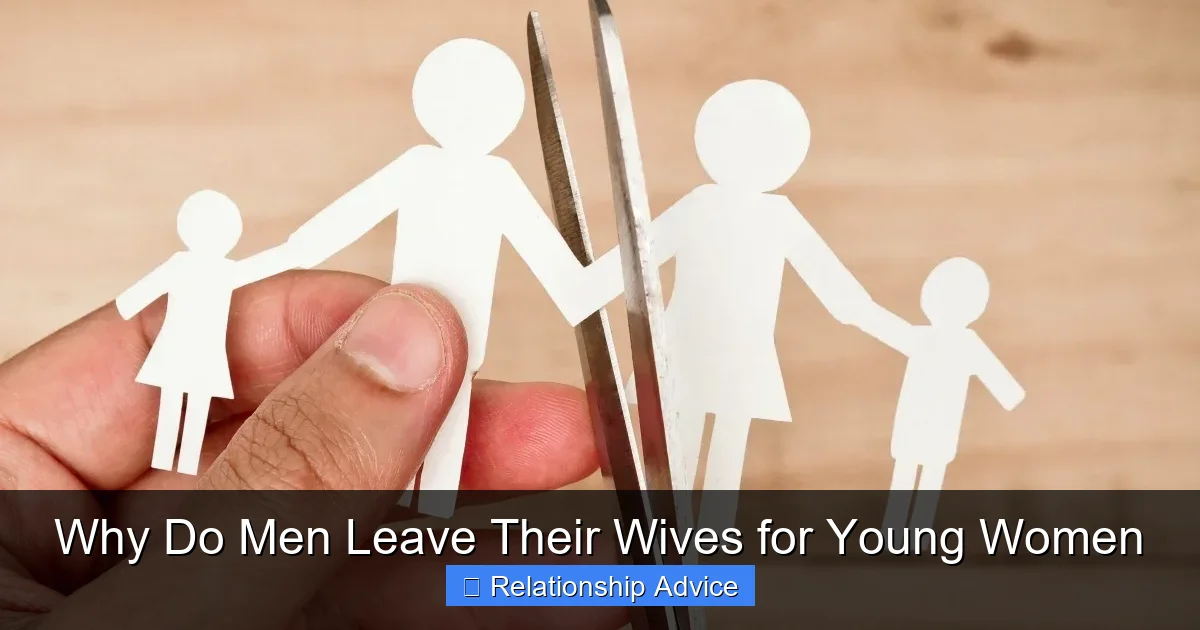
Men may leave their wives for young women due to changing desires, unmet emotional needs, or the allure of new experiences. While not universal, this pattern often reflects deeper issues in communication, intimacy, or self-worth. Understanding these motivations can help both partners heal and grow—whether apart or together.
We’ve all heard the stories—men leaving established marriages for much younger women. It sounds like a plot twist from a daytime soap opera, but it’s tragically real. Whether it’s a high-profile divorce or something quietly whispered behind closed doors, the pattern persists: older men, often with families and decades invested, choosing someone fresh and youthful instead of their lifelong partner.
But why? What really drives a man to walk away from stability, security, and years of shared history—just to chase what society calls “youth” or “newness”? Is it purely about attraction? Or is there something deeper going on beneath the surface? In this article, we’ll explore the emotional, psychological, and even cultural forces that contribute to why men leave their wives for young women. More importantly, we’ll look at how understanding these dynamics can help you either prevent such outcomes—or navigate them if they’ve already happened.
Let’s be honest: relationships aren’t always easy. People change. Needs evolve. And sometimes, what once felt like soul-deep connection starts to feel distant. When that happens, the grass doesn’t just *look* greener—it feels almost irresistible. Especially when it comes wrapped in confidence, energy, and an aura of mystery.
But before we dive into the “why,” let’s pause and acknowledge something important: not every man who leaves his wife for a younger woman is doing so out of malice or cruelty. Many genuinely believe they’re making the right choice—even if it hurts everyone involved. That belief often stems from a mix of insecurity, loneliness, or simply not knowing how to fix what’s broken at home.
So instead of judging, let’s try to understand. Because whether you’re the one being left, the one considering it, or just curious about human nature—knowing the truth can set you free.
Key Takeaways
- Emotional disconnect: Over time, couples may lose deep emotional connection, making younger partners seem more emotionally available and exciting.
- Fear of stagnation: Some men feel trapped in routine marriages and are drawn to youth as a symbol of freedom and possibility.
- Self-esteem issues: Feeling insecure or aging can lead some men to seek validation from younger women who admire them.
- Lack of communication: Unspoken resentments or unresolved conflicts often go unaddressed, creating fertile ground for temptation.
- Societal pressure: Cultural ideals glorify youth and attractiveness, influencing perceptions of desirability and success.
- Sexual dissatisfaction: Changes in libido or intimacy levels can drive men toward partners they perceive as more sexually vibrant.
- Opportunity vs. commitment: Younger women are often seen as less complicated, offering easier access to romance without long-term baggage.
📑 Table of Contents
The Psychology Behind the Pattern
At its core, the phenomenon of men leaving wives for younger women taps into fundamental aspects of human psychology. Evolutionary biologists have long noted that mate selection often favors youth and fertility—traits strongly associated with younger women. But modern psychology adds nuance: it’s not just biology; it’s also about identity, ego, and emotional fulfillment.
When a man reaches middle age, many face what psychologists call the “midlife crisis.” This isn’t just about buying a sports car (though that helps). It’s a period of intense questioning: *Who am I now? What did I accomplish? Why does life feel so… ordinary?* During this time, external validation becomes powerful. A younger woman who looks up to him, laughs at his jokes, and sees him as special can reignite feelings of importance and desirability.
This isn’t necessarily selfish—it’s human. We all crave to feel seen, valued, and desired. If your spouse has grown accustomed to your presence over decades, it’s natural for them to take you for granted. Meanwhile, a younger partner might shower you with attention because you’re *new*. That contrast alone can create an emotional rollercoaster.
Also consider this: aging affects perception. As men get older, societal standards shift. Youth isn’t just about appearance—it’s about perceived potential, vitality, and freedom. Even if the younger woman isn’t objectively better, she represents possibilities: new adventures, untapped potential, a chance to relive youth through someone else’s eyes.
And here’s where things get tricky: sometimes, the attraction isn’t even about the woman herself. It’s about rebelling against routine, escaping responsibility, or proving that they’re still desirable. These motives reveal more about the man’s internal state than about the woman’s qualities.
Midlife Identity Shifts
Middle age brings big changes. Careers plateau. Kids leave home. Health concerns arise. For some men, these shifts trigger a reevaluation of their entire lives—including their marriages. They begin asking: *Did I choose the right path? Was my marriage fulfilling?*
If the answer is no—or if it’s mostly yes but missing something—they may start looking elsewhere. Not necessarily out of spite, but out of desperation to reconnect with who they used to be or who they wish they were. Enter the younger woman: vibrant, energetic, full of “what ifs.” She doesn’t remind them of mortgages and responsibilities—she reminds them of dreams deferred.
Take Mark, a 52-year-old engineer whose wife had become increasingly focused on parenting and household duties after their youngest moved out. He felt invisible, unappreciated, and bored. When he met Chloe, a 26-year-old artist, she listened intently during their first coffee date. She asked about his passions—not just his job, but his childhood dreams of building rockets. For the first time in years, Mark felt alive again. The problem? He hadn’t addressed his emotional emptiness at home. Instead, he chased excitement elsewhere.
This is common. Men like Mark don’t always realize their marriage needs healing—not abandonment. Therapy, open conversations, or even small gestures (like planning weekly date nights) could have helped. But when you stop feeling special, it’s tempting to find someone who makes you feel that way again.
The Role of Self-Esteem
Low self-esteem plays a huge role. When a man doubts his own worth, he’s more likely to seek validation externally. And younger women—often seen as idealized, pure, and full of promise—are prime candidates for this kind of projection.
Think about it: if you believe you’re getting older and less attractive, wouldn’t you want proof that you’re still desirable? A younger woman telling you so—even if it’s partly fantasy—feels like affirmation. It’s easier than confronting the reality that your relationship may need work.
Dr. Susan Krauss Whitbourne, a developmental psychologist, explains: “As people age, they often struggle with perceived loss of status or relevance. External admiration from younger individuals can temporarily restore a sense of competence.”
That’s not healthy long-term. True confidence comes from within—not from chasing approval. But in the moment, it feels like salvation.
Common Emotional Triggers
Visual guide about Why Do Men Leave Their Wives for Young Women
Image source: upworthy.com
Beyond broad psychological patterns, specific emotional triggers push men toward younger women. These aren’t always conscious decisions—they’re reactions to long-standing feelings that have been ignored or suppressed.
One major trigger is **loneliness**. After decades of marriage, routines dominate. Birthdays, anniversaries, and holidays can feel repetitive rather than meaningful. If communication has faded, even simple moments become strained. Loneliness isn’t just physical absence—it’s emotional isolation.
Another trigger is **resentment**. Maybe the wife handles most chores, cares for aging parents, or manages finances while the husband works. Over time, unspoken bitterness builds. When a younger woman shows genuine interest in his day, compliments his skills, or defers to him, it feels like justice.
Then there’s **boredom**. Life gets predictable. Dinner is always pasta. Movies are reruns. Kids grow up and move on. Without intentional effort, relationships atrophy. A younger woman represents novelty—a break from monotony.
Finally, **fear of irrelevance** looms large. Society tells us men must be providers, protectors, and leaders. If those roles diminish (due to retirement, illness, or family changes), the fear of becoming obsolete can drive risky choices.
None of this excuses infidelity or abandonment. But understanding the pain behind it helps us respond with empathy—not just anger.
Loneliness vs. Liking
Here’s a critical distinction: **loneliness is different from romantic attraction**. You can miss your spouse deeply without wanting to replace them. Yet, when loneliness peaks, it clouds judgment. You start believing anyone offering companionship—even briefly—is worth pursuing.
For example, David, a retired teacher, felt abandoned after his wife developed dementia. He didn’t love her less—he loved her fiercely. But he was lonely. At 68, meeting a 29-year-old widow named Sarah felt like coming home. They bonded over grief, loss, and rebuilding life. Still, David struggled with guilt. He realized he wasn’t leaving because he wanted to—but because he couldn’t bear being alone.
His story shows how complex these situations are. Sometimes, the “young woman” isn’t the target—the void is.
Resentment as Fuel
Resentment is toxic. It festers silently until one day, it erupts—or worse, it goes unnoticed by both partners. When a man feels unappreciated, he may subconsciously seek someone who appreciates him *now*, not later.
Consider Tom, whose wife worked two jobs while he stayed home with their twins. Years passed. No vacations. No surprises. No “I love you” without being reminded about bills. Then came Emily, a single mom in her late twenties. She called him “handsome.” She laughed at his dad jokes. She didn’t ask about debt or college tuition.
Tom didn’t plan to leave. But little by little, he started dressing nicer, calling Emily more often, canceling plans with his wife. Eventually, he did leave—and blamed “new beginnings.” In truth, he’d been drowning in resentment for years.
Addressing resentment early saves marriages. Couples therapy, shared calendars, or even a heartfelt conversation can rebuild respect.
Communication Breakdown
At the heart of most failed marriages—especially those involving affairs with younger women—is poor communication. Too many couples assume the other knows what they need. Spouses stop asking questions. Husbands stop sharing feelings. Wives stop expressing desires.
Without dialogue, misunderstandings pile up. Small frustrations become mountains. And when a man hears “You never listen!” or “You’re boring!” repeatedly, he may retreat emotionally—only to be seduced by someone who listens *too well*.
Effective communication isn’t just talking—it’s active listening, empathy, and vulnerability. It means saying, “I feel neglected when we don’t talk for days,” instead of sulking silently.
Research from the Gottman Institute shows that couples who use “soft startups” (gentle ways to bring up sensitive topics) and “repair attempts” (acknowledging tension and de-escalating) have far healthier relationships.
Yet many avoid these tools. Why? Fear of conflict. Fear of rejection. Fear of rocking the boat.
But silence breeds distance. Distance breeds temptation.
Active Listening Matters
Active listening means more than hearing words. It’s nodding, maintaining eye contact, summarizing what you heard (“So you’re saying you felt ignored when I checked my phone during dinner?”), and responding thoughtfully.
When your wife shares a concern, don’t interrupt. Don’t deflect. Ask clarifying questions. Show you care.
If you’re struggling, practice daily. Pick one thing she said last week and reflect on it. “Remember how you mentioned feeling tired after work? I’ve noticed you’ve been quiet lately. Want to talk?”
Small acts build trust. Trust prevents secrets.
Vulnerability Builds Connection
Vulnerability is scary. Admitting you’re scared, unsure, or hurt takes courage. But it’s essential. When men hide their fears behind stoicism, they signal to their wives, “I don’t need you.” Meanwhile, younger women often wear their hearts on sleeves—which feels safer, even if it’s unrealistic.
Be vulnerable. Say, “I’m worried I’m losing interest in us. Can we fix this together?” Not “I’m leaving,” but “I want us back.”
Societal and Cultural Influences
Media, movies, and pop culture constantly reinforce the idea that younger women are more desirable. Think about it: romantic leads are almost always young and beautiful. Older men dating younger women? Taboo-breaking, scandalous, *sexy*. Older women dating younger men? Rarely portrayed positively.
This messaging shapes expectations. Men grow up believing they should be pursued, worshipped, and adored. Wives learn to prioritize others’ needs over their own. The result? A cycle where neither feels fulfilled.
Moreover, capitalism sells youth. Anti-aging creams, fitness trends, and social media filters all promote the notion that aging is failure. Men caught in this narrative may feel pressured to prove they’re “still got it”—by chasing youth.
But real beauty isn’t skin-deep. It’s kindness, humor, intelligence, and depth. Cultivating those qualities—both in yourself and your relationship—resists superficial traps.
The Myth of the “Perfect” Partner
Younger women aren’t inherently perfect. They’re often inexperienced, impulsive, or emotionally immature. But they’re *new*. Newness feels magical. Old problems feel insurmountable.
Avoid idealizing anyone—yourself included. Your wife made compromises, raised children, supported you through hard times. She deserves gratitude, not dismissal.
Ask yourself: Would I rather invest in fixing what we have, or chase a fantasy?
Reclaiming Masculinity
Some men leave because traditional masculinity—provider, protector, leader—feels diminished. They seek validation through younger partners because it restores their self-image.
But true strength isn’t about dominance. It’s about emotional maturity, accountability, and mutual respect. A healthy relationship empowers both partners to grow—not compete.
How to Prevent This Pattern
Prevention starts with awareness. If you recognize any red flags—emotional distance, lack of appreciation, resentment—act now. Here’s how:
1. **Schedule regular check-ins.** Set aside 20 minutes monthly to discuss feelings, goals, and concerns.
2. **Practice gratitude.** Write down three things you appreciate about your wife each day.
3. **Revive romance.** Plan surprise dates, send flowers, or recreate your first-date rituals.
4. **Seek counseling.** A neutral third party can uncover hidden issues.
5. **Work on yourself.** Boost confidence through hobbies, exercise, or therapy.
6. **Communicate openly.** Use “I feel” statements instead of blaming.
7. **Set boundaries.** Avoid flirting with younger women, even casually.
If you’re the one considering leaving, pause. Ask: *Am I running toward something, or away from pain?* If it’s the latter, address the pain at home.
Remember: youth fades. Passion wanes. But mutual respect, trust, and effort endure.
What If It’s Too Late?
Sometimes, despite best efforts, the damage is done. Affairs happen. Marriages end. If you’re facing this reality, know you’re not alone. Healing takes time, but it’s possible.
For the husband: Reflect honestly. Was it loneliness? Boredom? Low self-esteem? Own your actions. Apologize sincerely. Work on becoming the man your wife once fell in love with.
For the wife: Allow yourself to grieve. Seek support from friends, family, or therapists. Rebuild your identity outside the marriage. You deserve happiness—even if it looks different now.
And for the younger woman: Understand your role. Are you a rebound? A distraction? A genuine connection? If it’s the latter, great—but don’t ignore the complexities. If it’s the former, be careful not to enable someone else’s pain.
Life is messy. Relationships are hard. But growth happens in discomfort.
Final Thoughts
Why do men leave their wives for young women? Because humans crave connection, validation, and meaning. When those needs go unmet, we search elsewhere—sometimes foolishly, sometimes tragically.
But understanding the root causes doesn’t excuse betrayal. It informs compassion. It guides prevention. And it empowers healing.
Whether you’re trying to save your marriage or rebuild your life after loss, remember: you’re worthy of love—regardless of age, gender, or mistakes. And love, at its best, grows stronger through honesty, effort, and mutual respect.
If you’re struggling, reach out. Talk to a counselor. Confide in trusted friends. And never forget: every relationship has seasons. Even if winter feels endless, spring follows.
—
Frequently Asked Questions
Is it fair to blame all men who leave for younger women?
No, it’s unfair to generalize. Most men stay committed to their spouses. Those who leave usually act from personal struggles like low self-esteem or loneliness, not inherent flaws.
Can a marriage recover after a man cheats with a younger woman?
Yes, recovery is possible with honesty, therapy, and willingness from both partners. However, trust must be rebuilt gradually and intentionally.
Do younger women always know they’re replacing someone?
Not necessarily. Many are unaware of the full context and enter relationships hoping for stability and affection—not realizing they’re stepping into an existing dynamic.
Should I confront my husband about his attraction to younger women?
If you suspect ongoing attraction, have an honest conversation using “I feel” statements. Avoid accusations; focus on preserving your marriage through understanding.
Are men who leave for younger women selfish?
They may act selfishly, but their behavior often stems from deeper emotional voids—like loneliness or insecurity—rather than pure malice.
What if I’m attracted to a married man who’s older than me?
Recognize that his marriage comes with responsibilities and risks. Consider whether you’re seeking excitement or genuine connection, and weigh the consequences carefully.
