What Can Cross The Blood Brain Barrier A Complete Guide
The blood-brain barrier acts as a highly selective filter protecting your brain from harmful substances while allowing essential nutrients to pass through. This comprehensive guide explores what can cross the blood-brain barrier, how it functions, and why understanding this matters for your overall brain health and treatment of neurological conditions.
[FEATURED IMAGE_PLACEHOLDER]
The human brain is arguably the most complex organ in the body. It controls everything from your heartbeat to your deepest thoughts. But this incredible organ needs serious protection. Enter the blood-brain barrier — a remarkable biological shield that stands guard between your bloodstream and your brain tissue.
Think of it as the world’s most exclusive bouncer. It decides exactly what gets in and what stays out. Understanding what can cross the blood-brain barrier is crucial for anyone interested in brain health, neuroscience, or medical treatment development.
In this guide, we’ll break down everything you need to know about this fascinating biological structure. We’ll explore how it works, what passes through it, what doesn’t, and why it matters for your health.
Key Takeaways
- The blood-brain barrier is highly selective: It allows essential nutrients like glucose and amino acids to enter while blocking toxins and pathogens.
- Lipophilic substances cross more easily: Small, fat-soluble molecules can pass through the barrier via passive diffusion.
- Active transport systems exist: Specific transporters carry glucose, amino acids, and other vital nutrients across the barrier.
- Most large molecules cannot cross: Proteins, antibodies, and many drugs are too large to penetrate the tight junctions.
- The barrier can become compromised: Inflammation, injury, and certain diseases can increase permeability, allowing unwanted substances into the brain.
- Drug delivery remains a challenge: Researchers are developing innovative strategies to help medications cross this protective barrier.
- Lifestyle factors influence barrier health: Sleep, diet, exercise, and stress management all impact blood-brain barrier integrity.
📑 Table of Contents
- Understanding The Blood-Brain Barrier Structure
- What Can Cross The Blood-Brain Barrier
- What Cannot Cross The Blood-Brain Barrier
- Factors That Affect Blood-Brain Barrier Permeability
- Strategies For Crossing The Blood-Brain Barrier
- Maintaining A Healthy Blood-Brain Barrier
- Quick Tips For Brain Health
- Common Misconceptions About The Blood-Brain Barrier
- Comparison Table: What Crosses vs. What Doesn’t
- The Future Of Blood-Brain Barrier Research
- Conclusion
Understanding The Blood-Brain Barrier Structure
The blood-brain barrier isn’t a single wall. It’s a complex system made up of specialized cells that line the brain’s blood vessels. These cells work together to create one of the most selective barriers in the human body.
The Cellular Components
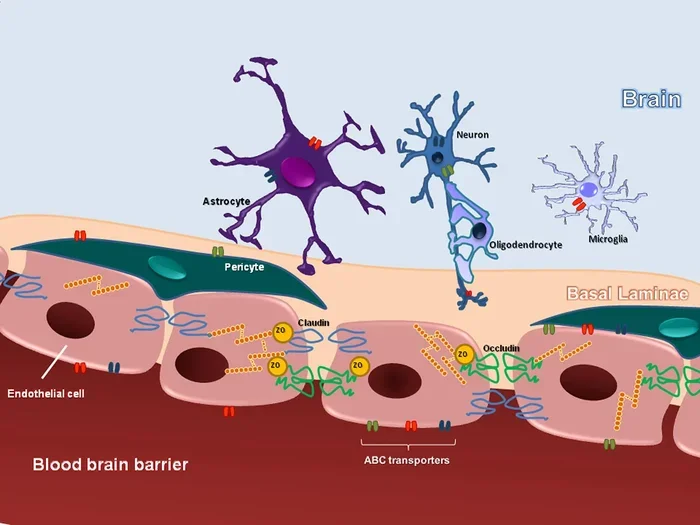
The barrier consists of several key cell types. Endothelial cells form the inner lining of blood vessels throughout the brain. Unlike regular blood vessel cells, these are packed incredibly tight together. They’re held in place by tight junctions — protein structures that seal the gaps between cells.
Astrocytes are star-shaped cells that wrap their foot-like extensions around blood vessels. They help maintain the barrier’s integrity and regulate what passes through. Pericytes sit between the endothelial cells and astrocytes, playing crucial roles in barrier formation and maintenance.
Why The Barrier Exists
Your brain is precious. It uses about 20% of your body’s oxygen and energy despite being only 2% of your body weight. It needs a stable environment to function properly. The blood-brain barrier provides that stability.
Without this barrier, toxins, pathogens, and fluctuations in blood chemistry could wreak havoc on your neural tissue. The barrier maintains the precise chemical balance your neurons need to fire properly.
What Can Cross The Blood-Brain Barrier

Visual guide about blood brain barrier crossing
Image source: pub.mdpi-res.com
Now let’s get to the heart of the matter. What actually makes it through this biological fortress?
Small Lipophilic Molecules
Fat-soluble substances can slip through the barrier relatively easily. These molecules pass directly through the cell membranes via passive diffusion. Examples include:
- Oxygen — essential for brain metabolism
- Carbon dioxide — a waste product that needs removal
- Ethanol — which is why alcohol affects the brain so quickly
- Caffeine — your morning coffee reaches your brain fast
- Nicotine — crosses within seconds of inhalation
- Steroid hormones — like cortisol and estrogen
These molecules share common characteristics. They’re small, uncharged, and dissolve easily in fats. This allows them to pass through the lipid-rich cell membranes without needing special transport systems.
Essential Nutrients Via Transport Systems
Your brain needs constant nourishment. Specialized transport systems carry essential nutrients across the barrier:
- Glucose transporters (GLUT1) — carry sugar, the brain’s primary fuel source
- Large neutral amino acid transporters (LAT1) — move building blocks for neurotransmitters
- Monocarboxylate transporters — transport lactate and ketone bodies
- Choline transporters — essential for acetylcholine production
- Iron transporters — critical for oxygen transport and enzyme function
These transporters are highly specific. They recognize particular molecular shapes and shuttle them across the barrier in a controlled manner.
Water And Small Ions
Water itself can cross the barrier through specialized channels called aquaporins. Small ions like sodium and potassium pass through selective ion channels. However, their movement is tightly regulated to maintain the brain’s precise electrical balance.
What Cannot Cross The Blood-Brain Barrier

Visual guide about blood brain barrier crossing
Image source: frontiersin.org
Understanding what gets blocked is equally important. The barrier effectively stops many substances from entering brain tissue.
Large Molecules And Proteins
Most proteins are too large to pass through the tight junctions. This includes:
- Antibodies — large immune proteins that cannot penetrate
- Albumin — a common blood protein
- Most therapeutic proteins — limiting treatment options
- Growth factors — too large for passive transport
Many Pharmaceutical Drugs
This is one of the biggest challenges in medicine. Approximately 98% of small molecule drugs cannot cross the blood-brain barrier. Even more large molecule drugs are blocked. This makes treating brain conditions incredibly difficult.
Drugs that typically cannot cross include:
- Most antibiotics — making brain infections hard to treat
- Chemotherapy agents — limiting brain tumor treatment
- Peptide-based drugs — including many newer therapies
- Hydrophilic compounds — water-soluble substances that can’t pass through lipid membranes
Pathogens And Toxins
The barrier provides excellent protection against many harmful agents:
- Most bacteria — too large to pass through intact barrier
- Many viruses — though some have evolved ways to bypass it
- Blood-borne toxins — including certain environmental pollutants
- Inflammatory cells — normally restricted from brain tissue
Factors That Affect Blood-Brain Barrier Permeability

Visual guide about blood brain barrier crossing
Image source: ncbi.nlm.nih.gov
The barrier isn’t static. Its permeability can change based on various factors.
Inflammation And Disease
When inflammation occurs, the barrier can become more permeable. This happens in conditions like:
- Multiple sclerosis — immune cells can breach the barrier
- Meningitis — infection increases permeability
- Traumatic brain injury — physical damage disrupts tight junctions
- Stroke — blood flow changes affect barrier function
- Brain tumors — can locally disrupt barrier integrity
Lifestyle And Environmental Factors
Your daily habits influence barrier health:
- Chronic stress — increases cortisol which can weaken the barrier
- Poor sleep — disrupts the barrier’s maintenance cycles
- High-fat diets — may increase permeability over time
- Alcohol consumption — acute and chronic effects on barrier function
- Aging — natural decline in barrier integrity
Strategies For Crossing The Blood-Brain Barrier
Scientists have developed several approaches to help therapeutic agents cross this barrier.
Medication Design Approaches
Pharmaceutical researchers use multiple strategies:
- Lipid conjugation — attaching fat-soluble groups to drugs
- Prodrug development — creating inactive forms that convert after crossing
- Nanoparticle carriers — tiny delivery vehicles that bypass the barrier
- Receptor-mediated transport — hijacking existing transport systems
Physical Methods
Some approaches physically open or bypass the barrier:
- Focused ultrasound — temporarily opens tight junctions
- Intrathecal injection — delivers drugs directly to cerebrospinal fluid
- Convection-enhanced delivery — pressure-driven drug distribution
- Implanted devices — bypass the barrier entirely
Maintaining A Healthy Blood-Brain Barrier
You can take steps to support your barrier’s integrity.
Dietary Recommendations
Certain nutrients support barrier health:
- Omega-3 fatty acids — reduce inflammation and support membrane integrity
- Polyphenols — found in berries and green tea, may protect the barrier
- Vitamin D — supports tight junction function
- Zinc — essential for barrier maintenance
- Magnesium — supports overall brain health
Lifestyle Habits
Daily practices that help maintain barrier function:
- Regular exercise — improves circulation and reduces inflammation
- Quality sleep — allows the glymphatic system to clear waste
- Stress management — keeps cortisol levels in check
- Limiting alcohol — reduces direct barrier damage
- Staying hydrated — supports all cellular functions
Just as maintaining physical health requires consistent effort, supporting your brain health through proper sleep and stress reduction is equally important. If you’re dealing with emotional challenges that affect your wellbeing, learning how happiness can be found even in the darkest of times might provide valuable insights for your overall health journey.
Quick Tips For Brain Health
- Get 7-9 hours of quality sleep each night
- Exercise regularly to promote healthy blood flow
- Manage stress through meditation or relaxation techniques
- Eat a balanced diet rich in omega-3s and antioxidants
- Stay mentally active with puzzles and learning
- Limit alcohol consumption
- Protect your head from injury
Common Misconceptions About The Blood-Brain Barrier
Myth 1: The barrier is impenetrable. Reality: It’s selectively permeable — many substances cross regularly.
Myth 2: All drugs can reach the brain. Reality: Most drugs cannot cross without special delivery methods.
Myth 3: The barrier is the same throughout the brain. Reality: Some areas, like the circumventricular organs, have a weaker barrier.
Myth 4: Barrier damage is always permanent. Reality: The barrier can repair itself in many cases.
Comparison Table: What Crosses vs. What Doesn’t
| Substance | Can Cross? | Mechanism |
|---|---|---|
| Oxygen | Yes | Passive diffusion |
| Glucose | Yes | GLUT1 transporter |
| Ethanol | Yes | Passive diffusion |
| Most antibiotics | No | Too large/polar |
| Antibodies | No | Too large |
| Dopamine | No | Requires precursor (L-DOPA) |
| Ketone bodies | Yes | Monocarboxylate transporters |
| Sodium ions | Limited | Selective channels |
The Future Of Blood-Brain Barrier Research
Scientists are making exciting progress in understanding and working with the barrier. New research focuses on:
- Biomarker development — detecting barrier dysfunction early
- Targeted drug delivery — smarter nanoparticles and carriers
- Barrier repair strategies — healing damage from disease or injury
- Personalized medicine — accounting for individual barrier differences
- Gene therapy approaches — treating neurological conditions at the source
Understanding how energy relates to brain function is also crucial. If you’re interested in the connection between physical vitality and cognitive health, exploring what energy has to do with mental health can provide additional context for maintaining optimal brain function.
Conclusion
The blood-brain barrier represents one of the body’s most elegant protective systems. It allows essential nutrients like glucose, oxygen, and amino acids to nourish your brain while keeping harmful substances at bay.
Understanding what can cross the blood-brain barrier helps us appreciate the complexity of brain health and the challenges of treating neurological conditions. While small lipophilic molecules and specific nutrients pass through readily, most drugs and large molecules remain blocked.
By maintaining healthy lifestyle habits — proper sleep, regular exercise, stress management, and good nutrition — you can support your barrier’s integrity. As research advances, we’re developing better ways to deliver medications across this barrier, offering hope for treating previously inaccessible brain conditions.
Your brain works hard for you every second of every day. Taking care of its protective barrier is one of the best investments you can make in your long-term cognitive health.
Frequently Asked Questions
What exactly is the blood-brain barrier?
The blood-brain barrier is a highly selective semipermeable border made up of specialized endothelial cells that prevents solutes in circulating blood from non-selectively crossing into the brain’s extracellular fluid. It protects the brain from toxins and pathogens while allowing essential nutrients to pass through.
Can alcohol cross the blood-brain barrier?
Yes, alcohol can easily cross the blood-brain barrier because it is a small, lipophilic molecule. This is why alcohol affects the brain so quickly after consumption, altering mood, coordination, and cognitive function within minutes of drinking.
Why can’t most medications reach the brain?
Most medications cannot reach the brain because they are either too large, too water-soluble, or lack the specific molecular characteristics needed to pass through the barrier’s tight junctions or be recognized by transport systems. Approximately 98% of small molecule drugs are blocked.
Does the blood-brain barrier weaken with age?
Yes, research shows that the blood-brain barrier naturally becomes more permeable as we age. This age-related decline in barrier integrity may contribute to increased vulnerability to neurological conditions and cognitive decline in older adults.
Can stress damage the blood-brain barrier?
Chronic stress can indeed compromise the blood-brain barrier. Prolonged elevation of stress hormones like cortisol can weaken tight junctions between endothelial cells, potentially allowing unwanted substances to enter brain tissue and triggering inflammation.
Are there foods that help protect the blood-brain barrier?
Yes, certain foods support barrier health. Omega-3 fatty acids found in fish, polyphenols in berries and green tea, and adequate vitamin D all contribute to maintaining the blood-brain barrier’s integrity and reducing inflammation that could compromise its function.