

Free college education could transform millions of lives by eliminating crushing student debt and creating equal opportunities. This article explores the economic, social, and personal benefits of making higher education accessible to all. From boosting economic mobility to strengthening democracy, the case for tuition-free college has never been stronger.
The debate over whether college should be free has gained massive momentum in recent years. With student debt reaching crisis levels and income inequality widening, more Americans are questioning why higher education comes with such a hefty price tag. The truth is, tuition-free college isn’t just a pipe dream—it’s a practical solution that could transform our economy, strengthen our society, and give millions of people a fair shot at success. In this article, we’ll explore the most compelling reasons why making college free would benefit everyone, not just students.
Key Takeaways
- Student debt crisis: Americans owe over $1.7 trillion in student loans, crushing financial futures before careers even begin.
- Economic growth: Free college boosts the economy by creating a more skilled workforce and increasing consumer spending.
- Equal opportunity: Tuition-free education levels the playing field for low-income and minority students.
- Global competitiveness: Countries with free college outperform the US in educational attainment and innovation.
- Social benefits: Higher education reduces crime rates, improves health outcomes, and strengthens civic participation.
- Workforce readiness: Modern jobs require advanced skills that college provides without the financial barrier.
- Long-term savings: Public investment in education reduces future spending on social programs and incarceration.
📑 Table of Contents
The Crushing Weight of Student Debt
Let’s start with the most obvious problem: student debt has become a national emergency. Americans collectively owe over $1.7 trillion in student loans. That’s more than credit card debt and car loans combined. The average graduate leaves school with around $30,000 in debt, but many owe much more.
How Debt Delays Life Milestones
Student debt doesn’t just affect your bank account. It delays major life decisions. Graduates put off buying homes, starting families, and saving for retirement. Many move back in with parents well into their late twenties or early thirties simply because they can’t afford independence while making loan payments.
Think about it. A generation of young adults is stuck in financial limbo. They did everything “right”—studied hard, got into college, earned degrees—and now they’re punished with decades of debt. This isn’t just unfair; it’s economically destructive.
The Mental Health Toll
The stress of student debt is overwhelming. Studies show that borrowers experience higher rates of anxiety, depression, and sleep problems. The constant worry about payments affects job performance, relationships, and overall well-being. Free college would eliminate this massive source of psychological burden.
Economic Benefits of Free College

Visual guide about college graduation celebration
Image source: static.vecteezy.com
Some people worry about the cost of free college, but they ignore the enormous economic benefits. A more educated workforce is a more productive workforce. When people aren’t burdened by debt, they spend money on homes, cars, and consumer goods—fueling economic growth.
Increased Consumer Spending
Imagine what would happen if millions of graduates suddenly had an extra $300-$500 per month in their pockets. That money would flow directly into the economy. Small businesses would thrive. Housing markets would stabilize. Consumer confidence would soar.
This isn’t speculation. Research shows that student debt reduction leads to immediate economic stimulus. Every dollar not spent on loan payments is a dollar spent in local communities.
Higher Tax Revenue
College graduates earn significantly more than those without degrees. Over a lifetime, the difference can be millions of dollars. Higher earnings mean higher tax revenue—federal, state, and local. The government would recoup its investment in free college many times over through increased tax collections.
Creating Equal Opportunities

Visual guide about college graduation celebration
Image source: yourteenmag.com
One of the most powerful arguments for free college is educational equity. Right now, your ability to attend college depends largely on your family’s wealth. That’s not meritocracy; it’s privilege.
Breaking the Cycle of Poverty
For low-income students, college is often the only path out of poverty. But the cost barrier is enormous. Many talented, hardworking students never apply to college because they assume it’s impossible. Others enroll but drop out due to financial pressure before earning a degree.
Free college would change this equation completely. It would send a clear message: your potential matters more than your parents’ paycheck. This is especially important for first-generation college students who lack family networks to navigate the financial aid system.
Leveling the Playing Field
Wealthy families can afford test prep courses, private tutors, and college consultants. They can pay for unpaid internships that boost resumes. Low-income students start the race miles behind. Free college won’t solve all inequality, but it removes one of the biggest barriers to upward mobility.
Global Competitors Already Do This
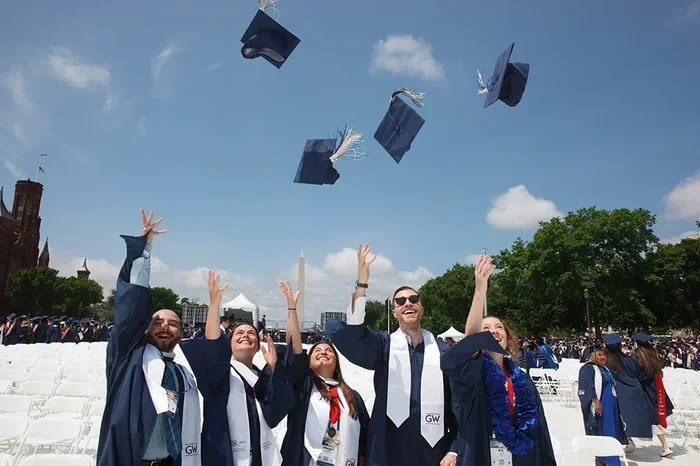
Visual guide about college graduation celebration
Image source: gwtoday.gwu.edu
The United States used to lead the world in educational attainment. Now, we’ve fallen behind many countries that offer free or low-cost college. Germany, Norway, Finland, and several other nations provide tuition-free higher education to their citizens.
Learning from Other Countries
These countries aren’t just being generous—they’re making smart investments. They understand that an educated population drives innovation, attracts businesses, and creates prosperity. By charging students tens of thousands of dollars, America is essentially taxing its own future competitiveness.
Some critics argue that other countries have smaller populations or different economies. But the principle remains: countries that invest in education thrive. Countries that don’t, fall behind.
The Skills Gap Problem
American employers consistently report difficulty finding qualified workers. There are millions of jobs that require college-level skills but remain unfilled. This skills gap hurts businesses and limits economic growth. Free college would help close this gap by training more people for high-demand careers.
Strengthening Democracy and Society
Education isn’t just about personal gain. It’s about creating informed citizens who can participate meaningfully in democracy. Higher education teaches critical thinking, exposes students to diverse perspectives, and encourages civic engagement.
Better Civic Participation
College graduates vote at higher rates, volunteer more, and are more likely to serve on juries and participate in community organizations. They’re better equipped to evaluate political claims, understand policy issues, and hold leaders accountable.
When we make college accessible to everyone, we create a more engaged and informed electorate. That’s not partisan—it’s essential for a functioning democracy.
Reduced Crime Rates
Research consistently shows that education reduces criminal behavior. People with college degrees are far less likely to commit crimes or become incarcerated. This means lower criminal justice costs and safer communities.
Every dollar spent on education saves multiple dollars in policing, courts, and prisons. Free college isn’t just an investment in individuals; it’s an investment in public safety.
Addressing Common Concerns
Of course, the idea of free college raises legitimate questions. Let’s address some of the most common concerns.
Won’t This Devalue Degrees?
Some worry that if everyone has a college degree, degrees will lose their value. But this misunderstands the issue. The goal isn’t to make everyone go to college—it’s to remove financial barriers for those who want to attend. Vocational training and trade schools would remain valuable options.
Moreover, the economy is evolving. Many jobs that didn’t require degrees now do. Rather than devaluing education, we should be expanding access to meet workforce demands.
How Do We Pay For It?
This is the big question. Proposals vary, but most involve redirecting existing education spending, implementing small taxes on financial transactions, or closing corporate tax loopholes. The key insight is that we already spend enormous amounts on the consequences of undereducation—poverty programs, unemployment benefits, incarceration.
Free college would actually save money in the long run by reducing these costs. It’s a classic case of spending now to save later.
What About Personal Responsibility?
Critics argue that students should pay for their own education because they benefit from higher earnings. But we don’t apply this logic to K-12 education. We recognize that an educated populace benefits everyone, not just individual students.
College is increasingly necessary for economic survival, not just personal advancement. Making it free is like making high school free a century ago—a recognition that society needs educated citizens.
The Path Forward
So how do we actually make college free? Several models exist. Some states have already implemented tuition-free community college programs. Others offer free four-year degrees to residents who meet certain requirements.
State-Level Success Stories
Tennessee, New York, and Oregon have all launched free college programs with promising results. Enrollment has increased, particularly among low-income and minority students. These programs prove that free college is not just theoretical—it works in practice.
Federal Action Needed
While state programs are valuable, a comprehensive solution requires federal action. The federal government could partner with states to fund free public college, similar to how Medicaid works. This would ensure consistency across states and prevent a patchwork of unequal access.
Conclusion
The case for free college is overwhelming. It would eliminate the student debt crisis, boost the economy, create equal opportunities, and strengthen our democracy. Other countries have proven it works. The question isn’t whether we can afford to make college free—it’s whether we can afford not to.
Every year we delay, another generation graduates into debt. Another million capable students never attend college because of cost. Another opportunity to strengthen our nation slips away. The time for free college is now. Our future depends on it.
Frequently Asked Questions
What is Reasons College Should Be Free?
Reasons College Should Be Free is an important topic with many practical applications.
