
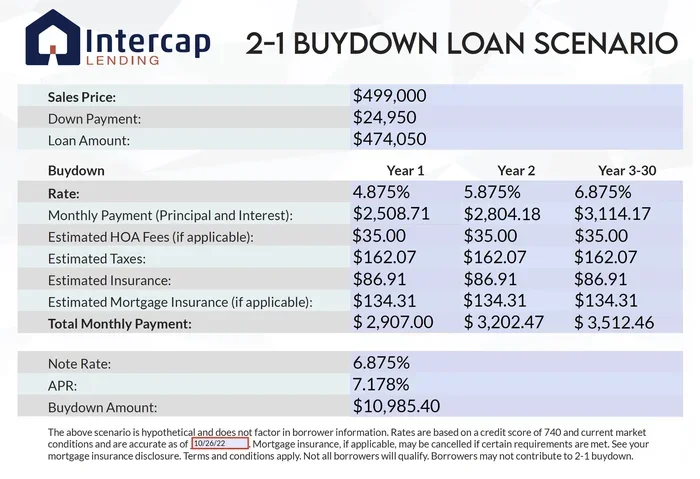
Is it worth it to buy down mortgage rate? The answer depends on how long you plan to stay in your home and how much cash you have upfront. A rate buydown lowers your interest rate by paying discount points at closing. This can reduce your monthly payment, but it is not always the smartest financial move. You need to calculate the break-even point carefully before you decide.
Key Takeaways
- Upfront Cost: Buying down your rate requires cash at closing, which reduces your available funds for moving or repairs.
- Monthly Savings: A lower interest rate means a smaller monthly payment, which improves your cash flow immediately.
- Break-Even Point: You must calculate how many months it takes for the savings to cover the upfront cost.
- Time Horizon: This strategy works best if you plan to keep the mortgage for many years beyond the break-even date.
- Tax Benefits: Discount points may be tax-deductible in some cases, which can lower the real cost of the buydown.
- Seller Concessions: Sometimes sellers pay for the buydown, making it a much more attractive option for buyers.
- Refinance Risk: If you refinance soon after buying, you may lose the money you spent on the rate buydown.
📑 Table of Contents
Understanding the Basics of Mortgage Rate Buydowns
Buying a home is one of the biggest financial decisions you will ever make. The interest rate on your mortgage plays a huge role in how much you pay over time. Many buyers hear about buying down the rate and wonder if it is a good idea. Is it worth it to buy down mortgage rate? This question does not have a simple yes or no answer. It depends on your specific situation and your long-term plans.
A rate buydown happens when you pay extra money at closing to get a lower interest rate. Lenders call this paying discount points. One point usually costs one percent of your loan amount. In return, your interest rate drops by a certain amount. This lowers your monthly payment for the life of the loan. It is a trade-off between paying now or paying later.
You need to understand the math before you sign anything. The lender will show you different rate options. You might see a standard rate with no points. Then you will see a lower rate with one or two points. The difference in the monthly payment tells you how much you save. But you must compare that savings to the upfront cost. This is the core of the decision.
Many people focus only on the monthly payment. They see a lower number and feel relieved. But they forget about the cash they spent at closing. That cash could have been used for other things. You might need it for furniture, repairs, or emergency savings. Mortgage discount points are not free money. They are an investment in your interest rate. You need to treat them like any other investment.
The concept is simple, but the details matter. Lenders have different pricing structures. The amount your rate drops per point can vary. Market conditions also play a role. When rates are high, buydowns might look more attractive. When rates are low, the benefit might be smaller. You need to look at the current market carefully.
Here are the basic elements you need to know:
- Loan Amount: The total money you borrow from the lender.
- Interest Rate: The percentage you pay to borrow the money.
- Discount Points: Upfront fees paid to lower the interest rate.
- Monthly Payment: The amount you pay every month for principal and interest.
- Break-Even Period: The time it takes for savings to equal the upfront cost.
Understanding these terms helps you ask the right questions. Your loan officer should explain each option clearly. Do not be afraid to ask for a comparison sheet. See the numbers side by side. This makes the decision much easier. Is it worth it to buy down mortgage rate? You will have a clearer answer once you see the data.
How to Calculate the Break-Even Point
The break-even point is the most important number in this decision. It tells you when the buydown starts saving you money. Before this point, you are losing money on the deal. After this point, you are gaining money. You need to find this number before you commit any cash.
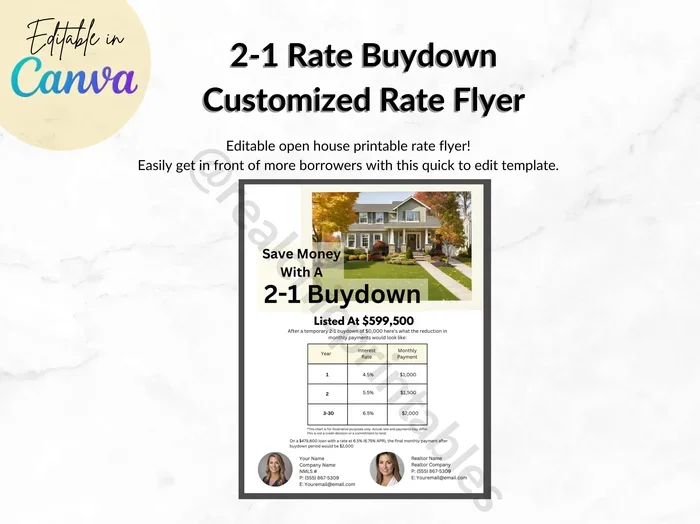
Visual guide about mortgage rate buydown documents
Image source: i.etsystatic.com
The calculation is straightforward. First, find the cost of the points. Multiply the loan amount by the point percentage. For example, one point on a $300,000 loan costs $3,000. Next, find the monthly savings. Subtract the new payment from the old payment. Finally, divide the cost by the monthly savings. This gives you the number of months to break even.
Let us look at a simple example. Imagine a $300,000 loan. The standard rate is 7%. The buydown rate is 6.5%. The cost is one point, or $3,000. The monthly payment drops by $90. You divide $3,000 by $90. The result is 33.3 months. This means you need almost three years to break even.
If you sell the home before 33 months, you lose money. You paid $3,000 upfront but did not save enough in payments. If you stay longer, you start saving money. Every month after 33 months is pure savings. This is why your time horizon matters so much. Buying down interest rate only makes sense if you stay past the break-even point.
You should also consider the type of buydown. Some buydowns are temporary. They lower the rate for the first few years only. These are called temporary buydowns. They are different from permanent buydowns. A permanent buydown lowers the rate for the entire loan term. Temporary buydowns can be useful if you expect your income to rise. But they carry more risk if you cannot afford the higher rate later.
Here is a comparison of the two main types:
| Feature | Permanent Buydown | Temporary Buydown |
|---|---|---|
| Duration | Life of the loan | First 1-3 years only |
| Upfront Cost | Paid by buyer or seller | Often paid by seller or builder |
| Monthly Payment | Stays low forever | Increases after period ends |
| Best For | Long-term owners | Short-term owners or income growth |
| Risk | Low risk if staying long | High risk if rate jumps later |
Temporary buydowns can be tricky. You need to make sure you can afford the payment when it resets. Many buyers get caught off guard by the higher payment later. They thought the low payment would last forever. Always read the fine print. Ask the lender exactly when the rate changes. Rate buydown calculator tools can help you model these scenarios.
You should also factor in taxes. In some cases, discount points are tax-deductible. This can lower the real cost of the buydown. Talk to a tax professional to understand your situation. If you get a tax benefit, your break-even point might be shorter. This adds another layer to the decision. It is not just about the mortgage numbers. It is about your overall financial picture.
When It Makes Sense to Buy Down Your Rate
There are specific situations where buying down the rate is a smart move. You need to match the strategy to your life circumstances. Not every buyer should do this. But for some people, it is the right choice. You need to look at your timeline and your budget.
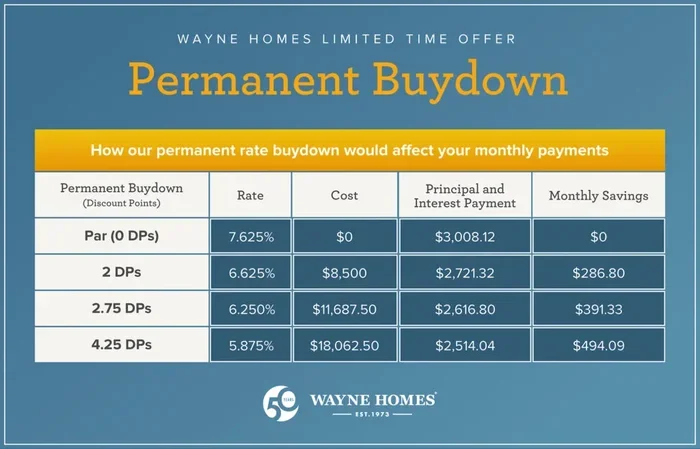
Visual guide about mortgage rate buydown documents
Image source: waynehomes.com
The biggest factor is how long you plan to stay. If you plan to live in the home for ten years or more, a buydown often makes sense. You have plenty of time to pass the break-even point. The long-term savings can be significant. Over ten years, even a small rate drop saves thousands of dollars. Lower mortgage payment means more money in your pocket every month.
Another good scenario is when you have extra cash at closing. Some buyers have strong savings but want to reduce monthly expenses. They prefer a lower payment for budgeting reasons. A lower payment reduces stress. It also frees up cash for other investments. If you have the cash and plan to stay, this is a solid strategy.
Seller concessions are another great opportunity. Sometimes sellers agree to pay for the buydown. This is common in buyer markets. The seller wants to close the deal and offers incentives. If the seller pays for the points, your upfront cost is zero. This makes the buydown a no-brainer. You get a lower rate without spending your own money. Seller paid buydown is one of the best deals you can get.
You should also consider your future income. If you expect your income to go up, a temporary buydown might help. It keeps your payment low while you build your career. But you must be careful. Do not count on income growth that might not happen. Only use this strategy if you are confident about your future earnings.
Here are the key signs that a buydown might be right for you:
- Long Ownership: You plan to stay in the home for 5+ years.
- Extra Cash: You have funds available beyond the down payment.
- Seller Help: The seller offers to pay for the points.
- Budget Focus: You want a lower monthly payment for stability.
- Rate Environment: Rates are high, and buydowns offer significant savings.
These signs do not guarantee success, but they point in the right direction. You still need to run the numbers. But if these factors align, the odds are in your favor. Is it worth it to buy down mortgage rate? In these cases, the answer is often yes.
When You Should Avoid Buying Down the Rate
Just as there are good times to buy down, there are bad times too. You need to recognize when this strategy is a trap. Spending money on points can be a mistake if your plans change. You need to be honest about your future.
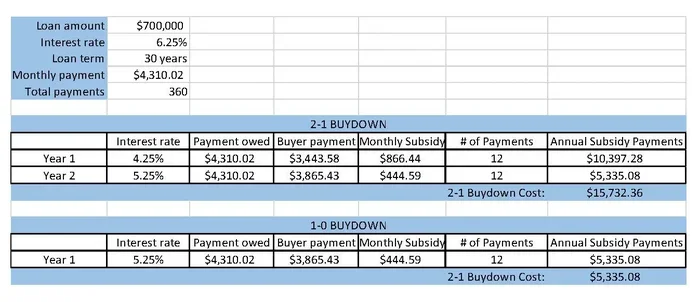
Visual guide about mortgage rate buydown documents
Image source: loansbyirene.com
The biggest red flag is a short time horizon. If you think you might move in two or three years, do not buy down. You will not reach the break-even point. You will lose the money you spent at closing. It is better to take the higher rate and keep your cash. You can use that cash for moving costs or a future down payment.
Cash flow is another concern. If paying points leaves you with no emergency fund, stop. You need money saved for repairs and unexpected events. A home always needs maintenance. If you spend all your cash on points, you are vulnerable. Mortgage points cost should not drain your safety net. Financial security is more important than a slightly lower rate.
Refinance risk is also real. If you think you might refinance soon, do not pay points. Refinancing pays off the old loan and starts a new one. You lose the benefit of the buydown. You spent money to lower a rate you no longer have. This is a common mistake for first-time buyers. They buy down the rate and then refinance within a year. That money is gone forever.
You should also avoid buydowns if the seller will not contribute. If you have to pay the full cost yourself, the math might not work. High rates and high point costs can make the break-even period too long. In a high-rate environment, the cost of points might rise. You need to check the current pricing carefully. Sometimes the cost outweighs the benefit.
Here are the warning signs that you should skip the buydown:
- Short Stay: You plan to move or sell within 3 years.
- Low Cash: Paying points leaves you with no emergency savings.
- Refinance Plans: You expect to refinance within a few years.
- Uncertain Income: Your job or income is not stable.
- High Point Costs: The lender charges too much for the rate drop.
Avoiding a bad deal is just as important as finding a good one. Protecting your cash is a smart financial move. Sometimes the best deal is the one you do not take. Is it worth it to buy down mortgage rate? In these cases, the answer is clearly no.
Exploring Alternatives to Rate Buydowns
Buying down the rate is not the only way to save money on a mortgage. There are other strategies you should consider. Some might work better for your situation. You need to compare all your options before you decide.
One common alternative is buying a less expensive home. A lower loan amount means a lower payment. You do not need to pay points to get this benefit. You just borrow less money. This is often the most effective way to reduce your monthly burden. It also reduces your risk if the market changes.
Another option is to make a larger down payment. This lowers your loan amount and might eliminate private mortgage insurance. PMI costs can be high. Removing PMI saves money every month. Sometimes putting cash into the down payment is better than buying points. You need to compare the savings from PMI removal versus the savings from a lower rate.
You can also look into different loan programs. Some loans have lower rates naturally. Government loans like FHA or VA might offer better terms. Adjustable-rate mortgages might start with a lower rate. But they carry risk later. You need to understand the trade-offs of each loan type. Mortgage rate reduction can come from many sources, not just points.
Improving your credit score is another powerful tool. A higher credit score often gets you a better rate. You can work on this before you apply for the loan. Pay down debt and fix errors on your report. This costs less than buying points and can have a bigger impact. It takes time, but it is worth the effort.
Here is a comparison of common strategies:
| Strategy | Upfront Cost | Monthly Impact | Best For |
|---|---|---|---|
| Buy Down Rate | High (points) | Lower payment forever | Long-term owners |
| Larger Down Payment | High (cash) | Lower payment + no PMI | Those with savings |
| Buy Cheaper Home | Low (same % down) | Much lower payment | Budget-conscious buyers |
| Improve Credit Score | Low (time/effort) | Better rate offered | Those with time to prepare |
| Seller Concessions | Low (seller pays) | Lower payment or costs | Buyer markets |
These alternatives show that points are just one tool. You should use the right tool for your job. Sometimes a combination works best. You might buy a cheaper home and improve your credit. This could save you more than buying points on a expensive home. Think holistically about your finances.
Working with Your Lender on the Decision
Your lender is a key partner in this process. You need to communicate clearly with them. Ask them to show you multiple scenarios. Do not just accept the first offer they give you. Shop around and compare different lenders too.
Ask for a loan estimate that shows different rate options. See the cost with zero points. See the cost with one point. See the cost with two points. Compare the monthly payments and the total costs. This document is your best tool for decision-making. Loan estimate comparison helps you see the real numbers.
You should also ask about lender credits. Sometimes lenders offer credits to cover closing costs. This is the opposite of buying points. You accept a higher rate in exchange for money at closing. This can be good if you are short on cash. You need to decide whether you want lower monthly payments or more cash now. It is a choice between time and money.
Negotiation is possible too. You can ask the seller to pay for the buydown. This is part of the purchase contract. Do not be afraid to ask for this concession. In a slow market, sellers are often willing to help. This can make the buydown much more affordable. Negotiating mortgage terms is a normal part of the process.
Get everything in writing. Do not rely on verbal promises. Make sure the buydown terms are clear in the contract. Know exactly what you are paying for. Know exactly what rate you will get. Protect yourself with clear documentation. This avoids surprises at closing.
Here are questions to ask your lender:
- What is the cost per point?
- How much does the rate drop per point?
- What is the break-even period?
- Are the points tax-deductible?
- Can the seller pay for the points?
- What happens if I refinance later?
Asking these questions shows you are informed. It also helps you get the best deal. Your lender should respect your diligence. If they rush you or hide numbers, find a new lender. You deserve clear and honest advice.
Conclusion
Deciding on a mortgage rate buydown requires careful thought. You need to look at the costs, the savings, and your future plans. Is it worth it to buy down mortgage rate? The answer depends on your unique situation. For long-term owners with extra cash, it can be a great investment. For short-term owners or those with tight budgets, it might be a mistake.
Always calculate the break-even point first. This number tells you the truth about the deal. Do not rely on emotions or monthly payment feelings alone. Look at the total picture. Consider alternatives like a larger down payment or a cheaper home. Compare all your options before you sign.
Use your lender as a resource. Ask for clear comparisons and get everything in writing. If the seller can pay for the points, that changes the math significantly. Take advantage of concessions when they are available. Protect your cash and your financial security above all else.
Making the right choice now saves you stress later. You will know exactly where you stand. You will have a mortgage that fits your life. Take your time and do the math. Your future self will thank you for the careful planning.
Frequently Asked Questions
How much does it cost to buy down one percent?
The cost varies by lender and market, but one point usually costs one percent of your loan amount. This might lower your rate by a fraction of a percent, not a full percent. You need to ask your lender for the specific pricing on your loan.
Can I buy down the rate after closing?
Generally, no. Rate buydowns must be done at closing using discount points. Once the loan is closed, you cannot go back and add points. Your only option after closing is to refinance the loan later.
Are mortgage points tax deductible?
In many cases, discount points are tax-deductible as mortgage interest. However, there are rules about how much you can deduct in the first year. You should consult a tax professional to understand your specific situation and eligibility.
Do sellers always pay for the buydown?
No, sellers do not always pay for the buydown. It depends on the market and your negotiation. In a buyer’s market, sellers are more likely to offer concessions. You must ask for this in your offer contract.
Is a temporary buydown better than a permanent one?
It depends on your goals. A temporary buydown costs less upfront but the rate goes up later. A permanent buydown costs more but lasts forever. Choose based on how long you plan to keep the loan.
What happens if I sell before the break-even point?
If you sell before the break-even point, you lose money on the buydown. You paid upfront costs but did not save enough in monthly payments. The loss is the difference between what you paid and what you saved.