
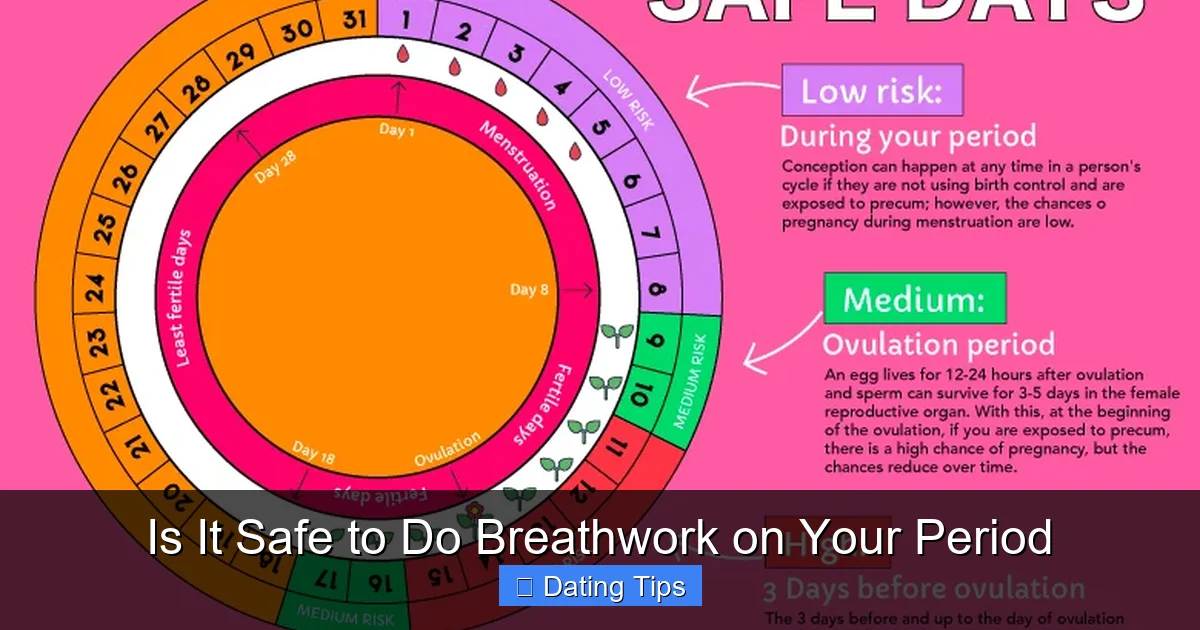
Breathwork during your period is generally safe and even helpful for many women. It can ease cramps, reduce stress, and support hormonal balance without interfering with menstruation. However, certain intense techniques may require modification during heavy flow days. Always listen to your body and adjust practices as needed.
Have you ever felt that familiar mix of fatigue, cramping, and emotional sensitivity during your period? You’re not alone—millions of women experience similar discomfort each month. And if you’re into holistic wellness, you might wonder: Can breathwork really help? More specifically, is it safe to do breathwork on your period?
The answer isn’t black and white. While breathwork is generally considered safe and even beneficial during menstruation, there are nuances depending on your body’s state, the type of breathwork you practice, and any underlying health conditions. Let’s dive in.
Breathwork refers to conscious control of breathing patterns to influence mental, emotional, and physical well-being. Techniques range from simple diaphragmatic breathing to advanced practices like holotropic breathwork or Wim Hof method. Many people use it for stress relief, anxiety reduction, energy boosts, or spiritual connection.
But what happens when your monthly rhythm kicks in? Does your uterus say, “Hold that hyperventilation,” or does breathwork sync beautifully with your cycle?
Let’s explore this together.
Key Takeaways
- Breathwork is typically safe during menstruation — gentle breathing practices like box breathing or alternate nostril breathing pose no risk and can offer comfort.
- It may help reduce period symptoms — studies suggest controlled breathing lowers cortisol, easing cramps, mood swings, and bloating associated with PMS.
- Heavy flow requires caution — avoid inverted poses or forceful breath retention if you’re experiencing heavy bleeding; opt for grounded, upright postures instead.
- Emotional release is common — hormonal shifts during your cycle can make breathwork more emotionally intense; journaling afterward helps process feelings safely.
- Hydration and warmth enhance benefits — drinking herbal teas like ginger or chamomile while practicing supports uterine health and relaxation.
- Consult a healthcare provider if unsure — especially if you have conditions like endometriosis, fibroids, or anemia, get personalized advice before starting new wellness routines.
📑 Table of Contents
- Understanding Menstruation and Breathwork Compatibility
- Types of Breathwork That Are Safe During Your Period
- What to Avoid During Your Period
- Benefits of Breathwork During Menstruation
- Practical Tips for Practicing Breathwork on Your Period
- When to Consult a Healthcare Provider
- Final Thoughts: Listen to Your Cycle
Understanding Menstruation and Breathwork Compatibility
Your menstrual cycle is governed by hormones—estrogen and progesterone fluctuating throughout the month. During your period (Days 1–7), these levels drop sharply after ovulation, triggering uterine lining shedding. This hormonal shift affects everything from blood flow to brain chemistry, often leading to fatigue, irritability, or heightened emotions.
Now, how does breathwork interact with this natural process?
Most traditional and modern breathwork practices don’t interfere with menstruation. In fact, they can complement it by regulating the autonomic nervous system—the part of your body that controls involuntary functions like heart rate, digestion, and hormone production.
When you breathe deeply and slowly, your parasympathetic nervous system activates, promoting rest-and-digest mode. This counteracts the stress response (sympathetic dominance) that many women feel pre-menstrually. Think of it as giving your body permission to slow down and heal.
That said, not all breathwork styles are created equal. Some involve rapid breathing, breath retention, or inverted positions—which may not be ideal during certain phases of your cycle.
The Science Behind Breathwork and Menstrual Health
Research supports the idea that intentional breathing influences pelvic circulation and nerve function. A 2020 study published in *Evidence-Based Complementary and Alternative Medicine* found that slow, deep breathing reduced menstrual pain and improved quality of life in participants with primary dysmenorrhea (painful periods).
Another benefit? Reduced cortisol levels. Chronic stress raises cortisol, which can worsen PMS symptoms and disrupt ovulation. Gentle breathwork lowers cortisol, potentially easing bloating, breast tenderness, and mood swings.
Additionally, improved oxygen delivery through efficient breathing may support tissue repair in the uterus during menstruation. Oxygen is essential for healing, and breathwork enhances its distribution throughout the body—including the pelvic region.
So yes, from a physiological standpoint, breathwork aligns well with your menstrual phase—especially when done mindfully and gently.
Types of Breathwork That Are Safe During Your Period

Visual guide about Is It Safe to Do Breathwork on Your Period
Image source: i.pinimg.com
Not every breathing exercise is suitable for every woman every day of her cycle. Here’s a breakdown of popular breathwork methods and their compatibility with menstruation:
Diaphragmatic Breathing (Belly Breathing)
This foundational technique involves breathing deeply into your diaphragm rather than shallowly into your chest. It’s one of the gentlest forms of breathwork and ideal for beginners.
– Why it’s great during your period: Promotes relaxation, reduces tension headaches, and supports digestive comfort.
– How to do it: Lie on your back or sit comfortably. Place one hand on your chest, the other on your belly. Inhale slowly through your nose for 4 counts, letting your belly rise. Exhale through pursed lips for 6 counts.
– Tip: Pair this with warm tea—ginger or chamomile work wonders for cramp relief.
Box Breathing (Square Breathing)
Also known as tactical breathing, this method uses equal counts for inhale, hold, exhale, and pause.
– Example: Inhale for 4 seconds → Hold for 4 → Exhale for 4 → Pause for 4.
– Safety note: Avoid holding your breath for too long if you feel dizzy. Short holds (2–3 seconds) are fine.
Alternate Nostril Breathing (Nadi Shodhana)
A yoga-based pranayama technique said to balance left and right brain hemispheres.
– Suitability: Generally safe, but skip if you have heavy bleeding—it shouldn’t affect blood flow, but some prefer lighter practices on heavy days.
– Modification: Focus only on inhaling/exhaling through one nostril at a time without switching rapidly.
Holotropic Breathwork
This is more intense—fast, circular breathing combined with music and emotional processing. Often used in therapeutic settings.
– Caution: Not recommended during heavy flow or if you’re prone to emotional overwhelm. Hormonal changes can amplify reactions.
– Alternative: Try gentle forms first. If you want to explore deeper work, schedule it outside your period.
What to Avoid During Your Period

Visual guide about Is It Safe to Do Breathwork on Your Period
Image source: cdn.shopify.com
While most breathwork is harmless, here are red flags to watch for:
Inverted Postures with Breath Retention
Poses like headstands or shoulder stands, especially when paired with breath holds, increase intra-abdominal pressure. Though unlikely to cause harm, they may feel uncomfortable during cramping and aren’t necessary for health.
Forceful Hyperventilation
Rapid, shallow breathing can trigger lightheadedness or tingling—common side effects that overlap with period-related dizziness. Stick to steady, rhythmic patterns.
Ignoring Physical Signals
If you’re exhausted or soaking through pads quickly, prioritize rest over practice. Your body needs extra nutrients and downtime right now.
Remember: There’s no universal rulebook. What works for your best friend may not suit you. Always tune into your inner wisdom.
Benefits of Breathwork During Menstruation

Visual guide about Is It Safe to Do Breathwork on Your Period
Image source: ferty9.com
Beyond general relaxation, breathwork offers targeted perks during your cycle:
Eases Cramping Naturally
Deep breathing relaxes the uterine muscles, reducing spasms. Try this: Before bed, lie on your side and place a heating pad over your lower abdomen. Add 5 minutes of diaphragmatic breathing. Many report less nighttime pain.
Balances Mood Swings
Progesterone dips post-ovulation can trigger sadness or anger. Controlled breathing stimulates the vagus nerve, which calms the amygdala—the brain’s fear center. Result? Fewer emotional rollercoasters.
Supports Detoxification
As your body sheds old tissue, breathwork helps clear metabolic waste via lymphatic drainage. Enhanced circulation aids detox without taxing your liver.
Improves Sleep Quality
Many women struggle to sleep during their period due to discomfort. A pre-bed breathing routine signals safety to your nervous system, making sleep onset easier.
Empowers Body Awareness
Menstruation teaches us about our limits and rhythms. Breathwork deepens this connection. Over time, you’ll notice patterns—like when you need more stillness versus movement.
Practical Tips for Practicing Breathwork on Your Period
Ready to give it a try? Start small and build up:
Create a Cozy Space
Dim lights, soft music, maybe a scented candle (lavender helps!). Use a cushion under your hips if lying down feels awkward.
Stay Hydrated
Dehydration worsens cramps. Sip warm water or herbal tea between breaths.
Track Your Experience
Keep a journal noting:
– How you felt before/after
– Any physical sensations
– Flow intensity
This builds self-trust and reveals what works best for you.
Modify as Needed
On heavy days, stick to seated or reclined positions. Skip advanced techniques until lighter flow returns.
Breathe with Intention, Not Judgment
Some days, your breath will feel effortless. Others, it might falter. Both are okay. The act itself matters more than perfection.
And hey—if you’re feeling low, that’s valid. Sometimes just noticing your breath is enough.
When to Consult a Healthcare Provider
Breathwork is low-risk, but certain conditions warrant professional guidance:
– Heavy or irregular bleeding
– History of anemia
– Endometriosis or fibroids
– Recurrent migraines triggered by breathing changes
A gynecologist or integrative practitioner can advise tailored modifications.
Also consider talking to them if breathwork brings up strong emotions or memories. While processing is normal, unresolved trauma may surface—and that’s worth exploring with support.
Final Thoughts: Listen to Your Cycle
Is breathwork safe during your period? For most women, absolutely—and it could become a cherished monthly ritual. It’s not about adding another task to your plate. Instead, think of it as honoring your body’s wisdom.
Your period isn’t something to endure—it’s a sign your body is functioning. And breathwork? It’s a way to say, “I see you. I support you.”
Start with 3–5 minutes daily. Notice how you feel. Adjust. Celebrate small wins—like getting through a session without reaching for painkillers.
And remember: Healing isn’t linear. Some cycles will feel smoother than others. Be patient. Be kind. And always, always honor your needs.
Because when you care for yourself deeply—physically, emotionally, spiritually—you show up fully for others too.
For more ways to nurture your relationship with your body and partner, check out our article on signs your husband is attracted to you. Understanding attraction goes beyond biology—it includes emotional presence, respect, and shared vulnerability. Just like breathwork, true intimacy starts with presence.
Or explore how to enjoy your marriage without sex, which emphasizes connection beyond physical acts. Emotional and mental closeness often deepens during challenging times—like menstruation—when communication becomes even more vital.
And if you’re curious about spiritual alignment in relationships, read about signs he is your husband from God. Sometimes, the quiet moments—like sitting with your breath during your period—offer clarity about what truly matters.
Ultimately, whether you’re doing breathwork, navigating love, or seeking deeper meaning, your body’s rhythms are your compass. Trust them.
Frequently Asked Questions
Can breathwork stop my period?
No, breathwork cannot halt menstruation. The menstrual cycle is driven by hormonal fluctuations, primarily estrogen and progesterone. While breathwork influences the nervous system and may ease symptoms, it doesn’t alter ovarian or uterine hormone production.
Does breathwork increase blood flow during menstruation?
Gently, it can. Improved circulation from deep breathing may enhance pelvic blood flow, which could slightly increase menstrual output. However, this effect is usually minimal and varies by individual. If you notice significantly heavier flow, consult a doctor.
Is it bad to do breathwork while cramping?
Not at all—in fact, it can help. Deep breathing relaxes tense muscles and reduces pain perception. Avoid aggressive techniques, but gentle diaphragmatic breathing is encouraged during cramps.
Can breathwork help with PMS symptoms?
Yes. By lowering cortisol and activating the parasympathetic nervous system, breathwork may reduce irritability, bloating, breast tenderness, and mood swings commonly experienced before and during your period.
Should I avoid breathwork if I have endometriosis?
Generally no—but listen carefully. Some women find inversion or intense breathwork uncomfortable with endometrial lesions. Start slow with gentle practices and monitor your body’s response. A healthcare provider can guide you.
How long should I practice breathwork during my period?
Begin with 3–5 minutes daily. As you feel comfortable, you can extend to 10–15 minutes. Consistency matters more than duration. On very heavy or painful days, shorter sessions or simply mindful breathing throughout the day work well.
