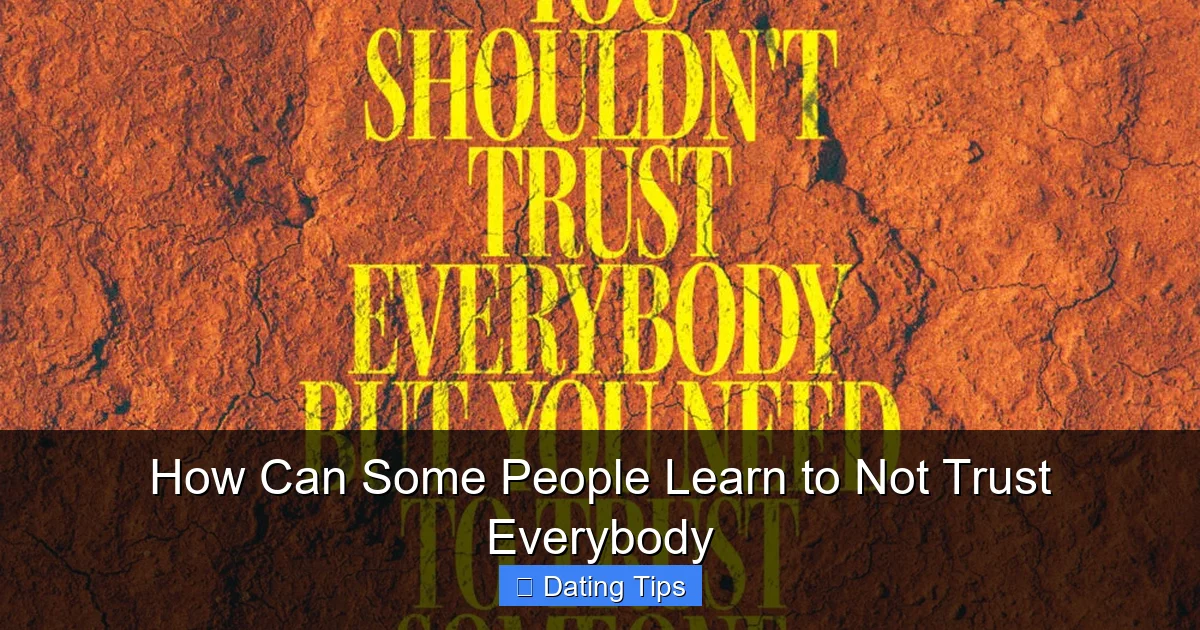
How Can Some People Learn to Not Trust Everybody
Not trusting everyone doesn’t mean being cold—it means being wise. In the world of dating, where emotions run high and intentions are hard to read, learning to guard your heart without closing yourself off is a powerful skill. This article explores why some people naturally learn not to trust everyone, and how you can do the same while staying open to love.
Have you ever found yourself falling for someone too fast, only to get hurt later? Or maybe you catch yourself second-guessing every text, every smile, every promise—because deep down, you know that not everyone deserves your full trust. The truth is, some people do learn to not trust everybody, and they do it not out of bitterness, but out of wisdom. In the world of dating, where hearts are vulnerable and lines are easily crossed, this kind of emotional intelligence can be a game-changer.
But here’s the thing: learning not to trust everyone doesn’t mean shutting down. It means becoming discerning—able to see who’s truly trustworthy and who might be playing games. And honestly? That’s one of the most attractive qualities a person can have. Confidence in your own judgment, calm under pressure, and the ability to walk away from toxic dynamics? Yeah, those turn heads. So if you want stronger relationships, less drama, and more peace in your love life, it’s time to understand how some people master the art of selective trust.
In this article, we’ll break down exactly how you can develop that same skill. We’ll talk about why people learn not to trust everyone, what behaviors signal danger (and safety), and how to build real connection without losing yourself. Whether you’re newly single, navigating a confusing situation, or trying to heal from past pain, these insights will help you move forward with clarity—not fear.
Key Takeaways
- Emotional boundaries are essential: Setting limits on how much you share and when helps protect your emotional well-being in relationships.
- Trust develops over time: True trust isn’t instant—it grows through consistent actions, not just kind words or grand gestures.
- Red flags matter more than feelings: Ignoring warning signs because “he seems nice” often leads to heartbreak. Stay alert to patterns, not just chemistry.
- Vulnerability is smart, not reckless: You can be open emotionally while still protecting yourself—vulnerability with boundaries builds deeper connections.
- Past hurts shape present choices: If you’ve been hurt before, it’s okay to take things slower and observe more closely. Healing allows better judgment.
- Self-trust strengthens relationship trust: When you believe in your own worth and intuition, you attract healthier partners and respond better to dishonesty.
- It’s not about distrust—it’s discernment: Learning not to trust everyone means trusting your instincts, not becoming cynical.
📑 Table of Contents
Why Do Some People Stop Trusting Everyone?
Let’s start with the big question: why would anyone choose to stop trusting everyone? After all, trust feels warm, welcoming, and safe, right? Well, not always. For many people, especially those who’ve experienced betrayal, disappointment, or repeated letdowns, trust becomes a risk—not a gift. When you’ve been burned before, the instinct to protect yourself makes perfect sense.
Take Sarah, for example. She fell in love with her ex after three months of dating. He was charming, attentive, and promised forever. But within six months, he started lying about his whereabouts, gaslighting her when she asked questions, and eventually cheated. Now, every new guy she dates gets extra scrutiny. She doesn’t shut down entirely—she still believes in love—but she takes longer to open up, watches his actions more closely, and sets clear boundaries early on.
This isn’t paranoia; it’s learned caution. Over time, people like Sarah realize that trusting too quickly or completely opens them up to manipulation, heartbreak, and self-doubt. They begin to notice patterns—like how certain types of men say all the right things but act inconsistently, or how flattery often masks insecurity.
Another reason some people learn not to trust everyone? Self-respect. When you value yourself enough to say “I deserve honesty,” you naturally start filtering out dishonest people. You don’t need constant reassurance because you already know your worth. And guess what? Those who respect themselves tend to attract others who match that energy.
Also, consider cultural or family influences. Maybe your parents modeled distrust due to their own experiences, or perhaps growing up in an unstable environment taught you to assume the worst until proven otherwise. These aren’t flaws—they’re survival mechanisms that evolved into healthy habits.
Ultimately, learning not to trust everyone is rarely about rejecting people altogether. It’s about recognizing that trust must be earned—not given freely. And that’s okay. In fact, it’s mature.
The Difference Between Distrust and Discerning
A common misconception is that choosing not to trust someone equals being closed-off or rude. But that’s far from true. What we’re really talking about is discerning—the ability to assess situations and people based on evidence, not assumptions.
Think of discernment like a GPS for your heart. Instead of driving blindly into relationships hoping everything turns out okay, you check the map along the way. You notice if the route keeps changing directions, if the scenery looks suspicious, or if other drivers seem unreliable. Similarly, in dating, you pay attention to whether your partner’s words align with their actions, whether they treat others with kindness, and whether they honor your boundaries.
Discerning isn’t the same as judging. You’re not labeling people as “good” or “bad” upfront. You’re simply observing—gathering data so you can make informed decisions later. And that takes courage, not cynicism.
How to Spot Unreliable People Early
Visual guide about How Can Some People Learn to Not Trust Everybody
Image source: somewisewords.com
One of the best ways to learn not to trust everyone is by recognizing warning signs early. Not every red flag means disaster—sometimes people slip up once and grow from it. But repeated inconsistencies? Those are tell-tale signs.
Here are some common behaviors that suggest someone may not be trustworthy:
- Inconsistency between words and actions: If they claim to value commitment but cancel plans last minute without explanation, that’s a pattern.
- Gaslighting or minimizing your concerns: When you express hurt and they dismiss it as “overreacting” or “too sensitive,” they’re avoiding accountability.
- Secretive behavior around communication: Constantly deleting texts, refusing video calls, or getting defensive when you ask about their day—these can signal deception.
- Lack of follow-through: Promises made but never kept, even small ones like showing up on time or remembering important details.
- Playing the victim: Blaming others for their mistakes instead of owning up to them shows low emotional maturity.
Now, none of this means you should jump to conclusions after one incident. But if multiple red flags appear across different interactions, it’s wise to pause and reflect. Ask yourself: Does this person consistently show up as their word?
For instance, Mark noticed his date, Lisa, always talked about wanting deep connection but avoided serious conversations. When he brought up future goals, she deflected with jokes. Later, he learned she’d done the same with previous partners. He didn’t confront her immediately—instead, he slowed down the pace, tested her consistency, and ultimately decided to step back. Smart move.
Remember: spotting unreliable people isn’t about perfection. It’s about awareness. The more you practice noticing these cues, the easier it becomes to protect your energy.
Practical Tips for Observing Behavior Safely
You don’t need to spy or dig up dirt to figure out if someone’s trustworthy. Just observe naturally:
– Pay attention to how they handle stress.
– Notice who they hang out with and how they treat strangers.
– Watch whether they apologize sincerely when wronged.
– See if they listen actively during conversations.
– Check if they keep promises—even small ones like returning a call within 24 hours.
These aren’t tests; they’re organic ways to gauge compatibility. And the beauty is, you’re doing this without seeming suspicious. Most people appreciate genuine interest, not interrogation.
If you’re unsure, try setting gentle boundaries and watching reactions. For example: “I’m not comfortable sharing personal stories yet—let’s focus on getting to know each other first.” Notice if they respect that, or push harder. Their response reveals a lot.
Building Trust Without Losing Yourself

Visual guide about How Can Some People Learn to Not Trust Everybody
Image source: asiaiplaw.com
Okay, so you’ve decided to stop trusting everyone blindly—great! But now comes the tricky part: how do you stay open to love while guarding your heart? Because if you become so cautious that you never date again, you’ve lost the point.
The secret lies in gradual vulnerability. You don’t have to reveal everything at once. Start small—share hobbies, opinions, weekend plans—and see how the other person responds. Are they supportive? Interested? Honest?
And remember: trust isn’t binary. It’s fluid. One moment you might trust them with something minor; the next, you withhold something bigger until you feel safer. That’s perfectly normal.
Also, prioritize mutual respect. If someone pushes you to disclose too soon or pressures you into physical intimacy before you’re ready, that’s a red flag. Real connection respects your pace.
Another key: surround yourself with trusted friends who can offer objective feedback. Sometimes our own fears cloud judgment. A close friend might say, “He sounds sweet, but I’ve seen him treat women poorly before,” giving you valuable perspective.
And don’t forget self-reflection. Ask: Am I projecting past trauma onto this person? Am I assuming the worst because I’m insecure? Honesty here helps separate real risks from imagined ones.
Creating Safe Spaces for Authentic Connection
When you learn not to trust everyone, you create space for true connection—not performative romance. How?
First, communicate your needs clearly. Say something like: “I’m taking things slow because I value honesty and consistency.” Most decent people will respect that.
Second, seek partners who mirror your values. If you prioritize loyalty, look for guys who talk about commitment seriously. If you value communication, find someone willing to have tough conversations.
Third, celebrate small wins. When someone shows up reliably, acknowledge it. Positive reinforcement encourages good behavior and builds confidence in your choices.
Lastly, practice self-care. When you feel anxious about a new relationship, ground yourself: breathe, journal, talk to a friend. Remind yourself: you’re safe, you’re worthy, and you’re making thoughtful decisions.
Healing from Past Betrayal to Future Clarity

Visual guide about How Can Some People Learn to Not Trust Everybody
Image source: img.picturequotes.com
If you’ve been hurt before, healing is essential before you can learn not to trust everyone effectively. Otherwise, old wounds might cause you to misread new situations or reject good people unfairly.
Start by processing your emotions—with therapy, journaling, or trusted confidants. Don’t bottle up anger or shame. Understand why the betrayal affected you so deeply. Was it the lie itself, or the violation of trust?
Then, work on rebuilding self-trust. Reconnect with activities that make you feel capable and happy. Reaffirm your worth daily. When you genuinely believe you’re deserving of respect, you won’t tolerate disrespect—even from well-meaning partners.
Over time, forgiveness becomes possible. But forgiving doesn’t mean forgetting or rushing back into danger. It means releasing bitterness so you can move forward without carrying unnecessary baggage.
Many survivors find strength in writing letters they never send—expressing feelings, letting go, and reclaiming power. Others join support groups where shared experiences reduce isolation.
Whatever path you choose, be patient. Healing isn’t linear. Some days you’ll feel strong; others, fragile. That’s okay. Progress matters more than perfection.
When to Walk Away (and When to Give Grace)
Part of learning not to trust everyone is knowing when to exit a situation—and when to extend grace. Not every mistake deserves immediate exile. But repeated harm? That’s a sign to prioritize your peace.
Use this framework:
– One-time slip-up: Consider context. Was it a lapse in judgment? Can they take responsibility?
– Repeated offenses: Especially if they minimize or repeat them, it’s time to reevaluate.
– Emotional manipulation:: Gaslighting, guilt-tripping, or love-bombing after wrongdoing? Run.
On the flip side, some people show remorse, change, and effort. If they’re working on themselves and respecting your boundaries, there’s room for growth. But set clear expectations: change requires proof, not just promises.
Remember: walking away isn’t failure—it’s self-preservation. And staying in toxic dynamics out of fear or obligation? That’s where real damage happens.
Cultivating Healthy Relationships Through Selective Trust
At its core, learning not to trust everyone is about attracting better relationships. When you stop wasting time on unworthy people, you create space for genuine connections. And those? They’re worth every bit of careful consideration.
Healthy relationships thrive on mutual respect, transparency, and emotional availability. You don’t need to be perfect—just honest about your needs and boundaries. And if someone can’t meet you halfway? That’s their loss, not yours.
Also, don’t confuse caution with isolation. You can be selective while still being loving, generous, and open-hearted. In fact, the people who appreciate your discernment often admire your strength and integrity.
Plus, as you build confidence in your choices, dating becomes less stressful. You’re not guessing anymore—you’re aligning. And alignment attracts abundance.
Long-Term Benefits of Emotional Discernment
Choosing not to trust everyone everywhere leads to profound benefits:
– Fewer disappointments: You avoid toxic dynamics before they escalate.
– Stronger self-esteem: You act from strength, not desperation.
– Deeper connections: Quality over quantity wins every time.
– Less anxiety:: Knowing your boundaries gives you peace.
– Greater freedom:: You’re not tied to anyone who doesn’t honor you.
Imagine waking up without dread about a text message, without replaying arguments in your head, without wondering if you’re being too sensitive. That’s the life emotional discernment creates.
Final Thoughts: Trust Your Gut, Protect Your Peace
Learning not to trust everyone isn’t about building walls—it’s about building wisdom. It’s about saying “no” to shortcuts and “yes” to authenticity. It’s about choosing yourself without becoming selfish.
And here’s the beautiful truth: when you stop trusting everyone blindly, you start trusting yourself—your intuition, your boundaries, your right to happiness. And that? That draws the right people toward you.
So go ahead—observe more, share wisely, and move slowly. Let your heart heal, your standards rise, and your choices reflect your worth. Because the kind of love you deserve isn’t rushed, pressured, or conditional. It’s steady, respectful, and real.
And if you ever feel stuck? Remember: healing is possible. Growth is ongoing. And you’ve got this.
Frequently Asked Questions
Is it normal to not trust everyone after being cheated on?
Absolutely. Trauma affects trust, and it’s healthy to take time rebuilding confidence. Use this period to reflect, set boundaries, and focus on self-growth. Healing doesn’t mean forgetting—it means protecting yourself while opening to love again when ready.
How long should I wait before trusting someone again?
There’s no fixed timeline. Trust rebuilds through consistent actions over time. Focus on how they treat you daily—honesty, reliability, and respect matter more than days passed. If they prove trustworthy repeatedly, trust can return naturally.
Can being overly cautious hurt my chances at love?
Maybe at first—but long-term, discernment attracts better matches. Quick hookups rarely lead to meaningful connections anyway. Prioritize quality relationships over speed; true love respects your boundaries.
What if my friends think I’m too guarded?
Your comfort level matters most. Genuine friends will support your journey. Politely explain that you’re prioritizing emotional safety—this isn’t about them, but about your well-being. Healthy relationships include mutual understanding.
How do I know if I’m being paranoid instead of protective?
Ask: Is my concern based on facts or fears? Do I assume the worst without evidence? If yes, journal triggers and seek feedback from trusted allies. Paranoia clouds judgment; protection uses observation wisely.
Should I confront someone about their unreliability?
Only if safe and constructive. Choose a calm moment, use “I” statements (“I felt uneasy when…”), and listen openly. Avoid accusations. If they dismiss concerns or repeat patterns, distance yourself—confrontation won’t fix fundamental issues.