
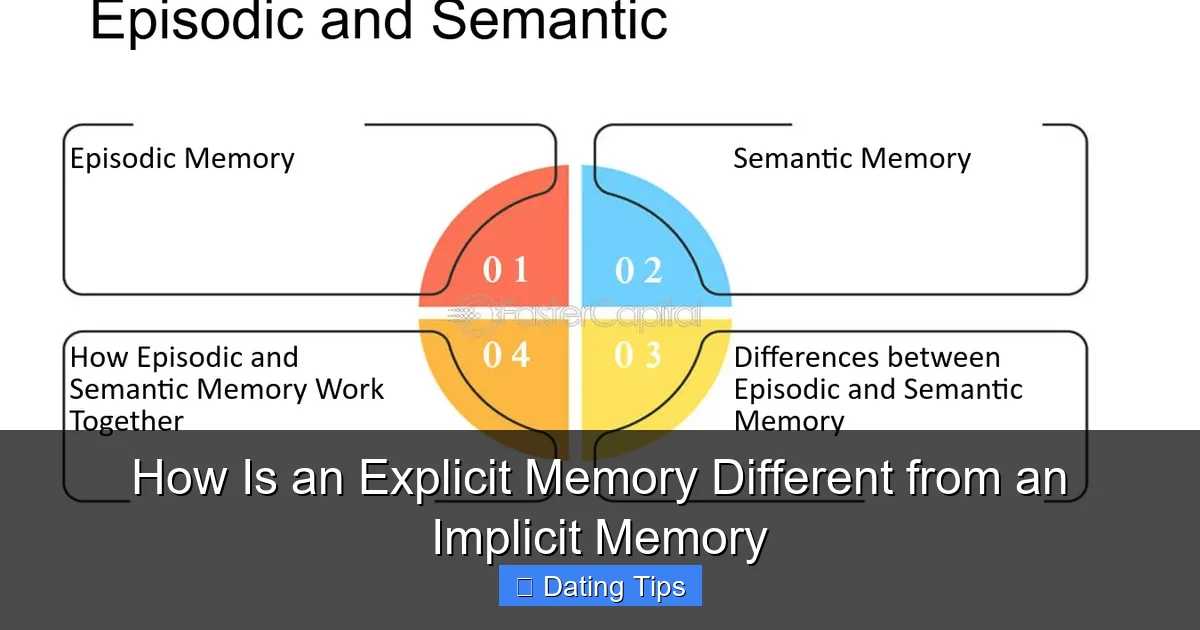
Explicit memory involves consciously recalling facts and events—like remembering your first date or a loved one’s birthday. In contrast, implicit memory works behind the scenes, influencing habits, reactions, and automatic behaviors without conscious awareness. Understanding both types helps you recognize how past experiences shape present emotions and relationship dynamics.
How Is an Explicit Memory Different from an Implicit Memory?
Have you ever felt a sudden wave of emotion when you smell something familiar—like your ex’s perfume or your first date spot? Or maybe you effortlessly ride a bicycle even though you haven’t pedaled in years. These experiences reveal two powerful but very different ways our brains remember things: explicit memory and implicit memory. While both shape who we are and how we connect with others, they operate in entirely separate parts of the mind—and understanding their differences can transform how you navigate love, loss, and personal growth.
In relationships, memories aren’t just background noise. They’re the foundation of trust, the source of joy, and sometimes, the root of pain. Whether it’s remembering your partner’s laugh or subconsciously flinching at loud voices because of a past trauma, memory plays a starring role in every interaction. That’s why knowing how explicit and implicit memory work isn’t just academic—it’s essential for building healthier, more fulfilling connections.
Let’s dive into what makes these two memory systems unique, how they impact your emotional life, and practical ways to harness them in your romantic journey.
Key Takeaways
- Explicit memory is conscious: It includes remembering specific events (episodic) or general knowledge (semantic), like recalling a wedding day or knowing your partner’s favorite song.
- Implicit memory is unconscious: It affects skills and habits without deliberate thought—such as riding a bike or feeling anxious around someone who once hurt you.
- Brain regions differ: The hippocampus supports explicit memory, while implicit memory relies on areas like the basal ganglia and cerebellum.
- They influence relationships differently: Explicit memories build shared history; implicit ones shape emotional triggers and comfort levels in intimacy.
- Both can be strengthened: Mindfulness, journaling, and therapy help clarify implicit patterns, while shared activities deepen explicit bonds.
- Memory errors matter: Misremembering events (source confusion) or reacting emotionally to old wounds shows how intertwined these systems are in love.
- Practical use in dating: Being aware of both types helps you process breakup pain, avoid repeating negative patterns, and create meaningful new memories together.
📑 Table of Contents
What Is Explicit Memory?
Explicit memory, also called declarative memory, is the kind you actively think about. It’s the stuff you can put into words: “I remember that trip to Paris,” or “I know that Shakespeare wrote Hamlet.” This type of memory falls into two main categories—episodic and semantic.
Episodic memory covers personal experiences: birthdays, vacations, first kisses. Semantic memory includes general knowledge: facts, dates, vocabulary. Both require conscious effort to retrieve. For example, if you ask yourself, “Where were we when we met?” and recall a rainy café downtown, that’s explicit memory at work.
These memories are fragile. Without rehearsal or emotional weight, they fade quickly. But when they’re vivid—like the moment you said “I do”—they become anchors in your identity and relationships.
Examples of Explicit Memory in Daily Life
- Recalling your first kiss under the stars
- Remembering your partner’s reaction to your proposal
- Knowing that pineapple doesn’t belong on pizza (thanks, childhood taunts!)
In dating, explicit memories build your narrative. They’re the stories you share, the inside jokes that grow sweeter over time, and the milestones that define your bond. When you revisit these moments—through photos, letters, or simply talking—you reinforce emotional closeness.
What Is Implicit Memory?
Visual guide about How Is an Explicit Memory Different from an Implicit Memory
Image source: i.ytimg.com
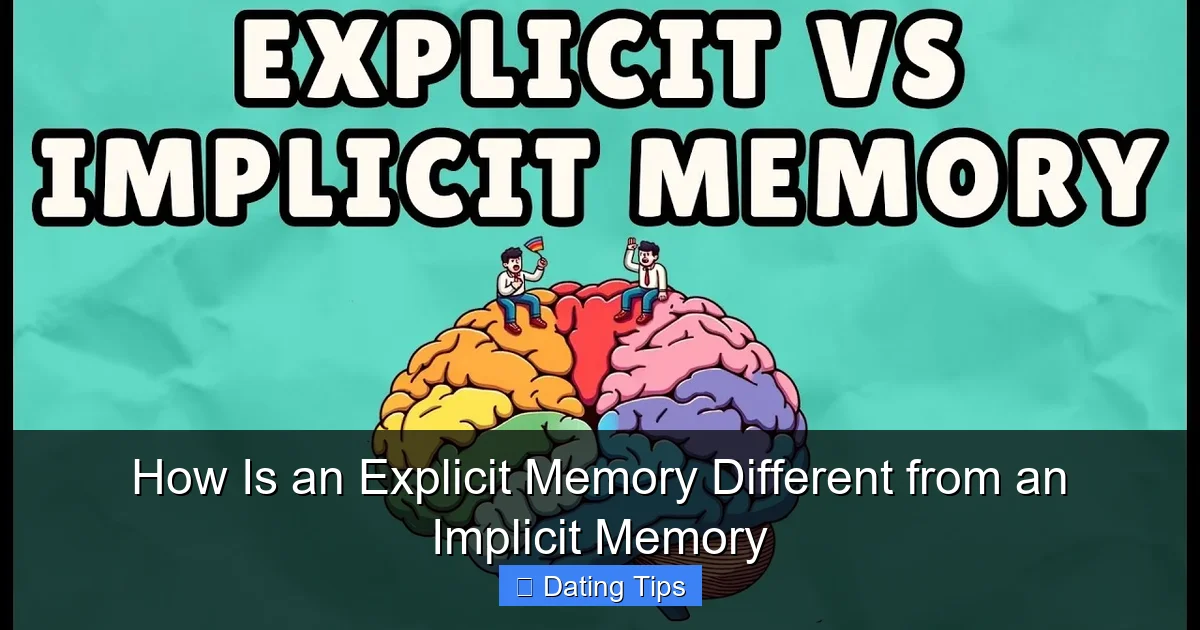
Unlike explicit memory, implicit memory operates beneath awareness. You don’t have to think about it; it just happens. Also known as non-declarative memory, this system controls habits, skills, and conditioned responses.
Think of riding a bike: once learned, the motion becomes second nature. Or how certain sounds, faces, or smells instantly trigger fear or comfort—even if you can’t explain why. These are implicit memories shaping your behavior without your input.
This system includes procedural memory (skills like typing or dancing) and classical conditioning (associating stimuli with feelings). For instance, if someone cheated on you early in a relationship, your brain might automatically tense up during arguments—not because you consciously decided to, but because your body remembers the pattern.
Real-Life Implicit Memory Scenarios
- Feeling uneasy around strangers after being stalked
- Automatically smiling when your partner says your name
- Knowing exactly how to open a stubborn jar lid (without trying)
In relationships, implicit memory influences chemistry and compatibility. It’s why some people feel instantly safe with others, or why certain gestures—like holding hands—trigger warmth even before your mind processes it.
The Brain Behind the Memories
Visual guide about How Is an Explicit Memory Different from an Implicit Memory
Image source: hips.hearstapps.com
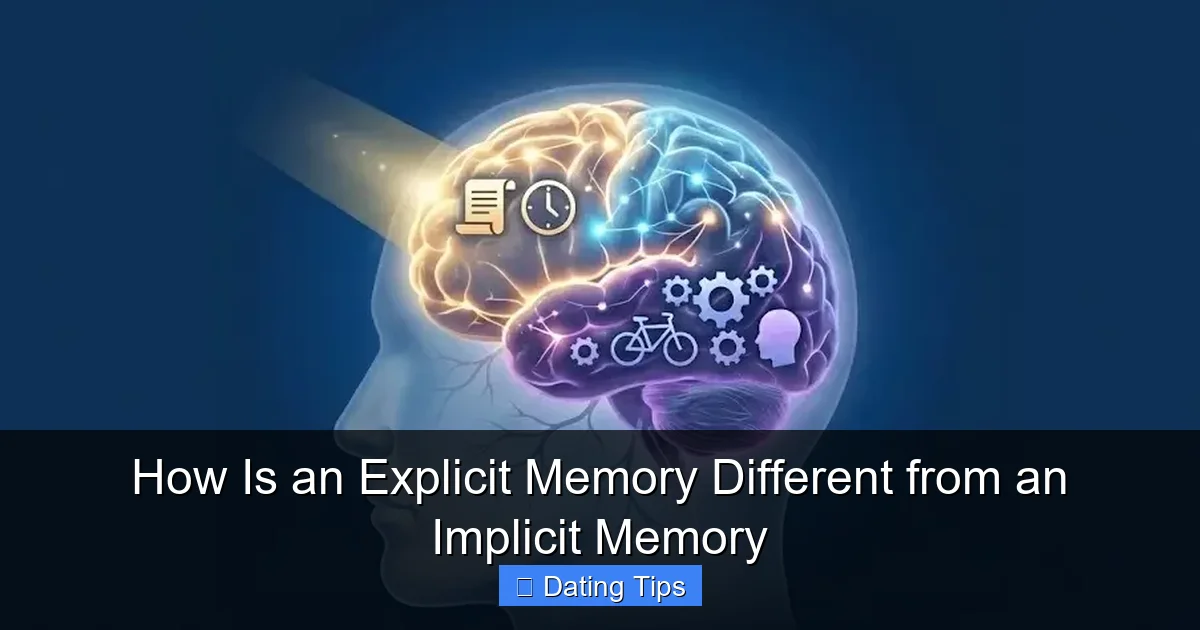
The science behind these memory types is fascinating. Explicit memory primarily relies on the hippocampus, a small but mighty structure deep in the brain. Damage here—as seen in Alzheimer’s patients—can erase recent memories while leaving older ones intact.
Implicit memory, by contrast, depends on other regions: the basal ganglia (for habits), amygdala (for emotional associations), and cerebellum (for coordination). These areas work seamlessly, often without your knowledge, to keep you functioning smoothly.
Neuroplasticity allows both systems to adapt. Trauma can embed painful implicit memories; therapy and mindfulness can rewire them. Similarly, positive experiences strengthen explicit memories through repetition and emotional significance.
Understanding this neuroscience helps demystify why some memories feel “stuck” while others fade. It also explains why healing from heartbreak isn’t just about logic—it’s about rewiring deeply embedded neural pathways.
How Memory Shapes Relationships
Visual guide about How Is an Explicit Memory Different from an Implicit Memory
Image source: cognitivetrain.com
Memories don’t exist in isolation—they ripple through every aspect of connection. Explicit memories create shared histories. Implicit ones set the emotional tone.
When you recall a funny argument you had last month and laugh about it now, that’s explicit memory strengthening your bond. But when your stomach tightens at the sound of raised voices—because of a past betrayal—that’s implicit memory protecting (or warning) you.
Over time, couples accumulate thousands of these moments. Some become cherished traditions (“We always order tacos on Friday”); others remain buried but still influence how you react to conflict or affection.
Consider this: if you’ve experienced rejection before, your implicit memory might make you pull away during tension—even if your rational mind knows your current partner is trustworthy. Conversely, joyful explicit memories (“He surprised me with flowers every Valentine’s Day”) can boost security and intimacy.
Recognizing both types helps you distinguish between healthy caution and irrational fear. It also empowers you to curate new, positive memories that overwrite old patterns.
Memory Errors in Love
Memory isn’t perfect. Confabulation—filling gaps with false details—is common. Source amnesia? Mixing up where you heard a story. These errors happen in relationships too. Maybe you misremembered your partner’s promise, leading to mistrust. Or you conflate past betrayals with present behavior.
Being aware of these pitfalls fosters empathy. Instead of assuming malice, ask: “Could my memory be distorting this?” This curiosity builds resilience and prevents unnecessary conflicts.
Healing Through Memory Awareness
Breaking up hurts—not just emotionally, but neurologically. Heartbreak rewires implicit memory, making breakups feel cyclical. Every new relationship risks triggering old wounds. But awareness changes everything.
By identifying implicit patterns—like anxiety around commitment—you gain control. Techniques like journaling, therapy, and mindfulness help surface hidden memories. Once named, they lose power. You realize, “Oh, that fear comes from my parents’ divorce, not my boyfriend.”
Meanwhile, consciously creating new explicit memories shifts your focus forward. Plan surprise dates, write love notes, or revisit places that symbolize happiness. Each act plants seeds for stronger future connections.
If you’re struggling post-breakup, consider exploring how implicit memories influence your dating style. Are you drawn to unavailable partners? Does jealousy flare too easily? Therapy can untangle these threads, freeing you to choose healthier paths.
Remember: healing isn’t erasing the past—it’s integrating it wisely.
Practical Tips to Strengthen Positive Memories
- Create rituals: Weekly game nights or morning coffees build repeatable, joyful explicit memories.
- Document moments: Keep a shared photo album or voice memo log of inside jokes.
- Practice gratitude: Write down three things your partner did well each week—this reinforces positive neural pathways.
- Address triggers: If a smell reminds you of a bad breakup, don’t avoid it—acknowledge it, then redirect attention to happy thoughts.
Memory and Emotional Intelligence
Emotional intelligence (EQ) thrives on memory awareness. High EQ individuals recognize when implicit memories drive reactions. They pause before responding to anger, knowing it may stem from childhood neglect, not current slights.
Similarly, they nurture explicit memories that celebrate connection. They remember anniversaries, learn partners’ love languages, and express appreciation consistently.
Developing EQ means asking: “Am I reacting based on truth or trauma?” It’s about balancing honesty with compassion—for yourself and others.
In dating, this skill prevents jumping to conclusions. If your partner forgets your anniversary, instead of assuming indifference, check: “Did something stressful happen? Is my memory accurate?” Curiosity replaces assumption.
Moreover, sharing vulnerable memories builds trust. Telling your partner about a painful past experience—and how you’ve healed—invites intimacy. It says, “I trust you enough to let you see my scars.”
Building Trust Through Shared Memory
Trust isn’t built in days—it’s etched in micro-moments. When you both remember small preferences (“You always drink oat milk lattes”) and honor them, reliability grows. So does safety.
Conversely, broken promises poison explicit memory. Repeated letdowns create implicit scripts like, “People leave eventually.” Healing requires consistent, trustworthy actions until old patterns fade.
If you’re rebuilding after betrayal, focus on creating new, positive explicit memories. Over time, these rewrite the narrative. Your partner becomes proof that not everyone breaks their word.
Technology, Memory, and Modern Dating
Digital life complicates memory. Texts, photos, and social media preserve explicit memories—but also distort them. Do you remember your first date or just the Instagram post? Algorithms curate highlight reels, making relationships feel curated rather than real.
Meanwhile, implicit memory suffers from constant stimulation. Notifications, dating apps, and endless scrolling train your brain for instant gratification, weakening deep memory formation.
To counter this:
- Limit screen time before bed—sleep consolidates memories.
- Unplug during quality time: no phones at dinner or walks.
- Use digital tools mindfully: save sweet texts, but don’t obsess over likes.
Creating offline rituals strengthens both memory types. A handwritten letter beats a text any day—it’s slower, more thoughtful, and lingers longer in your mind.
Also, be wary of idealizing past relationships. Photos show perfection, but real memories include messiness. Comparing current partners to filtered ghosts sets unrealistic expectations.
Instead, practice presence. Notice how your partner laughs today—not how they compare to someone else. This grounds you in the real, not the remembered.
Memory in Long-Distance Relationships
Distance strains both memory types. Explicit memories fade without reinforcement. Implicit ones weaken when physical touch (a hug, kiss) is absent—the primary vehicle for emotional encoding.
Combat this by scheduling video calls that recreate shared spaces. Cook the same meal together virtually. Send voice notes mimicking your usual morning routine. These acts mimic co-presence, keeping implicit bonds alive.
Also, plan visits strategically. One big trip isn’t enough—schedule monthly mini-visits if possible. Each encounter plants fresh explicit memories, while repeated exposure rebuilds implicit安全感 (security).
If long-distance ends, ease back into routines. Rediscover coffee shops, parks, or hobbies you loved before. New contexts create new memories, helping overwrite old patterns tied to separation anxiety.
Conclusion: Memory as a Bridge, Not a Barrier
Explicit and implicit memory aren’t enemies—they’re collaborators. One crafts your story; the other runs your instincts. Together, they guide your choices in love.
Understanding their differences doesn’t mean labeling memories as “good” or “bad.” It means recognizing their roles so you can navigate them wisely. When you catch yourself reacting to a trigger, pause. Ask: “Is this real, or is it replaying an old tape?”
And when you create beautiful moments—whether through a surprise picnic or a heartfelt conversation—you’re planting seeds for future happiness. Every shared smile, every resolved disagreement, every quiet night cuddled on the couch adds to your collective memory bank.
In dating and beyond, memory is currency. Spend it on what matters: authenticity, growth, and connection. Because the best relationships aren’t built on perfect recall—they’re built on choosing to remember the good, release the pain, and keep showing up, again and again.
Frequently Asked Questions
Can explicit and implicit memory work together in relationships?
Absolutely. Explicit memories provide the narrative—“We got engaged at sunset”—while implicit memories create the emotional resonance—the warmth you feel when thinking about it. Both enrich intimacy.
How can I heal from implicit memories affecting my current relationship?
Practice self-awareness: journal triggers, seek therapy, and communicate openly with your partner. Over time, new positive experiences overwrite old neural pathways.
Are explicit memories more important than implicit ones in love?
Not inherently. Explicit memories build shared history; implicit ones ensure emotional safety. Both are vital—ignoring either leads to imbalance.
Can false memories harm relationships?
Yes. If you misremember your partner’s actions (source amnesia), it breeds mistrust. Honesty about memory limitations fosters empathy and reduces conflict.
How do memories influence attraction?
Implicit memory drives instant chemistry—feeling “right” without explanation. Explicit memory sustains it through shared stories and mutual respect.
Is it normal to forget explicit memories over time?
Yes. Without reinforcement, explicit memories fade—especially minor ones. Major emotional events (like meeting your partner) tend to endure due to hippocampal encoding strength.
