
Peer pressure can create intense emotional stress, especially during dating and young adulthood. Learning to say no without guilt or fear is essential for mental well-being. This guide offers practical, compassionate strategies to build self-confidence, set boundaries, and make choices aligned with your values—even when others disagree. You don’t have to fit in to be loved or accepted.
Let’s be real—everyone feels it at some point: that nagging voice telling you to do something just because everyone else is doing it. Whether it’s skipping class to hang out with friends, trying alcohol for the first time, or even making a major decision about relationships based on what your group thinks, peer pressure sneaks up quietly and can feel impossible to resist. And when that pressure comes wrapped in romance—like feeling pushed into physical intimacy or pressured to act a certain way around a crush—it can become even more confusing and emotionally taxing.
The truth is, you are not alone. Millions of teens and adults face this daily, especially in dating scenarios where the desire to belong clashes with personal values. But here’s the good news: you don’t have to surrender your peace to fit in. In fact, choosing authenticity over approval isn’t just brave—it’s healthier. This article will walk you through healthy ways to deal with the stress of peer pressure, so you can navigate relationships, friendships, and life’s challenges from a place of strength—not fear.
—
Key Takeaways
- Recognize the signs of unhealthy peer pressure: It often involves manipulation, guilt-tripping, or threats disguised as friendship or romance.
- Strengthen your self-worth: When you value yourself, external opinions lose power over your decisions.
- Practice assertive communication: Use “I” statements like “I feel uncomfortable” instead of “You’re wrong” to express boundaries kindly but firmly.
- Surround yourself with supportive people: Positive influences reinforce your confidence and reduce the need to conform under stress.
- Develop a personal code of ethics: Know your non-negotiables—whether related to intimacy, honesty, or lifestyle—and protect them fiercely.
- Seek help when needed: Talking to a counselor or trusted mentor can provide clarity during confusing times.
- Remember: true connection respects autonomy: Healthy relationships allow both partners to grow independently and together.
📑 Table of Contents
- Understanding Peer Pressure in Modern Relationships
- Building Self-Awareness: Knowing Your Limits
- Communicating Assertively Without Apologizing
- Cultivating Supportive Relationships
- Managing Stress Through Mindfulness & Self-Care
- Making Peace With Imperfection
- When Peer Pressure Crosses Into Abuse
- Long-Term Strategies for Emotional Resilience
- Conclusion: Your Voice Matters More Than Their Opinion
Understanding Peer Pressure in Modern Relationships
Peer pressure isn’t just about school or parties anymore. Today, it shows up in text messages, social media DMs, and late-night conversations between couples. It might sound like, “Come on, one drink won’t hurt,” or “If you really loved me, you’d…” These aren’t innocent suggestions—they’re subtle forms of control disguised as concern or affection.
In romantic contexts, peer pressure can come from friends who judge your partner, family members who disapprove of someone new, or even your own internalized beliefs about how things “should” go. For example, you might feel obligated to agree with a friend’s negative opinion about your boyfriend just because you don’t want to seem disloyal—even if you actually love him.
What makes it tricky is that sometimes the person pushing the pressure doesn’t mean harm. They might think they’re helping, protecting you, or keeping you safe. But when your comfort, values, or safety are compromised—even unintentionally—that’s when stress builds up. Over time, constant exposure to conflicting expectations can lead to anxiety, low self-esteem, or poor relationship choices.
So how do you stay grounded? The answer starts with awareness.
—
Building Self-Awareness: Knowing Your Limits
Visual guide about Healthy Ways to Deal with the Stress of Peer Pressure
Image source: i.pinimg.com
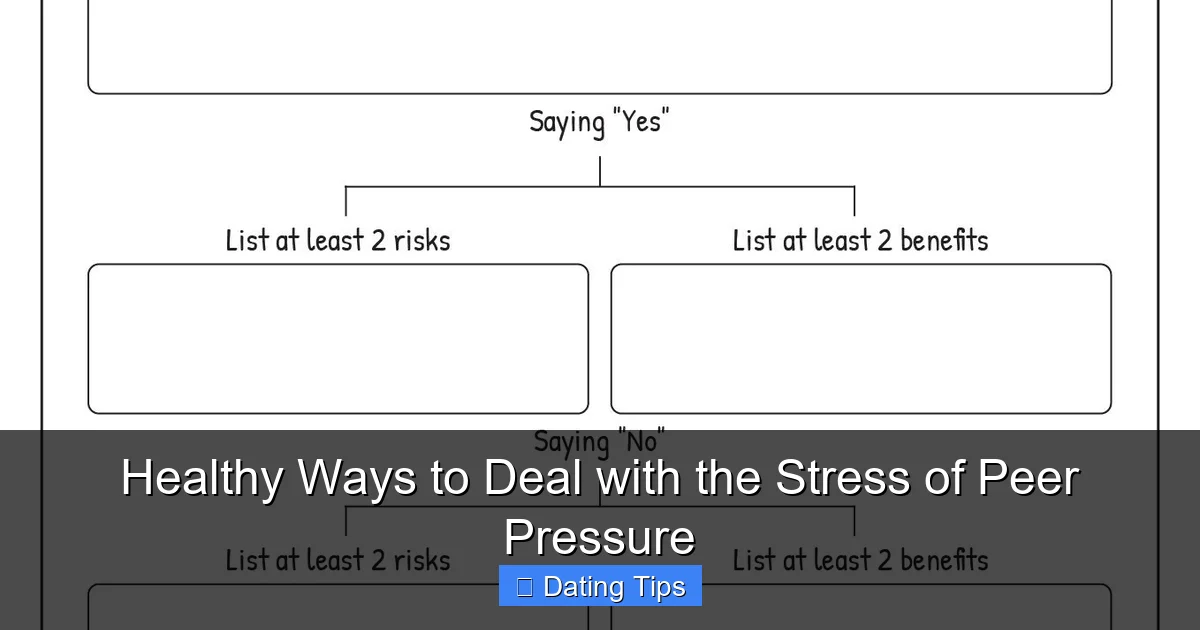
Before you can resist peer pressure, you need to understand what you stand for—and what you won’t compromise on. That means getting honest with yourself about your boundaries, desires, and red lines.
Start by asking:
– What behaviors make me feel ashamed or uneasy?
– Are there topics I avoid discussing even though others bring them up?
– Who do I turn to when I feel confused or unsure?
Journaling can help. Write down situations where you felt pressured and how you reacted. Did you agree and regret it later? Or did you speak up—and if so, how did it feel? Reflecting helps you spot patterns and identify your core values. Are you someone who values honesty above all? Then lying—even “white lies”—might trigger deep discomfort. Recognizing these triggers gives you power.
Also, consider seeking guidance from mentors, pastors, therapists, or trusted older friends who’ve been through similar struggles. Sometimes an outside perspective clarifies what’s truly important versus what’s just noise.
Remember, knowing yourself isn’t selfish—it’s necessary. As psychologist Carl Rogers said, “The curious paradox is that when I accept myself just as I am, then I can change.” When you honor your inner compass, external pressures lose their grip.
—
Communicating Assertively Without Apologizing
Visual guide about Healthy Ways to Deal with the Stress of Peer Pressure
Image source: helpfulprofessor.com
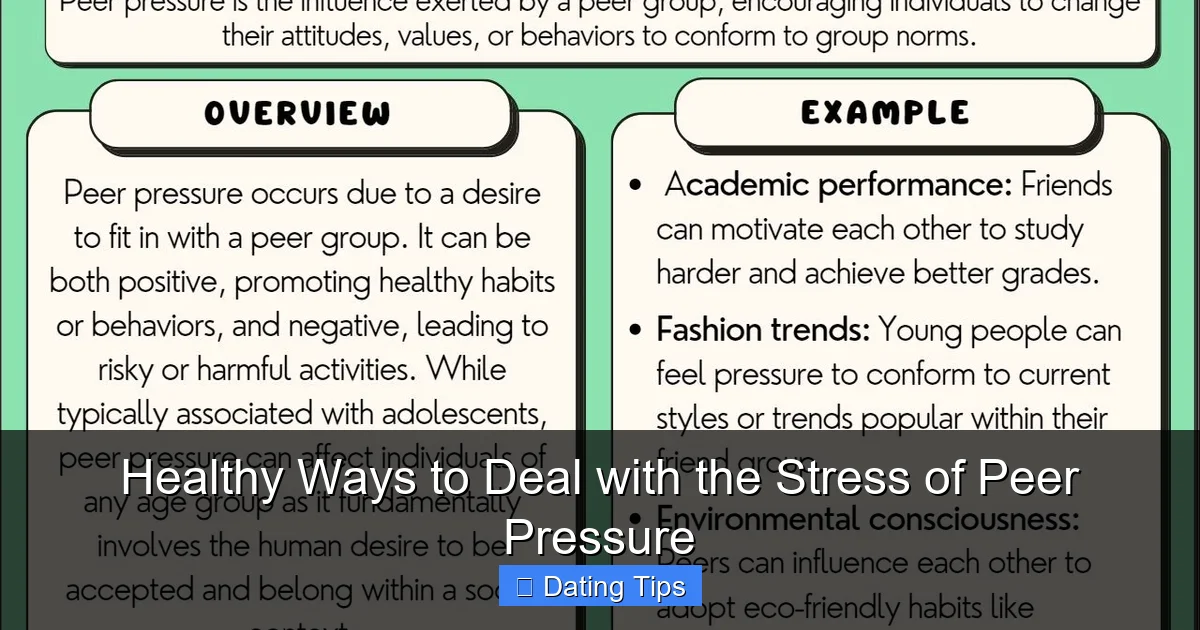
Saying “no” doesn’t have to be aggressive or rude. In fact, clear, kind communication builds respect—both for yourself and others. Practice using “I” statements that focus on your feelings rather than blaming others.
For instance:
– Instead of: “You’re forcing me to do this!”
– Try: “I feel overwhelmed when I’m asked to do things I’m not ready for.”
Or in a dating context:
– Instead of: “Your friends hate my boyfriend—he’s toxic!”
– Say: “I care about you, but I need to make my own choices about who I spend time with.”
Assertiveness also includes listening. If someone expresses concern—like a friend worried you’re moving too fast with someone—acknowledge it briefly before reaffirming your stance: “Thanks for caring about me. Right now, I’m focusing on getting to know him slowly.”
Practice these phrases out loud until they feel natural. Role-play with a trusted friend or write sample responses. The more prepared you are, the less anxious you’ll feel when real pressure hits.
And if someone pushes back hard? Stay calm. Repeat your boundary gently but firmly. You don’t owe anyone justification for protecting your peace.
—
Cultivating Supportive Relationships
Visual guide about Healthy Ways to Deal with the Stress of Peer Pressure
Image source: cdn2.momjunction.com
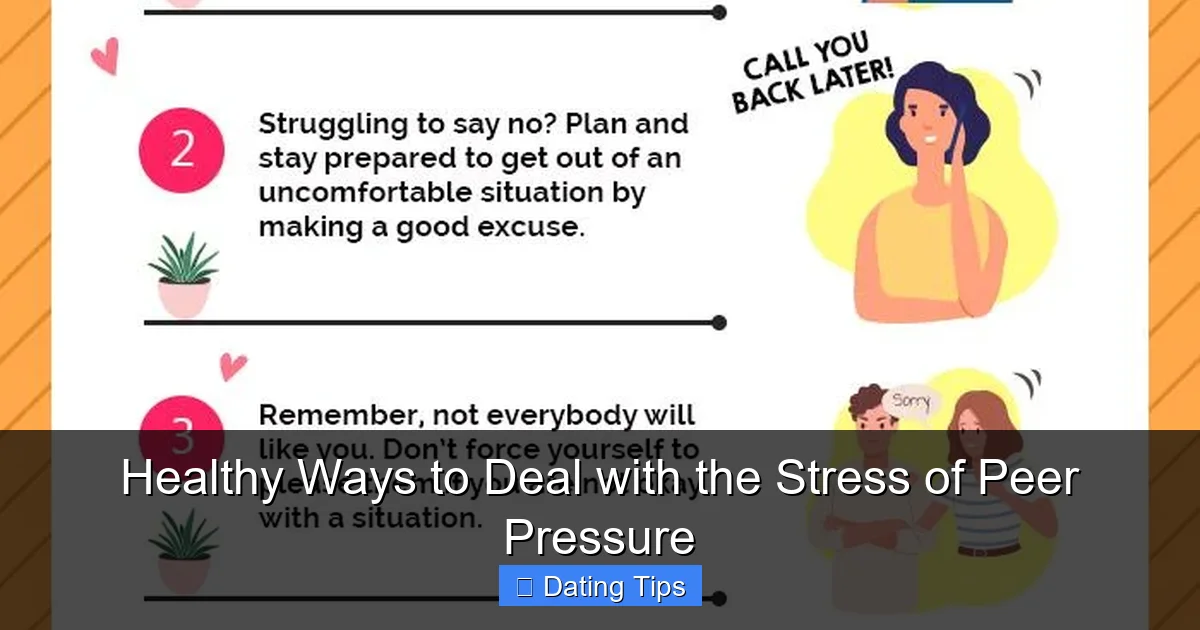
Your circle matters. If most of your friends encourage risky behavior or mock your hesitations, that’s not healthy support—it’s enabling. True friends celebrate your growth, not conformity.
Look for people who:
– Ask how you’re really doing
– Respect your “no” without guilt-tripping
– Share positive experiences that inspire rather than pressure
If you’re in a relationship where your partner’s friends constantly undermine your choices, that’s a red flag. A good partner will encourage you to maintain healthy friendships—and vice versa. You deserve mutual respect.
Sometimes, you may need to gently distance yourself from toxic influences. That doesn’t mean cutting ties forever—it means protecting your mental space until those relationships evolve.
Also, lean into communities that align with your values. Join clubs, attend events, or connect online with groups focused on self-growth, faith, or hobbies. Being around people who uplift you reduces the temptation to chase validation elsewhere.
—
Managing Stress Through Mindfulness & Self-Care
When peer pressure causes anxiety, your body responds—tight shoulders, racing thoughts, sleepless nights. Learning to manage these physical reactions helps you respond wisely instead of reacting impulsively.
Simple mindfulness techniques work wonders:
– **Deep breathing**: Breathe in for 4 counts, hold for 4, exhale for 6. Repeat three times.
– **Grounding exercises**: Name five things you see, four you hear, three you touch, two you smell, one you taste.
– **Daily reflection**: Spend five minutes journaling about what stressed you that day—and how you handled it.
Self-care routines also buffer stress. Prioritize sleep, eat nourishing foods, exercise regularly, and schedule downtime. When your mind and body feel strong, you’re less vulnerable to manipulation.
If stress becomes overwhelming, don’t hesitate to reach out to a therapist. Many offer sliding-scale fees or free community resources. Therapy isn’t just for crises—it’s a powerful tool for building resilience.
—
Making Peace With Imperfection
Even with the best intentions, you might slip up. Maybe you agreed to something you didn’t mean to please someone. If that happens, own it without spiraling.
Apologize sincerely if appropriate: “I made a choice I regret. I’m working on being clearer about my boundaries.” Then learn from it. Ask: What triggered me? How could I handle it differently next time?
Perfection isn’t the goal—consistency is. Every small step toward honoring yourself builds momentum. Over time, your confidence grows, and peer pressure loses its sting.
—
When Peer Pressure Crosses Into Abuse
Not all pressure is psychological. Some crosses into emotional or sexual coercion—especially in dating. Signs include:
– Threats: “If you leave me, I’ll hurt myself.”
– Guilt: “After everything I’ve done for you…”
– Isolation: Cutting you off from friends/family to increase dependence
– Physical coercion: Pressuring or forcing unwanted intimacy
These are serious red flags. If you’re experiencing any of this, reach out immediately. Confide in a teacher, counselor, pastor, or domestic violence hotline (like National Domestic Violence Hotline: 1-800-799-SAFE). You deserve safety—not survival.
—
Long-Term Strategies for Emotional Resilience
Building lasting resistance takes practice. Here’s how to keep growing:
**Set recurring check-ins**: Weekly self-reflection helps you catch pressure early. Ask: “Am I staying true to myself lately?”
**Celebrate wins**: Note moments you stood firm—even small ones. Did you decline a drink without explanation? That’s courage!
**Educate yourself**: Read books on boundaries, consent, or self-worth. Knowledge empowers action.
**Forgive yourself**: Slip-ups don’t erase progress. Each attempt teaches you something new.
Remember, every time you choose integrity over ease, you’re rewiring your brain to value authenticity. That shift protects you far longer than temporary approval ever could.
—
Conclusion: Your Voice Matters More Than Their Opinion
Navigating peer pressure in dating or life isn’t about winning arguments or proving who’s right. It’s about living with integrity, even when it’s hard. When you stop seeking permission and start trusting your judgment, you attract people who respect your truth—not just tolerate it.
True connection thrives on mutual respect, not manipulation. And while fitting in feels safer in the short term, belonging begins when you show up as your authentic self. That’s not arrogance—it’s strength.
So next time you feel that pull toward something that doesn’t feel right, pause. Breathe. Remember your worth. Speak your truth. And know this: you’re exactly where you need to be—on your path to becoming someone unshakable, unafraid, and deeply free.
—
Frequently Asked Questions
How do I tell if peer pressure is coming from a real friend?
A genuine friend respects your boundaries, supports your growth, and never makes you feel guilty for saying “no.” If someone pressures you repeatedly or reacts negatively to your hesitation, they may not have your best interests at heart. Look for consistency, empathy, and encouragement—not control.
Can peer pressure happen in committed relationships?
Absolutely. Even in loving relationships, one partner might pressure the other to change habits, meet family expectations, or act in ways that compromise personal values. Healthy relationships allow space for individuality; if yours feels suffocating, it may be time to reassess compatibility.
What should I do if my crush pressures me into something I’m not ready for?
Politely but firmly state your limits: “I care about you, but I’m not comfortable with that right now.” If he respects your boundary, great. If not—or if he mocks or guilts you—that’s a warning sign. Prioritize partners who honor your pace and choices.
Is it okay to change my mind after agreeing to something due to pressure?
Yes—absolutely. Changing your mind shows self-awareness. Just communicate clearly: “I realize I wasn’t fully comfortable with that decision earlier. Can we talk about alternatives?” Honesty builds trust, even when plans shift.
How can I rebuild confidence after giving in to peer pressure?
Start small: affirm your strengths daily, practice saying “no” in low-stakes situations, and surround yourself with encouraging people. Journal your progress and remind yourself that growth isn’t linear. Each step forward strengthens your resolve.
Are there spiritual ways to cope with peer pressure?
Many find peace through prayer, meditation, or scripture. Verses like Proverbs 27:17 (“As iron sharpens iron…”) emphasize wise counsel over blind conformity. Speaking with a faith leader can also provide personalized guidance rooted in values and purpose.
