
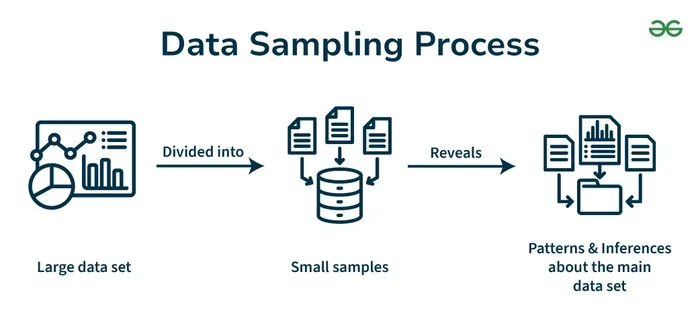
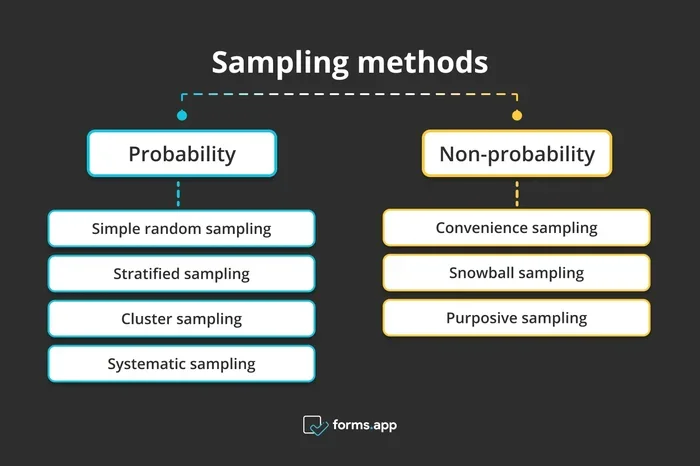
Cluster sampling and stratified sampling are two powerful probability sampling techniques that researchers use to study large populations. While both methods help you gather representative data, they work in fundamentally different ways. Cluster sampling divides your population into groups and randomly selects entire groups to study, while stratified sampling divides your population into subgroups and samples from each one. Understanding these differences is crucial for choosing the right approach for your research project.
Cluster sampling and stratified sampling are two fundamental probability sampling methods that every researcher should understand. Whether you’re conducting academic research, market analysis, or social science studies, choosing the right sampling technique can make or break your results. Both methods help you study a large population without surveying every single person, but they approach this challenge from completely different angles. In this comprehensive guide, we’ll break down exactly how each method works, when to use them, and how to avoid common pitfalls that could compromise your data quality.
The truth is, many researchers struggle to decide between these two approaches. It’s a bit like understanding the nuances between compromise vs sacrifice in research design—sometimes you give up precision for practicality, and other times you invest more resources for better accuracy. By the end of this article, you’ll have a clear framework for making this critical decision with confidence.
Key Takeaways
- Cluster sampling selects entire groups: You randomly choose whole clusters and study everyone within them, making it cost-effective for geographically spread populations.
- Stratified sampling samples from all subgroups: You divide the population into strata and take samples from each group, ensuring representation across key characteristics.
- Cost vs. precision trade-off: Cluster sampling saves money and time but may have higher sampling error, while stratified sampling offers greater precision at a higher cost.
- Homogeneity matters: Cluster sampling works best when clusters are heterogeneous (diverse within), while stratified sampling requires homogeneous strata (similar within).
- Different use cases: Use cluster sampling for nationwide surveys and large-scale studies; use stratified sampling when you need precise subgroup comparisons.
- Sampling error differs: Cluster sampling typically has higher sampling error due to similarities within clusters, while stratified sampling reduces error through proportional representation.
- Research goals drive the choice: Your specific objectives, budget, and timeline should determine which sampling method you select.
📑 Table of Contents
- What Is Cluster Sampling? A Complete Overview
- What Is Stratified Sampling? A Complete Overview
- Cluster Sampling Vs Stratified Sampling: The Core Differences
- Advantages and Disadvantages of Each Method
- How to Choose Between Cluster and Stratified Sampling
- Common Mistakes to Avoid
- Real-World Applications and Examples
- Statistical Considerations and Analysis
- Quick Tips for Successful Sampling
What Is Cluster Sampling? A Complete Overview
Cluster sampling is a probability sampling technique where you divide a large population into separate groups called clusters, then randomly select entire clusters to include in your study. Instead of sampling individuals from across the whole population, you study every individual within your chosen clusters. This approach is incredibly practical when your population is spread across a wide geographic area.
How Cluster Sampling Works in Practice
The process is straightforward but requires careful planning. First, you define your target population and identify natural groupings. These clusters could be cities, schools, hospitals, or neighborhoods. Next, you randomly select a sample of these clusters. Finally, you survey every individual within your chosen clusters.
For example, imagine you want to study eating habits across an entire state. Rather than traveling to every town, you might randomly select 10 counties and survey every household within those counties. This saves enormous time and money while still giving you valuable data.
Types of Cluster Sampling
There are two main approaches you should know about:
One-stage cluster sampling: You select clusters randomly and include every individual within those clusters. This is the simplest form and works well when clusters are relatively small.
Two-stage cluster sampling: You first randomly select clusters, then randomly sample individuals within those chosen clusters. This adds another layer of randomness and can help manage costs when clusters are very large.
When Cluster Sampling Makes Sense
Cluster sampling shines in specific situations:
- Geographically dispersed populations: When your subjects are spread across a wide area, cluster sampling dramatically reduces travel and logistics costs.
- No complete sampling frame: When you don’t have a list of every individual in the population but do have a list of groups or clusters.
- Limited budget and time: When resources are tight and you need a practical, cost-effective approach.
- Natural groupings exist: When your population already falls into logical clusters like schools, hospitals, or city blocks.
What Is Stratified Sampling? A Complete Overview
Visual guide about research data sampling
Image source: c8.alamy.com
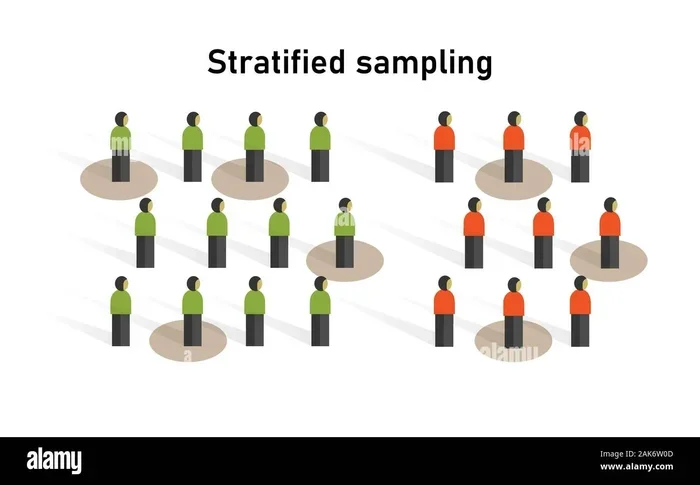
Stratified sampling is a probability sampling method where you divide your population into distinct subgroups called strata based on shared characteristics, then randomly sample from each stratum. Unlike cluster sampling, you don’t study entire groups—you take a representative sample from every subgroup. This ensures that each segment of your population is properly represented in your final sample.
How Stratified Sampling Works in Practice
The process begins by identifying characteristics that are relevant to your research. These could include age, income, education level, or any variable that might affect your results. You then divide your population into strata based on these characteristics. Finally, you randomly select individuals from each stratum.
For instance, if you’re studying job satisfaction across a company, you might stratify by department—creating separate groups for sales, engineering, support, and management. You’d then randomly select employees from each department to ensure every perspective is captured.
Types of Stratified Sampling
You have two options for selecting samples within each stratum:
Proportional stratified sampling: You select the same proportion of individuals from each stratum. If sales makes up 40% of the company, then 40% of your sample comes from sales. This maintains the population’s natural distribution.
Disproportional stratified sampling: You select different proportions from each stratum, often oversampling smaller groups to ensure you have enough data for meaningful analysis. This is useful when some subgroups are very small but important to your research.
When Stratified Sampling Makes Sense
Stratified sampling is ideal when:
- Subgroup comparisons matter: When you need to compare results across different segments of your population.
- Population diversity is high: When your population has distinct groups that might respond differently to your research questions.
- Precision is critical: When you need the most accurate estimates possible and are willing to invest more resources.
- Complete sampling frame exists: When you have a list of every individual in your population and can sort them into strata.
Cluster Sampling Vs Stratified Sampling: The Core Differences
Visual guide about research data sampling
Image source: alamy.com
Understanding the fundamental differences between these two methods is essential for making the right choice. It’s similar to distinguishing between a platonic relationship vs friendship—the categories may seem similar on the surface, but the underlying structure and purpose are quite different.
Division of Population
The most basic difference lies in how each method divides the population:
Cluster sampling creates groups that are ideally heterogeneous—meaning each cluster contains a diverse mix of individuals that mirrors the overall population. The goal is for every cluster to be a miniature version of the whole.
Stratified sampling creates groups that are homogeneous—meaning individuals within each stratum share similar characteristics. The goal is to separate the population into distinct, internally consistent subgroups.
Unit of Analysis
In cluster sampling, the cluster is your primary sampling unit. You select groups and study everyone within them. The individual members of each cluster are secondary.
In stratified sampling, the individual is your primary sampling unit. You select people from each stratum, and the strata themselves are just organizational tools to ensure representation.
Comparison Table: Cluster Vs Stratified Sampling
| Feature | Cluster Sampling | Stratified Sampling |
|---|---|---|
| Population Division | Divides into heterogeneous clusters | Divides into homogeneous strata |
| Sampling Unit | Entire clusters | Individuals from each stratum |
| Within-Group Similarity | High diversity within clusters | High similarity within strata |
| Cost | Lower cost, more practical | Higher cost, more resource-intensive |
| Precision | Lower precision, higher sampling error | Higher precision, lower sampling error |
| Best For | Large, spread-out populations | Subgroup comparisons and precise estimates |
| Sampling Frame | Only need list of clusters | Need complete list of all individuals |
| Representativeness | Depends on cluster selection | Guaranteed representation of all subgroups |
Practical Example Comparing Both Methods
Let’s say you want to study student satisfaction across all universities in a country.
Using cluster sampling: You would randomly select 20 universities and survey every student at those schools. This is fast and cheap, but if you happen to pick schools with unusually happy or unhappy students, your results could be skewed.
Using stratified sampling: You would divide universities by type—public, private, technical, liberal arts—then randomly select students from each category. This ensures every type of institution is represented, giving you more reliable results across the entire higher education landscape.
Advantages and Disadvantages of Each Method
Visual guide about research data sampling
Image source: file.forms.app
Every sampling method involves trade-offs. Understanding these helps you make informed decisions about your research design.
Cluster Sampling: Pros and Cons
Advantages:
- Cost-effective: Dramatically reduces travel, logistics, and administrative costs when populations are spread out.
- Practical for large populations: Makes it feasible to study populations that would otherwise be impossible to reach.
- No need for complete sampling frame: You only need a list of clusters, not every individual in the population.
- Easier implementation: Simpler to administer, especially for large-scale surveys and field research.
Disadvantages:
- Higher sampling error: Clusters may not perfectly represent the population, leading to less precise estimates.
- Requires larger sample sizes: To achieve the same precision as stratified sampling, you often need more respondents.
- Risk of bias: If clusters are not truly representative, your results may be systematically skewed.
- Less suitable for subgroup analysis: You can’t easily compare different segments of the population.
Stratified Sampling: Pros and Cons
Advantages:
- Higher precision: Reduces sampling error by ensuring all subgroups are represented.
- Enables subgroup comparisons: You can analyze and compare different segments of your population with confidence.
- Guaranteed representation: Every important subgroup is included in your sample.
- More efficient use of sample size: Achieves better results with fewer total respondents compared to cluster sampling.
Disadvantages:
- More expensive: Requires more resources for sampling across multiple strata.
- Requires complete sampling frame: You need a list of every individual to sort them into strata.
- Complex administration: More complicated to design and implement correctly.
- Requires knowledge of population characteristics: You must know which variables are important for stratification.
How to Choose Between Cluster and Stratified Sampling
Selecting the right sampling method requires careful consideration of your research goals, resources, and constraints. Here’s a practical framework to guide your decision.
Questions to Ask Yourself
Before choosing, work through these key questions:
- What is my research objective? Are you estimating population parameters or comparing subgroups?
- What resources do I have? Consider your budget, timeline, and personnel.
- Do I have a complete sampling frame? Can you list every individual in your population?
- How is my population distributed? Is it concentrated in one area or spread across many locations?
- What level of precision do I need? How much sampling error can you tolerate?
Decision Framework
Choose cluster sampling when:
- Your population is geographically dispersed
- You have limited budget and time
- You don’t have a complete list of individuals
- Natural clusters already exist in your population
- You’re conducting exploratory research where perfect precision isn’t critical
Choose stratified sampling when:
- You need to compare subgroups within your population
- Precision and accuracy are top priorities
- You have a complete sampling frame
- Your population has distinct, identifiable segments
- You have adequate resources for more complex sampling
Expert Insight: The Middle Ground
Many experienced researchers use a combined approach. You might stratify first to ensure representation across key characteristics, then use cluster sampling within each stratum to manage costs. This hybrid approach gives you the best of both worlds—representation and practicality.
Common Mistakes to Avoid
Even experienced researchers make errors when working with these sampling methods. Here are the pitfalls you need to watch out for.
Mistakes in Cluster Sampling
Selecting too few clusters: If you only pick a handful of clusters, your results may not represent the population well. Aim for at least 20-30 clusters when possible.
Ignoring cluster heterogeneity: Remember that each cluster should ideally mirror the overall population. If your clusters are too similar to each other, you’ll get biased results.
Treating cluster samples as simple random samples: Cluster sampling requires special statistical analysis techniques. Using standard formulas will underestimate your sampling error.
Failing to account for design effect: Cluster samples typically have a design effect greater than 1, meaning you need larger sample sizes to achieve the same precision as simple random sampling.
Mistakes in Stratified Sampling
Choosing irrelevant stratification variables: Your strata should be related to what you’re studying. Stratifying by hair color when researching income levels won’t improve your results.
Using too many strata: Creating too many subgroups can make each stratum too small to sample effectively. Keep your stratification focused and meaningful.
Ignoring non-response within strata: If certain strata have lower response rates, your results may still be biased even with proper stratification.
Forgetting to weight your results: If you use disproportional stratified sampling, you must weight your results to reflect the true population proportions.
Real-World Applications and Examples
Understanding how these methods work in practice helps solidify your knowledge. Here are some concrete examples from different fields.
Healthcare Research
Cluster sampling example: The World Health Organization often uses cluster sampling for immunization coverage surveys. They randomly select villages or neighborhoods and survey every household within those areas. This approach makes it possible to assess vaccination rates across entire countries without visiting every community.
Stratified sampling example: A hospital studying patient satisfaction might stratify by department—emergency, surgery, outpatient, and inpatient—then randomly select patients from each. This ensures they capture experiences across all types of care.
Market Research
Cluster sampling example: A national retailer wants to understand customer preferences. They randomly select 50 stores across the country and survey every customer who visits during a specific week. This gives them nationwide data without the cost of visiting every location.
Stratified sampling example: A software company studying user satisfaction stratifies customers by subscription tier—free, basic, premium, and enterprise. They then randomly sample users from each tier to ensure they understand satisfaction levels across their entire customer base.
Education Research
Cluster sampling example: A researcher studying teaching methods randomly selects 30 schools and observes every classroom within those schools. This approach captures the natural variation in teaching practices while keeping the study manageable.
Stratified sampling example: A university studying graduation rates stratifies students by major, year, and enrollment status. They then randomly select students from each combination to identify which factors most strongly predict graduation success.
Statistical Considerations and Analysis
Both methods require specific analytical approaches to produce valid results. Understanding these statistical nuances is crucial for accurate interpretation.
Design Effect in Cluster Sampling
The design effect measures how much your sampling method inflates sampling error compared to simple random sampling. In cluster sampling, the design effect is typically greater than 1 because individuals within clusters tend to be more similar to each other than to the general population.
Formula: Design Effect = 1 + (Average Cluster Size – 1) × Intraclass Correlation
Practical implication: If your design effect is 2, you need twice as many respondents to achieve the same precision as a simple random sample. Always calculate and report your design effect when using cluster sampling.
Optimal Allocation in Stratified Sampling
When using stratified sampling, you need to decide how many individuals to select from each stratum. There are two main approaches:
Proportional allocation: Sample the same proportion from each stratum. This maintains the population’s natural distribution and is the most common approach.
Optimal (Neyman) allocation: Sample more from strata with higher variability and larger sizes. This approach minimizes overall sampling error but requires knowing the standard deviation within each stratum.
Confidence Intervals and Margin of Error
Both methods allow you to calculate confidence intervals and margins of error, but the formulas differ. Cluster sampling typically produces wider confidence intervals due to the design effect, while stratified sampling often yields narrower intervals thanks to the reduced sampling error from proper stratification.
Quick Tips for Successful Sampling
Document your sampling process: Keep detailed records of how you selected your sample. This transparency is essential for research credibility and replication.
Pilot test your approach: Run a small pilot study to identify potential issues before committing to your full sample size.
Consider non-response: Plan for the fact that not everyone will participate. Oversample slightly to ensure you end up with enough completed responses.
Use appropriate software: Modern statistical software like R, Stata, or SPSS can handle the complex calculations required for both cluster and stratified sampling analysis.
Consult a statistician: If your research has significant consequences or requires high precision, invest in professional statistical guidance during the design phase.
Frequently Asked Questions
What is the main difference between cluster sampling and stratified sampling?
The main difference is how they divide the population and what they sample. Cluster sampling divides the population into heterogeneous groups and studies entire clusters, while stratified sampling divides the population into homogeneous subgroups and samples individuals from each stratum.
Which sampling method is more cost-effective?
Cluster sampling is generally more cost-effective, especially for geographically dispersed populations. Since you only study selected clusters rather than spreading your sample across the entire population, you save significantly on travel, logistics, and administrative costs.
Can I use both cluster and stratified sampling together?
Yes, you can combine these methods in a multi-stage design. For example, you might first stratify your population by region, then use cluster sampling within each region to select specific communities. This hybrid approach balances precision with practicality.
When should I avoid using cluster sampling?
Avoid cluster sampling when you need precise subgroup comparisons, when your clusters are very similar to each other, or when you require the highest possible accuracy in your estimates. In these cases, stratified sampling or simple random sampling would be more appropriate.
How do I determine the right sample size for each method?
Sample size calculations differ between the two methods. For cluster sampling, you must account for the design effect, which typically requires a larger sample. For stratified sampling, you need to ensure adequate representation within each stratum. Statistical software or a consultant can help you calculate the optimal sample size.
What happens if my clusters are not representative of the population?
If your clusters are not representative, your results will be biased. This is why it’s crucial to ensure that each cluster contains a diverse mix of individuals that mirrors the overall population. Random selection of clusters helps, but you should also examine your clusters for representativeness before proceeding with data collection.
