
Max Weber’s bureaucratic theory revolutionized how we understand modern organizations by introducing a structured, rule-based system that prioritizes efficiency, hierarchy, and clear division of labor. This groundbreaking framework replaced arbitrary decision-making with standardized procedures, professional qualifications, and impersonal relationships—principles that still shape governments, corporations, and institutions worldwide today. In this beginner-friendly guide, you’ll discover how Weber’s six key characteristics of bureaucracy work together to create predictable, fair, and scalable organizations.
Key Takeaways
- Clear hierarchy: Every role has a defined place in the chain of command.
- Division of labor: Tasks are split into specialized roles for efficiency.
- Formal rules: Standardized procedures ensure consistency and fairness.
- Impersonality: Decisions follow rules, not personal relationships.
- Merit-based hiring: Jobs go to qualified candidates, not favorites.
- Written records: Documentation creates accountability and transparency.
- Rational-legal authority: Power comes from rules, not tradition or charisma.
📑 Table of Contents
- Who Was Max Weber and Why Does He Matter?
- The Core Principles of the Bureaucratic Theory Of Max Weber
- The Good, The Bad, and The Red Tape
- Bureaucracy in Action: Real-World and Relationship Examples
- How to Deal with Bureaucracy in Your Daily Life
- Comparing Organizational Structures
- Key Takeaways from the Bureaucratic Theory Of Max Weber
- Final Thoughts
Who Was Max Weber and Why Does He Matter?
Imagine a world where everything runs like a well-oiled machine. That was the dream of Max Weber. He was a brilliant thinker from Germany. He lived a long time ago, from 1864 to 1920. But his ideas still rule our lives today. When you wait in line at the DMV, you see his ideas. When you fill out a form at work, you see his ideas. The Bureaucratic Theory Of Max Weber is all about order. It is about rules and structure. But is it always good? Let’s find out.
Weber saw the world changing fast. Factories were popping up everywhere. People were moving from farms to cities. Old ways of doing things were fading. Kings and queens were losing power. Weber wanted to know how to run these new big groups. He came up with the idea of bureaucracy. He thought it was the best way to run large organizations. He believed it was fair and efficient. But he also warned us about its dark side. He called it the “iron cage.” That sounds scary, right? We will get to that later.
The Core Principles of the Bureaucratic Theory Of Max Weber
To understand the Bureaucratic Theory Of Max Weber, we need to look at its building blocks. Weber said a true bureaucracy has five main parts. These parts work together to keep things running smoothly. Let’s break them down one by one.
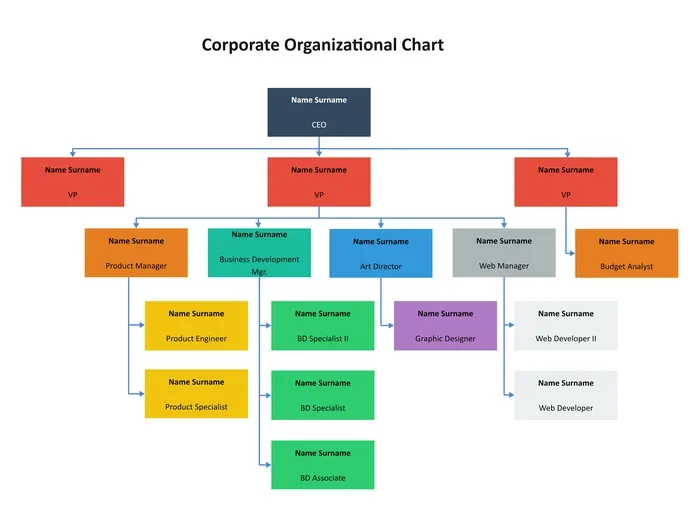
Visual guide about corporate organizational hierarchy
Image source: images.edrawmax.com
1. A Clear Hierarchy
Every bureaucracy has a chain of command. Think of a pyramid. The boss sits at the top. Middle managers sit in the bottom. Workers sit at the bottom. Everyone knows who they report to. Everyone knows who they supervise. This clear structure avoids confusion. You do not have ten people telling you what to do. You have one boss. That boss has one boss. It is a neat, tidy system.
2. A Division of Labor
In a bureaucracy, every job has a specific task. You do a small part of the big puzzle. You do not try to do everything. This makes you very good at your one task. For example, in a car factory, one person puts on the wheels. Another person paints the doors. Because you do the same thing over and over, you get fast and skilled. This division of labor makes the whole system efficient.
3. Formal Rules and Regulations
Rules are the heart of the Bureaucratic Theory Of Max Weber. A bureaucracy runs on a strict set of written rules. These rules apply to everyone. They do not change based on who you are. If you follow the rules, you get the result you want. If you break the rules, you face the consequences. This system creates predictability. You know exactly what to expect. There are no surprises.
4. Impersonality
This is a big word for a simple idea. Impersonality means feelings do not matter. The rules apply equally to everyone. Your boss cannot give you special treatment just because they like you. You cannot skip the line just because you are having a bad day. Decisions are made based on facts, not emotions. This sounds cold, but it is meant to be fair. It stops favoritism and bias.
5. Employment Based on Technical Qualifications
In a true bureaucracy, you get a job because you are skilled. You do not get a job because you are the boss’s nephew. You pass a test. You show your degree. You prove you can do the job. Once you are in, your job is safe. As long as you follow the rules and do your work, you cannot be fired on a whim. Your skills protect you.
The Good, The Bad, and The Red Tape
Like anything in life, the Bureaucratic Theory Of Max Weber has two sides. It can be a great tool. It can also be a huge headache. Let’s look at the good and the bad.

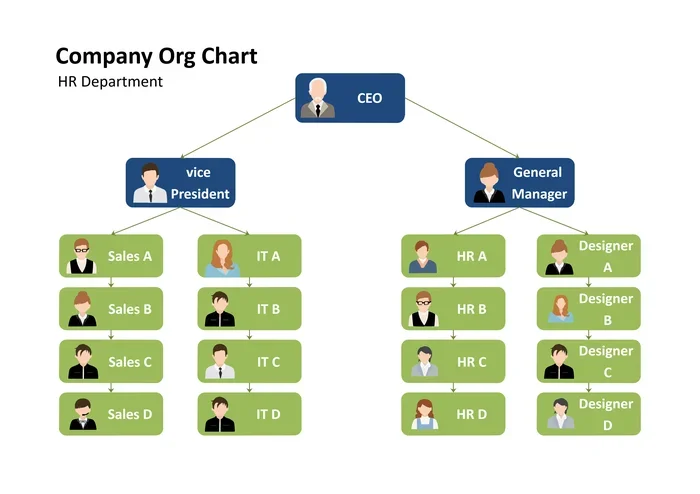
Visual guide about corporate organizational hierarchy
Image source: marketplace.canva.com
The Good: Why Bureaucracy Works
When it works, bureaucracy is a beautiful thing. It brings order to chaos. It makes sure everyone is treated the same. It makes organizations efficient. Imagine a hospital without bureaucracy. Doctors would not know which patient gets which medicine. Nurses would not know their schedules. It would be a disaster. Bureaucracy saves lives by keeping things organized. It also protects workers. Because the rules are clear, bosses cannot treat workers unfairly. You have a job security that you do not get in other systems.
The Bad: The Iron Cage and Red Tape
Weber warned us about the “iron cage.” He feared that we would get trapped in a world of rules. We would become like robots. We would follow orders without thinking. We would lose our humanity. This is the dark side of bureaucracy. It can make people feel small and unimportant. It can crush creativity. If you have a new idea, the system might reject it. The system only likes the old rules.
Then there is the dreaded “red tape.” Red tape means too many rules that slow things down. It is when the rules become more important than the goal. For example, you need a permit to fix your porch. But to get the permit, you need five forms. To get those forms, you need to wait in line for three hours. The rule that was meant to keep you safe now just makes you angry. This is goal displacement. The means become the end.
Bureaucracy in Action: Real-World and Relationship Examples
You might think the Bureaucratic Theory Of Max Weber only applies to big corporations or government offices. But it shows up in our personal lives too. It even shows up in our relationships. Let’s look at some examples.
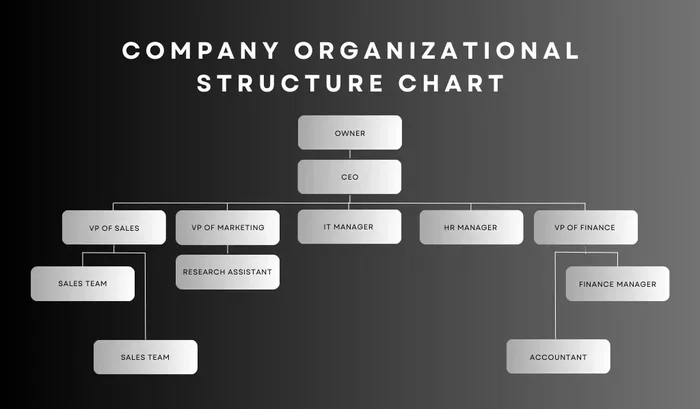
Visual guide about corporate organizational hierarchy
Image source: a.storyblok.com
Bureaucracy at Work
Think about your job. Do you have an employee handbook? That is a bureaucratic rulebook. Do you have a timesheet? That is a bureaucratic tool to track your labor. Do you have a boss who reports to a bigger boss? That is the hierarchy. Most jobs use this system because it works. It keeps things fair. But sometimes, it can feel suffocating. You might have a great idea to help a customer. But the rulebook says you cannot do it. You have to follow the script. This can be very frustrating.
Bureaucracy in Relationships
Now, let’s talk about love. Sometimes, relationships can become bureaucratic. You might have strict rules about who does the dishes. You might have a schedule for date night. A little bit of structure is good. But too much structure kills the romance. If you treat your partner like an employee, you will run into trouble. If you keep score and demand they follow your rules, you create a cold environment. This kind of rigidity can feel a lot like stonewalling. You hide behind your rules instead of connecting with your partner. You stop seeing them as a person and start seeing them as a problem to manage.
Sometimes, we hold onto these rigid patterns because we are scared to change. We don’t know how to let go of a relationship dynamic that no longer works. We cling to our rules because they feel safe. But safety is not the same as happiness. A relationship needs warmth, not just a rulebook.
How to Deal with Bureaucracy in Your Daily Life
You cannot escape bureaucracy. It is everywhere. But you do not have to let it ruin your day. You can learn to navigate the system. You can keep your humanity while dealing with the red tape. Here are some tips to help you survive and thrive.
1. Learn the Rules of the Game
If you are dealing with a big organization, do your homework. Read the fine print. Know what they can and cannot do. When you know the rules, you can work within the system. You can find the loopholes. You can get what you need without pulling your hair out. Knowledge is power, even in a bureaucracy.
2. Keep Your Humanity
Just because the system is cold does not mean you have to be. When you are the one in charge, break the rules a little. Show empathy. If someone makes a mistake, help them instead of punishing them. If you are the one waiting in line, be kind to the worker. They are just as trapped in the system as you are. A little kindness goes a long way.
3. Find Peace in the Chaos
Dealing with bureaucracy can be incredibly stressful. It can feel like finding peace of mind in a dumpster fire. But you can do it. Take a deep breath. Remember that the rules are just paper. They do not define your worth. Do what you can, and let go of what you cannot control. Your peace of mind is more important than any rulebook.
4. Let Go of Rigid Expectations
This applies to both work and love. Sometimes, we need to let go of rigid expectations to be happy. If you expect everything to go perfectly according to plan, you will be disappointed. Life is messy. People are messy. Learn to bend a little. If a rule does not make sense, challenge it. If a relationship dynamic feels too cold, warm it up. Do not let the perfect be the enemy of the good.
Comparing Organizational Structures
The Bureaucratic Theory Of Max Weber is just one way to run things. It is helpful to see how it compares to other styles. Let’s look at a simple table to see the differences.
| Feature | Bureaucratic Organization | Flexible Organization |
|---|---|---|
| Structure | Strict hierarchy, pyramid shape | Flat structure, team-based |
| Rules | Many formal rules, strict enforcement | Few rules, guidelines only |
| Decision Making | Top-down, slow | Collaborative, fast |
| Focus | Efficiency and consistency | Innovation and adaptability |
| Atmosphere | Formal, impersonal | Casual, personal |
As you can see, both styles have their place. A hospital needs bureaucracy to keep patients safe. A tech startup needs flexibility to invent new apps. The key is finding the right balance. You need enough rules to keep order. But you need enough freedom to stay human.
Key Takeaways from the Bureaucratic Theory Of Max Weber
We have covered a lot of ground today. Let’s recap the main points. The Bureaucratic Theory Of Max Weber is a foundational concept in sociology and management. It explains how large organizations can run efficiently. Here are the key takeaways:
- Weber’s Goal: Max Weber wanted to create a fair and efficient system to replace the old, corrupt systems of favoritism.
- The Five Pillars: Hierarchy, division of labor, formal rules, impersonality, and technical qualifications are the building blocks of bureaucracy.
- The Iron Cage: Weber warned that too much bureaucracy can trap us. It can make us feel like robots in a cold, heartless machine.
- Red Tape: When rules become more important than the goal, we get red tape. This slows everything down and causes frustration.
- Life Application: We see bureaucracy everywhere, from the DMV to our own relationships. A little structure is good, but too much kills joy.
- Finding Balance: We must learn to navigate the system without losing our humanity. We can follow the rules and still show kindness.
Final Thoughts
The Bureaucratic Theory Of Max Weber is not just some old, dusty idea from a textbook. It is a living, breathing part of our daily lives. It shapes how we work, how we interact with the government, and even how we love. Weber gave us a tool to understand the world. He showed us the power of order. But he also showed us the danger of too much order.
Next time you are stuck in a long line, remember Max Weber. Next time you feel trapped by a silly rule, remember the iron cage. But do not just get angry. Use your knowledge. Work the system when you can. Change the system when you must. And always, always keep your humanity. Rules are important, but people matter more. That is the true lesson of the Bureaucratic Theory Of Max Weber.
Frequently Asked Questions
What is the bureaucratic theory of Max Weber?
The bureaucratic theory of Max Weber is a management framework that emphasizes a structured, hierarchical organization with clear rules, specialized roles, and impersonal relationships. Weber believed this system was the most efficient way to run large organizations because it reduces favoritism and ensures consistency. His model includes a clear chain of command, written rules, and merit-based hiring.
What are the main characteristics of Weber’s bureaucracy?
Weber identified several key features including a hierarchy of authority, division of labor, formal rules and regulations, impersonality, and career advancement based on qualifications. Each level of the organization has clearly defined responsibilities and reporting relationships. These characteristics work together to create a predictable and efficient organizational structure.
Why did Max Weber support bureaucracy?
Weber supported bureaucracy because he saw it as the most rational and efficient form of organization compared to traditional or charismatic leadership models. He believed bureaucratic management eliminated nepotism, reduced arbitrary decision-making, and created fairness through standardized procedures. In his view, it was essential for managing complex modern societies and large-scale enterprises.
What are the advantages and disadvantages of bureaucratic theory?
The advantages include efficiency, consistency, clear accountability, and equal treatment of employees and clients. However, disadvantages include rigidity, slow decision-making, reduced creativity, and potential for red tape. While Weber’s model works well for stable environments, it can struggle to adapt quickly to changing circumstances.
How is Weber’s bureaucratic theory used in modern organizations?
Many modern organizations still use elements of Weber’s bureaucratic theory such as organizational hierarchies, standard operating procedures, and formal job descriptions. Government agencies, hospitals, and military organizations particularly rely on these principles. However, today’s companies often blend bureaucratic structures with more flexible approaches to encourage innovation.
What is the difference between Weber’s bureaucracy and other management theories?
Unlike scientific management which focuses on task efficiency, or human relations theory which emphasizes employee satisfaction, Weber’s bureaucratic theory centers on organizational structure and authority. It prioritizes rules and hierarchy over individual relationships or worker motivation. This makes it unique as a top-down approach to organizational design.
