
Mastering body language basic how to read someone is a skill that transforms your relationships and social interactions. This guide breaks down nonverbal communication cues including facial expressions, eye contact, gestures, and posture to help you understand what people really mean. You’ll learn practical techniques to detect hidden emotions, spot deception, and build deeper connections through reading body signals others miss.
Have you ever talked to someone who said they were fine, but something felt off? Maybe their words said one thing, but their body told a completely different story. That’s the power of nonverbal communication. Learning body language basic how to read someone isn’t just a cool party trick. It’s a life skill that changes how you connect with people forever.
Most of us focus heavily on words. But here’s the thing — words are only a small part of the message. Research suggests that nonverbal cues carry the bulk of emotional meaning in any conversation. When you understand how to read these signals, you gain access to what people truly think and feel. Whether you’re on a date, in a meeting, or having dinner with family, this skill gives you an edge that most people completely overlook.
In this guide, we’ll walk through everything you need to know about reading body language. From facial expressions to hand gestures, eye contact to personal space, you’ll learn practical techniques that work in real life. Let’s dive in and start decoding the hidden messages all around you.
Key Takeaways
- Nonverbal communication makes up over 70% of human interaction — understanding body language gives you a massive advantage in relationships.
- Microexpressions last less than a second but reveal genuine emotions people try to hide.
- Context matters more than individual signals — always read body language clusters, not isolated gestures.
- Mirroring is a powerful trust signal — when someone copies your posture, they likely feel connected to you.
- Eye contact patterns reveal confidence, attraction, and deception — learn to read the eyes like an open book.
- Personal space violations indicate discomfort or dominance — respecting boundaries builds trust faster.
- Practice observing people in real situations — the more you watch, the better your reading skills become.
📑 Table of Contents
- Why Body Language Matters More Than Words
- How to Read Facial Expressions Like a Pro
- Eye Contact Secrets That Reveal True Intentions
- Decoding Hand Gestures and Arm Positions
- Reading Posture and Body Positioning
- Detecting Deception Through Body Language
- Body Language in Dating and Attraction
- Practical Tips for Improving Your Reading Skills
- Common Body Language Mistakes to Avoid
- Building Trust Through Body Language Awareness
- Conclusion
Why Body Language Matters More Than Words
Words can lie. People say what they think you want to hear. They hide behind polite phrases and rehearsed answers. But the body? The body rarely lies. That’s why understanding body language basic how to read someone gives you such a powerful advantage in every area of life.
When someone crosses their arms, avoids eye contact, or shifts their weight nervously, these signals often reveal more truth than any sentence they could construct. Your brain picks up on these cues automatically, even when you’re not consciously aware of them. Learning to read them intentionally transforms your social awareness completely.
The science behind nonverbal communication is fascinating. Studies from UCLA suggest that only about 7% of communication comes from spoken words. The rest comes from tone of voice, facial expressions, and body positioning. That means if you’re only listening to words, you’re missing over 90% of the actual message.
The Three Channels of Nonverbal Communication
To read people effectively, you need to understand the three main channels of nonverbal communication:
- Facial expressions: The face is the most expressive part of the body and reveals emotions instantly.
- Body posture and movement: How someone holds themselves and moves tells you about their confidence and comfort level.
- Paralanguage: This includes tone of voice, pitch, speed, and volume of speech.
When all three channels align, you’re getting an honest message. When they conflict — like someone saying “I’m happy” with a tense jaw and flat tone — trust the nonverbal signals over the words.
If you’ve ever struggled to understand what someone truly feels during difficult conversations, learning how to deal with miscommunication and different love languages can complement your body language reading skills perfectly.
How to Read Facial Expressions Like a Pro
Visual guide about reading body language
Image source: a.storyblok.com
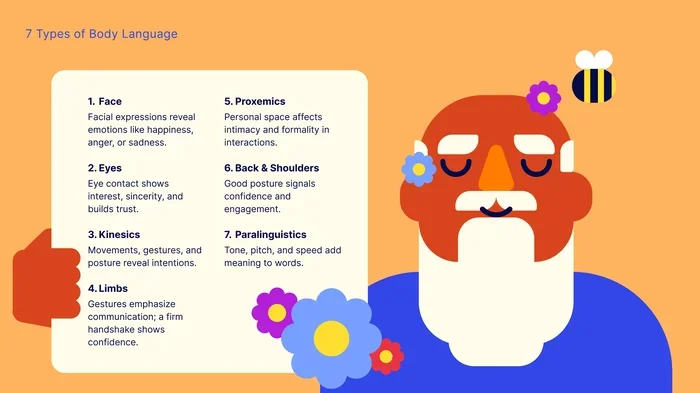
The face is where the magic happens. It’s the most honest part of the body when it comes to emotions. Learning to read facial expressions is the foundation of body language basic how to read someone.
Microexpressions are the golden key. These are ultra-fast facial movements that flash across someone’s face in a fraction of a second. They happen when someone tries to suppress a genuine emotion. Most people miss them entirely. But with practice, you can catch these fleeting moments and understand what someone really feels.
The Seven Universal Facial Expressions
Psychologist Paul Ekman identified seven emotions that show up on faces the same way across every culture on Earth:
- Happiness: Raised cheeks, crow’s feet around the eyes, genuine smile reaching the eyes
- Sadness: Inner corners of eyebrows drawn up, corners of mouth turned down
- Anger: Eyebrows pulled down and together, lips pressed tight or open in a square shape
- Fear: Eyebrows raised and drawn together, upper eyelids raised, lips stretched horizontally
- Surprise: Eyebrows raised, eyes wide open, jaw dropped
- Disgust: Nose wrinkled, upper lip raised, cheeks pushed up
- Contempt: One corner of the mouth raised — this is the only unilateral expression
Quick Tip: The biggest tell for a fake smile is the eyes. A genuine smile (called a Duchenne smile) crinkles the corners of the eyes. A polite or fake smile only moves the mouth. Watch the eyes first.
What the Eyebrows Reveal
Eyebrows are incredibly expressive. Here’s what to watch for:
- Raised eyebrows indicate surprise, fear, or an attempt to appear non-threatening
- Furrowed brows signal confusion, concentration, or anger
- One raised eyebrow often shows skepticism or disbelief
- Quick eyebrow flash is a universal sign of recognition and greeting
When you start paying attention to eyebrows, you’ll notice they move constantly during conversation. They’re like little flags waving above the eyes, broadcasting emotional states in real time.
Eye Contact Secrets That Reveal True Intentions
Visual guide about reading body language
Image source: eadn-wc01-3361115.nxedge.io
They say the eyes are the window to the soul. When it comes to body language basic how to read someone, this couldn’t be more true. Eye behavior reveals attraction, confidence, discomfort, and deception more reliably than almost any other signal.
Eye contact is a dance of connection. When two people are engaged and comfortable, their eye contact follows a natural rhythm. They look at each other, glance away briefly, then return their gaze. Breaking this rhythm — either by staring too intensely or avoiding eyes completely — creates discomfort.
What Different Eye Patterns Mean
Here’s how to decode eye behavior:
- Sustained eye contact (without staring): Confidence, interest, honesty, and engagement
- Frequent looking away: Discomfort, boredom, submission, or processing thoughts
- Eyes darting side to side: Anxiety, scanning for escape routes, or dishonesty
- Looking down: Shame, submission, or accessing emotions
- Looking up and to the right: Often indicates imagination or fabrication
- Pupil dilation: Interest, attraction, or arousal (this is involuntary and very telling)
The Eye Blocking Phenomenon
One of the most powerful eye signals is eye blocking. This happens when someone closes their eyes longer than a normal blink, rubs their eyes, or covers their eyes while talking. Eye blocking is a strong indicator of discomfort or disagreement.
When you say something and the other person closes their eyes for a moment, they’re essentially trying to “block out” what you said. It’s an unconscious response that reveals their true feelings even when their words agree with you.
Expert Insight: Don’t confuse normal blinking with eye blocking. A typical blink lasts about 1/10th of a second. Eye blocking involves holding the eyes closed noticeably longer. The difference is easy to spot once you know what to look for.
Decoding Hand Gestures and Arm Positions
Visual guide about reading body language
Image source: image.slidesharecdn.com
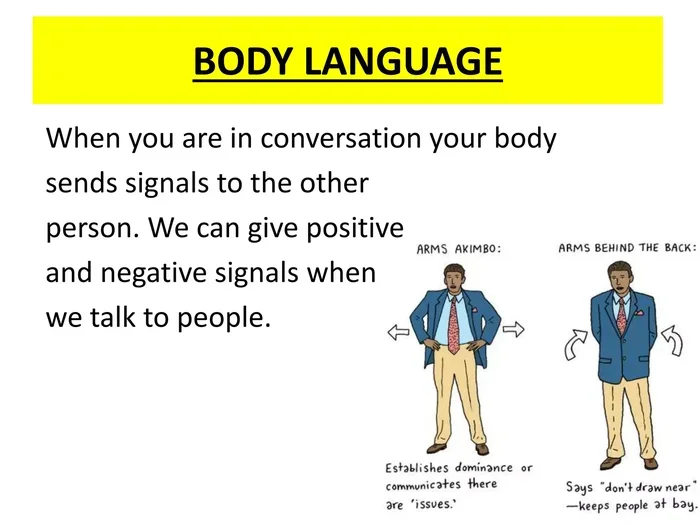
Hands are incredibly communicative. They punctuate our words, express our emotions, and sometimes betray our hidden thoughts. Understanding hand gestures is a crucial part of learning body language basic how to read someone.
Hands are the most honest body part after the face. We use them constantly, and most hand gestures happen automatically without conscious thought. That’s what makes them so reliable for reading people.
Open Palms vs. Closed Hands
This is one of the oldest signals in human communication:
- Open palms facing up: Honesty, openness, submission, and trustworthiness
- Open palms facing down: Authority, dominance, or an attempt to calm a situation
- Closed fists or hidden hands: Discomfort, secrecy, frustration, or withdrawal
- Hand wringing: Anxiety, nervousness, or stress
When someone talks with their hands visible and palms open, they generally come across as trustworthy. When they hide their hands — in pockets, under a table, or behind their back — it creates an unconscious sense of distrust in the observer.
The Truth About Crossed Arms
Crossed arms get a bad reputation. Many people assume crossed arms always mean defensiveness or closed-mindedness. But the reality is more nuanced.
Crossed arms can mean several things:
- Defensiveness or disagreement (especially if combined with a tight grip)
- Comfort and relaxation (if arms are loosely crossed and body is relaxed)
- Cold temperature (seriously, sometimes people are just cold!)
- Habit (some people simply find this position comfortable)
Common Mistake: Never interpret crossed arms in isolation. Always look for other signals. If someone has crossed arms, a furrowed brow, and tight lips, they’re probably uncomfortable. If they have crossed arms but a relaxed face and open posture otherwise, they’re probably just comfortable.
Hand-to-Face Gestures
Watch what people do with their hands near their face during conversation:
- Touching the nose: Often associated with lying or withholding information
- Rubbing the eye: Disbelief, disagreement, or eye blocking
- Touching the ear: Uncertainty or a desire to “not hear” what’s being said
- Fingers near the mouth: Self-comfort, anxiety, or holding back words
- Chin stroking: Decision-making or evaluation
These gestures are especially revealing during important conversations. When someone is answering a question and their hand drifts to their face, pay attention. Their body might be signaling doubt even while their words sound confident.
Reading Posture and Body Positioning
How someone holds their body tells you volumes about how they feel. Posture is one of the most reliable indicators of confidence, comfort, and emotional state in body language basic how to read someone.
Body orientation reveals interest and engagement. When someone is interested in you or what you’re saying, their body points toward you. Their shoulders, hips, and feet all align in your direction. When they’re not interested or want to leave, their body starts angling away.
The Four Main Posture Types
- Open posture: Arms uncrossed, legs uncrossed, torso facing the other person, chest open. This signals confidence, receptiveness, and comfort.
- Closed posture: Arms crossed, legs crossed away from the other person, torso angled away. This signals defensiveness, discomfort, or disinterest.
- Forward lean: Leaning toward someone shows engagement, interest, and agreement. It’s one of the strongest positive signals.
- Backward lean or withdrawal: Leaning back signals relaxation (if combined with other open signals) or disengagement (if combined with closed signals).
What Feet Tell You
Here’s something most people never think to watch: feet. Feet are actually one of the most honest parts of the body. We consciously control our facial expressions and hand movements, but most people never think about what their feet are doing.
- Feet pointing toward you: Interest, engagement, comfort
- Feet pointing toward the exit: Desire to leave, discomfort, or impatience
- Foot tapping or bouncing: Anxiety, impatience, or restlessness
- Ankle locking: Holding back, anxiety, or defensive feelings
Quick Tip: Next time you’re in a meeting or social setting, glance at people’s feet under the table. You’ll be amazed at what you discover. Someone might be smiling and nodding while their feet point straight toward the door.
Mirroring: The Ultimate Connection Signal
Mirroring happens when one person unconsciously copies another’s body language. It’s one of the most powerful indicators of rapport and connection.
When someone mirrors you, it means they feel connected to you on a subconscious level. They might copy your posture, hand position, facial expressions, or even your speech patterns. Mirroring is the body’s way of saying “we’re on the same wavelength.”
You can also use mirroring intentionally to build rapport. When you subtly match someone’s posture and energy level, they feel more comfortable around you. Just don’t overdo it — obvious copying comes across as mocking rather than connecting.
If you’re navigating complex relationship dynamics where understanding someone’s true feelings matters deeply, reading body language becomes essential. Sometimes understanding nonverbal cues helps when you need to know how to give someone space without losing them — their body often tells you before their words do.
Detecting Deception Through Body Language
One of the most sought-after applications of body language basic how to read someone is spotting lies. While no single gesture proves deception, clusters of signals can raise red flags that something isn’t adding up.
Important caveat: There is no single “Pinocchio’s nose” signal for lying. Research shows that even trained professionals detect lies only slightly better than chance. However, understanding deception cues helps you ask better questions and dig deeper when something feels off.
Common Deception Signals
Watch for these clusters of behavior when you suspect someone isn’t being fully honest:
- Incongruence: Words and body language don’t match. They say “yes” while shaking their head “no” slightly.
- Increased self-touching: More face touching, neck rubbing, or hand wringing than usual
- Speech changes: Hesitation, stammering, changes in pitch, or speaking faster than normal
- Microexpressions of fear or distress: Brief flashes of negative emotions that disappear quickly
- Excessive detail or too little detail: Liars often over-explain or give suspiciously vague answers
- Throat clearing or swallowing: Physical tension that comes with the stress of lying
- Shifting weight or fidgeting: Increased movement as the body responds to internal stress
The Baseline Method for Spotting Lies
The most effective way to detect deception is establishing a baseline. This means observing how someone behaves when they’re telling the truth, then watching for deviations from that norm.
Here’s how to establish a baseline:
- Ask simple, factual questions you know the answers to (their name, where they live, what they had for breakfast)
- Observe their normal eye contact, posture, gestures, and speech patterns
- Now ask the questions you actually care about
- Watch for significant changes in their behavior from the baseline
When someone’s behavior shifts dramatically from their baseline — especially increased self-touching, reduced eye contact, and physical tension — it’s a sign to probe further. They might not be lying, but something about the topic makes them uncomfortable.
Expert Insight: The best lie detectors don’t look for specific “lying gestures.” They look for clusters of stress signals that deviate from a person’s normal behavior. Context is everything. Someone might touch their nose because they’re lying, or because their nose itches. Always consider the full picture.
Body Language in Dating and Attraction
Understanding body language basic how to read someone becomes especially valuable in romantic contexts. Attraction has its own unique set of nonverbal signals that are universal across cultures and incredibly revealing.
Flirting is essentially a nonverbal conversation. Before anyone makes a move, their bodies are already communicating interest or disinterest. Learning to read these signals saves you from embarrassment and helps you respond appropriately.
Signs of Romantic Interest
Here are the most reliable body language signals of attraction:
- Prolonged eye contact: Looking at you for longer than normal, especially with dilated pupils
- Preening behaviors: Fixing hair, adjusting clothing, straightening posture when they see you
- Leaning in: Moving closer during conversation, reducing physical distance
- Pointing feet toward you: Even in a group, their feet orient in your direction
- Mirroring: Copying your gestures, posture, and energy level
- Exposed wrists and palms: Showing vulnerable body parts signals trust and interest
- Lip licking or biting: Subconscious signals of attraction and anticipation
- Finding excuses to touch: Light touches on the arm, shoulder, or back during conversation
Signs Someone Is NOT Interested
Just as important as recognizing interest is recognizing disinterest. Here’s what to watch for:
- Body angled away: Shoulders and feet pointing toward the exit or another person
- Minimal eye contact: Looking at their phone, the room, or anywhere but you
- Creating barriers: Holding a drink in front of their body, crossing arms, keeping distance
- No mirroring: Their body language doesn’t match or complement yours at all
- Stepping back: When you move closer, they create more distance
li>Short responses with closed body language: Combined with minimal engagement signals
Quick Tip: If you’re unsure whether someone is interested, test it. Move slightly closer and see if they move closer too or step back. Their reaction will tell you everything you need to know.
The Science of Attraction Signals
Attraction triggers specific physiological responses that show up in body language. Pupil dilation, increased blood flow to the lips (making them appear fuller), and heightened skin coloration are all involuntary responses to attraction.
These signals happen automatically. Someone can’t control their pupil size or blood flow. That’s what makes these signals so reliable — they’re genuine physiological responses, not conscious choices.
When you combine multiple attraction signals — eye contact, leaning in, mirroring, preening — you get a very clear picture of someone’s interest level. The more signals that align, the stronger the attraction.
Practical Tips for Improving Your Reading Skills
Learning body language basic how to read someone is like learning any other skill. It takes practice, patience, and a willingness to be wrong sometimes. Here are practical ways to sharpen your abilities.
Start With Observation
The best way to improve is to become an active observer. Watch people everywhere you go.
- Sit in a coffee shop and watch couples interact
- Observe people in meetings at work
- Watch interviews on TV with the sound off — try to guess emotions from body language alone
- Pay attention to how people greet each other in different contexts
- Notice how body language changes when topics shift in conversation
Watch for Clusters, Not Individual Signals
This is the single most important rule in reading body language. Never interpret one gesture in isolation.
Someone might cross their arms because they’re defensive. Or because they’re cold. Or because it’s simply comfortable. The signal only becomes meaningful when it’s part of a cluster of related signals.
Always look for at least three congruent signals before drawing a conclusion. If someone has crossed arms, a furrowed brow, and tight lips, that’s a cluster indicating discomfort. Crossed arms alone? It could mean anything.
Consider the Context
Body language always exists within a context. The same gesture can mean completely different things depending on the situation.
- Someone looking at their watch might be bored — or they might have somewhere important to be
- Crossed arms during a heated debate signal defensiveness — during a casual chat, they might just be comfortable
- Avoiding eye contact might indicate lying — or it might indicate cultural norms or social anxiety
Always ask yourself: what’s happening around this person? What’s the environment? What’s the relationship? Context transforms the meaning of every signal.
Build Your Emotional Vocabulary
The more precisely you can identify emotions, the better you become at reading them in others. Many people have limited emotional vocabulary — they can identify “happy,” “sad,” and “angry” but miss the subtle differences between frustration, disappointment, irritation, and resentment.
Practice naming emotions specifically. Instead of “bad,” think “disappointed” or “anxious” or “overwhelmed.” This precision helps you recognize these states in others more accurately.
Practice With People You Know
Start reading body language with friends and family members. You already know their baseline behavior, which makes it easier to notice changes. Ask yourself:
- How does my partner’s body language change when they’re stressed vs. relaxed?
- What does my friend’s posture look like when they’re excited vs. bored?
- How do my coworkers’ facial expressions shift during different types of meetings?
The more familiar you are with someone’s normal behavior, the more accurately you’ll read their nonverbal signals in different situations.
If you’re working on understanding someone who struggles with emotional regulation, body language reading becomes even more valuable. Learning how to deal with someone who is bipolar and angry often starts with recognizing the nonverbal warning signs before emotions escalate.
Common Body Language Mistakes to Avoid
Even with good intentions, people make predictable errors when learning body language basic how to read someone. Avoiding these mistakes will make you a much more accurate reader.
Mistake #1: Reading Single Gestures
As mentioned earlier, this is the biggest error beginners make. One crossed arm doesn’t mean anything definitive. One touch of the nose doesn’t prove lying. Always look for clusters of signals that tell a consistent story.
Mistake #2: Ignoring Cultural Differences
Many body language signals are universal, but some vary significantly across cultures. Eye contact norms, personal space preferences, and hand gestures can mean completely different things in different cultural contexts.
Always consider cultural background when reading someone’s body language. What signals confidence in one culture might signal disrespect in another.
Mistake #3: Over-Reading Negative Signals
When you first start learning body language, you’ll notice negative signals everywhere. You’ll see discomfort, deception, and disinterest in every interaction. This is normal but unhelpful.
Remember that people fidget, avoid eye contact, and cross their arms for many reasons that have nothing to do with you. Don’t let your new awareness turn you into a paranoid over-analyzer.
Mistake #4: Forgetting About Your Own Body Language
While you’re busy reading others, don’t forget that they’re reading you too. Your own body language constantly broadcasts messages about your confidence, interest, and emotional state.
Practice maintaining open, confident body language. Keep your posture upright, your gestures open, and your eye contact steady. When you project confidence and openness, people respond in kind.
Mistake #5: Assuming You’re Always Right
Body language reading is an educated interpretation, not a superpower. You’ll be wrong sometimes. Everyone is. The key is staying humble, asking clarifying questions, and using your observations as conversation starters rather than accusations.
If you notice someone seems uncomfortable, instead of thinking “they’re hiding something,” try asking “is everything okay? You seem a little tense.” This approach builds trust and often reveals the truth more effectively than silent analysis.
Building Trust Through Body Language Awareness
Understanding body language basic how to read someone isn’t just about decoding others — it’s about building stronger, more authentic relationships. When you understand nonverbal communication, you can respond to people’s real needs instead of just their words.
Trust is built in the space between what people say and what they feel. When someone expresses frustration but their body shows sadness, responding to the sadness creates deeper connection than addressing the frustration alone.
Here’s how to use body language awareness to build trust:
- Match your words with your body language: Ensure your nonverbal signals align with your spoken message
- Respect personal space: Give people the physical distance they need to feel comfortable
- Use open posture: Show receptiveness through uncrossed arms and forward lean
- Mirror subtly: Build rapport by naturally matching the other person’s energy and posture
- Maintain appropriate eye contact: Show engagement without staring
- Respond to discomfort signals: When you notice someone’s body language closing down, change your approach
When people feel truly seen and understood, trust develops naturally. Body language awareness helps you see beyond surface-level interactions and connect with people on a deeper level.
Sometimes relationships reach a point where understanding body language helps you recognize when someone needs professional support. If you’re wondering how to get someone mental help when they refuse, noticing their nonverbal withdrawal signals can be the first step toward compassionate intervention.
Conclusion
Mastering body language basic how to read someone transforms every interaction in your life. From casual conversations to intimate relationships, from business meetings to family dinners, understanding nonverbal communication gives you access to the unspoken truth behind every word.
Remember the key principles: watch for clusters of signals rather than isolated gestures, always consider context, establish baselines before drawing conclusions, and practice regularly in real-world settings. The face reveals emotions through microexpressions and universal expressions. The eyes communicate interest, confidence, and discomfort through patterns of contact and avoidance. Hands signal openness or concealment through palm visibility and gestures. Posture and body orientation show engagement or withdrawal. And feet — those often-ignored appendages — point toward what someone truly wants.
Your journey to reading people like a book starts with awareness. Begin observing today. Watch people in coffee shops, notice how your partner’s body language shifts during different conversations, pay attention to your own nonverbal signals. With consistent practice, you’ll develop an intuitive understanding of human behavior that most people never achieve.
The most important thing to remember is that body language reading should bring you closer to people, not create distance. Use this skill to understand, empathize, and connect. When you can read between the lines of human communication, you gain something truly valuable — the ability to see people as they really are.
Frequently Asked Questions
What is Body Language Basic How To Read Someone?
Body Language Basic How To Read Someone is an important topic with many practical applications.
