
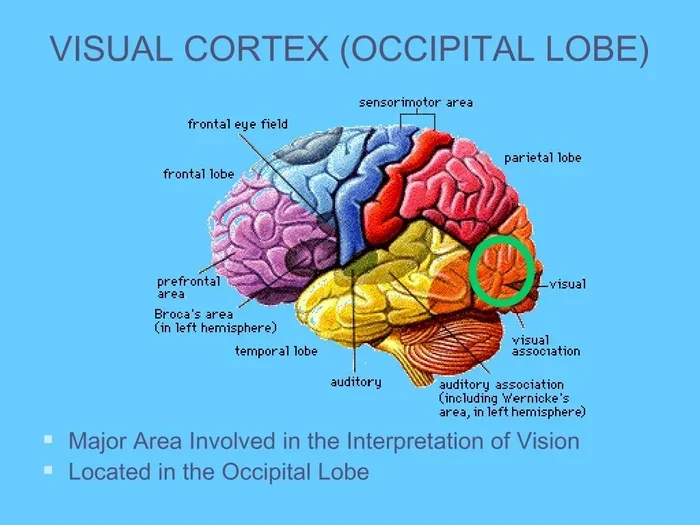
The primary visual cortex sits in the occipital lobe at the back of your brain and serves as the brain’s main hub for processing visual information. Understanding this brain region reveals how you interpret colors, shapes, movement, and everything you see around you every day.
Have you ever wondered how your brain makes sense of everything you see? When you look at a sunset, read a book, or recognize a friend’s face, an incredible process is happening inside your head. At the center of this process sits a small but powerful region called the primary visual cortex. This tiny area does the heavy lifting when it comes to turning light into meaningful images.
Understanding where this brain region lives and how it works can change the way you think about vision. It is not just about your eyes. Your brain plays a massive role in what you actually perceive. Let us dive into the fascinating world of the visual cortex and discover why it matters more than you might think.
- Location: The primary visual cortex is located in the occipital lobe at the back of the brain.
- Function: It processes raw visual data from the eyes and begins interpreting shapes, colors, and motion.
- Also Known As: This area is called V1, the striate cortex, or Brodmann area 17.
- Damage Impact: Injury to this region can cause vision loss or cortical blindness even with healthy eyes.
- Mapping: The visual cortex contains a detailed map of your entire visual field.
- Connection: It works with other brain areas to create the full visual experience you perceive.
- Health: Protecting your visual cortex supports lifelong healthy vision and cognitive function.
📑 Table of Contents
- Where Is The Primary Visual Cortex Located In The Brain
- What Does The Primary Visual Cortex Do
- Why The Primary Visual Cortex Location Matters
- The Visual Cortex And Daily Life
- How To Protect Your Visual Cortex
- Fascinating Facts About The Primary Visual Cortex
- Common Misconceptions About The Visual Cortex
- The Visual Cortex And Modern Life
- Conclusion
Where Is The Primary Visual Cortex Located In The Brain
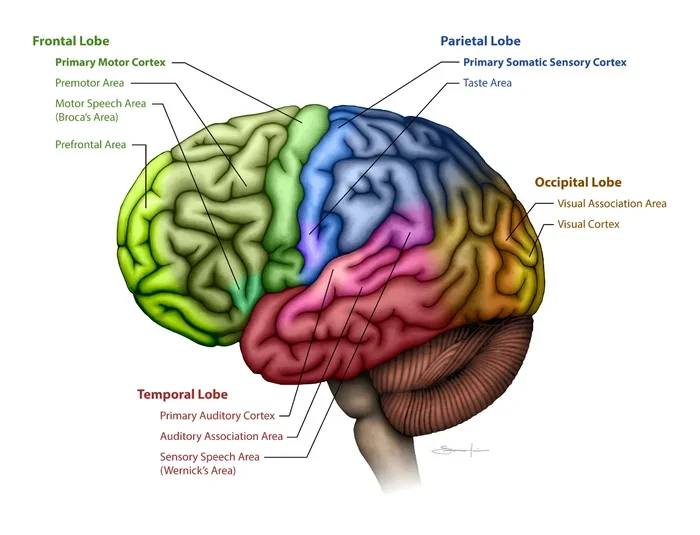
The primary visual cortex is located in the occipital lobe, which sits at the very back of your brain. If you point to the base of your skull, right above your neck, you are pointing in the right direction. This area is the brain’s dedicated headquarters for processing everything you see.
The occipital lobe is one of the four major lobes of the brain. It is the smallest of the four, but it handles one of the most important jobs. Without it, you would not be able to make sense of visual information at all. The primary visual cortex wraps around the inside of the occipital lobe along a deep groove called the calcarine fissure.
This location is strategic. Being at the back of the brain keeps it protected by the thickest part of the skull. Your brain literally put its most important visual processor in a safe spot. The visual cortex receives information from the eyes through a pathway called the optic tract, which travels from the retina through the thalamus before reaching the occipital lobe.
The Exact Position Within The Occipital Lobe
Within the occipital lobe, the primary visual cortex lines both sides of the calcarine fissure. The area above this fissure processes information from the lower part of your visual field. The area below it handles the upper part of your visual field. This organized layout means every part of what you see gets mapped to a specific spot in your brain.
Scientists call this retinotopic mapping. It is like having a tiny screen inside your brain that mirrors everything your eyes detect. The center of your vision, where you see the sharpest details, takes up a disproportionately large amount of space in the visual cortex. This makes sense because central vision is what you use most for reading, recognizing faces, and detailed work.
What Does The Primary Visual Cortex Do
Visual guide about brain anatomy visual cortex
Image source: books.byui.edu
The primary visual cortex is the first cortical area to receive and process visual information from your eyes. Think of it as the brain’s visual sorting office. Raw data arrives here first, and the cortex begins breaking it down into basic features like edges, orientation, color, and motion.
This area does not create the full picture you see. Instead, it extracts the fundamental building blocks of vision. These building blocks then get sent to other visual areas in the brain for more advanced processing. The primary visual cortex handles the early stages of vision, while other regions combine these elements into recognizable objects and scenes.
Processing Basic Visual Features
The primary visual cortex contains specialized neurons that respond to specific visual elements. Some neurons fire when they detect vertical lines. Others respond to horizontal lines or specific angles. Some are tuned to particular colors or directions of motion. This specialization allows the brain to efficiently analyze every aspect of a visual scene simultaneously.
Here are the key features the primary visual cortex processes:
- Orientation: The angle of lines and edges in your visual field
- Spatial frequency: The level of detail and texture in what you see
- Color: Basic color information from cone cells in the retina
- Motion direction: Which way objects are moving in your field of view
- Binocular disparity: Differences between what each eye sees, enabling depth perception
The Visual Processing Hierarchy
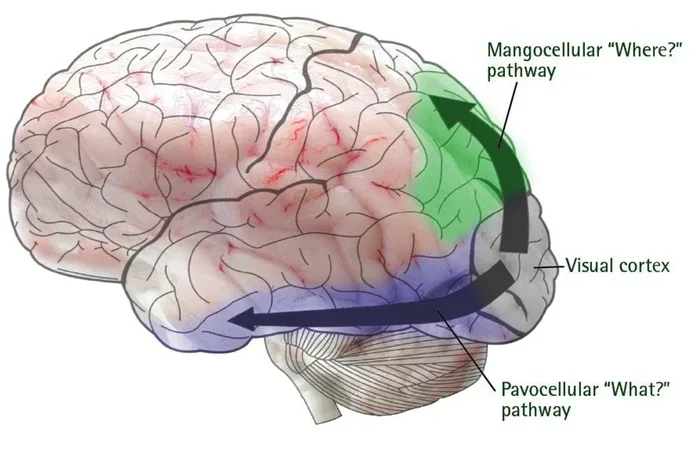
After the primary visual cortex extracts these basic features, the information travels along two main pathways. The dorsal stream moves toward the parietal lobe and handles spatial awareness and motion. This is the “where” pathway. The ventral stream moves toward the temporal lobe and deals with object recognition and form. This is the “what” pathway.
This division of labor means your brain processes different aspects of vision in parallel. You know where something is and what it is at the same time because different brain regions handle these tasks simultaneously. The primary visual cortex kicks off this entire cascade by providing the raw material these higher areas need.
Why The Primary Visual Cortex Location Matters
Visual guide about brain anatomy visual cortex
Image source: basicmedicalkey.com
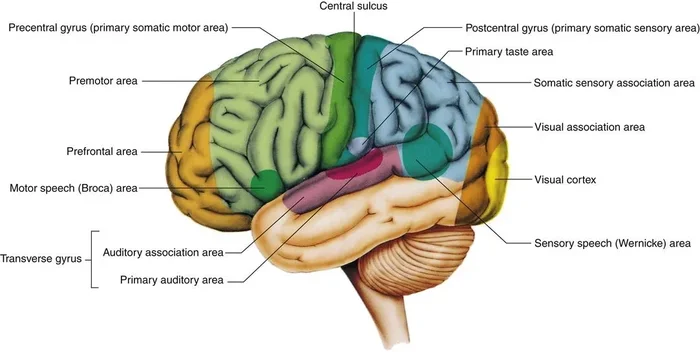
The location of the primary visual cortex at the back of the brain has important implications for both health and function. Because it sits in a specific, predictable location, doctors can diagnose problems more accurately. Brain injuries, tumors, or strokes affecting the occipital lobe often produce characteristic vision problems that point directly to this region.
When the primary visual cortex is damaged, a condition called cortical blindness can occur. This means the eyes work perfectly fine, but the brain cannot process what they see. This is different from eye damage. It highlights a crucial truth: seeing is a brain function, not just an eye function.
How Visual Cortex Damage Affects Vision
Damage to the primary visual cortex can cause several specific visual deficits:
- Homonymous hemianopia: Loss of vision in the same half of both visual fields
- Scotomas: Small blind spots in specific parts of the visual field
- Cortical blindness: Complete loss of vision despite healthy eyes
- Visual agnosia: Inability to recognize objects despite seeing them
- Akinetopsia: Inability to perceive motion in the visual field
The specific type of vision loss depends on exactly which part of the visual cortex is damaged. Because of the retinotopic mapping mentioned earlier, doctors can often pinpoint the location of brain damage based on the pattern of vision loss a patient experiences.
The Circle Of Control And Brain Health
Understanding your brain’s visual system helps you focus on what you can control when it comes to protecting your vision. Just as in life where knowing your circle of control helps you manage stress and focus your energy, knowing how your visual cortex works empowers you to take actionable steps to protect it.
The Visual Cortex And Daily Life
Visual guide about brain anatomy visual cortex
Image source: cdn-background.pearltrees.com
Your primary visual cortex is working every single moment you have your eyes open. It processes millions of bits of visual information every second without you even noticing. From the moment you wake up and look at your phone to reading street signs while driving, this brain region is on duty.
The visual cortex also plays a role in how we interpret social cues. When you read someone’s facial expression or notice their body language, your visual cortex is the first stop for that information. This processing happens so fast and automatically that we rarely think about it. But it shapes every social interaction we have.
Visual Processing In Relationships
Communication involves far more than words. We constantly send and receive visual signals through facial expressions, posture, and eye contact. The primary visual cortex processes all of these signals before higher brain regions interpret their meaning. When someone gives you the silent treatment, your brain is still processing visual information about their body language and facial expressions. Understanding why stonewalling is the most overlooked form of emotional abuse starts with recognizing that visual communication plays a massive role in how we connect with others.
Visualization And Mental Imagery
Interestingly, the primary visual cortex is also active during mental imagery. When you visualize something in your mind, whether it is a memory or an imagined future, this brain region lights up. This is why visualization techniques can be so powerful for goal setting and personal growth. People who practice manifestation techniques often rely on vivid mental imagery, which directly engages the visual cortex.
How To Protect Your Visual Cortex
Keeping your visual cortex healthy is essential for maintaining good vision throughout your life. While you cannot control everything that affects your brain, there are practical steps you can take to support this vital region.
Lifestyle Habits For Visual Cortex Health
Your brain thrives on the same healthy habits that benefit the rest of your body. Here are evidence-based ways to support your visual cortex:
- Regular exercise: Physical activity increases blood flow to the brain, including the occipital lobe
- Quality sleep: Your brain consolidates visual learning and repairs neural connections during sleep
- Nutritious diet: Antioxidant-rich foods and omega-3 fatty acids support brain cell health
- Mental stimulation: Visual puzzles, reading, and learning new skills keep visual pathways active
- Eye protection: Sunglasses and safety goggles prevent damage to the eyes that feeds the visual cortex
- Manage chronic conditions: Diabetes and high blood pressure can damage blood vessels in the brain
Quick Tips For Daily Visual Cortex Care
Small daily habits can make a big difference for your brain health. Take regular breaks from screens to reduce eye strain. Practice focusing on distant objects to exercise different visual pathways. Stay hydrated because even mild dehydration can affect cognitive function and visual processing speed.
Fascinating Facts About The Primary Visual Cortex
The visual cortex is one of the most studied areas in neuroscience, and researchers continue to uncover surprising facts about how it works. Here are some remarkable things you might not know about this brain region.
The Cortex Contains A Detailed Visual Map
The primary visual cortex contains a complete map of your visual field. However, this map is not proportional. The center of your vision, called the fovea, takes up a much larger area of the visual cortex than the periphery. This is called cortical magnification. It explains why you see fine details clearly in the center of your vision but not at the edges.
Visual Cortex Plasticity
The visual cortex is remarkably plastic, especially in young people. If someone loses their sight, the visual cortex can be recruited for other functions like touch and hearing. This is why blind individuals often develop enhanced abilities in other senses. The brain literally rewires itself to use the visual processing power for something else.
Even in adults, the visual cortex shows plasticity. Learning new visual skills, like reading or playing a musical instrument, can cause measurable changes in the visual cortex over time. This is a powerful reminder that your brain is always adapting based on how you use it.
The Visual Cortex Works Faster Than You Think
Your primary visual cortex can process a visual scene in as little as 13 milliseconds. That is faster than you can blink. This incredible speed allows you to react to visual threats almost instantly. It is also why you can catch a ball or swerve to avoid a hazard before you consciously think about it.
Common Misconceptions About The Visual Cortex
There are several myths about the visual cortex and how vision works. Let us clear up some of the most common ones.
Myth: Vision Happens In The Eyes
Many people think seeing is all about the eyes. In reality, your eyes collect light and convert it into electrical signals. The actual process of seeing happens in the brain. Your eyes are just the camera. The visual cortex is the processor that creates the image you experience.
Myth: We See Everything In Front Of Us
Your brain actually fills in a lot of what you think you see. There is a blind spot in each eye where the optic nerve connects to the retina. You never notice this blind spot because your visual cortex fills in the missing information. Your brain also makes assumptions about color, brightness, and motion based on context. What you perceive is as much a construction of your brain as it is a reflection of the outside world.
Myth: Visual Cortex Damage Always Means Total Blindness
Damage to the primary visual cortex does not always cause complete blindness. Depending on the location and extent of damage, people might retain some visual abilities. Some individuals with cortical blindness experience a phenomenon called blindsight, where they can respond to visual stimuli they cannot consciously see. This suggests that some visual processing happens outside the primary visual cortex through alternative pathways.
The Visual Cortex And Modern Life
In today’s screen-filled world, your visual cortex works harder than ever before. Hours of scrolling, reading, and video watching put constant demand on this brain region. While the visual cortex is designed to handle complex visual input, excessive screen time can lead to eye strain, fatigue, and reduced attention.
Screen Time And Visual Processing
Staring at screens for extended periods does not damage the visual cortex directly, but it can cause digital eye strain. Symptoms include dry eyes, headaches, and blurred vision. The 20-20-20 rule helps: every 20 minutes, look at something 20 feet away for 20 seconds. This gives your visual system a break and reduces fatigue.
How Technology Is Advancing Visual Cortex Research
Modern brain imaging techniques like functional MRI and EEG have revolutionized our understanding of the visual cortex. Scientists can now watch this brain region in action as people view different images and scenes. This research is leading to breakthroughs in treating visual disorders and even developing brain-computer interfaces that could restore vision to those who have lost it.
Conclusion
The primary visual cortex sits in the occipital lobe at the back of your brain, serving as the command center for visual processing. This remarkable region transforms raw data from your eyes into the rich visual world you experience every day. From detecting edges and colors to mapping your entire visual field, the visual cortex does the essential groundwork that makes sight possible.
Understanding where this brain region is located and how it functions gives you a deeper appreciation for the complexity of human vision. It also empowers you to take better care of your brain health through exercise, sleep, nutrition, and mindful screen habits. Your visual cortex works tirelessly every moment you are awake. Give it the care it deserves, and it will serve you well for a lifetime.
Frequently Asked Questions
What is Where Is The Primary Visual Cortex Located?
Where Is The Primary Visual Cortex Located is an important topic with many practical applications.
