

Yes, you can have two mortgages on one house, but it is not as simple as taking out a second loan. Lenders allow it in specific situations, such as when you use a home equity line of credit or a piggyback loan. You must meet strict income, credit, and equity requirements. Understanding the risks and costs helps you decide if this path fits your financial goals.
Many homeowners ask the same question when they need extra cash or want to buy a property with less cash down. The idea sounds simple at first. You already have a home loan, so why not add another one on the same house? The short answer is yes, but the real answer depends on your situation, your lender, and the type of second loan you want.
This guide breaks down how two mortgages on one house actually work. We will look at the most common loan structures, the rules that lenders follow, and the financial risks you should know before you sign anything. By the end, you will have a clear picture of whether this strategy makes sense for you.
Let us start with the basics and move step by step through the details.
Key Takeaways
- Two mortgages are possible: You can carry a first mortgage and a second loan on the same property, but lenders call the second one a junior lien.
- Equity matters most: You need enough home equity to qualify for a second loan without pushing your total debt too high.
- Loan types differ: A HELOC, home equity loan, or piggyback loan each work differently and carry unique costs.
- Debt-to-income ratio counts: Lenders review your monthly income against all housing payments, not just the first mortgage.
- Risk increases: Two loans mean two payments, higher total interest, and a greater chance of foreclosure if you miss payments.
- Alternatives exist: Refinancing, downsizing, or waiting to build more equity may be safer than stacking loans.
- Professional guidance helps: A mortgage broker or financial advisor can compare options and help you avoid costly mistakes.
📑 Table of Contents
- What Does It Mean to Have Two Mortgages on One House
- Types of Second Loans You Can Use on the Same Property
- Lender Requirements and Approval Rules
- Costs, Payments, and Real-World Numbers
- Risks and Downsides to Think About
- Smart Ways to Use Two Loans and When to Avoid Them
- How to Decide If Two Mortgages Fit Your Situation
- Final Thoughts on Carrying Two Loans
What Does It Mean to Have Two Mortgages on One House
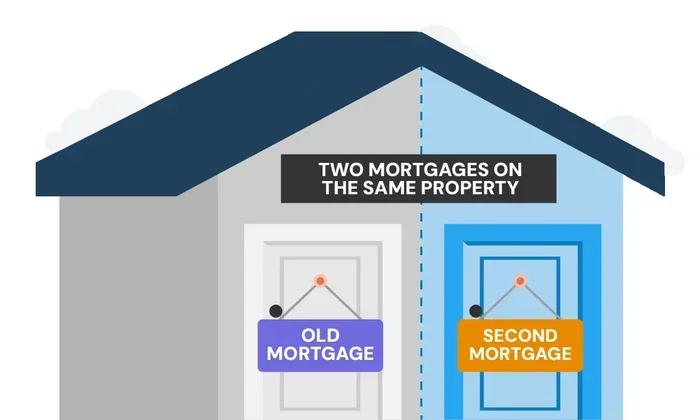
When people say two mortgages on one house, they usually mean one primary home loan plus a second loan secured by the same property. The first loan is the senior lien. The second loan sits behind it in line. If the home goes into foreclosure, the first lender gets paid first. The second lender only gets paid if money remains.
This setup is common in a few situations. Some buyers use a second loan to cover part of the purchase price. Others tap into home equity later to pay for repairs, school costs, or debt consolidation. The key point is that the house backs both loans. That means your home is on the line for both debts.
Before you move forward, it helps to understand the words lenders use. A junior lien is the technical term for the second loan. You may also hear terms like second mortgage, home equity loan, or HELOC. These are not all the same, and each one carries different rules.
Senior Lien Versus Junior Lien
The senior lien holds the top spot. It usually has the larger balance and the lower interest rate. The junior lien is smaller and often costs more. This order matters because it affects risk. If home prices drop, the second lender faces a bigger chance of losing money. That is why second loans tend to have stricter approval standards.
Why People Consider a Second Loan
Homeowners usually look at a second mortgage for one of these reasons:
- Cover a large expense without selling the home
- Avoid private mortgage insurance on a first loan
- Keep a low first mortgage rate while borrowing extra cash
- Fund renovations that may raise property value
Each reason comes with trade-offs. Borrowing more money can solve a short-term problem, but it also raises your monthly obligations. You should weigh the benefit against the long-term cost before you apply.
Types of Second Loans You Can Use on the Same Property
Not all second loans work the same way. The structure you choose changes your payments, your interest costs, and your flexibility. Here are the most common options.
Visual guide about two mortgages one house
Image source: moneysavingguru.co.uk
Home Equity Loan
A home equity loan gives you a lump sum upfront. You repay it over a fixed term with a set interest rate. This option feels predictable because the payment stays the same each month. It works well when you know exactly how much money you need and you want a stable schedule.
The downside is that you lock into a rate and a term. If your needs change, you cannot easily adjust the loan. Also, closing costs can eat into the benefit, especially for smaller amounts.
Home Equity Line of Credit
A HELOC works more like a credit card tied to your home. You get a credit limit, and you can draw from it as needed during a set period. You only pay interest on what you use. This flexibility makes it popular for ongoing projects or unexpected costs.
The catch is that many HELOCs have variable rates. Your payment can rise if interest rates move up. Some plans also require minimum draws or carry annual fees. Read the fine print before you commit.
Piggyback Loan
A piggyback loan is a second loan used at purchase time. It often covers part of the down payment so you can avoid private mortgage insurance. A common setup is an 80-10-10 structure. The first loan covers 80 percent of the price, the second loan covers 10 percent, and you put down 10 percent in cash.
This approach can save money on insurance premiums, but it adds a second payment. You should compare the total cost of both loans against the cost of a single loan with mortgage insurance. The better choice depends on your rate, your loan size, and how long you plan to stay in the home.
Other Junior Lien Options
Some lenders offer specialized products that blend features of fixed and variable loans. Others may allow a second lien through a local credit union or community bank. These options can be useful if your situation is unusual, but they may come with higher rates or tighter rules. Always compare at least three offers before you decide.
Lender Requirements and Approval Rules
Getting a second loan is not automatic just because you already own the home. Lenders look at the full picture. They want to know that you can handle both payments without strain.
Visual guide about two mortgages one house
Image source: premiumpropertydirect.co.uk
Equity and Loan-to-Value Limits
Equity is the share of the home you truly own. It equals the home value minus all loans against it. Most lenders want you to keep a safe buffer of equity after the second loan. If you borrow too much, you may hit a loan-to-value ceiling and get denied.
For example, if your home is worth a certain amount and your first loan already uses a large share of that value, there may be little room left for a second lien. The exact limit varies by lender, loan type, and property type.
Credit Score and Income Checks
Your credit score affects both approval and pricing. A stronger score usually unlocks better terms. Lenders also review your income, job history, and existing debts. They want proof that your paycheck can cover the combined housing payments plus your other monthly obligations.
You will likely need recent pay stubs, tax returns, and bank statements. If you are self-employed, the review may take longer because the lender has to verify stable income from your business.
Debt-to-Income Ratio
Your debt-to-income ratio shows how much of your income goes toward debt each month. A second mortgage raises this ratio because it adds another payment. Many lenders prefer a lower ratio because it signals less risk. If your ratio is already high, a second loan may not fit your profile.
You can improve this number by paying down other debts before you apply. Even small reductions in credit card balances can help your case.
Property and Title Rules
The property itself must meet the lender’s standards. A single-family home usually qualifies more easily than a condo or multi-unit building. The title must also be clear enough for the lender to record a second lien. If there are liens, disputes, or ownership issues, the process can stall.
Costs, Payments, and Real-World Numbers
Two loans mean two sets of costs. You should look beyond the headline rate and ask how the loan affects your total monthly budget.

Visual guide about two mortgages one house
Image source: propertyfinder.ae
Interest Rates and Fees
Second loans often carry higher rates than first mortgages. That is because the second lender takes more risk. You may also pay appraisal fees, origination charges, title work, and closing costs. Some HELOCs waive certain fees, but others build the costs into the balance or the rate.
Always ask for a written estimate that lists every fee. Compare the annual percentage rate, not just the advertised rate, so you can see the true cost.
Monthly Payment Impact
Your monthly payment will rise by the amount of the second loan payment plus any new fees. If the second loan has a variable rate, your payment may change later. That can make budgeting harder. A fixed home equity loan gives you more certainty, but it may cost more upfront.
A simple way to test the impact is to add both payments together and compare the total to your current budget. If the new total leaves little room for savings or emergencies, you may want to pause and rethink the plan.
Total Cost Over Time
The length of the second loan matters too. A longer term lowers the monthly payment but increases total interest. A shorter term costs more each month but saves money over time. Pick the term that matches your cash flow and your payoff goals.
Risks and Downsides to Think About
Borrowing against your home can help in the right situation, but it also adds real risk. You should understand these downsides before you move forward.
Foreclosure Risk Rises
Because both loans use your house as collateral, missing payments puts your home at risk. The first lender has the stronger claim, but the second lender can also take action if you default. Two loans mean two chances to miss a payment, so your margin for error gets smaller.
Variable Rates Can Bite
If you choose a HELOC or another variable-rate product, your payment can climb when rates rise. A payment that feels comfortable today may feel tight later. If your income does not rise at the same pace, you could feel squeezed.
Equity Can Shrink
If home values fall, your equity can drop faster when you hold two loans. That leaves you with less flexibility to refinance or sell without bringing cash to closing. In a downturn, a heavily borrowed home is harder to manage.
Overborrowing Trap
It is easy to treat home equity like a windfall. Remember that it is not free money. Every dollar you borrow must be repaid with interest. If you use the funds for short-term wants, you may regret the long-term cost.
Smart Ways to Use Two Loans and When to Avoid Them
A second loan can be a useful tool when you have a clear plan. It can also be a costly mistake when you borrow without a purpose. Here is how to tell the difference.
Good Uses of a Second Loan
These situations often make more sense because the borrowing has a clear goal or potential return:
- Funding renovations that improve safety, function, or value
- Consolidating high-rate debt into one lower-rate payment
- Covering a large, one-time expense with a fixed repayment plan
- Avoiding mortgage insurance when the math clearly favors it
In each case, ask yourself whether the benefit outweighs the added cost. If the answer is yes, then a second loan may be reasonable.
When to Step Back
You may want to avoid a second loan if:
- Your income is unstable or about to change
- Your debt load is already high
- You plan to borrow for discretionary spending with no payoff plan
- Home prices in your area are volatile or falling
- You are unsure how you will handle the combined payments
If any of these apply, it may be better to wait, save more, or look for a different solution.
Alternatives to Stacking Loans
Sometimes a different path works better. You might consider:
- Refinancing the first mortgage to a new rate or term
- Waiting to build more equity before borrowing
- Using a smaller loan amount to keep payments manageable
- Selling unneeded items or trimming expenses to free up cash
The best choice depends on your goals. A mortgage broker can help you compare the numbers side by side so you do not guess.
How to Decide If Two Mortgages Fit Your Situation
This decision is not just about approval. It is about fit. A loan can be approved and still be a poor match for your life. Use this simple checklist before you apply.
Check Your Numbers First
Start with the basics:
- Your current home value and first loan balance
- Your credit score and recent credit changes
- Your monthly income and fixed expenses
- Your emergency savings and backup plan
These numbers tell you how much room you have. They also show whether a second payment would stretch your budget too far.
Define the Purpose Clearly
Write down exactly why you want the second loan. Be specific. A clear purpose helps you choose the right product and keeps you from borrowing more than you need. If the purpose is vague, pause and rethink the plan.
Compare at Least Three Offers
Do not stop at the first quote. Compare rates, fees, terms, and flexibility. Ask how the payment could change over time. Ask what happens if you want to pay the loan off early. Small differences can add up to a lot of money.
Plan for the Worst Case
Think about what would happen if your income dropped or rates rose. Could you still make both payments? Do you have savings to cover a few months of housing costs? A good plan includes a cushion, not just a best-case scenario.
Final Thoughts on Carrying Two Loans
So, can you have two mortgages on one house? Yes, in many cases you can, as long as you meet the lender’s rules and the property has enough equity. A second loan can give you access to cash, help you structure a purchase, or let you avoid extra insurance costs. But it also adds risk, cost, and monthly pressure.
The smartest move is to look at the full picture. Check your equity, your income, your credit, and your budget. Compare loan types. Read the fine print. Make sure the reason for borrowing is strong enough to justify the added burden. If the numbers work and the purpose is clear, a second loan can be a useful tool. If the numbers are tight or the purpose is fuzzy, it may be better to wait.
Your home is one of your biggest assets. Treat it with care. Borrow in a way that supports your goals, not one that puts them at risk.
Frequently Asked Questions
Can you have two mortgages on one house at the same time?
Yes, you can have a first mortgage and a second loan on the same property, as long as a lender agrees to place a junior lien on the home. The second loan sits behind the first in line and usually requires enough equity and strong enough income to qualify.
What is the difference between a second mortgage and a HELOC?
A second mortgage usually gives you a lump sum with a fixed rate and a set repayment schedule. A HELOC works like a revolving line of credit with a draw period and often a variable rate, so you pay interest only on what you use.
Will a second loan affect my first mortgage rate?
It does not usually change the rate on your existing first mortgage, but it can affect your overall debt picture if you refinance later. The second loan has its own rate and terms, which are often higher than the first loan.
How much equity do I need for a second loan?
The exact amount varies by lender, but most want you to keep a safe amount of equity after both loans. If your first loan already uses a large share of the home’s value, there may not be enough room for a second lien.
Can I get a second mortgage if my debt-to-income ratio is high?
It is harder, because lenders add the second payment into your monthly obligations. You may still qualify if your income is strong, your credit is solid, or you pay down other debts before applying.
Is it better to get a second loan or refinance my first mortgage?
It depends on your goal. A second loan can keep your first rate intact while adding borrowing power, while refinancing may simplify your payments or lower your rate. Compare the total cost of both options before you choose.
