
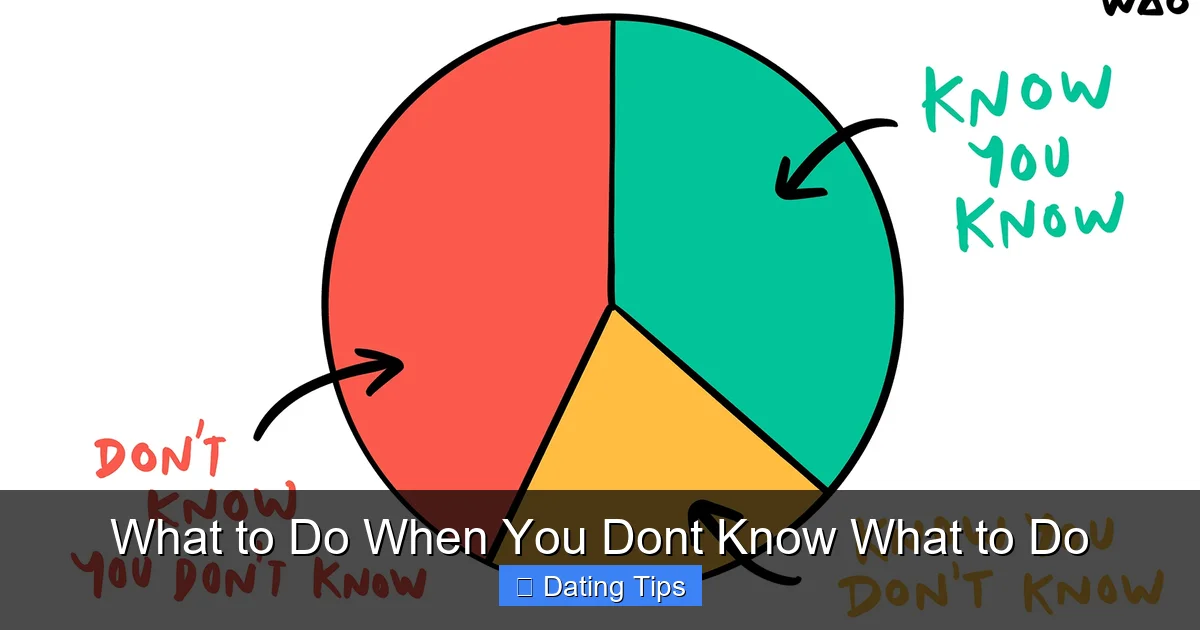
When you’re stuck wondering “what to do when you don’t know what to do,” the first step isn’t to panic—it’s to pause and reset. This guide helps you navigate dating confusion by breaking down emotional blocks, clarifying your goals, and taking small, intentional steps forward. Whether you’re unsure about a crush, confused after a breakup, or just feeling lost in modern dating, these strategies will help you move from paralysis to purpose.
Key Takeaways
- Pause before you act: When overwhelmed, stop reacting emotionally and create space to think clearly—this prevents rash decisions.
- Clarify your values and goals: Ask yourself what kind of relationship you truly want to avoid wasting time on incompatible connections.
- Take one small action daily: Progress comes from consistency, not perfection. Even opening your dating app once a day builds momentum.
- Reflect through journaling or conversation: Talking to trusted friends or writing down thoughts helps uncover hidden feelings and patterns.
- Embrace uncertainty as part of the journey: Dating isn’t always linear—learning to sit with discomfort reduces pressure and increases self-awareness.
- Limit comparison and social media: Constantly comparing yourself to others fuels doubt. Focus inward instead of scrolling through idealized profiles.
- Seek support when needed: A therapist or relationship coach can provide unbiased guidance during confusing times.
Key Takeaways
- Understanding What To Do When You Dont Know What To Do: Provides essential knowledge
📑 Table of Contents
- What to Do When You Dont Know What to Do: Finding Clarity in Dating Confusion
- Step 1: Pause and Breathe
- Step 2: Clarify Your Intentions
- Step 3: Take Small, Consistent Actions
- Step 4: Reflect and Reassess Regularly
- Step 5: Accept Uncertainty as Normal
- Overcoming Common Roadblocks
- Building Confidence Through Self-Awareness
- When to Seek Professional Help
- Final Thoughts: Move Forward with Compassion
What to Do When You Dont Know What to Do: Finding Clarity in Dating Confusion
Have you ever felt like you’re standing at a crossroads with no signposts? Maybe you’re swiping through dating apps but feel nothing clicks. Or perhaps you’ve been talking to someone for weeks and now you’re second-guessing every text. You keep asking yourself, “What am I even doing here?” That moment of hesitation—the blank screen, the pause before replying, the sudden doubt—is more common than you think.
In today’s fast-paced digital dating world, it’s easy to get caught in a loop of overthinking and indecision. We’re told to be confident, to go after what we want, but sometimes confidence feels out of reach. So what do you do when you don’t know what to do?
The truth is, not knowing how to proceed doesn’t mean you’re broken or failing. It means you’re human. And the good news? There are concrete steps you can take to move past that mental block. This article walks you through exactly what to do when you don’t know what to do—especially in matters of the heart.
Step 1: Pause and Breathe
Visual guide about What to Do When You Dont Know What to Do
Image source: media1.tenor.com
When you’re stuck, your first instinct might be to rush into something—a new profile, a bold move, or even jumping back into a past relationship. But rushing usually makes things worse. Instead, try this simple technique: pause and breathe.
Close your eyes for 60 seconds. Inhale slowly through your nose, hold for four seconds, then exhale through your mouth. Repeat three times. This tiny act resets your nervous system and gives your brain a chance to catch up.
Why does this work? Because stress narrows your focus. By calming down, you open space for clearer thinking. You’ll find that after a few deep breaths, your racing thoughts quiet slightly. That’s your cue to ask: “What’s really going on here?”
For example, let’s say you matched with someone new and immediately feel anxious about whether they’ll reply. Your mind spirals: *They didn’t text back yet… Do they not like me? Should I message again?* But if you pause, you realize your anxiety isn’t about them—it’s about your need for validation. Once you identify that, you can respond more wisely.
Remember: not knowing what to do is temporary. It doesn’t define your worth or your future. Taking a breath changes everything.
Create Emotional Distance
Sometimes, we’re so close to a situation that we lose perspective. Try writing down your feelings as if you’re advising a friend. How would you talk them through this mess? Chances are, your advice would be kinder, wiser, and less reactive than your current thoughts.
Also, consider setting a “decision timer.” Give yourself 24 hours before making any big dating-related choices—like blocking someone, confessing feelings, or ending contact. This delay prevents impulsive moves fueled by fear or loneliness.
Step 2: Clarify Your Intentions

Visual guide about What to Do When You Dont Know What to Do
Image source: hugh.cdn.rumble.cloud
One reason people feel stuck is because they haven’t asked themselves the right questions. Instead of wondering “What should I do?” shift to “What do I actually want?”
Ask yourself honestly:
– Am I looking for something casual or serious?
– What qualities matter most in a partner?
– Have my standards changed since my last relationship?
– Am I using dating as distraction from other life issues?
These aren’t easy questions—but answering them brings clarity. For instance, if you’ve been single for months and suddenly start chasing anyone who shows interest, you may not be ready for real connection. Or if you keep falling for emotionally unavailable people, there’s likely an unmet need in your life.
Clarity also means recognizing red flags early. If someone ghosts you repeatedly or avoids commitment talks, that’s not confusion—that’s incompatibility. Trusting your gut saves heartache later.
And hey, it’s okay if your answer evolves! People grow, priorities shift. The point is awareness, not perfection.
Use a Values Checklist
Make a quick list of non-negotiables: honesty, kindness, shared interests, etc. Then compare potential partners against it. This simple exercise filters out mismatches before they cause pain.
If you’re still unsure, revisit articles like What To Do When He Doesn’t Respect You or How To Know If A Guy Loves You Secretly—they offer frameworks to assess compatibility without guessing.
Step 3: Take Small, Consistent Actions

Visual guide about What to Do When You Dont Know What to Do
Image source: cdn.verbub.com
Here’s the reality: motivation rarely strikes when you’re paralyzed. But action often creates its own motivation. Start tiny. Open your dating app. Send one message. Go on one coffee date. Each small step builds confidence.
Think of it like training for a marathon—you don’t run 26 miles on day one. You walk, then jog, then gradually increase distance. Same with dating. Consistency beats intensity.
For example, if you’ve been avoiding messaging someone because you’re afraid of rejection, commit to sending just one friendly text per week. You’ll quickly learn that most rejections aren’t personal—they’re just timing or compatibility.
Also, diversify your approach. If Tinder feels draining, try joining a hobby group or attending a meetup. Meeting people organically reduces pressure and feels more natural. Plus, shared activities spark authentic conversations.
Remember: done is better than perfect. Even awkward first dates teach you something. Every interaction—positive or negative—shapes your understanding of what works for you.
Track Your Wins
Keep a mini journal (physical or digital) where you note small victories: “Made eye contact with stranger,” “Had great chat at bookstore,” “Didn’t ghost after bad date.” Over time, you’ll see patterns and progress you didn’t notice before.
This practice combats negative self-talk. When you feel stuck, reread your wins. You’re braver and more capable than you think.
Step 4: Reflect and Reassess Regularly
Stagnation happens when we stop checking in. Set aside 15 minutes each week to reflect. Ask:
– Did anything surprise me this week?
– Was there a pattern in my interactions?
– Am I attracting people who match my values?
– Where do I feel energized vs. drained?
Reflection prevents you from repeating mistakes. Say you keep choosing guys who disappear after intimacy—your reflection might reveal a fear of abandonment. With that insight, you can set boundaries or seek therapy.
You can also use tools like the What To Say When You Feel Ignored In Your Relationship framework to communicate needs clearly. Awareness + communication = healthier relationships.
Don’t wait until you’re miserable to reassess. Regular check-ins keep you aligned with your goals.
Talk to Someone You Trust
Sometimes, our best insights come from outside. Share your confusion with a close friend who knows your dating history. They might spot blind spots we miss. Just remember: choose listeners who won’t gossip or give unsolicited advice unless asked.
If emotions run high, consider professional support. Therapists specialize in helping people untangle relationship struggles. Articles like How To Know If Your Wife Hates You explore deeper dynamics—even if you’re not married, the principles apply to understanding attachment styles.
Step 5: Accept Uncertainty as Normal
Finally, here’s the hardest truth to swallow: you’ll never have all the answers. Dating involves risk, vulnerability, and guesswork. Trying to control every outcome leads to frustration.
Instead, practice acceptance. When you don’t know what to do, acknowledge it: “I’m uncertain right now, and that’s okay.” Then choose the next best action based on your values, not fear.
This mindset shift reduces anxiety. You stop obsessing over “right” moves and start focusing on “good enough” ones. And guess what? Good enough often leads to growth.
For instance, if you’re nervous about telling someone how you feel, remind yourself: “Even if they say no, I’ll learn more about myself.” That reframing makes courage possible.
Uncertainty isn’t weakness—it’s the price of intimacy. The more you embrace it, the freer you become.
Overcoming Common Roadblocks
Even with clear steps, certain barriers can derail progress. Here’s how to tackle them:
Fear of Rejection
Rejection stings, but it’s not a verdict on your worth. Most people say yes to someone else—not because they’re better, but because they’re luckier in timing or chemistry. Protect yourself by setting soft boundaries: “I’m open to chatting for two weeks before deciding if I want to meet.”
Comparison Trap
Scrolling through Instagram couples or hearing friends’ engagements triggers insecurity. Remember: everyone curates their highlights. Your timeline is valid. Compare yourself to who you were last month, not to influencers.
Burnout from Swiping
If dating apps drain you, take a break. Recharge with solo adventures, friendships, or hobbies. Returning refreshed often attracts better matches than desperate energy.
Ghosting Guilt
You might hesitate to end things because you worry about hurting someone. But silence is worse. Use compassionate language: “I’ve realized we’re not aligned long-term. I wish you happiness.” Kindness preserves dignity.
Each roadblock has a workaround. The key is staying grounded in your truth.
Building Confidence Through Self-Awareness
Confidence isn’t about being fearless—it’s about showing up despite fear. When you understand your patterns, you regain control. For example, if you tend to people-please, start practicing saying “no” kindly. If you struggle with vulnerability, begin with low-stakes confessions.
Self-awareness also means celebrating your uniqueness. You don’t have to fit every mold to be lovable. Authenticity draws the right people.
Try daily affirmations: “I deserve clear, respectful treatment,” “My choices honor my values,” “It’s okay to prioritize my peace.” Repetition rewires subconscious beliefs over time.
And yes—sometimes, the best thing to do is simply be. Show up as your whole self, flaws included. Vulnerability invites deeper connection.
When to Seek Professional Help
While self-reflection helps, some situations need expert input. Consider therapy if:
– You repeat unhealthy patterns despite knowing better
– Anxiety interferes with daily life
– Past trauma affects current relationships
– You’re grieving a loss and struggling to open up
Therapists don’t diagnose relationships—they help you heal yourself. Healing creates space for healthy partnerships.
Online resources like Signs He Pretends To Love You offer clues, but only you can decide what feels true for your experience.
Don’t wait until you’re in crisis. Proactive care builds resilience.
Final Thoughts: Move Forward with Compassion
Feeling lost in dating isn’t a failure—it’s a signal that you care. Those moments of uncertainty are invitations to grow. By pausing, clarifying, acting small, reflecting, and accepting ambiguity, you turn confusion into clarity.
Remember: every expert was once a beginner. Every connection started with a single hello. Every heartbreak taught someone valuable lessons. You’re exactly where you need to be right now.
So next time you stare at your phone wondering “what to do when you don’t know what to do,” take a breath. Choose kindness—to yourself and others. Then take one step forward. The path unfolds as you walk it.
You’ve got this.
Frequently Asked Questions
What if I keep making the same dating mistakes?
If you notice recurring patterns—like choosing emotionally unavailable partners or rushing into commitments—it’s time to dig deeper. Journal your experiences and identify underlying fears or unmet needs. Consider working with a therapist to unpack these habits. Articles like How To Know If A Guy Is Using You Or Likes You can also help you recognize red flags earlier.
How long should I wait before deciding whether to pursue someone?
There’s no universal rule, but giving interactions at least two weeks allows natural chemistry to develop. Use that time to observe consistency in communication and values. If someone respects your boundaries and shares genuine interest, it’s worth exploring further. Tools like When Does A Man Start To Miss You can offer context on behavioral cues.
Is it normal to feel anxious while dating?
Absolutely. Anxiety signals that you care, but it shouldn’t paralyze you. Practice grounding techniques like deep breathing or mindfulness. If anxiety becomes overwhelming, speak with a counselor. Remember, dating is supposed to be fun—not exhausting.
Should I change myself to attract someone?
No. Healthy relationships thrive on authenticity. You might adjust small behaviors (like punctuality), but core traits—your sense of humor, values, quirks—should stay intact. Trying to impress others erodes self-trust. Focus on becoming your truest self instead.
What if I’m afraid of being alone forever?
Loneliness often stems from unresolved self-issues. Invest in friendships, hobbies, and self-care. Therapy can help address deep-seated fears. True companionship follows self-fulfillment—not desperation. Explore resources like Why Do Guys Disappear When They Like You to understand emotional availability.
Can I recover from a painful breakup and date again?
Yes, absolutely. Grief takes time, but healing enables healthier choices. Allow yourself to mourn, then gradually re-engage when ready. Use breakups as lessons: what worked, what didn’t, what you’ll protect next time. Support groups or books on emotional recovery can accelerate healing.
