Stories About Jealousy: 10 Short Tales That Teach Gratitude
Stories about jealousy are short tales that help children understand the uncomfortable feeling of wanting what someone else has, and learn how to turn it into gratitude, effort and kindness. Almost every child feels jealous at some time, and a gentle story is a safe way to talk about it.
Below are ten original stories about jealousy with a moral and two talk-about questions for parents. After the stories you will find simple ways to help a jealous child, and the difference between jealousy and envy. For more tales on other values, visit our hub of short moral stories for kids.
Why Do Children Feel Jealous?
Jealousy is a normal feeling, not a bad one. It shows up when a child feels that someone else is getting more attention, more toys or more praise. The trouble starts only when jealousy turns into unkind words or actions.
- A new baby arrives and the older child feels left out.
- A sibling gets praised for a good mark or a talent.
- A friend has something new, such as a bicycle or a bag.
- A classmate wins a prize or is picked first.
- Comparison by adults, even gentle, such as “Why can’t you be like your brother?”
The goal is not to stop the feeling. The goal is to name it, understand it and choose a kind response. Stories do this beautifully.
10 Short Stories About Jealousy With Morals
1. The New Baby
When baby Lily came home, everyone gathered around her cot. Tom, who was five, stood by the door. His mother held the baby and his father took photographs. Tom felt a hot, prickly feeling inside and walked away to his room.
Later his mother found him with his arms crossed. “Are you feeling left out?” she asked gently. Tom nodded. “I still love you the same,” she said. “And Lily needs a big brother to teach her everything. Will you show her your toy train?” Tom smiled and ran to fetch it. When Lily grabbed the engine with her tiny hand, Tom laughed, and the prickly feeling melted.
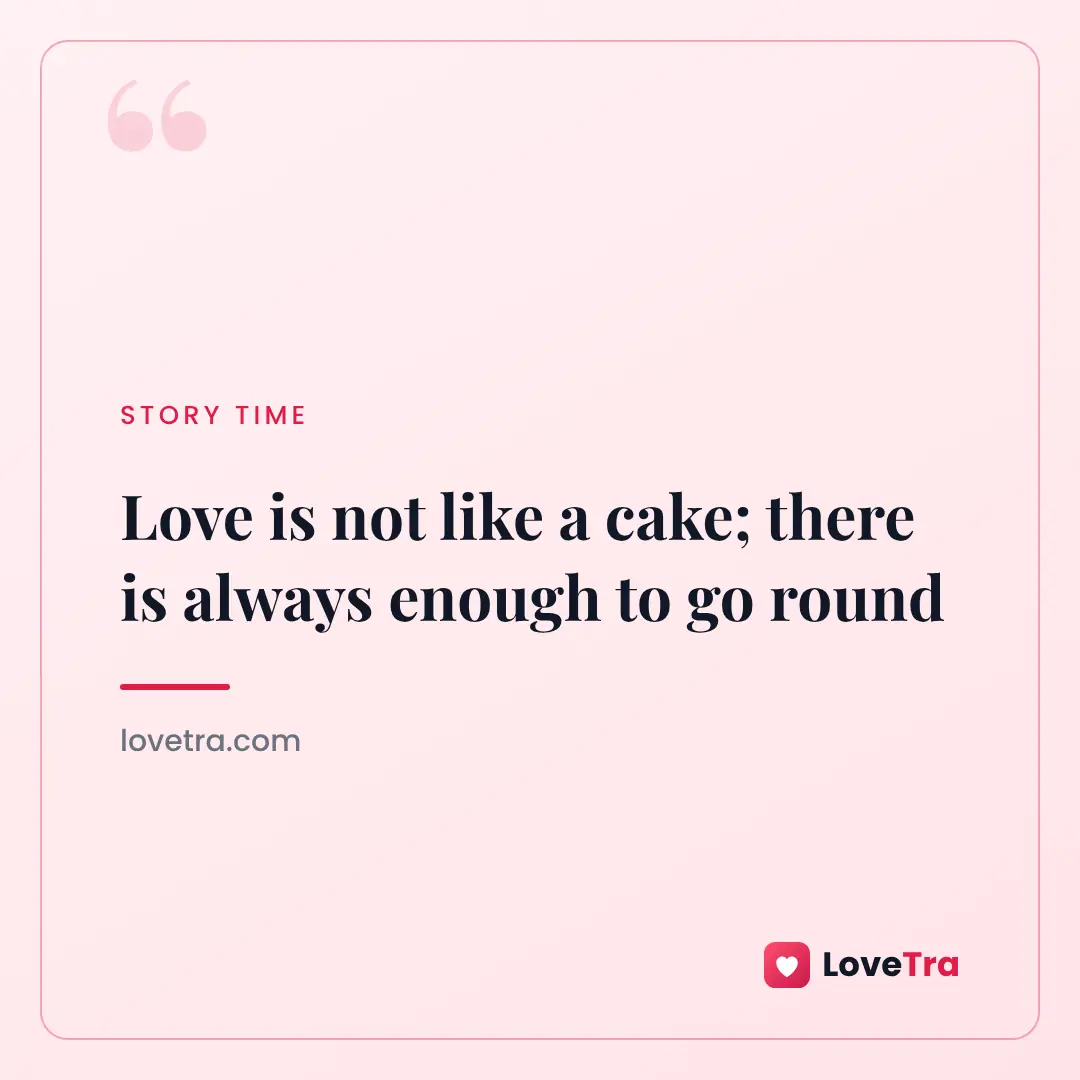
Moral: Love is not like a cake that runs out; there is always enough to go round.
Talk about it: How did Tom feel at first? What helped him feel better?
2. The Best Drawing
At school, the teacher hung Emma’s drawing on the wall. Ruby looked at it and felt her cheeks go hot. Her own picture was tucked in the back. “Hers is not that good,” Ruby muttered.
That afternoon, Emma showed Ruby how she mixed colours for the sky. Ruby tried it, and her next painting was bright and soft. The teacher hung that one on the wall too. Ruby discovered that learning from someone she envied was better than being angry at her.
Moral: Learn from those you admire instead of resenting them.
Talk about it: Have you ever wished you could do something as well as a friend? What could you ask them?
3. The Fox and the Grapes (A Fresh Retelling)
A hungry fox spotted a bunch of ripe grapes hanging high on a vine. He jumped and jumped, but he could not reach them. Tired and cross, he turned away and said, “Those grapes are probably sour anyway.”
A little sparrow, who had watched, chirped, “You could ask the gardener for a ladder.” The fox had never thought of asking. He felt a little silly, but he went to the gardener, who smiled and helped him. The grapes were sweet after all.
Moral: When we cannot reach something, we should ask for help or try a new way, not pretend we never wanted it.
Talk about it: Why did the fox say the grapes were sour? What could he have done earlier?
4. The Birthday Bicycle
Ben’s neighbour, Max, got a shiny red bicycle for his birthday. Ben looked at it every day through the fence and felt unhappy. He stopped waving to Max and walked past without a smile.
One afternoon, Max knocked on his door. “Would you like to ride with me?” Ben was surprised. He had been so jealous that he had not noticed Max was lonely. The two took turns riding along the path, laughing. Ben learned that the feeling he had been carrying was heavier than any bicycle.
Moral: Jealousy hides the chance to share in someone else’s joy.
Talk about it: How did Ben’s feelings change when he rode the bicycle?
5. The Two Gardens
Two neighbours, Mr. Stone and Mr. Hale, both had gardens. Mr. Stone’s roses bloomed bright and tall, while Mr. Hale’s seemed small. Every day Mr. Hale looked over the fence and frowned.
One morning, Mr. Stone called out, “Would you like some of my compost? It helps the soil.” Mr. Hale blinked in surprise, then accepted. By summer, his flowers bloomed too, and the two men sat together admiring both gardens. “I almost lost a friend because of a few flowers,” Mr. Hale said quietly.
Moral: A friend’s success can be a source of help, not harm.
Talk about it: How can we turn “I wish I had that” into “Can you teach me?”
6. The Class Race
On sports day, Oliver and Sam ran the final race. Sam won by a step. Oliver’s heart sank. He walked to the side and kicked the grass. “He only won because he had better shoes,” he thought.
His grandfather, who had come to watch, sat beside him. “You ran very well,” he said. “Tell me, what did you notice about Sam’s start?” Oliver thought. “He bent low and pushed hard.” The next week Oliver practised the same start, and he beat his own record. When Sam was running slowly the following month, Oliver cheered the loudest.
Moral: Look at what others do well, then use it to improve yourself.
Talk about it: What is the difference between wishing you could win and working to improve?
7. The Peacock and the Sparrow
A little sparrow watched the peacock spreading his bright feathers in the garden. “I wish I were as beautiful as him,” she sighed, looking at her own brown wings. She stopped singing and sat alone on a branch.
The peacock, who had heard her songs every morning, asked, “Why are you so quiet?” The sparrow explained. The peacock laughed. “I cannot sing a note! I wish I had your voice.” The two birds looked at each other and smiled. From that day, the sparrow sang while the peacock danced, and the garden was happier.
Moral: Everyone has a gift; look at yours before you look at someone else’s.
Talk about it: What is one thing you are good at? What is one good thing you see in a friend?
8. The Praised Sister
Whenever visitors came, they praised Holly for her neat handwriting. Her younger sister, Grace, felt invisible. One day she hid Holly’s pen and watched her search the room.
When Holly finally found it, she looked sad. “I thought you were my friend,” she said. Grace’s face turned red. She burst into tears and admitted what she had done. Their mother hugged them both, and told Grace, “You have a gift too: you make everyone laugh. I want you to feel it.” From then on, she made sure to notice both girls’ talents.
Moral: Jealousy can make us do things we regret; honesty and apology heal.
Talk about it: What should Grace have done instead of hiding the pen?
9. The Shared Lunch
Jack’s lunch box held a plain sandwich, while his friend Daniel’s was full of colourful treats. Jack felt a tight knot in his stomach. “I wish my lunch was like his,” he whispered to himself.
Daniel noticed and offered half of his snack. “My mother always packs too much,” he said. Jack accepted and shared his sandwich in return. They both discovered that the plain sandwich tasted very good with a little fruit. Jack thanked his mother that evening for the sandwich she had made with care.
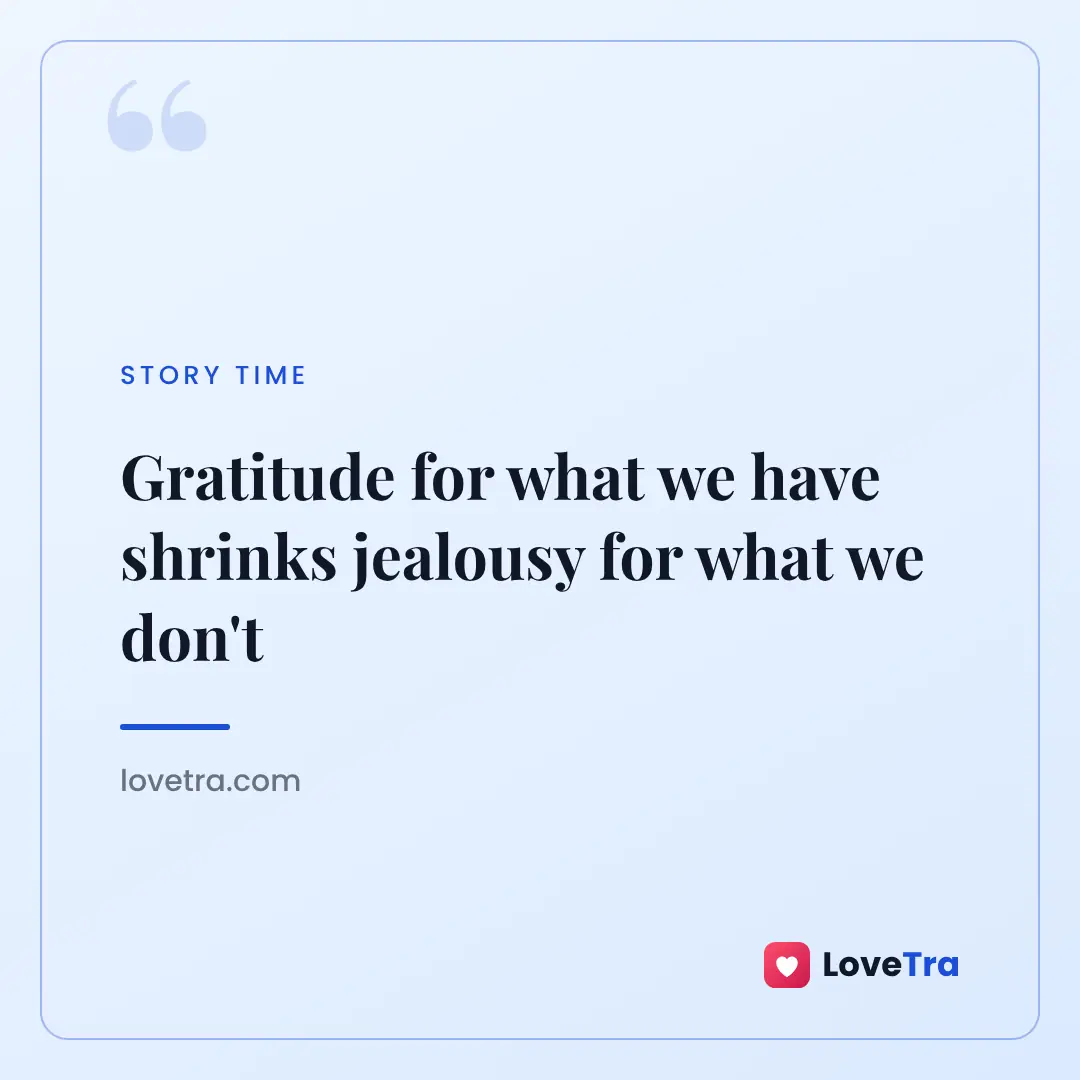
Moral: Gratitude for what we have shrinks jealousy for what we don’t.
Talk about it: What are three things you are thankful for in your lunch box, your home, your family?
10. The Quiet Winner
In a class spelling contest, Mia and Lena were the last two standing. Mia spelled her word correctly, and the teacher declared her the winner. Lena’s face fell. She slowly walked to her seat with tears in her eyes.
Mia walked over and said, “You spelled so well. I was nervous the whole time.” Lena looked up and smiled a little. “You deserved it,” she said. At home, Lena told her father about the day. “I felt jealous, but I’m glad I clapped,” she said. Her father hugged her and replied, “That is real strength.”
Moral: Congratulating a winner takes courage and shows a big heart.
Talk about it: How do you feel when you clap for someone who has beaten you?
What Is the Difference Between Jealousy and Envy?
People often use these words as if they mean the same thing, but they are slightly different, and explaining this to children can help.
- Envy is wanting something that someone else has, such as a toy, a talent or a good mark.
- Jealousy is fearing that you may lose someone’s love or attention to another person, such as a parent’s attention to a new baby.
In daily language we use both words loosely, and for young children it is enough to say: “It is the feeling of wanting what someone else has or fearing we will lose something.”
How to Help a Jealous Child
- Name the feeling. Say, “It looks like you feel left out.” Naming it removes its power.
- Never shame the child. Jealousy is a feeling, not a flaw.
- Give one-on-one time. Ten minutes of undivided attention does more than a gift.
- Avoid comparing children. Praise each child for their own efforts.
- Teach gratitude. Each evening, ask your child to name three good things from the day.
- Encourage effort. Say, “What small step could you take to get better at that?”
- Model graciousness. Let children hear you congratulate others sincerely.
These ideas fit well with our guides on how to teach kids to share and how to teach kids to be kind.
Frequently Asked Questions (FAQ)
Is jealousy normal in children?
Yes. Almost all children feel jealous at times, especially around siblings. It becomes a problem only if it leads to unkind actions or long unhappiness.
How do I talk to my child about jealousy?
Choose a calm moment, read a story together, and ask, “Have you ever felt like that character?” Listen without judging, then suggest one kind action.
What age do children start to feel jealous?
Signs appear as early as one or two years, when a toddler sees a parent holding another child. The feeling continues in different forms through life.
How can I stop my child from comparing themselves with others?
Praise personal progress, avoid ranking children, and teach them to say, “I am proud of what I did today.”
A jealous feeling is a doorway: it can lead to anger or to growth. Read one of these stories tonight and let your child choose the door. Find more guidance in our Character category, and for kindness stories, try stories about helping others.