
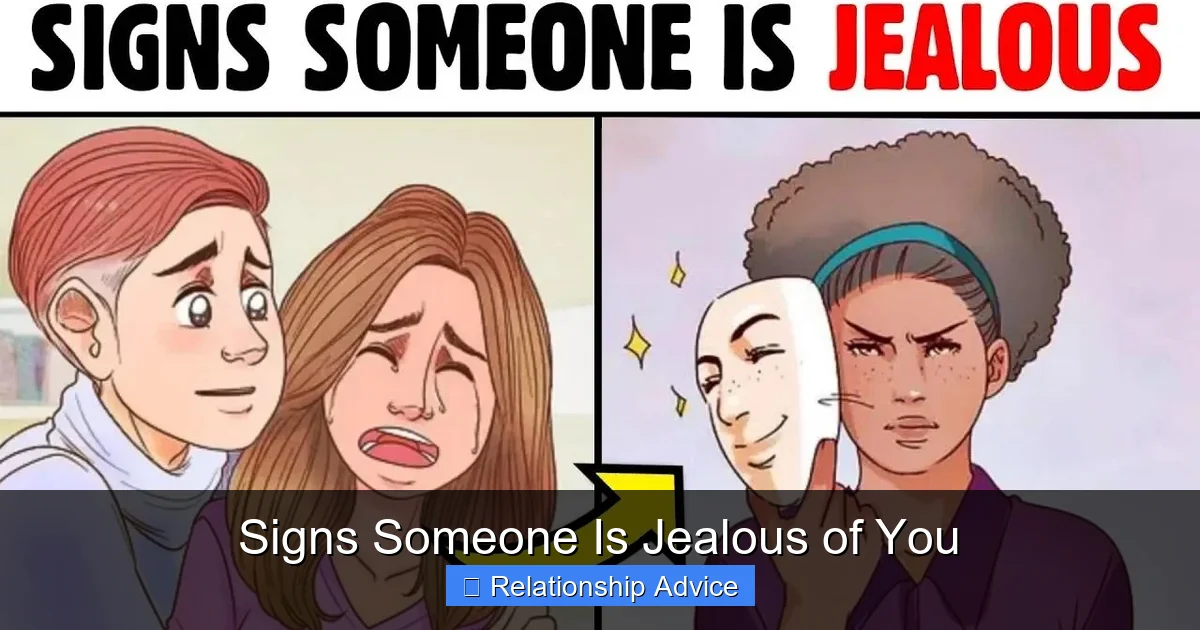
Jealousy often shows up in surprising ways, from intense staring to sudden criticism. Recognizing these signs early can help you understand deeper dynamics in your relationships. Whether it’s a friend, partner, or family member, knowing what to look for empowers you to respond wisely.
Have you ever walked into a room and felt an invisible tension? Maybe someone’s smile didn’t quite reach their eyes, or their laughter sounded just a little too sharp. You brushed it off—maybe they were having a bad day, or maybe you imagined it. But deep down, something felt off. That “off” feeling? It might have been jealousy.
Jealousy isn’t always loud or obvious. Often, it’s quiet, sneaky, and woven into everyday interactions. And while a little envy can be human nature, when it becomes a pattern—especially in close relationships—it starts to affect your peace, your confidence, and even your sense of belonging.
In this article, we’ll explore the subtle yet telling signs that someone is jealous of you. From micro-expressions to social media behavior, we’ll break down exactly what to watch for so you can better understand the dynamics at play. Whether it’s a romantic interest, a coworker, or even a family member, recognizing these signals helps you respond with clarity instead of confusion.
Let’s dive in.
Key Takeaways
- Body language speaks louder than words: Frequent eye contact, crossed arms, or mimicking your gestures can signal jealousy.
- Criticism disguised as concern: When someone constantly points out your flaws or achievements with a negative twist, they may be masking envy.
- Sudden changes in behavior: If a usually supportive person becomes distant or overly competitive around you, it could indicate hidden jealousy.
- Overcompensation: Excessive flattery, gifts, or attempts to one-up you might be cover-ups for feeling insecure.
- Social media monitoring: Liking every post, commenting excessively, or asking invasive questions about your life are red flags.
- Emotional volatility: Unexplained mood swings or reactions to your success suggest internal conflict tied to your presence.
- Trust your gut: Intuition often picks up on subconscious cues that logic misses—don’t ignore persistent feelings.
📑 Table of Contents
- What Is Jealousy—And Why Does It Matter?
- Sign #1: Intense or Avoidant Eye Contact
- Sign #2: Backhanded Compliments and Criticism
- Sign #3: Sudden Changes in Behavior Around You
- Sign #4: Social Media Surveillance
- Sign #5: Emotional Volatility and Mood Swings
- Sign #6: Attempts to One-Up or Control
- How to Respond When You Notice These Signs
- When Jealousy Becomes Manipulation
- Final Thoughts: Confidence Is Your Armor
What Is Jealousy—And Why Does It Matter?
At its core, jealousy is an emotion triggered by the fear of losing something valuable—whether that’s love, status, attention, or security. It’s not inherently bad; in small doses, it can even reflect care or investment in a relationship. But when jealousy turns into resentment, control, or passive-aggression, it becomes toxic.
Why does this matter to you? Because if someone is genuinely envious of your life, talents, or relationships, it can impact how they treat you. They might withdraw support, spread rumors, or try to undermine your successes. More importantly, their jealousy can erode your self-worth if you internalize their negativity.
The good news? Awareness is power. By understanding the common signs someone is jealous of you, you can protect your energy, set healthy boundaries, and decide whether to address the issue directly or simply move forward without letting their envy define you.
Sign #1: Intense or Avoidant Eye Contact
Visual guide about Signs Someone Is Jealous of You
Image source: wellbii.online
One of the most telling physical cues is how someone looks at you. Jealousy often manifests in the eyes—either through excessive staring or deliberate avoidance.
When someone is truly interested or admiring you, their gaze tends to linger naturally. But when jealousy is involved, the eye contact becomes charged. You might notice:
– Prolonged staring that feels uncomfortable or even hostile, especially after you’ve shared good news.
– Quick glances away when you catch them looking, followed by pretending not to pay attention.
– Mimicked expressions—like flashing a smile right after you do, but it doesn’t feel genuine.
For example, imagine your coworker just got promoted. Instead of congratulating you warmly, they stare at you with narrowed eyes before quickly turning back to their screen. Or picture a friend who avoids eye contact whenever you mention your new boyfriend. These aren’t coincidence—they’re subconscious tells.
Remember: healthy admiration involves warm, relaxed eye contact. Jealousy? It’s tense, fleeting, or aggressively direct.
Sign #2: Backhanded Compliments and Criticism
Ever received a “compliment” that felt like a dig? That’s likely jealousy wearing a mask of politeness.
Backhanded compliments are classic jealousy indicators. They sound nice on the surface but carry underlying resentment. Examples include:
– “You’re really brave to wear that—most people wouldn’t dare!”
– “Wow, you actually finished that project? I didn’t think you had it in you.”
– “I wish I had your confidence… though I guess you don’t need much else to be happy.”
These remarks often come with a smirk, exaggerated tone, or follow-up questions designed to make you doubt yourself. The goal? To diminish your achievements or appearance subtly.
Another form of jealous behavior is selective criticism. A genuinely supportive person will celebrate your wins and offer constructive feedback only when asked. But a jealous individual might nitpick your accomplishments—“You got lucky with that job,” “That dress makes you look cheap,” or “Everyone knows he’s only dating you out of pity.”
If you find yourself constantly defending your choices or feeling guilty for succeeding, take note. This isn’t feedback—it’s sabotage dressed up as concern.
Sign #3: Sudden Changes in Behavior Around You
Jealousy doesn’t announce itself with a megaphone—it creeps in quietly, changing how someone interacts with you.
Pay attention to shifts in routine or attitude. For instance:
– Your normally cheerful friend suddenly becomes cold or dismissive after you mention a new romantic interest.
– A colleague who used to seek your advice now ignores you in meetings or undermines your ideas in front of others.
– Someone who once admired your style starts making snide comments about your wardrobe or lifestyle.
These behavioral whiplashes often happen because the person feels threatened by your happiness, success, or independence. Their jealousy triggers defensiveness, leading them to pull away—or worse, attack.
Also watch for overcompensation. Sometimes, instead of withdrawing, jealous people become overly attentive. They might shower you with gifts, excessive texts, or constant praise—not out of sincerity, but to prove they’re “just as good” or to guilt-trip you into staying loyal.
As one relationship counselor puts it: “When kindness feels forced or transactional, it’s rarely kindness at all.”
Sign #4: Social Media Surveillance
In today’s digital age, social media has become a battlefield for unspoken emotions—including jealousy.
If someone is jealous of you, their online activity will betray it. Watch for:
– Liking every single one of your photos, even private ones, within minutes of posting.
– Asking invasive questions like “Who was that guy/girl you were with last night?” or “Are you seeing anyone seriously?”
– Commenting excessively on your posts with vague, loaded phrases (“Looks like you’re living your best life…”).
– Tagging you in unrelated memes or articles with passive-aggressive captions (“Thought you’d appreciate this!”).
Even more revealing? They might unfollow you temporarily when you post something positive—only to refollow days later, acting like nothing happened.
This digital stalking isn’t harmless curiosity. It’s a way to monitor your life, compare themselves to you, and feed their insecurity. As psychologist Dr. Elena Torres notes: “Constant engagement with someone’s online presence often reflects unresolved envy, not genuine interest.”
Sign #5: Emotional Volatility and Mood Swings
Jealousy creates emotional turbulence—both in the jealous person and those around them.
If you notice sudden mood swings whenever you’re present—laughing too loudly, snapping at minor things, or becoming unusually quiet—it could be jealousy bubbling beneath the surface.
For example:
– You share exciting news, and instead of celebrating, they react with sarcasm or silence.
– You succeed professionally, and they respond with condescension or false enthusiasm.
– You spend time with others, and they act distant, irritable, or overly clingy.
These reactions stem from discomfort. When someone feels inadequate compared to you, their ego rebels. Their emotional instability isn’t about you—it’s about their own insecurities.
Over time, this creates a cycle: your success triggers their jealousy, which fuels their erratic behavior, which pushes you away. Breaking this cycle requires either honest communication or setting firm boundaries.
Sign #6: Attempts to One-Up or Control
Jealous individuals often try to regain a sense of superiority by competing with you—even if it means distorting the truth.
Common tactics include:
– Bragging about trivial achievements: “I ran a marathon last weekend too!” (When you’ve never run one.)
– Interrupting stories to insert themselves: “Oh, that reminds me—I once did something even cooler…”
– Questioning your credibility: “Really? How do you know that?” or “Are you sure about that?”
– Trying to control narratives: “Actually, the real story is…” or “Let me tell it properly.”
Sometimes, control takes subtler forms. They might:
– Demand details about your plans under the guise of “helping.”
– Pressure you to include them in activities you’d rather do alone.
– Spread misinformation to shift focus from your accomplishments to theirs.
As relationship expert Marcus Lee explains: “When someone constantly tries to one-up you, they’re not building rapport—they’re building a wall.”
How to Respond When You Notice These Signs
Discovering that someone is jealous of you can leave you feeling confused, hurt, or defensive. But how should you respond?
First, don’t internalize their jealousy. Their insecurities say more about them than about you. Your worth isn’t diminished by someone else’s envy.
Second, assess the relationship. Is this person important to you? Do they show remorse or growth? If not, consider distancing yourself.
Third, set boundaries. Polite but firm limits work wonders:
– “I’d prefer if we kept conversations respectful.”
– “I’m not comfortable discussing my personal life with you.”
– “Let’s focus on supporting each other instead of comparing.”
If the jealousy stems from a place of care (e.g., a crush or close friendship), have an open conversation. Say something like:
“I’ve noticed you seem a bit off lately when I talk about [specific topic]. Is everything okay?”
Most people won’t admit jealousy outright, but honesty can open doors to healing—or closure.
Finally, lean on your support system. Share your observations with trusted friends or a therapist. External perspectives prevent you from overthinking or blaming yourself.
When Jealousy Becomes Manipulation
While occasional envy is normal, chronic jealousy can escalate into manipulation—especially in romantic or familial relationships.
Red flags include:
– Guilt-tripping: “After all I’ve done for you… you’d abandon me for someone new?”
– Withholding affection: Giving you the silent treatment after you spend time with others.
– Spreading rumors: Whispering behind your back to damage your reputation.
– Isolation attempts: Convincing mutual friends you’re “too demanding” or “ungrateful.”
If you suspect manipulation, prioritize safety. Document concerning behaviors, limit alone time with the person, and consult a professional if needed.
Remember: no one deserves to live in emotional turmoil caused by another’s jealousy. Protect your peace.
Final Thoughts: Confidence Is Your Armor
Being recognized—even jealously—can feel validating. But true confidence isn’t built on comparison; it’s rooted in self-respect.
When someone is jealous of you, it often means you’re thriving in areas they’ve neglected or lost touch with. Instead of letting their envy shake you, use it as fuel. Celebrate your growth. Strengthen your boundaries. Surround yourself with people who elevate you—not compete with you.
And if you’re wondering whether God wants you to stay in a relationship where jealousy festers—consider prayer and counsel. As Scripture reminds us: “Love is patient, love is kind… love does not envy” (1 Corinthians 13:4). Healthy love celebrates your joy; toxic love fears it.
You deserve relationships that honor your light—not dim it because they’re afraid of their own shadows.
Frequently Asked Questions
How do I know if someone is secretly jealous of me?
Look for patterns like intense eye contact, backhanded compliments, sudden distance, or social media surveillance. These behaviors often reveal underlying envy—especially when paired with emotional volatility or attempts to one-up you.
Can jealousy be a sign of love or attraction?
In some cases, yes—but cautiously. Mild jealousy can reflect care, while intense or controlling jealousy indicates insecurity, not love. True attraction builds up; jealousy tears down.
Should I confront someone about their jealousy?
Only if the relationship matters to you and you feel safe doing so. Approach calmly: “I’ve sensed some tension lately—is everything okay?” Avoid accusations; focus on your feelings.
How do I stop someone’s jealousy from affecting me?
Set clear boundaries, limit exposure if needed, and reinforce your self-worth externally. Therapy or journaling can also help you detach emotionally from their insecurities.
Is it normal to feel jealous of others?
Yes—brief envy is human. But recurring jealousy over your achievements, looks, or relationships signals deeper issues like low self-esteem or fear of loss.
What if the jealous person is my partner?
Healthy relationships require trust and respect. If your partner’s jealousy leads to control, lies, or isolation, seek couples counseling immediately. Otherwise, it may signal incompatibility.
