
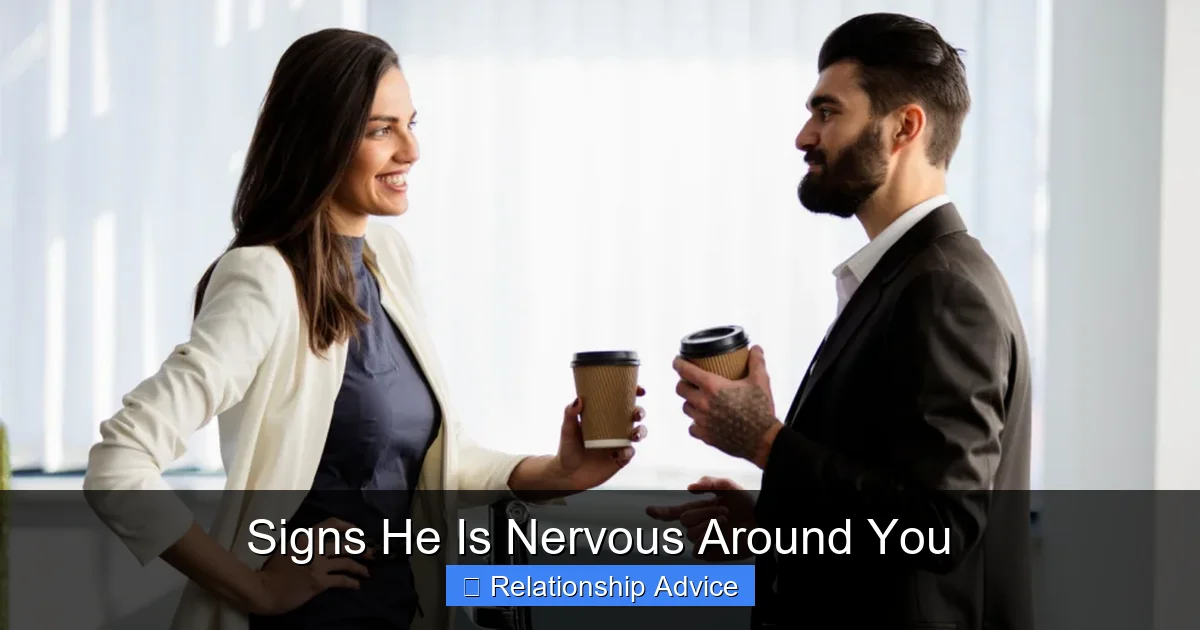
When a man is nervous around you, it often shows in small but telling ways—like avoiding eye contact, fumbling his words, or overcompensating with jokes. These behaviors usually signal he’s either deeply attracted to you or emotionally vulnerable in your presence. Recognizing these signs helps you understand whether he’s genuinely interested or just awkward.
When someone makes you feel butterflies—or at least slightly off-balance—it’s natural to wonder: Is he nervous around me? That fluttering sensation in your chest isn’t just your imagination. Men, especially when they’re emotionally invested, often exhibit subtle yet telling signs that reveal their inner state. Whether it’s a stutter during a conversation, averted gaze, or sudden interest in fixing something nearby, these behaviors aren’t random—they’re clues.
Understanding why and how a man behaves when he’s nervous can help you decode his intentions. Maybe he’s falling for you and scared to show it. Or perhaps he’s simply socially anxious and uncomfortable in new situations. The difference lies not just in the behavior itself, but in the pattern behind it. This guide dives deep into those unmistakable indicators so you can read between the lines and gain clarity on what he really thinks—and feels—when you’re near.
Key Takeaways
- Nervous energy often means attraction: When men are around someone they like, their bodies can react before their minds do—leading to visible signs of tension.
- Eye contact tells the real story: Avoidance might mean he’s shy, but prolonged glances or flickering eyes often indicate he’s trying (and failing) to stay calm.
- Speech changes reveal inner conflict: Stuttering, mumbling, or suddenly speaking too fast can be subconscious attempts to impress or hide his feelings.
- Body posture says more than words: Leaning away, crossing arms, or fidgeting may signal discomfort, but mirroring your movements could mean he’s subtly connecting.
- He might overcompensate with humor: If he cracks jokes when you enter a room or tries too hard to be funny, it could mask genuine anxiety about impressing you.
- Physical proximity matters: He may unconsciously move closer when comfortable or pull back when flustered—watch for shifts in personal space.
- Consistency is key: One-off nervous moments happen to everyone. Patterns over time are what truly suggest deeper emotional involvement.
📑 Table of Contents
- Why Men Get Nervous Around Women They Like
- Common Physical Signs He’s Nervous Around You
- Behavioral Indicators of Hidden Anxiety
- Emotional Cues That Reveal Inner Turmoil
- How to Tell If It’s Real Interest or Just Social Awkwardness
- Practical Tips to Ease His Nerves (and Yours)
- When Nervousness Signals Deeper Issues
- Final Thoughts: Trust Your Gut
Why Men Get Nervous Around Women They Like
Let’s start with the big question: Why would a guy act differently around one woman versus all others? The answer lies in psychology and emotion. When a man develops romantic feelings, especially early on, his brain releases dopamine—the “feel-good” chemical associated with attraction and reward. But alongside that surge comes cortisol, the stress hormone, because being vulnerable around someone special feels risky.
This dual response explains why he might both want to impress you *and* feel uneasy doing so. His mind races: What if I say something stupid? Will she think I’m boring? Does she even like me back? These thoughts trigger fight-or-flight instincts, which manifest physically. His heart pounds, palms sweat, and his voice cracks—classic symptoms of nervousness rooted in care.
Also, consider social conditioning. Many guys grow up being told not to “show weakness.” So when emotions run high, they default to awkwardness instead of openness. It’s not always about deception; sometimes it’s about fear of rejection clashing with genuine interest. That’s why spotting consistent patterns—not just isolated incidents—is crucial. After all, everyone gets butterflies once in a while. Real interest shows itself through repeated effort to connect despite discomfort.
The Science Behind Attraction and Nervousness
Research from behavioral psychologists shows that when people like someone, their autonomic nervous system kicks into overdrive. Your body doesn’t distinguish much between excitement and anxiety—both activate similar physiological responses. That’s why blushing, shaky hands, or rapid speech can signal attraction *or* embarrassment.
In fact, studies using facial recognition software found that participants exhibited micro-expressions of fear or surprise when shown photos of crushes—even if they claimed to feel only happiness. So yes, those little tells? They’re real. And they’re hard to fake completely because they stem from subconscious processes.
For men specifically, societal expectations amplify this. Unlike women, who’ve long been encouraged to express emotion freely, men are often conditioned to suppress vulnerability. Thus, when feelings arise, they don’t know how to process them gracefully. Instead, they retreat, deflect, or overcompensate—each strategy revealing layers of insecurity beneath the surface.
Common Physical Signs He’s Nervous Around You
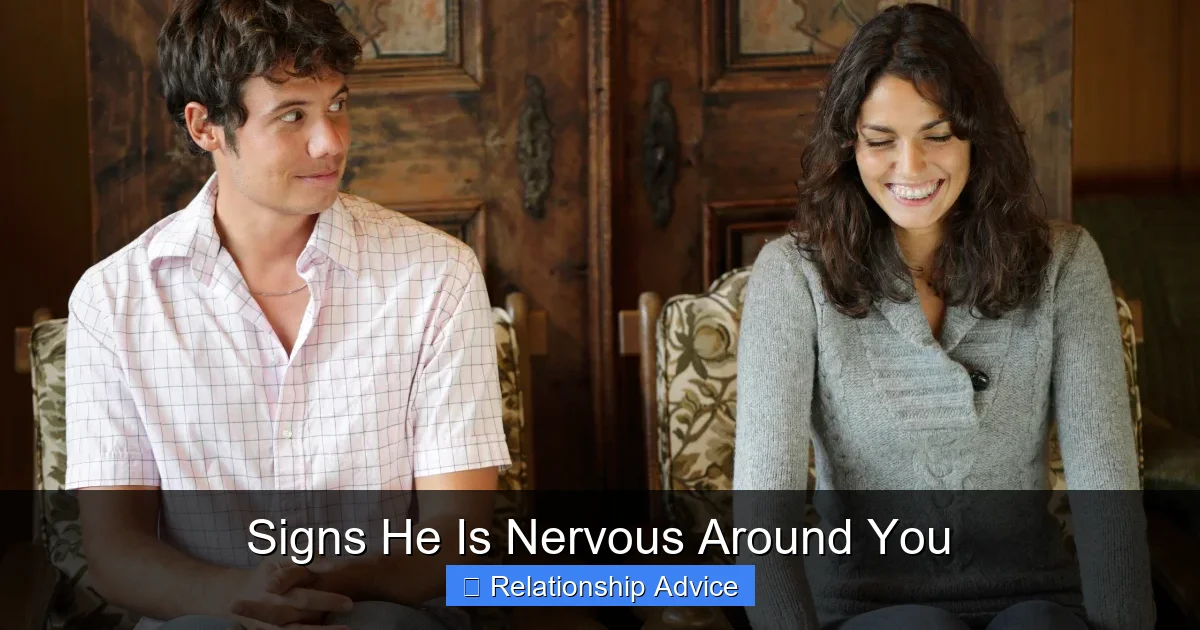
Visual guide about Signs He Is Nervous Around You
Image source: realestlove.com
You’ve probably noticed him acting differently when you walk into a room. But what exactly are those differences? Let’s break down the most telling physical cues:
Avoiding or Flickering Eye Contact
One of the first things people notice is eye contact. If he keeps looking at you… then glancing away quickly… then back again… that’s a textbook sign. Avoidance suggests discomfort, while fleeting glances mean he wants connection but fears getting lost in it. Pay attention to duration: steady gazes last longer when confidence meets interest.
Conversely, staring too hard can also signal nerves—he’s trying so hard to appear engaged that he forgets to breathe normally. Either way, inconsistency points to internal struggle.
Fidgeting or Restlessness
Watch his hands! Do they tap, drum, or twist objects repeatedly? Fidgeting is the body’s way of releasing excess energy caused by adrenaline. When he’s around you, his muscles tighten because his brain is working overtime processing social cues, emotions, and potential outcomes.
Sometimes this manifests as constant movement—shifting weight, adjusting clothing, or pacing. Other times, he freezes entirely, unable to relax. Both extremes scream “nerves.”
Tense Posture or Mirroring
Does he stand stiffly or slump forward when you’re nearby? Tension radiates from shoulders to jawline. Alternatively, does he unconsciously mimic your gestures—leaning in when you do, crossing legs the same way? Mirroring indicates rapport, which often flourishes when two people feel safe together. But if combined with other nervous behaviors, it hints at guardedness masked as connection.
Blushing or Flushed Face
Red cheeks aren’t just for shyness—they’re blood vessels dilating due to increased circulation. When someone likes you, their face heats up faster than usual. If you catch him turning pink after making eye contact or laughing at your joke, that’s likely physiological stress response.
Don’t mistake this for guilt unless paired with evasive actions. True attraction rarely causes shame—just anticipation.
Behavioral Indicators of Hidden Anxiety
Beyond body language, how he acts speaks volumes. Here’s where patterns become clearer:
Mumbling or Stuttering
Have you ever heard him struggle to form sentences when you’re close? Speech disruptions like repeats, pauses, or volume changes are red flags. He might blame it on distraction, but context matters. If it happens consistently around you—not during presentations or stressful calls—it’s probably emotional.
Some guys compensate by talking faster, filling silence awkwardly, or using filler words (“um,” “like”). These habits distract from the message and highlight anxiety.
Overcompensation Through Humor
Jokes land harder (or miss entirely) when nerves run high. If he cracks one-liners whenever you enter the room or tries too hard to be witty, he’s likely masking vulnerability. Genuine humor flows naturally; forced humor screams “I need approval.”
Note whether the humor centers on himself (“Wow, I’m so bad at this…”) or deflects from deeper topics. Self-deprecation often masks insecurity.
Sudden Interest in Mundane Tasks
Ever see him obsessively straighten bookshelves or organize pens when you arrive? That’s displacement activity—diverting attention from emotional intensity to trivial tasks. It’s a survival tactic: focus on controllable details rather than unpredictable human interaction.
Similarly, excessive cleaning, checking phone notifications, or pretending to fix something nearby serves the same purpose. He needs an outlet for restless energy.
Changes in Voice Tone or Pitch
Your voice goes up when excited? His might do the same when flustered. High-pitched tones during conversation suggest heightened arousal. Lower pitches usually indicate dominance or boredom—so pitch shifts matter.
Also listen for breathiness. Shallow breathing affects vocal quality, making voices sound husky or strained. Again, this ties back to adrenaline flooding the system.
Emotional Cues That Reveal Inner Turmoil
Not everything shows physically. Emotional leakage—unfiltered reactions—can betray his true state:
Uncharacteristic Silence or Over-Talking
Silence can be golden… unless it’s abnormal. If he’s usually chatty but goes quiet when you’re present, he’s overwhelmed. Conversely, if he talks nonstop to fill gaps, he’s compensating for discomfort.
Compare this to baseline behavior: How does he interact with friends vs. you? Drastic differences suggest selective nervousness.
Micro-Expressions of Fear or Surprise
Split-second facial flashes—like widened eyes, raised eyebrows, or lip pulls—occur before conscious control kicks in. Camera phones help catch these, but you don’t need tech to spot them: A quick frown when you mention another guy, or shock when you touch his arm lightly, reveals subconscious jealousy or surprise.
These moments are fleeting but telling. They’re the body’s honest reply before the mind edits them.
Increased Sensitivity to Feedback
If criticism stings more when coming from you than anyone else, he’s emotionally invested. Nervous men often interpret neutral comments as threats, especially if they’re already self-conscious.
Watch how he reacts to compliments too. Does he downplay them? That’s classic deflection. Does he accept them confidently? Possible, but rare under stress.
How to Tell If It’s Real Interest or Just Social Awkwardness
Here’s the million-dollar question: Are these signs proof he likes you—or just that he’s awkward? Context separates truth from assumption:
Look for Consistency
A single incident? Ignore it. But if he fidgets every time you enter a room, avoids deep conversations, and laughs too loudly around you over weeks—that’s a pattern. Real attraction creates recurring behavioral shifts, not random quirks.
Compare timelines: Did this start after you became closer? After a compliment? After he learned you liked him? Timing links cause and effect.
Observe Baseline Behavior
Everyone has comfort zones. Ask yourself: How does he act around strangers vs. friends vs. you? If he’s relaxed with everyone except you, it’s personal. If he’s generally shy, his behavior toward you fits his norm.
Use friends as benchmarks. Do they describe him as “clumsy” or “calm”? That clarifies whether your observations are unique to you.
Check for Effort
Genuine interest involves conscious effort to improve. Has he practiced conversations beforehand? Asked mutual friends about you? Adjusted his style to match yours? These aren’t signs of nervousness alone—they’re attempts to bridge gaps created by anxiety.
Awkwardness without intent lacks direction. Intent shows investment.
Evaluate Reciprocity
Nervousness usually flows both ways. Does *you* feel energized or drained around him? If you’re equally flustered, excitement outweighs discomfort. If you’re calm and he’s chaotic, his behavior may stem from external factors (stress at work, etc.) rather than you specifically.
Reciprocity builds trust. Asymmetric reactions create imbalance.
Practical Tips to Ease His Nerves (and Yours)
Once you recognize the signs, what now? You can’t force confidence, but you can foster comfort:
Create Low-Pressure Environments
Group settings reduce spotlight anxiety. Invite him to casual hangouts instead of one-on-one dinners. Shared activities (games, walks) distract from verbal pressure and build connection organically.
Avoid intense topics early on. Keep chats light until rapport solidifies. Remember, first impressions matter—but so does gradual bonding.
Practice Active Listening
When he speaks, focus fully. Nod, smile, ask follow-ups. This signals safety. Men nervous about impressing often assume silence means judgment. Showing you’re present eases tension.
Avoid interrupting or finishing his sentences—it undermines confidence further.
Validate Without Pushing
If he stammers or laughs nervously, respond warmly. Say something like, “No rush—take your time,” or “It’s okay if it’s complicated.” Validation reassures without demanding perfection.
Never tease him about being “so cute when you’re flustered.” Humor can backfire if he already feels exposed.
Share Vulnerability First
Lead by example. If you admit being nervous around someone new, he’ll feel less alone. Mutual vulnerability builds intimacy faster than forced charm.
Keep confessions brief and positive. Over-sharing early on overwhelms.
Gently Push Boundaries (When Ready)
Once comfortable, test closeness slowly. Light touches (shoulder pat, hand on arm) gauge reactions. If he reciprocates, great. If he pulls back sharply, respect boundaries—his discomfort isn’t a reflection of your worth.
Always prioritize consent. Never assume familiarity equals permission.
When Nervousness Signals Deeper Issues
Sometimes, excessive anxiety hints at bigger problems:
Anxiety Disorders
Generalized anxiety, social phobia, or panic disorders cause chronic unease. If his nervousness interferes with daily life—work, friendships, hobbies—it warrants professional support. Therapy helps manage symptoms, improving relationship health.
Signs include persistent worry, physical symptoms (headaches, nausea), or avoidance of normal activities. Don’t confuse situational nerves with clinical conditions, but stay observant.
Low Self-Esteem
If he constantly doubts himself or seeks validation externally, low self-worth fuels insecurity. Nervousness becomes a shield against perceived inadequacy. Building confidence takes time, but small wins compound.
Encourage strengths outside romance. Remind him of past achievements quietly—without pressure.
Fear of Commitment
Even if he likes you, commitment anxiety causes hesitation. He may freeze up during serious talks or change subjects abruptly. This isn’t necessarily about you—it’s about his internal barriers.
Discuss values openly but gently. Avoid ultimatums. Understanding roots fosters patience.
Final Thoughts: Trust Your Gut
Decoding male nervousness isn’t science fiction—it’s human behavior in action. Those tiny tells? They’re windows into his soul. But remember: No single sign proves anything. Only patterns over time reveal truth.
If he’s consistently nervous yet respectful, kind, and attentive despite discomfort—chances are, he’s genuinely interested. If his anxiety borders on disrespectful or inconsistent effort, take a breath. Healthy love doesn’t require constant second-guessing.
And hey—if you’re unsure, talk to him. Honesty cuts through confusion faster than speculation. Frame it as curiosity: “Hey, I’ve noticed you seem a bit tense around me sometimes. Is everything okay?” Most men appreciate directness. Even if he denies it, the conversation itself strengthens connection.
Ultimately, relationships thrive on mutual understanding. Whether he’s falling for you or just struggling with social skills, recognizing his nervousness empowers you to respond wisely. Stay patient, stay kind, and let authenticity guide the next step.
Frequently Asked Questions
Is it normal for guys to get nervous around women they like?
Absolutely. Many men experience nervousness due to attraction, social anxiety, or fear of rejection. Physiological responses like rapid heartbeat and speech changes are common and usually harmless unless they interfere with daily life.
Can nervousness be a sign he’s interested in you?
Often, yes. Consistent nervous behaviors—like avoiding eye contact or fumbling words—typically indicate emotional investment. However, always consider context and patterns, as occasional awkwardness doesn’t equal deep interest.
How do I tell if his nervousness is because he likes me or is just socially awkward?
Look for consistency across interactions. Compare his behavior around you versus others. If he’s relaxed with everyone except you, it’s likely personal. Also note effort: Does he try to improve his approach? Real interest involves conscious attempts to connect.
Should I confront him about his nervousness?
If you’re curious or concerned, a gentle, non-accusatory conversation helps. Frame it as concern rather than criticism: “I’ve noticed you seem a bit tense when we talk—is everything okay?” Open dialogue builds trust and clarity.
What should I do if he gets extremely nervous around me?
Start with low-pressure environments like group outings. Practice active listening and validate his feelings without pressure. If his anxiety seems severe (e.g., panic attacks, avoidance of normal activities), encourage professional support—it’s a sign of strength, not weakness.
Does nervousness always mean he’s hiding something?
Not necessarily. While some men use nervousness to mask dishonesty, most cases stem from genuine attraction, social anxiety, or personal insecurities. Always assess behavior holistically rather than assuming deception based on one symptom.
