
Deciding whether should I pay extra on my mortgage depends on your debt, savings, and long-term goals. Extra payments can save interest and build equity faster, but they may limit cash flow or delay other priorities. Weigh the pros and cons carefully before committing extra funds.
Many homeowners ask the same question during dinner conversations and late-night budget reviews. Should I pay extra on my mortgage, or should I keep that money in my pocket? The answer is not simple. It depends on your numbers, your stress level, and your future plans. This guide breaks down the real pros and cons so you can make a clear choice.
A mortgage is often the biggest bill in your life. It can feel good to chip away at it early. It can also feel risky to tie up so much cash in one asset. We will walk through the math, the psychology, and the practical steps. You will see when extra payments make sense and when they might backfire.
By the end, you will know how to test your own situation. You will also learn simple ways to run a quick comparison. Let’s start with the biggest benefit: saving money on interest.
Key Takeaways
- Interest Savings: Extra payments reduce your principal faster, which lowers total interest paid over the loan term.
- Equity Growth: Paying extra builds home equity sooner, giving you more borrowing power or sale profit later.
- Cash Flow Trade-Off: Committing extra money monthly can tighten your budget and reduce flexibility for emergencies.
- Opportunity Cost: Extra mortgage payments might beat low savings rates, but investing could yield higher long-term returns.
- Prepayment Penalties: Some loans charge fees for early payoff, so check your contract before sending extra funds.
- Emergency Priority: Build a solid emergency fund first so extra mortgage payments do not leave you cash-poor.
- Personal Goals Matter: The best choice depends on your age, income stability, debt load, and future housing plans.
📑 Table of Contents
Why Pay Extra On Your Mortgage
The main reason people send extra money is to cut interest costs. Mortgages are long-term loans. Even a modest rate can add up to a large total over thirty years. When you pay extra, you reduce the balance faster. That means less debt remains to accrue interest each month.
Think of your loan like a snowball rolling downhill. The earlier you shrink it, the less it grows. Extra payments attack the principal directly. Regular payments cover interest first, then principal. Extra payments skip that slow start and push down the balance right away.
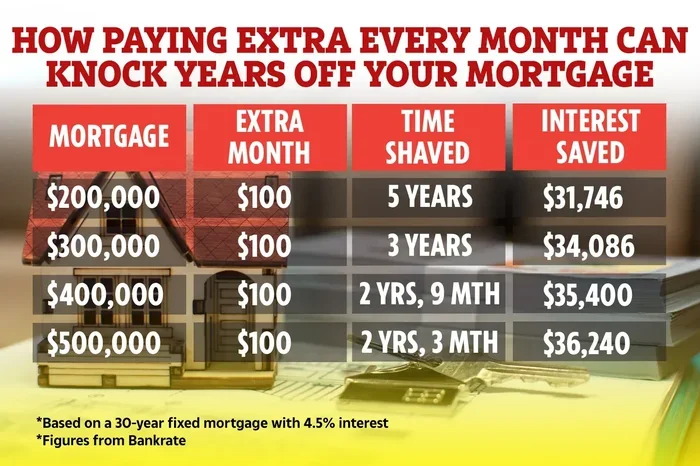
Here is a simple example. Imagine a $300,000 loan at 6 percent. A standard monthly payment keeps the term at thirty years. If you add $200 each month, you can shave years off the timeline. You also save a meaningful amount of interest. The exact numbers depend on your rate and loan size, but the pattern is consistent.
The Power of Principal Reduction
Principal is the amount you actually borrowed. Interest is the cost of borrowing it. Most early payments go heavily toward interest. That is why the balance feels slow to move at first. Extra payments change that dynamic. They reduce the principal immediately.
Lower principal means lower interest charges in future months. This creates a compounding effect. Each extra dollar you send now saves interest later and again later. Over time, this can shorten your loan by several years. It can also free you from debt sooner, which many people find deeply satisfying.
How Extra Payments Save Interest
Interest is calculated on the remaining balance. When the balance drops faster, the interest drops too. This is the core mechanism behind mortgage savings. You do not need a huge amount to see a difference. Consistent small extras often outperform occasional large ones because they become a habit.
A quick comparison helps. Suppose two homeowners start with the same loan. One sends an extra $100 every month. The other waits five years and then sends a lump sum. The first homeowner usually saves more interest because the balance shrinks earlier. Timing matters as much as amount.
Quick Example: $200 Extra Each Month
Let’s keep the math simple. A $300,000 loan at 6 percent has a standard payment near $1,800. Adding $200 brings the monthly total to $2,000. That extra $200 goes straight to principal. Over time, the loan term shortens. The total interest paid drops. You may also reach home equity faster, which can help if you plan to sell or refinance later.
This example is not a promise of exact savings. Rates, fees, and loan types vary. Still, the lesson is clear. Small, steady extras can create real momentum. If you can afford it without stress, the payoff can be substantial.
The Pros of Paying Extra on Your Mortgage
Extra payments offer several clear advantages. The biggest is interest savings. The second is faster equity growth. The third is peace of mind. For many people, owning a home free and clear feels like a major life milestone.
Here are the most common benefits:
- Lower total interest: You pay less over the life of the loan.
- Faster equity: Your ownership stake grows more quickly.
- Shorter loan term: You can reach payoff years earlier.
- Better cash flow later: Once the mortgage ends, your monthly budget opens up.
- Psychological relief: Less debt can reduce stress and improve sleep.
These benefits are real. They matter most when your rate is moderate to high and your budget can absorb the extra payment comfortably. If you value certainty and simplicity, paying extra can be a strong move.
Building Equity Faster
Equity is the difference between your home’s value and your loan balance. When you pay extra, your balance falls faster. That increases equity even if the market stays flat. More equity can help you later. You might borrow against it for renovations, or you might sell and keep more profit.
Equity also acts like a buffer. If prices dip, a lower balance gives you more protection. You are less likely to end up underwater. This can be valuable in uncertain markets. It is not a guarantee, but it improves your position.
Peace of Mind and Debt Freedom
Numbers are important, but feelings matter too. Some people hate debt. They lose sleep over it. For them, early payoff is worth more than a perfect investment return. That is a valid choice. Money is a tool for living, not just for optimizing.
Debt freedom can simplify life. You have one less big bill to worry about. If your income changes, your fixed costs are lower. That flexibility can be priceless during career shifts, family changes, or retirement. For many, the debt-free home goal is a powerful motivator.
The Cons and Risks of Extra Payments
Extra payments are not always the best use of cash. The biggest risk is reduced liquidity. Money sent to your lender is not easily retrieved. If an emergency hits, you cannot call the mortgage company and ask for a refund. You need cash on hand for real life.
Another risk is opportunity cost. If your mortgage rate is low, you might earn more by investing elsewhere. That does not mean investing is guaranteed to win. It means you should compare options. A low-rate mortgage can be a cheap form of debt. Keeping it while investing surplus cash may make sense for some households.
Here are the main downsides to consider:
- Less liquidity: Extra payments lock cash into your home.
- Opportunity cost: Investing might outperform your mortgage rate.
- Inflation effect: Fixed payments feel smaller over time as wages and prices rise.
- Prepayment penalties: Some loans limit early payoff or charge fees.
- Higher-priority goals: Retirement savings and emergency funds may come first.
Reduced Liquidity and Cash Flow
Liquidity means access to cash when you need it. A mortgage payment is fixed, but life is not. Car repairs, medical bills, and job changes happen. If you send every extra dollar to your lender, your safety net shrinks. That can force you to use credit cards or loans at higher rates later.
A healthy budget balances debt payoff with liquidity. Many experts suggest a solid emergency fund before aggressive extra payments. That fund should cover several months of expenses. Once that base is set, extra mortgage payments become safer.
Opportunity Cost and Inflation
Opportunity cost is the value of the next best choice you give up. If you use extra cash for the mortgage, you cannot use it to invest, start a business, or cover education costs. The right choice depends on your rate, your risk tolerance, and your timeline.
Inflation also matters. A fixed mortgage payment becomes easier to handle as time passes. Wages often rise. Prices rise too, but your payment stays the same. In that sense, inflation can quietly help you. Paying extra now may not feel as urgent if your rate is low and your income is stable.
Prepayment Penalties and Loan Rules
Before you send extra money, check your loan documents. Some mortgages have prepayment penalties. These fees can reduce or erase your savings. Others have rules about how extra payments are applied. You may need to specify that the extra amount goes to principal.
This step is simple but critical. A quick call or document review can prevent surprises. If your loan has restrictions, you may still be able to pay extra, but you need to know the terms. Always confirm before you commit.
How to Decide If Extra Payments Fit Your Goals
The best decision starts with your full picture. List your debts, savings, income stability, and goals. Then compare the mortgage to other uses of cash. This is not just about math. It is about what makes your life feel secure and forward-moving.
Use this simple checklist:
- Emergency fund: Do you have several months of expenses saved?
- High-interest debt: Are you carrying credit card balances or other costly debt?
- Retirement savings: Are you on track for your long-term retirement goals?
- Mortgage rate: Is your rate high, moderate, or low compared with other options?
- Job and income stability: Can you sustain extra payments through ups and downs?
- Future plans: Do you plan to stay in the home long enough to benefit?
If you have high-interest debt, that usually comes first. Credit card interest can be much higher than mortgage interest. Paying that down often saves more money and reduces stress faster. If your emergency fund is thin, build it first. Safety comes before speed.
Compare Your Mortgage Rate to Other Options
Your mortgage rate is a key number. If it is high, extra payments often make strong sense. If it is low, the case is weaker, especially if you can invest at a higher expected return. This is not a perfect comparison, because investments carry risk. But it is a useful starting point.
Also think about tax effects. Mortgage interest can be tax-deductible for some borrowers. That can lower the effective cost of the loan. If you itemize deductions, your true rate may be a bit lower than the stated rate. This does not change the basic logic, but it refines it.
Think About Your Timeline and Life Plans
How long will you stay in the home? If you plan to move soon, extra payments may not have time to pay off fully. You might still save some interest, but the biggest benefits come over longer periods. If you plan to stay for many years, extra payments can have a bigger impact.
Life plans also include retirement. Some people want a paid-off home before they stop working. That can reduce monthly costs in retirement. Others prefer to keep investing and use savings for flexibility. Neither path is wrong. The right path matches your goals.
Simple Ways to Pay Extra Without Stress
You do not need a huge windfall to make progress. Small, consistent steps work well. The key is to make the process easy and automatic. That way, you do not have to decide every month. The habit does the work for you.
Here are practical methods:
- Add a fixed amount each month: Even a small extra sum builds momentum.
- Make one extra payment per year: This is simple and can shorten the term.
- Round up your payment: Rounding to the nearest hundred can be painless.
- Use occasional bonuses: Tax refunds or work bonuses can accelerate payoff.
- Specify principal application: Tell your lender the extra amount is for principal.
Automation helps a lot. Set up an automatic transfer if your lender allows it. If not, schedule a calendar reminder. The goal is consistency, not perfection. A modest plan you can keep is better than an ambitious plan you abandon.
Principal-Only Payments and Automation
When you send extra money, make sure it reduces principal. Some lenders apply extras to future payments unless you specify otherwise. That does not help you save interest as much. Always confirm how the payment will be applied.
Automation reduces friction. If the money moves automatically, you are less likely to spend it elsewhere. You also avoid forgetting. Over time, this steady approach can create meaningful savings without daily effort.
Common Mistakes to Avoid
A few mistakes can weaken your plan. Watch out for these:
- Skipping the emergency fund: Do not drain your safety net to pay extra.
- Ignoring high-interest debt: Costly debt usually deserves priority.
- Not checking loan terms: Prepayment penalties can catch you off guard.
- Assuming all extras are equal: Timing and application method matter.
- Overcommitting: If the budget feels tight, scale back and stay sustainable.
Avoiding these mistakes keeps your plan healthy. The aim is steady progress, not self-punishment. A smart plan respects both your future and your present needs.
Expert Insight: Balance Debt Payoff and Investing
Many financial planners suggest a balanced approach. That means covering essentials, building savings, managing high-interest debt, and then choosing between extra mortgage payments and investing. The split depends on your rate, your risk comfort, and your goals.
Some people split extra cash. They send part to the mortgage and part to investments. This can offer a middle ground. You make progress on debt while still building other assets. If one path feels too rigid, a split can keep you moving on both fronts.
Key Takeaways for Your Decision
At the end of the day, the question comes back to your life. Should I pay extra on my mortgage if it leaves me cash-tight? Probably not. Should you pay extra if your rate is high, your budget is stable, and you value debt freedom? That can be a strong yes.
Use this short summary to guide yourself:
- Start with safety: Build an emergency fund and handle costly debt first.
- Check your rate: Higher rates usually strengthen the case for extra payments.
- Respect liquidity: Keep access to cash for real-life surprises.
- Confirm loan terms: Make sure extra payments go to principal and carry no penalty.
- Match your goals: Choose the path that supports your timeline and peace of mind.
The best choice is the one you can stick with. A modest, consistent plan often beats a dramatic one that never lasts. Whether you pay extra a little or a lot, make it intentional. That is how you turn a mortgage from a burden into a manageable step toward your next chapter.
Frequently Asked Questions
Should I pay extra on my mortgage if I have credit card debt?
Usually, you should pay off high-interest credit card debt first because it costs more than a typical mortgage. Once that debt is gone, extra mortgage payments can make more sense.
Does paying extra on a mortgage reduce interest?
Yes, extra payments lower the principal balance, which reduces future interest charges. Over time, this can save a significant amount and shorten the loan term.
Can I lose access to my money if I pay extra on my mortgage?
Yes, extra payments are generally not refundable, so your cash becomes less liquid. That is why keeping an emergency fund is important before paying extra.
What happens if my loan has a prepayment penalty?
A prepayment penalty can charge you for paying off the loan early or making large extra payments. Check your loan documents before sending extra funds so you do not lose savings.
Is it better to invest or pay extra on my mortgage?
It depends on your mortgage rate, your investment options, and your comfort with risk. A low-rate mortgage may make investing more attractive, while a higher-rate mortgage often favors extra payments.
How do I make sure extra payments go to principal?
Contact your lender and specify that the extra amount should be applied to principal, not future payments. Some lenders also let you choose this option online or on a payment form.
