
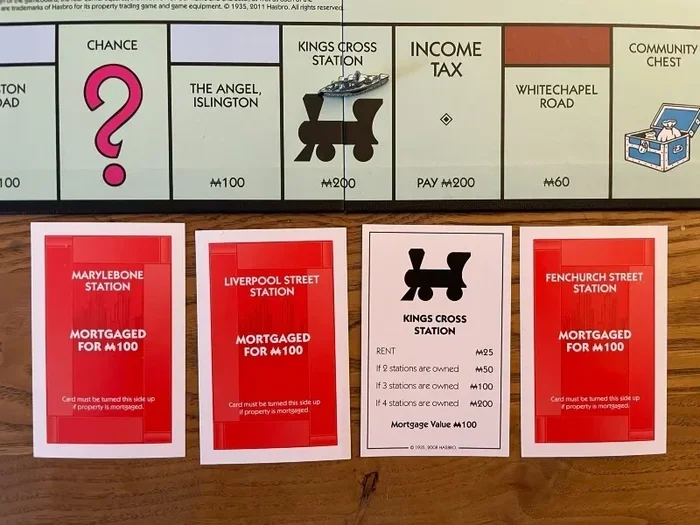
In Monopoly, a mortgage is a way to raise quick cash by pledging your properties to the bank. When you mortgage a property, you receive half its purchase price but cannot collect rent until you unmortgage it. Understanding what mortgage means in Monopoly helps you manage money wisely and avoid bankruptcy during tough rounds.
Key Takeaways
- Mortgage Basics: Mortgaging a property gives you immediate cash equal to half its listed price.
- Rent Pause: You cannot collect rent on mortgaged properties until you repay the loan plus interest.
- Unmortgaging Cost: To lift a mortgage, you must pay the bank the mortgage value plus a 10% interest fee.
- Strategic Timing: Mortgage only when you desperately need cash to pay dues or avoid elimination.
- Auction Risk: If you fail to unmortgage before another player buys the property at auction, you lose ownership permanently.
- Property Groups: Mortgaging one property in a color group breaks the monopoly and stops rent collection on the entire set.
- Smart Planning: Keep a cash reserve and mortgage strategically to extend your gameplay and increase winning chances.
📑 Table of Contents
- Understanding What Mortgage Means in Monopoly
- How Mortgaging Works Step by Step
- The Real Cost of Mortgaging and Unmortgaging
- When to Mortgage and When to Hold
- Smart Strategies to Use Mortgages Wisely
- Common Mistakes Players Make With Mortgages
- How Mortgages Change the Flow of the Game
- Final Thoughts on What Mortgage Means in Monopoly
Understanding What Mortgage Means in Monopoly
Monopoly is more than just a board game. It teaches real money lessons. One of the most useful tools in the game is the mortgage. Many players hear the word and feel confused. You might wonder how it works or when to use it. The good news is that it is simple once you break it down.
A mortgage in Monopoly works like a short-term loan from your own property. You trade a property for quick cash. The bank holds the property as security. You get money right away. But you also take on a small debt. You must pay it back later to reclaim the property. This mechanic can save you from losing the game. It can also help you build a stronger position if you use it wisely.
Learning what mortgage means in Monopoly gives you a real edge. You will know when to hold steady and when to make a quick move. You will also understand how to avoid common money traps. This guide walks you through every step. You will learn the rules, the costs, and the best strategies. By the end, you will feel confident at the table.
How Mortgaging Works Step by Step
The process is straightforward. You do not need special cards or complex math. You just follow a few clear steps. Here is how it works in practice.
Step One: Choose a Property
Pick any property you own that is not already mortgaged. You can choose a single house lot or a utility. You cannot mortgage railroads or spaces like Go or Jail. Stick to the clear property spaces on the board. Make sure you really need the cash before you commit.
Step Two: Receive Half the Value
The bank gives you cash equal to half the purchase price. You can find this number on the property card. For example, if a property costs 200 dollars, you get 100 dollars when you mortgage it. This cash goes straight into your hand. You can use it to pay rent, taxes, or other fees.
Step Three: Place the Mortgage Marker
Take the mortgage tile from the bank. Place it on the property space or on the property card. This shows that the property is now tied up. Other players will see the marker. It also reminds you that the property cannot earn rent yet.
Step Four: Remember the Restriction
A mortgaged property stops earning rent. You cannot collect money from opponents who land on it. The property also does not count toward a color group for building houses. This is a big trade-off. You gain cash now, but you lose income later until you fix it.
The Real Cost of Mortgaging and Unmortgaging
Many players focus only on the cash they receive. That is a mistake. You also need to know the cost of getting the property back. The numbers matter. Small fees add up fast in a long game.
The 10 Percent Interest Rule
When you want to unmortgage a property, you must pay the bank. The payment includes the original mortgage value plus 10 percent interest. So if you mortgaged a property for 100 dollars, you must pay 110 dollars to lift the mortgage. This extra cost is the price of using the bank as a backup plan.
Why the Fee Matters
The interest fee can surprise new players. You might think you can simply pay back the same amount later. That is not how it works. The bank always charges a little extra. Plan ahead so you do not get stuck with a property you cannot reclaim. Keep enough cash on hand if you expect to unmortgage soon.
Quick Example
Imagine you own a property worth 160 dollars. You mortgage it and receive 80 dollars. Later, you land on it yourself or someone else lands on it while it is still mortgaged. You decide to unmortgage it. You pay the bank 88 dollars. You get the property back. You can now collect rent again. The math is simple, but the timing is everything.
When to Mortgage and When to Hold
Timing is the heart of good Monopoly strategy. Mortgaging can save you. It can also weaken your position if you use it too early. You need a clear sense of when to act.
Use Mortgages as a Safety Net
The best time to mortgage is when you face a cash crisis. Maybe you owe a large rent payment. Maybe you drew a heavy tax card. Maybe you need money to buy a property at auction. In these moments, a mortgage can keep you in the game. It gives you breathing room. It stops you from going bankrupt right when you were doing well.
Avoid Early Overuse
Do not mortgage just because you feel low on cash. Early in the game, cash flow often improves quickly. You may land on good spaces. You may collect rent soon. If you mortgage too soon, you lose future income. You also pay extra to get the property back. Try to keep at least one or two properties free so you can still earn money.
Balance Your Color Groups
A strong Monopoly position comes from complete color sets. When you own all the properties in a group, you can build houses and charge high rent. Mortgaging one property in a set breaks that group. You lose the ability to build. You also reduce your rent power. Before you mortgage, check your board. See if you are breaking a valuable set. If you are, think twice.
Smart Strategies to Use Mortgages Wisely
Good players treat mortgages as a tool, not a habit. They use them with purpose. Here are some practical ways to make the most of this rule.
Keep a Cash Buffer
Try to keep a small reserve of money. This reserve helps you handle surprise costs. It also gives you options. If you have extra cash, you may not need to mortgage at all. If you do mortgage, you will have funds ready to unmortgage faster. A buffer reduces stress and keeps your game strong.
Mortgage Low-Value Properties First
When you must raise cash, start with the least valuable properties. These properties give you smaller mortgage payments, but they also cost less to unmortgage later. You keep your high-value properties free. This approach protects your long-term income. It also keeps your best color groups intact.
Plan Your Unmortgage Path
Before you mortgage, think about how you will get the money back. Will you collect rent soon? Will you trade with another player? Will you wait for a lucky card? Having a plan helps you avoid staying mortgaged for too long. The longer a property stays mortgaged, the more income you miss.
Use Mortgages to Negotiate
Sometimes a mortgage can help you make a trade. You might offer to mortgage a property to balance a deal. You might free up cash to close a swap. Other players may see that you are serious. This can lead to better deals. Just be careful not to give away too much value.
Common Mistakes Players Make With Mortgages
Even experienced players make errors. A few simple mistakes can cost you the game. Watch out for these common traps.
Mistake One: Mortgaging the Wrong Property
Some players mortgage a property in a strong color group without thinking. This breaks the set and kills rent potential. Always check your groups first. Protect your best sets. Mortgage isolated properties when you can.
Mistake Two: Forgetting the Interest Cost
Players often forget the 10 percent fee. They plan to pay back the exact mortgage amount. Then they realize they are short on cash. This can force another mortgage or a bad trade. Always calculate the full unmortgage cost before you commit.
Mistake Three: Mortgaging Too Many Properties at Once
It feels safe to raise a lot of cash quickly. But mortgaging many properties at once leaves you with almost no income. You may survive the moment, but you will struggle later. Try to mortgage only what you need. Keep some earning power alive.
Mistake Four: Waiting Too Long to Unmortgage
Some players leave properties mortgaged for a long time. They forget about the lost rent. They also miss the chance to build houses. The longer you wait, the more you lose. Make a plan to unmortgage as soon as you can afford it.
Quick Tip: Track Your Mortgages
Use a small note or a mental list. Write down which properties are mortgaged. Remember the amount you received. Remember the amount you owe to unmortgage. This simple habit prevents confusion and bad decisions.
How Mortgages Change the Flow of the Game
Mortgages do more than move money around. They change the rhythm of the whole game. They can slow down a rich player. They can help a struggling player stay in the fight. They also create new trading opportunities.
Cash Flow Shifts
When you mortgage, your cash goes up now. Your income goes down later. This shift matters. A player with high cash but low income can still lose fast. A player with steady income can wait for better chances. Balance both sides. Do not focus only on the money in your hand.
Trading Dynamics
Mortgages can make trades more interesting. A player with a mortgaged property may want to unmortgage quickly. Another player may have extra cash. This can lead to a deal. You might sell a property, swap assets, or lend money. Good trades can turn a weak position into a strong one.
Risk and Pressure
Mortgaging adds pressure. You now owe the bank a little more than you received. You also lose rent on that space. This pressure can push you to make smarter choices. It can also push you to take risks. Use the pressure to think clearly, not to panic.
Expert Insight: Think in Cycles
Strong players think in cycles. They know when to build, when to hold, and when to mortgage. They treat the game like a series of money waves. Sometimes you spend. Sometimes you save. Sometimes you borrow from your own properties. When you see the cycle, you make better choices. You stop reacting and start planning.
Final Thoughts on What Mortgage Means in Monopoly
A mortgage is a simple tool with a big impact. It gives you quick cash when you need it. It also asks you to pay a small price later. If you understand what mortgage means in Monopoly, you can use it with confidence. You will know when to protect your income and when to raise emergency funds.
Remember the basics. You get half the value. You cannot collect rent while mortgaged. You must pay the mortgage value plus 10 percent to unmortgage. Keep your best color groups safe. Mortgage only when you need a lifeline. Plan your next move before you commit. These habits will keep you in the game longer.
Use mortgages as a smart backup plan, not a first choice. Keep a cash buffer. Track what you owe. Think about the next turn, not just the current one. With a little care, you can turn a tough moment into a strong position. That is the real power of understanding mortgages in Monopoly.
Frequently Asked Questions
What does mortgage mean in Monopoly?
In Monopoly, a mortgage means you pledge a property to the bank in exchange for quick cash. You receive half the property value, but you cannot collect rent until you unmortgage it.
How much money do you get when you mortgage a property?
You get exactly half of the property purchase price listed on the card. For example, if the property costs 200, you receive 100 when you mortgage it.
Can you collect rent on a mortgaged property?
No, you cannot collect rent while a property is mortgaged. The property stays inactive until you pay the bank to unmortgage it.
How do you unmortgage a property in Monopoly?
You pay the bank the mortgage value plus 10 percent interest. Once you pay that amount, you remove the mortgage marker and the property becomes active again.
What happens if you cannot pay to unmortgage a property?
If you do not unmortgage it before someone else buys it at auction, you lose ownership. The property can leave your control permanently if you fail to reclaim it in time.
When is the best time to mortgage a property?
The best time is during a cash emergency, such as paying a large rent bill or avoiding bankruptcy. Try not to mortgage too early or you may lose valuable rent income later.
