

How to Teach a Child to Listen: 12 Gentle, Proven Steps
Every parent has been there: you ask your child to put on shoes for the third time, and they are still playing. You raise your voice, they cry, and everyone is upset. Learning how to teach a child to listen is not about winning a battle of wills. It is about building a calm, respectful habit that helps a child hear, understand and follow instructions, now and for life.
This guide gives you twelve gentle steps, sentences you can use right away, tips for each age group, and a list of mistakes that make children tune out. You will also find a short daily practice plan and answers to common questions. For related reading, see our existing guide on how to get kids to listen, and our hub on family meal time, where listening skills are practised every day.
Why do some children not listen?
Children often do not listen because of their age, their attention or the way we speak, not because they are bad. Understanding the reason makes it easier to respond kindly. Common causes include:
- **They are busy.** A child deep in play truly does not hear you from across the room.
- **The instruction is too long.** Children under seven can follow one or two steps at a time, not a long list.
- **Too many commands.** If every sentence is an order, children learn to ignore the noise.
- **They are tired, hungry or upset.** A child in need cannot cooperate.
- **They want attention.** Sometimes ignoring is a way to be noticed, even negatively.
- **They are testing limits.** This is a normal part of growing up, especially for toddlers and teenagers.
- **A hearing problem.** If a child often does not respond, ask a doctor to check their hearing.
Once you know the likely reason, you can pick the right step from the list below.
What are 12 gentle steps to teach a child to listen?
Pick two or three and practise them for a week. Children learn from steady habits more than from perfect speeches.
- **Get close and get their attention first.** Walk to the child, kneel to their height, say their name softly and wait for eye contact. Calling from another room rarely works.
- **Say it once, clearly, in a calm voice.** “Please put your shoes by the door.” Do not repeat ten times. Wait a few seconds and give them a chance to respond.
- **Keep instructions short and specific.** “Tidy your toys” is vague. “Put the blocks in the blue box” is clear. For small children, give one step at a time.
- **Use a positive sentence.** Say what you want, not what you do not want: “Walk, please,” rather than “Stop running!”
- **Give a short warning before changes.** “In five minutes we will put the toys away.” This respects their play and avoids sudden battles.
- **Ask the child to repeat the instruction.** “Can you tell me what you are going to do?” This builds attention and memory.
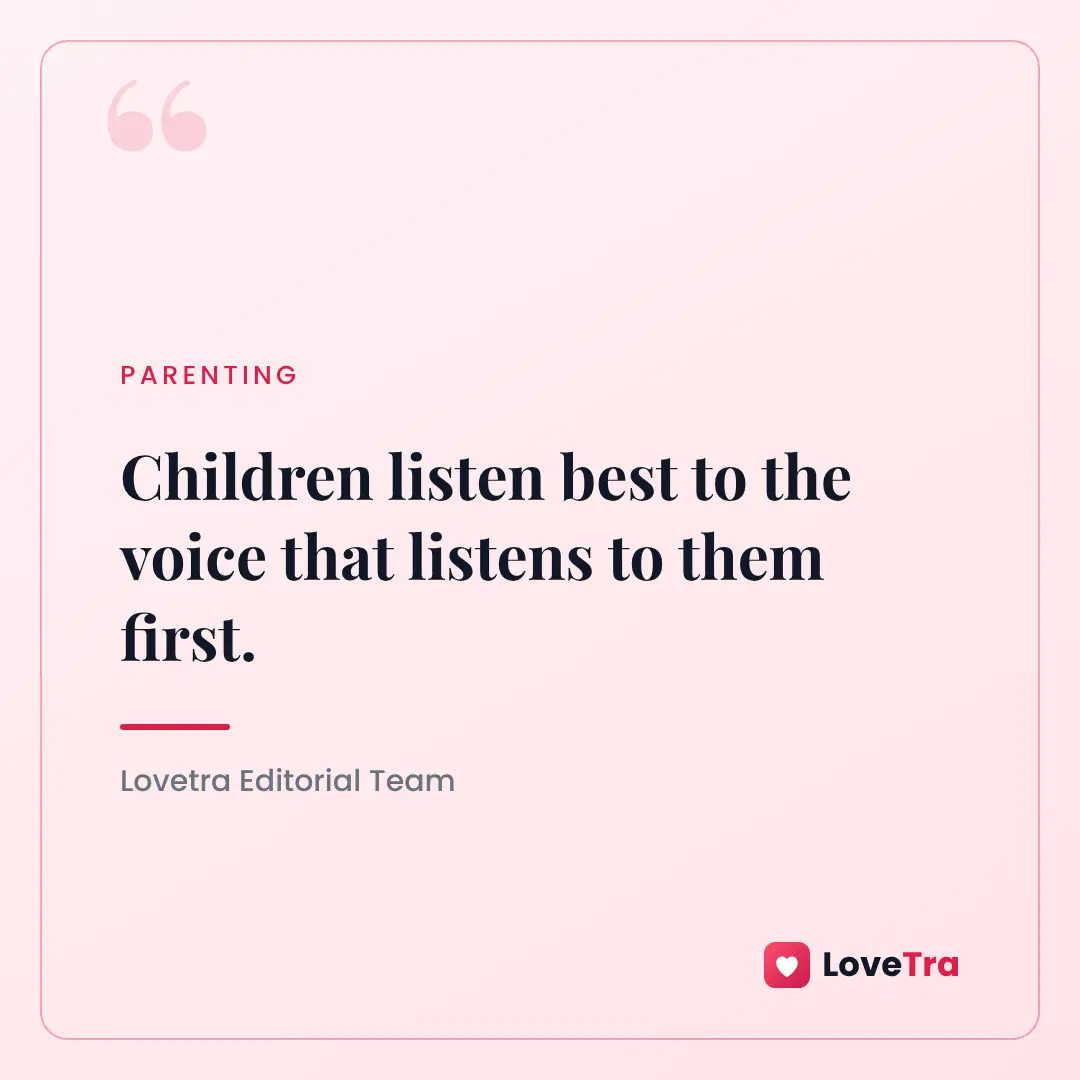
- **Be a good listener yourself.** When your child speaks, stop what you are doing, look at them and listen to the end. Children who feel heard learn to hear.
- **Offer choices within limits.** “Do you want to brush your teeth before or after your story?” Choice reduces power struggles.
- **Use a calm routine.** Predictable times for meals, play, bath and bed mean fewer instructions are needed. Our guides on daily routine for kids and bedtime routine for kids help.
- **Notice and praise listening.** “Thank you for listening so quickly. That was very helpful.” Specific praise encourages more of the same.
- **Follow through with a calm consequence.** If the child does not listen, calmly apply a fair, pre-announced consequence, such as pausing a game. Never hit or shout. Our guide on consequences for kids explains how.
- **Stay patient and consistent.** Listening is a skill that grows slowly. Keep the same rules, tone and routines every day.
What sentences can you use at home?
Words shape how children respond. Try these examples.
Instead of shouting from a distance
Walk over and say softly, “Look at me, please, my dear. It is time to wash your hands.” Wait for eye contact, then smile.
Instead of repeating and repeating
“I will say this once. Please bring your plate to the kitchen.” Then wait. If they do not move, calmly follow through: “I see you are not ready yet. I will help you.”
Instead of threatening
“If you pack the toys now, we will have time for a story before bed.” This is a gentle if-then statement, not a threat.
Instead of “Why don’t you ever listen?”
“I can see you are enjoying your game. Let us finish this round, then we will wash up.” This respects their feelings while keeping your limit.
When a child answers back
“I hear that you do not want to. I still need you to do it. Would you like to walk or hop to the sink?” A touch of humour can melt a lot of resistance.
How do you teach listening by age?
Different ages need different approaches.
Toddlers (about 1 to 3)
Use very short words and actions. Say “Shoes on” while pointing. Make tasks into games: “Let us see who can put the cup on the table first!” Redirect gently and offer simple choices. Expect lots of repetition, and keep your voice soft.
Preschoolers (about 3 to 5)
Give one or two steps. Use pictures or a simple chart for the morning routine. Sing a little tidy-up song. Praise quickly, because their memory for rewards is short.
School-age children (about 6 to 10)
Explain reasons simply: “We brush our teeth to keep our teeth strong.” Involve them in setting family rules. Use a written checklist for homework and chores, and let them tick off tasks. Give small responsibilities so they feel trusted.
Pre-teens and teenagers
Talk with them, not at them. Listen first, give your view calmly, and let them share ideas on rules. Respect their growing independence while keeping core values firm. See our hub on rules for teenagers.

How can parents set a good listening example?
Children copy what they see more than what they hear. If we interrupt, shout or look at our phones while they talk, they learn those habits.
- **Put your phone down** when your child speaks to you.
- **Do not interrupt.** Let them finish a sentence, even if it takes time.
- **Use polite words.** Say please and thank you to your children and your spouse.
- **Admit your mistakes.** “I did not listen to you well earlier. I am sorry. Tell me again.” This teaches humility and respect.
- **Keep promises.** If you say you will listen after dinner, do it. Trust makes listening easier.
- **Agree as parents.** Both mother and father should give the same message so the child is not confused.
- **Speak respectfully about others** in front of children.
What fun games build listening skills?
Games teach listening without pressure. Try these:
- **Follow the leader.** One person gives simple actions, and the others follow: clap, hop, touch your nose.
- **Whisper game.** Whisper a short sentence and pass it around the family. See how it changes.
- **Treasure hunt.** Hide a small object and give clues one at a time.
- **Story questions.** Read a short story and ask questions about the details afterwards.
- **Quiet minute.** Sit together and listen to the sounds around you. Share what each of you heard.
- **Cooking together.** Give simple steps while cooking: “Add two spoons of flour, then stir.” Children love to be helpers.
What does a calm morning look like when a child listens?
Here is a short example of a family using these steps. A mother wants her five-year-old son ready for school in thirty minutes.
- **She starts the day gently.** She wakes him with a soft touch and a smile, not a call from the kitchen.
- **She gives one instruction.** Kneeling beside him, she says, “Please wash your face. Then come to the table.”
- **She gives a warning.** “In five minutes, breakfast is ready.”
- **He is slow, so she offers a choice.** “Do you want to walk to the bathroom or hop like a rabbit?” He laughs and hops.
- **She praises quickly.** “Thank you for washing so quickly. That was a big help.”
- **At the table she listens first.** He wants to tell her about a dream, and she listens fully before reminding him to eat.
- **When he forgets his shoes,** she does not shout. She asks, “What is the next thing we need for school?” He remembers and gets them.
- **At the door she thanks him.** “You listened well today. I am proud of you.”
Nothing here is magical. The mother used a soft voice, short instructions, choices and praise. Over weeks, her son began to follow the routine with fewer reminders. Some mornings are still messy, and that is normal; the goal is progress, not perfection.
What mistakes make children stop listening?
- **Constant nagging.** The more we talk, the less they hear.
- **Shouting.** A loud voice may work once, but soon becomes background noise.
- **Long lectures.** Keep your message short and clear.
- **Inconsistent rules.** If a rule changes depending on your mood, children learn to test it.
- **Empty threats.** If you say you will do something, do it kindly, or do not say it.
- **Hitting or shaming.** These damage trust and teach fear, not listening.
- **Ignoring good behaviour.** If we only react to bad behaviour, children learn that is the way to get attention.
- **Expecting too much too soon.** Listening develops over years.
A simple one-week practice plan
- **Day 1:** Use eye contact and a soft voice for each instruction.
- **Day 2:** Give one short, specific instruction at a time.
- **Day 3:** Offer two choices at least three times.
- **Day 4:** Praise listening three times, with specific words.
- **Day 5:** Play one listening game after dinner.
- **Day 6:** Practise your own listening: give your child ten minutes of full attention.
- **Day 7:** Review the week as a family and note what worked.
Frequently asked questions
At what age should a child start listening?
Even babies respond to tone, and toddlers can follow very simple instructions. Expect partial listening at first and build the skill gradually.
What if my child listens to others but not to me?
Children often test limits most with the people they feel safest with. Stay calm and consistent. Check whether you repeat commands too often or speak while they are busy, and try the eye-contact step.
Should I punish a child who does not listen?
Do not punish harshly. Use calm, fair consequences that fit the situation and are told in advance, such as pausing a game. Always explain what you expect and show them how to do better next time.
When should I worry about my child’s listening?
If your child does not respond to sounds, seems unusually withdrawn or forgetful, or listening problems affect school and friendships, talk to a doctor or the child’s teacher.
A warm closing thought
Teaching a child to listen takes patience, but it is one of the best investments you can make in your family’s peace. Speak softly, get close, keep it simple and listen back. Your child will learn to hear you because they feel heard. Little by little, your home will move from reminders and raised voices to cooperation and warmth.


