
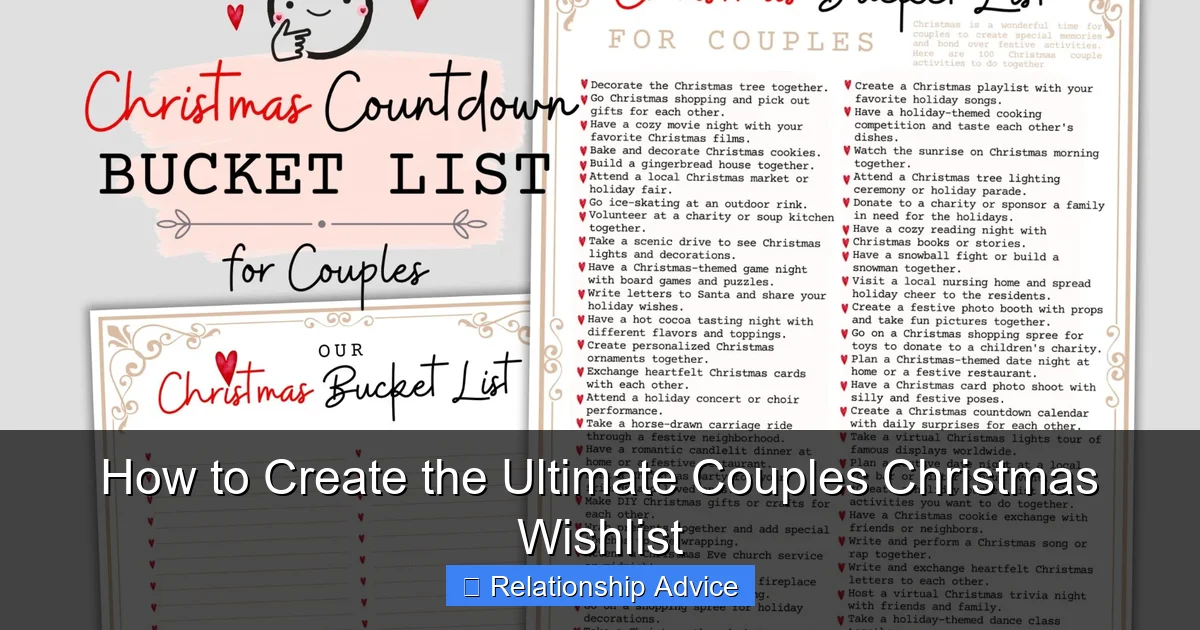
Creating a couples Christmas wishlist is more than just picking gifts—it’s a powerful way to deepen your bond, align your dreams, and show each other you care. When done right, a shared wishlist strengthens communication, reveals what truly matters to both of you, and turns gift-giving into an act of love. Whether you’re newly in love or married for years, this guide walks you through every step to make your Christmas wishlist meaningful, fun, and full of connection.
Key Takeaways
- Start early and communicate openly: Begin brainstorming your wishlist together weeks before December—this gives time for honest conversations about wants versus needs and prevents last-minute stress.
- Focus on shared experiences over material items: Gifts like weekend getaways, cooking classes, or concert tickets often create stronger memories than physical objects.
- Categorize your list for clarity: Organize ideas into categories like “Adventures,” “Home & Comfort,” “Personal Growth,” and “Fun & Laughter” so both partners feel represented.
- Include non-material wishes: Add emotional desires like “more quality time together” or “a date night every week” to remind yourselves that love isn’t always wrapped in paper.
- Update and refine together: Review and adjust your list as needs change—this keeps the process flexible and responsive to your evolving relationship.
- Practice gratitude throughout: Celebrate small wins during the process, like discovering a new hobby you both enjoy, to keep the mood positive and connected.
📑 Table of Contents
- The Magic of a Shared Wishlist: More Than Just Gifts
- Why a Couples Wishlist Strengthens Your Relationship
- Step-by-Step: How to Create Your Ultimate Couples Christmas Wishlist
- Real-Life Examples: What a Great Couples Wishlist Looks Like
- Common Pitfalls to Avoid (And How to Bounce Back)
- Making It Fun: Turn Wishlist Creation Into a Ritual
- Beyond Christmas: Why This Process Matters Year-Round
- Final Thoughts: Love Is in the Details
The Magic of a Shared Wishlist: More Than Just Gifts
Christmas is supposed to be magical—the twinkling lights, the scent of pine, the warmth of loved ones gathered around. But sometimes, even the most romantic season can feel stressful when it comes to gift-giving. Between comparing Amazon lists and wondering if your partner actually wants that fancy coffee maker, it’s easy to lose sight of what really matters: connection.
That’s where the idea of a couples Christmas wishlist comes in. It’s not just about picking presents—it’s about creating space for real conversation, dreaming together, and showing up for one another in intentional ways. When you build a wishlist as a team, you’re saying, “I care about what makes you happy,” and “I want us to grow closer.”
In this guide, we’ll walk you through exactly how to create a wishlist that reflects both of your hearts—and strengthens your bond in the process. From brainstorming ideas to finalizing your list, we’ve got practical tips, fun examples, and plenty of room for laughter along the way.
Why a Couples Wishlist Strengthens Your Relationship
You might wonder: why go through the trouble of making a shared list? Isn’t it easier to just let each person pick their own gifts?

Visual guide about How to Create the Ultimate Couples Christmas Wishlist
Image source: lovethentic.com
Actually, no. When each person chooses independently, you risk missing out on surprises that matter deeply—or worse, giving gifts that don’t resonate because they’re based on assumptions. A couples Christmas wishlist flips the script. Instead of guessing, you’re inviting honesty, vulnerability, and creativity into your relationship dynamic.
It Builds Emotional Intimacy
Sharing dreams—whether it’s learning to ski, renovating a kitchen, or starting a podcast—helps you see your partner’s inner world. When you write down “a cozy cabin in the mountains” or “weekly dance lessons,” you’re saying, “Your dreams are mine too.” This kind of openness builds trust and deepens emotional intimacy faster than any expensive gadget ever could.
It Prevents Miscommunication
Ever gotten something you didn’t want because you didn’t speak up? With a joint wishlist, everyone has a voice. You avoid hurt feelings, awkward exchanges at the store, and that sinking feeling when the gift doesn’t fit. Plus, it reduces pressure—no more frantic last-minute searches!
It Creates Shared Memories
Think about it: the best gifts aren’t always things. They’re experiences. The surprise weekend trip. The handmade photo album. The time you stayed up late talking until sunrise. These moments stick with you far longer than a new blender. A well-curated wishlist increases the chances of gifting those unforgettable experiences.
Step-by-Step: How to Create Your Ultimate Couples Christmas Wishlist
Ready to get started? Here’s a simple, step-by-step process that works whether you’re dating, engaged, or married. Follow these steps, and you’ll end up with a wishlist that feels personal, thoughtful, and full of love.
1. Set the Mood: Choose a Time and Space for Brainstorming
Find a quiet moment—maybe after dinner or during a walk—where you won’t be interrupted. Grab a notebook, open a shared digital doc (like Google Docs), or use a whiteboard. Make it cozy: light a candle, play soft music, or sip hot cocoa. The goal is to create a relaxed environment where both of you feel safe sharing ideas.
Pro tip: Start with a question like, “What’s something you’ve always wanted to try but never had the chance?” or “If money wasn’t an issue, what would make this Christmas unforgettable for you?”
2. Brainstorm Freely: No Judgment, No Limits
This is the fun part! Each person should jot down everything that comes to mind—big dreams and small joys alike. Include:
- Hobbies you’d like to explore together (pottery class, hiking trails)
- Gifts you’ve always wanted (a specific watch, a vintage camera)
- Experiences (a spa day, a road trip)
- Home upgrades (a new sofa, smart lighting)
- Even abstract wishes like “more morning cuddles” or “a chore rotation chart”
Remember: quantity over quality here. The more ideas, the better your options will be later.
3. Categorize Your Ideas
Once you’ve filled two pages (or screens), group similar items together. Here are some common categories that work well:
- Adventures & Experiences: Travel, classes, tickets, workshops
- Home & Comfort: Furniture, decor, kitchen gadgets, bedding
- Personal Growth: Books, courses, fitness gear, journaling supplies
- Fun & Laughter: Games, movies, silly subscriptions (like mystery snack boxes)
- Romance & Connection: Date nights, candles, love letters, couples’ activities
Categorizing helps you visualize balance and ensures neither person feels overlooked.
4. Discuss and Prioritize Together
Now comes the conversation phase. Look at your combined list and talk about:
- Which items excite both of you?
- Are there duplicates or overlaps?
- What’s realistic given your budget?
- Which gifts reflect shared values or goals?
For example, if one person wants noise-canceling headphones and the other wants a meditation cushion, you might decide which aligns more with your current lifestyle. Or, you could split the difference and buy both—but only if it fits your plans.
5. Finalize Your List and Share It Wisely
Once you’ve narrowed things down, finalize your top 10–15 items. Then, consider how to share the list:
- If you’re buying from each other, send the list via text, email, or a private note so surprises stay intact.
- If family or friends are contributing, share the link discreetly—maybe with a note like, “We’re doing a couples wishlist this year! Please avoid spoilers.”
- If you’re pooling funds for one big gift (like a trip), make that clear upfront so expectations match.
Real-Life Examples: What a Great Couples Wishlist Looks Like
Let’s make this concrete. Here’s how real couples have built their ultimate Christmas wishlists—and why it worked.
Example 1: The Adventure Lovers
Partners: Sarah and Mike, newlyweds who love spontaneous trips.
Wishlist Highlights:
- A tandem paragliding lesson
- A weekend retreat in Asheville, NC
- A waterproof Bluetooth speaker
- “One unplanned adventure per month” (yes, written as a wish!)
Why it worked: They prioritized experiences over stuff, and included a meta-wish that reinforced their shared value of spontaneity. Mike surprised Sarah with the speaker; Sarah booked the retreat. Both felt seen and celebrated.
Example 2: The Homebody Duo
Partners: Emma and Leo, busy parents who crave relaxation.
Wishlist Highlights:
- A heated massage chair (for dad)
- A weighted blanket (for mom)
- Weekly “date nights” without kids
- A subscription to a wine-and-cheese delivery service
Why it worked: They acknowledged each other’s needs without competition. Even though they’re different types, the list honored both. And “date nights” weren’t just a gift—they were a promise to nurture their relationship.
Example 3: The Growth-Oriented Pair
Partners: James and Chloe, career-focused professionals.
Wishlist Highlights:
- Online course in financial planning
- Journaling set for goal tracking
- Concert tickets to see their favorite band
- “Monthly check-ins to discuss dreams”
Why it worked: They blended self-improvement with joy. The concert was a reward; the courses were investments. And the “check-in” wish turned into a new monthly ritual that strengthened their partnership.
Common Pitfalls to Avoid (And How to Bounce Back)
Even with the best intentions, couples sometimes stumble during wishlist creation. Here’s how to dodge common traps—and recover gracefully.
Pitfall #1: One Person Dominates the Conversation
If you notice one partner doing most of the talking or dismissing the other’s ideas, gently redirect. Say things like, “Hey, I love that idea, but what about yours?” or “Can you tell me more about why this matters to you?”
Consider using a timer: “Let’s each share three ideas in two minutes—then switch.” This keeps things balanced.
Pitfall #2: Focusing Only on Expensive Items
It’s tempting to list luxury items, but remember: meaningful gifts often cost little or nothing. A handwritten letter, a playlist of songs that remind you of each other, or planning a picnic in the park can be priceless.
Ask yourself: “Does this item reflect our values, or just my status anxiety?”
Pitfall #3: Ignoring Non-Material Wishes
Sometimes the deepest desires aren’t about objects. If your partner mentions “less screen time together” or “helping me relax after work,” include those on the list. You might fulfill them by switching off phones during dinner or taking over bedtime routines once a week.
Pitfall #4: Not Revisiting the List
Life changes. A job loss, health issue, or family emergency might mean your original priorities shift. Check in mid-November to see if anything needs adjusting. Flexibility shows respect for each other’s current reality.
Making It Fun: Turn Wishlist Creation Into a Ritual
Creating a couples Christmas wishlist shouldn’t feel like homework. Inject humor, creativity, and playfulness to keep it enjoyable.
Try These Activities:
- “Worst Gift Ever” Contest: Each person pitches the most ridiculous idea they can think of. Laughter builds connection.
- Vision Board Session: Cut out images from magazines or print Pinterest inspiration for your dream gifts. Glue them onto poster board.
- “Would You Rather…” Game: “Would you rather receive a lifetime supply of avocados or a surprise trip to Iceland?” This sparks fun debate and reveals preferences.
- Write Love Notes: Before sharing ideas, each person writes a short note explaining why one thing matters to them. Read them aloud with chocolate.
These rituals turn logistics into love language.
Beyond Christmas: Why This Process Matters Year-Round
While we’re focusing on Christmas, the skills you develop here apply everywhere. Want to plan a wedding? Host a birthday? Navigate a tough decision? Talking openly about wants and needs—just like you did with your wishlist—builds resilience and closeness.
In fact, couples who regularly practice collaborative dreaming report higher satisfaction in all areas of life. As relationship coach Esther Perel says, “Intimacy grows when we dare to dream together.”
So keep the habit alive. Try creating a “Summer Bucket List” or a “New Year’s Dream Board” with your partner. You’ll be amazed how these small rituals compound into stronger bonds.
Final Thoughts: Love Is in the Details
At the heart of every great couples Christmas wishlist is something simple: the willingness to listen, imagine, and care. It’s not about perfection or grand gestures. It’s about showing up—again and again—with curiosity and kindness.
Whether you end up gifting a drone, a couples’ massage, or simply “an evening without distractions,” what matters most is that you’re choosing each other. That choice, made every holiday season, becomes the foundation of your story together.
This Christmas, let your wishlist be more than a shopping guide. Let it be a love letter. Let it be a promise. And let it bring you closer—one dream at a time.
Frequently Asked Questions
How early should we start creating our couples Christmas wishlist?
Ideally, begin brainstorming 4–6 weeks before December 25th. This gives you enough time for honest conversations, avoids last-minute stress, and allows flexibility if priorities shift due to unexpected events.
Should we include budget limits on our wishlist?
Not necessarily—save budgets for the final selection phase. Focus first on listing all ideas freely. Then, during discussion, consider costs naturally. This prevents self-censorship early on and keeps the process joyful.
What if we disagree on most items?
Disagreements are normal! Use them as opportunities to understand each other deeper. Ask, “Why does this matter to you?” instead of arguing over the item itself. Often, underlying needs (like security, adventure, or relaxation) reveal common ground.
Can we still have surprises with a couples wishlist?
Absolutely! Share the list privately so each person can choose gifts independently while staying within approved parameters. Or, pool funds for one big experience—that’s often the biggest surprise of all.
Do we need to stick to our original list?
Not rigidly—but revisit it together. Life happens. If a job loss or health issue changes your situation, adjust accordingly. Flexibility shows empathy and keeps your partnership grounded in reality.
What if someone feels left out or ignored during wishlist creation?
Gently acknowledge their feelings. Say, “I noticed you didn’t share many ideas—want to talk about why?” Sometimes people hesitate because they fear criticism or don’t realize their input matters. Reassure them and invite participation without pressure.
