How to Avoid Showing Off: 9 Steps to Stay Humble
If you want to know how to avoid showing off, start by understanding why the urge appears. Most people who show off are not bad; they simply want to be seen, valued and respected. But constant boasting about wealth, success, clothes, children or knowledge pushes people away and quietly harms the heart of the one who does it. Humility, on the other hand, draws people closer. In this guide you will find simple, practical steps to stay modest, to talk about your achievements wisely, and to teach children to be humble without losing confidence.
What does it mean to show off?
Showing off means trying to impress others by displaying or talking about your possessions, success, skills or status in a way that makes you seem better than them. It can be loud, such as bragging, or quiet, such as constantly hinting at how well you are doing, or making sure your new purchase is seen by everyone.
It is important to separate showing off from sharing happiness. Telling your family good news, or thanking someone who helped you, is natural. Showing off begins when the purpose is to rise above others rather than to share joy.
Why do people show off?
People show off because they feel insecure, want approval or fear being overlooked. Behind the display is often a quiet worry: “Am I enough?” Some were praised only for results as children, so they learned that love depends on achievement. Others compare themselves with the people around them, and feel they must keep up. Showing off brings a brief sense of importance, but it rarely brings real respect or closeness.

Why is showing off harmful?
- It creates distance. People feel small or envious around a boaster.
- It hides your real self. You start living for the audience rather than for what is true.
- It breeds jealousy and competition in families and neighbourhoods.
- It teaches children that worth equals possessions.
- It can hurt people who are struggling, such as those who are poor, sick or unemployed.
- It wastes money and energy on impressing others instead of caring for your family.
How do you avoid showing off? Nine steps
- Pause before you speak. Ask, “Why am I sharing this? Is it to help or to impress?”
- Be grateful instead. Replace “Look what I have” with quiet thanks for what you have been given.
- Let your actions speak. Good work and good character are noticed without announcements.
- Ask about others. Turn the conversation toward the other person’s life and listen with interest.
- Give credit generously. Mention the help of others whenever you achieve something.
- Do good in private. Give quietly, help without telling others and keep some good deeds to yourself.
- Stop comparing. Everyone’s path is different. Your worth is not measured against anyone else’s.
- Live within your means. Buy what you need and can afford, not what will impress.
- Accept compliments simply. Say “Thank you, that is kind of you,” and move on without adding to it.
How can you share good news without showing off?
You can share good news humbly by sharing it with sincerity, giving thanks and showing interest in the other person. Here are some contrasts.
- Instead of “I got the best marks in the class,” say “I am so thankful. I worked hard and my teachers helped a lot.”
- Instead of “We bought a bigger house than anyone in the family,” say “We have moved into a new house, and we are very grateful. You are welcome to visit.”
- Instead of “My son is the cleverest,” say “My son has worked hard on his studies, and we are glad for him.”
- Instead of posting photos of every meal and purchase, enjoy them with your family.
Notice the difference in tone: the second version invites connection, while the first invites comparison.
How do you handle it when someone else shows off?
When someone shows off, stay calm and kind, and do not compete. You might say something warm such as “That is wonderful news” and then change the subject gently. Remember that boasting often hides insecurity. Avoid mocking them behind their back. If you feel envy, remind yourself that your life has its own good things, and thank the people in your life for what they bring. If the behaviour harms you or your children, you may speak privately and gently about it.
How do you teach children not to show off?
Teach children to be proud of effort and kindness, not of possessions or ranking. Children copy the adults around them, so the first step is your own behaviour.
- Praise effort and character. “I loved how patiently you worked” rather than “You are better than everyone.”
- Do not compare your children with cousins or neighbours.
- Teach gratitude. Ask each day, “What are you thankful for?”
- Encourage sharing. Let children give away toys, food or time.
- Model humility. When you succeed, thank those who helped.
- Explain gently. If a child boasts, say, “It is good to be happy, but let us also be kind to our friend’s feelings.”
How can you stay humble and still be confident?
Humility and confidence belong together. A humble person knows their worth and does not need to prove it. They can speak up, lead and share ideas without putting others down. They accept their strengths gratefully and their weaknesses honestly. If you are proud of something, you can say so simply and warmly. Confidence says, “I did my best.” Showing off says, “I am better than you.” Keep the first and drop the second.
A short example
A man built a successful business. At family gatherings, he used to talk about prices, cars and trips until others stopped speaking to him. One day his elderly uncle quietly said, “You work hard, and we are proud. But the table is warmer when you listen.” The man was struck. At the next gathering, he asked his cousins about their lives and spoke little about his own. Later he helped quietly with a relative’s fees. Gradually the family relaxed around him, and he found he enjoyed the evenings more. By talking less about himself, he gained far more respect.
How do you avoid showing off on your phone and online?
Online life makes showing off easy, because every moment can be photographed and displayed for admiration. A few simple habits keep you honest.
- Ask before you post. “Am I sharing this to remember or to impress?”
- Enjoy the moment first. Put the phone away and be present with your family.
- Do not post private family matters such as money, gifts or children’s achievements for applause.
- Be careful with comparisons. Do not measure your life against the highlights others show.
- Celebrate others. Send kind messages about other people’s good news.
- Take breaks. A day without scrolling reminds you that your life is real without an audience.
How can married couples avoid showing off?
Couples sometimes feel pressure to display a perfect marriage, a bigger home or expensive gifts. This pressure steals energy from real closeness. Agree together to keep your home simple and your celebrations modest. Spend on what your family truly needs, and save what you can for the future. When you speak about your spouse, speak with respect and warmth, not as a trophy. Remember that a marriage is built in private moments of kindness, patience and cooperation, not in public display. If one of you feels tempted to compare, talk about it calmly and remind each other of what matters.
What are the benefits of modesty?
- Peace of mind. You are free from the constant need to be admired.
- Deeper friendships. People trust and enjoy the company of a humble person.
- Better finances. You spend on real needs rather than on appearances.
- Respect without effort. Sincere character earns lasting respect.
- A better example for children. They learn to value kindness and effort over show.
- More learning. Humble people listen, ask questions and keep growing.
What can you say instead of showing off?
Having a few humble phrases ready helps you answer questions about your life without bragging. Use them naturally and warmly.
- “Thank you. I am grateful, and I had a lot of help along the way.”
- “It was a team effort. Everyone worked hard.”
- “I am still learning, and I appreciate your advice.”
- “We are thankful for what we have. How are things with you?”
- “That is very kind of you to say.”
- “I am happy for you. Tell me more about it.”
When someone asks how your work or family is doing, answer honestly and briefly, then show interest in them. The conversation will move from comparison to connection, which is what most people are truly looking for.
How can you replace the need for approval?
The urge to show off weakens when your sense of worth comes from within, from living by your values rather than from applause. Spend a few minutes each evening reviewing the day: Was I honest? Was I kind? Did I help someone? These questions measure what really counts. Seek the approval of your conscience first, and the opinion of those you love second. Over time, you will find that you no longer need to prove yourself, because you know who you are.
Common mistakes to avoid
- “Humble bragging”. Complaining about how hard it is to be so successful is still showing off.
- Posting everything online to be admired.
- Judging others for showing off while doing it yourself in other ways.
- Hiding your gifts completely. Humility does not mean pretending to be useless.
- Spending beyond your means to keep up appearances.
- Looking down on those who have less.
Quick checklist
- Ask “why am I sharing this?” before speaking.
- Thank those who helped you.
- Ask someone about their life today.
- Do one good deed in private.
- Avoid comparing your family with others.
- Accept compliments with a simple thank-you.
- Spend within your means.
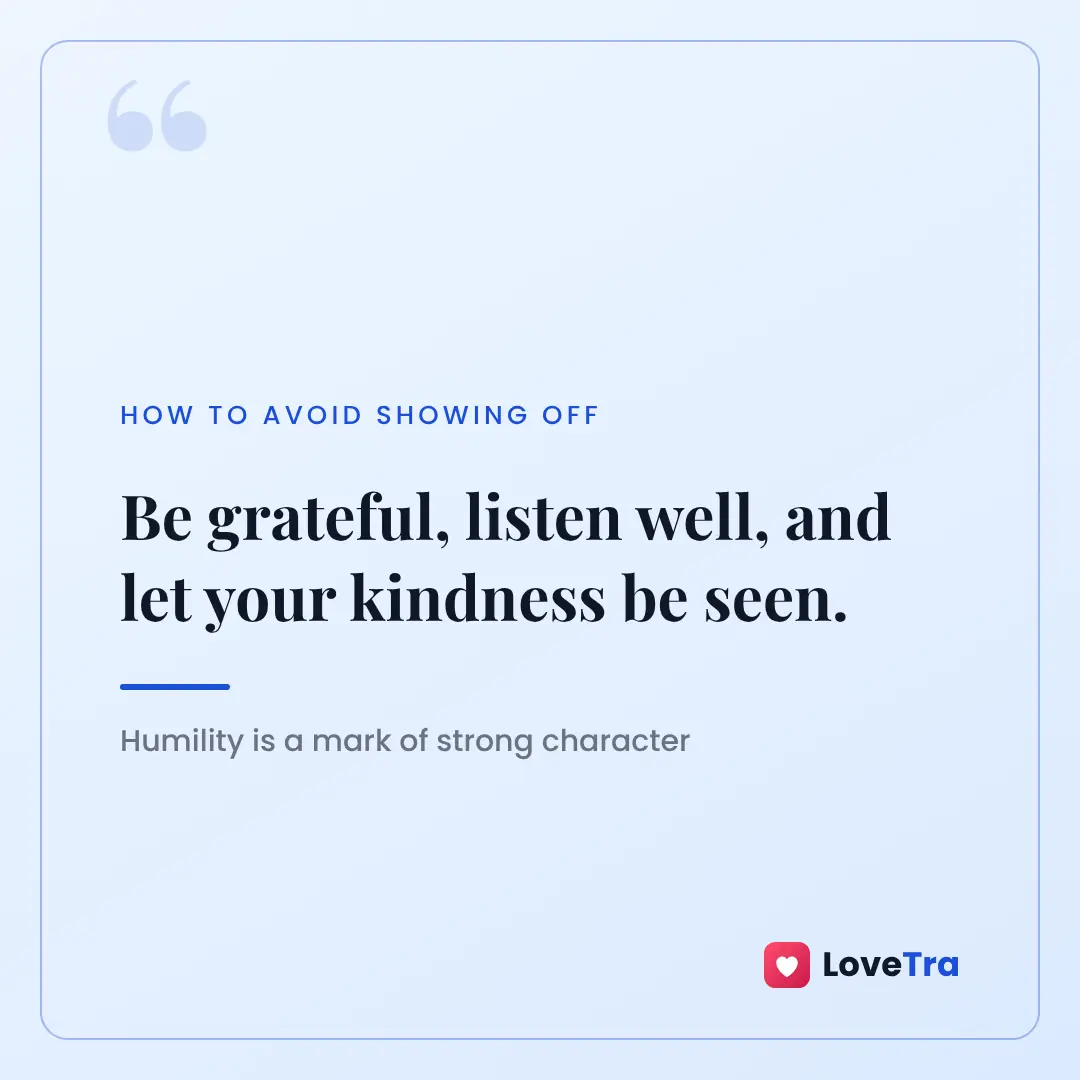
Humility is a mark of strong character. Read more in how to be a good example, how to be a good person, how to be considerate and how to have good manners.
Frequently asked questions
Is it wrong to feel proud of an achievement?
No. Feeling happy about honest effort is natural. The key is to share it with gratitude and without comparing yourself to others.
How do I stop bragging when I get nervous?
Slow down, ask questions about the other person and focus on listening. Nervous bragging usually fades as you become comfortable in company.
How can I tell if I am showing off?
Ask whether your purpose is to connect or to impress. If you feel a need for people to notice and admire you, it is a sign to pause.
Why does showing off bother people?
It can make them feel less valued, and it often seems insincere. People feel closer to those who are sincere and caring.
Can showing off be a sign of insecurity?
Often, yes. The remedy is gratitude, self-acceptance and focusing on what you can give rather than what you can display.
Quiet character speaks the loudest
Avoiding showing off does not make you smaller; it makes your character larger. Be grateful, listen well, do good quietly and let your kindness be seen in your actions. The respect you earn this way is real and lasting.