
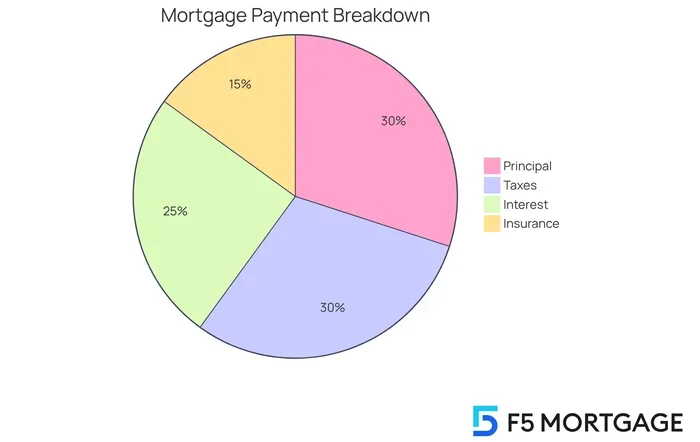
How much of mortgage payment is interest depends on your loan size, rate, and term. Early on, most of your payment covers interest, not the balance. This guide breaks it down clearly so you can plan smarter and save money over time.
Buying a home is exciting, but the numbers can feel confusing. You sign the papers, get the keys, and then see your first statement. Suddenly, you wonder where all that money went. A big chunk usually goes to interest, especially at the start. If you have ever asked how much of mortgage payment is interest, you are not alone. This is one of the most common questions new homeowners ask.
The good news is that the math is simpler than it seems. Your payment is split between two main parts. One part lowers your loan balance. The other part pays the lender for borrowing the money. In the beginning, the interest part is larger. Over time, that changes. This guide will walk you through the basics in plain language. You will learn what drives the split, how to read your statement, and what you can do to pay less over the long run.
Key Takeaways
- Early payments are interest-heavy: In the first years, most of your monthly payment goes to interest, not principal.
- Amortization changes the split over time: As you pay down the balance, interest drops and more goes toward the loan itself.
- Rate and term matter a lot: A higher rate or longer term means more interest paid across the life of the loan.
- Extra payments help: Paying a little extra each month can cut interest and shorten your payoff timeline.
- Refinancing can lower costs: A lower rate or shorter term may reduce total interest, but always check fees first.
- Use calculators for clarity: A mortgage breakdown tool shows exactly how much of mortgage payment is interest each month.
- Watch the full cost: Taxes, insurance, and fees add to your payment, but interest is based on your loan amount and rate.
📑 Table of Contents
- What Drives How Much Of Mortgage Payment Is Interest
- How Amortization Changes the Split Over Time
- Simple Example: A 30-Year Loan at a Fixed Rate
- Ways to Reduce the Interest You Pay
- How to Read Your Statement and Track the Split
- Expert Insights on How Much Of Mortgage Payment Is Interest
- Key Takeaways on Managing Interest Costs
What Drives How Much Of Mortgage Payment Is Interest
Several factors shape the split between interest and principal. The biggest ones are your loan amount, your interest rate, and the length of your loan. A larger loan means more interest at the start. A higher rate also raises the cost of borrowing. A longer term spreads payments out, but it usually means more interest paid overall.
Your payment schedule also matters. Most home loans use a fixed schedule called amortization. This schedule is designed so your payment stays the same each month. Because the balance slowly drops, the interest portion shrinks over time. That means more of your payment goes toward the loan itself as the years pass. If you want a clear picture of how much of mortgage payment is interest in your own case, start with these three inputs.
Loan Amount
The more you borrow, the more interest you pay each month. Even a small rate on a large balance adds up fast. This is why a bigger down payment can help. It lowers the loan size and reduces the interest charged from day one.
Interest Rate
Your rate is the cost of borrowing money. A difference of even a small fraction can change your total cost a lot. Lower rates mean less interest in each payment. Higher rates push more of your payment toward interest, especially in the early years.
Loan Term
The term is how long you have to repay the loan. A longer term lowers the monthly payment, but it usually increases total interest. A shorter term raises the monthly payment, yet it cuts the total interest you pay. This trade-off is key when you ask how much of mortgage payment is interest over the full life of the loan.
How Amortization Changes the Split Over Time
Amortization is the plan that sets your monthly payment. It keeps the payment steady while the balance slowly drops. At the start, your balance is high, so the interest charge is high too. That leaves less money to reduce the loan. As the balance falls, the interest charge falls as well. Then more of your payment can go to the principal.
This shift is normal and expected. It does not mean your payment changed. It means the ratio changed. In year one, interest may take a large share. By year ten, the share may be much smaller. By the end of the term, most of the payment goes to the balance. If you want to know how much of mortgage payment is interest in any given month, look at your amortization schedule. It shows the exact split for every payment.
Why the First Years Feel Heavy
The early years can feel frustrating. You make payments for a long time, yet the balance seems slow to move. That happens because interest is front-loaded. The lender charges interest on the remaining balance each month. When the balance is largest, the interest is largest. This is the nature of a standard fixed payment plan.
The Turning Point
There is a point where the balance drops enough that principal starts to catch up. After that, the loan pays down faster. The exact timing depends on your rate and term. With a shorter term, this shift comes sooner. With a longer term, it takes more time. Either way, the trend is the same. Interest falls, and principal grows over the life of the loan.
Simple Example: A 30-Year Loan at a Fixed Rate
Let’s keep the math easy. Imagine a loan with a fixed rate and a 30-year term. In the first payment, a large share goes to interest. The rest lowers the balance a little. Fast forward to the middle of the loan. The balance is much lower, so the interest charge is smaller. Now a bigger share of the payment reduces the loan. Near the end, most of the payment goes to the balance.
This example shows the basic pattern. The payment stays the same, but the split changes. If you are trying to figure out how much of mortgage payment is interest in your own loan, this pattern is your guide. The exact numbers will differ, but the direction is the same. Interest starts high and slowly drops as the balance falls.
What This Means for Your Budget
Knowing this pattern helps you plan better. You can expect higher interest costs early on. You can also see why extra payments matter. A small extra payment early can reduce the balance faster. That lowers future interest charges. Over time, this can save a meaningful amount. It also helps you build equity sooner.
Ways to Reduce the Interest You Pay
You cannot change the past, but you can shape the future. There are several practical ways to lower the total interest on a home loan. Some steps are small and easy. Others take more planning. The best choice depends on your goals, your cash flow, and your timeline.
Make Extra Payments
Even a little extra each month can help. Put the extra amount toward the principal. This lowers the balance faster. A lower balance means less interest next month. Over time, this snowball effect can shorten your loan and reduce total interest. If you use this strategy, be sure the lender applies the extra funds to the principal.
Refinance to a Lower Rate
If rates drop, refinancing may help. A lower rate can reduce the interest portion of each payment. It can also lower the total cost over the life of the loan. But refinancing is not free. There are closing costs and fees. Always compare the savings to the costs. If you plan to stay in the home long enough, the math may work in your favor.
Choose a Shorter Term
A shorter term usually means higher monthly payments, but less interest overall. If your budget can handle it, this can be a smart move. You pay off the loan faster and save on interest. This is one of the clearest ways to change how much of mortgage payment is interest across the full term.
Avoid Unnecessary Delays
Some loans offer grace periods or flexible dates. Still, paying on time and avoiding delays keeps the schedule on track. Late fees do not help your bottom line. A steady payment habit also protects your credit, which matters for future borrowing costs.
How to Read Your Statement and Track the Split
Your monthly statement usually shows the full payment and the breakdown. Look for lines that show principal and interest. Some statements also list escrow for taxes and insurance. Those parts are separate from the loan itself. For this topic, focus on the principal and interest lines. That is where you see how much of mortgage payment is interest each month.
If your statement is unclear, ask your servicer for an amortization schedule. This document shows the split for every payment. It is a useful tool for planning. You can also use a simple online calculator. Enter your loan amount, rate, and term. The tool will show the monthly split and the total interest over the life of the loan.
Quick Tips for Tracking
- Check the principal and interest lines each month.
- Compare the interest share over time to see the trend.
- Use an amortization schedule to plan extra payments.
- Confirm that any extra funds go to the principal.
- Review your rate and term if you consider refinancing.
Common Mistakes to Avoid
- Assuming the payment split stays the same from month to month.
- Sending extra money without marking it for the principal.
- Ignoring closing costs when thinking about refinancing.
- Forgetting that taxes and insurance are separate from interest.
- Choosing a longer term without checking the total interest cost.
Expert Insights on How Much Of Mortgage Payment Is Interest
Financial professionals often suggest looking at the full picture, not just the monthly payment. The payment is important, but the total cost matters too. A lower monthly payment can feel easier, yet it may raise the total interest. A higher monthly payment can feel tighter, yet it may save a lot over time. The right choice depends on your income, your savings, and your goals.
Experts also note that consistency beats perfection. You do not need a huge extra payment to make a difference. Small, steady extra payments can still cut interest and shorten the loan. The key is to make sure the money goes to the balance. If you keep this up, you will see the interest share drop faster than the standard schedule predicts.
Another useful insight is to think in terms of trade-offs. A shorter term saves interest but raises the monthly payment. A longer term lowers the monthly payment but adds interest. A lower rate helps both the monthly payment and the total cost, if you can get it. When you weigh these choices, you get a clearer answer to how much of mortgage payment is interest and what you can do about it.
Key Takeaways on Managing Interest Costs
Understanding the split helps you make better choices. The early years are interest-heavy, but that changes with time. Your rate, term, and loan size set the pace. Extra payments and smart refinancing can reduce the total cost. Reading your statement and using an amortization schedule keeps you informed. With a clear plan, you can manage the interest and build equity with confidence.
If you are still wondering how much of mortgage payment is interest in your own case, start with your loan details. Plug them into a calculator. Look at the first payment, the middle, and the final years. This simple exercise shows the full picture. Then choose one action you can take this month. Even a small step can move you in the right direction.
Frequently Asked Questions
What part of my payment is interest?
In the beginning, a large share of your payment usually goes to interest. The exact amount depends on your loan size, rate, and term. Over time, the interest share drops and more goes to the balance.
Why does interest take so much at the start?
Interest is charged on the remaining balance each month. Early on, the balance is highest, so the interest charge is highest too. As you pay down the loan, the interest portion falls.
Does a longer term always mean more interest?
Usually, yes. A longer term lowers the monthly payment, but it often raises the total interest paid. A shorter term does the opposite. The best choice depends on your budget and goals.
Can extra payments really reduce interest?
Yes. Extra payments lower the balance faster, which reduces future interest charges. Over time, this can shorten the loan and save money. Just make sure the extra funds are applied to the principal.
How do I find the exact split for my loan?
Check your monthly statement for the principal and interest lines. You can also request an amortization schedule from your servicer. A simple calculator can show the split for any month.
Does refinancing always lower interest costs?
Not always. Refinancing can help if you get a lower rate or shorter term, but closing costs matter too. Compare the savings to the fees and think about how long you will stay in the home.
