

How long after closing is mortgage paid off depends on your loan terms, payment schedule, and extra contributions. Most homeowners pay off their mortgage over 15 to 30 years, but strategic extra payments can shorten this timeline significantly. Understanding your amortization schedule and communicating with your lender ensures a smooth payoff process.
Buying a home is one of the biggest financial steps you will ever take. Once you sign the final papers and hand over the down payment, you might wonder how long after closing is mortgage paid off. The answer is not a single date. It depends on your loan structure, your payment habits, and how you manage extra contributions over time.
Many first-time buyers expect the mortgage to disappear quickly. In reality, most home loans stretch across decades. That long timeline is normal. It also gives you room to plan, save, and pay strategically. If you understand the process early, you can make smarter choices and potentially clear the balance years ahead of schedule.
This guide breaks down the payoff timeline in plain language. You will learn how amortization works, what affects your payoff date, and which steps help you reach debt-free homeownership faster. Let us start with the basics.
Key Takeaways
- Primary keyword focus: how long after closing is mortgage paid off varies by loan type, term length, and payment habits.
- Amortization matters: Early payments cover more interest, slowing principal reduction initially.
- Extra payments accelerate payoff: Even small additional amounts can save years and thousands in interest.
- Lender communication is critical: Confirm payoff amounts, request lien releases, and avoid processing delays.
- Tax and insurance considerations: Escrow accounts may require adjustments once the loan is fully paid.
- Document everything: Keep records of payments, payoff statements, and confirmation of lien release.
- Refinancing or recasting options: These strategies can alter your payoff timeline and monthly obligations.
📑 Table of Contents
- Understanding how long after closing is mortgage paid off
- What changes the answer to how long after closing is mortgage paid off
- How to pay off your mortgage faster without stress
- The final payoff process and what happens after
- Smart considerations before you pay off your mortgage early
- Key takeaways for your mortgage payoff journey
Understanding how long after closing is mortgage paid off
When you close on a home, your lender sets up a payment schedule that spreads your balance over the full loan term. A 30-year mortgage, for example, is designed to be paid over 360 months. That schedule is called amortization. It divides each payment between interest and principal. In the early years, most of your money goes toward interest. Later, more of it reduces the balance.
So, how long after closing is mortgage paid off on a standard schedule? If you make every payment on time and never add extra amounts, the payoff date matches the end of your term. A 15-year loan ends in 15 years. A 30-year loan ends in 30 years. The closing date is just the starting line. Your payoff date is the finish line.
Several factors can shift that finish line. Your interest rate, loan type, payment frequency, and extra contributions all play a role. Even small changes can move the date forward by months or years. The key is knowing where you stand and planning with intention.
How amortization shapes your payoff timeline
Amortization can feel confusing at first. Think of it as a slow shift in where your money goes. At the beginning, the loan balance is high, so interest charges are larger. As the balance drops, interest shrinks, and more of your payment attacks the principal. This is why early extra payments have such a strong impact. They reduce the balance sooner, which lowers future interest charges.
If you want a clearer picture, ask your lender for an amortization schedule. This document shows each payment, the interest portion, the principal portion, and the remaining balance. It also reveals your exact payoff date if you stick to the original plan. Many borrowers are surprised by how much interest accumulates in the first half of the loan.
Quick Tip: Review your amortization schedule once a year. Small adjustments in your budget can create big time savings over the life of the loan.
Common loan terms and typical payoff windows
Loan terms vary, and each one changes the answer to how long after closing is mortgage paid off. Here are the most common structures:
- 30-year fixed: Predictable payments, slower equity build, longer payoff window.
- 15-year fixed: Higher monthly payments, faster equity build, shorter payoff window.
- 20-year fixed: A middle ground with a balance of affordability and speed.
- Adjustable-rate mortgages: Payments may change over time, which can affect your ability to pay extra consistently.
- Interest-only periods: These delay principal reduction and extend the time needed to fully pay off the loan.
Your choice matters because it affects both monthly cash flow and total interest costs. A shorter term usually means less interest paid overall. A longer term usually means lower monthly payments, but more interest over time. If flexibility matters most, a longer term with voluntary extra payments can give you the best of both worlds.
What changes the answer to how long after closing is mortgage paid off
The scheduled payoff date is only the starting point. Your real timeline can be shorter, and sometimes longer, depending on how you manage the loan. The most important factors are extra payments, interest rate changes, refinancing decisions, and payment consistency.
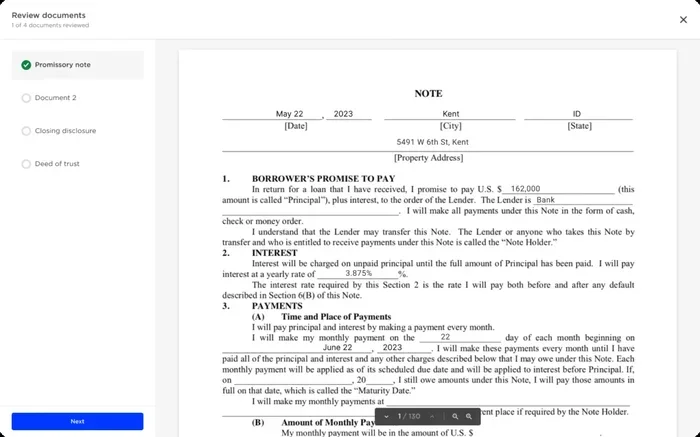
Visual guide about Mortgage closing signing documents
Image source: blend.com
Extra payments are the biggest lever. Even one additional payment per year can trim months or years off a 30-year mortgage. The reason is simple. Extra money applied to principal lowers the balance immediately. Lower balance means less interest next month. That creates a compounding effect over time.
Interest rates also matter. If your rate is high, more of each payment covers interest. If your rate is low, more goes toward principal sooner. That is why refinancing can sometimes help, especially if you move from a higher rate to a lower one and keep the same payment amount.
Extra payments and their real impact
Not all extra payments are treated the same. Some borrowers send additional money without specifying how it should be used. In some cases, the lender may hold it as a credit for future payments instead of applying it to principal. That does not help you pay off the loan faster. Always mark extra payments clearly and confirm they reduce principal.
Here is a simple example. Imagine a $250,000 mortgage at a fixed rate with 25 years left on the term. If you add one extra monthly payment each year, you could shorten the loan by several years and save a meaningful amount in interest. The exact savings depend on your rate and remaining balance, but the principle stays the same: principal reduction accelerates payoff.
Common Mistake: Sending extra money without instructions. Always write “apply to principal” and verify the posting with your lender.
Refinancing, recasting, and payoff timing
Refinancing replaces your current loan with a new one. It can lower your rate, change your term, or both. A lower rate may reduce interest costs and help you pay off the balance faster if you keep payments steady. A shorter term can also speed things up, but it usually raises the monthly payment.
Recasting is different. It allows you to make a lump-sum payment and then have the lender recalculate your monthly payment based on the new balance. This does not always shorten the term, but it can reduce your monthly obligation. That frees up cash for other goals or for additional principal payments later.
Before you refinance, compare the closing costs with the potential savings. A new loan may extend your payoff timeline if you reset the clock. If your goal is to answer how long after closing is mortgage paid off with a faster date, make sure any new loan supports that goal instead of delaying it.
How to pay off your mortgage faster without stress
Paying off a mortgage early does not require extreme sacrifice. It works best when you build a plan that fits your budget and lifestyle. The goal is consistency, not perfection. Small, repeatable actions often beat occasional big efforts.

Visual guide about Mortgage closing signing documents
Image source: proplogix.com
Start by choosing a strategy that feels realistic. Some people prefer one extra payment per year. Others add a small fixed amount to every monthly payment. Some use windfalls like bonuses, tax refunds, or gifts to reduce principal. Any of these can work if you keep the process simple and sustainable.
Simple strategies that accelerate payoff
Here are practical methods that many homeowners use successfully:
- Round up payments: If your payment is $1,487, pay $1,500. The extra bit adds up over time.
- Biweekly payments: Splitting your monthly payment in half and paying every two weeks creates 26 half-payments, which equals one extra full payment each year.
- Dedicated principal payments: Set aside a separate amount each month and apply it directly to principal.
- Use windfalls wisely: Direct bonuses, refunds, or cash gifts toward the loan balance.
- Keep payments steady after rate drops: If your payment decreases due to refinancing or recasting, continue paying the original amount if you can.
The best strategy is the one you can maintain. If you choose a plan that feels too tight, you may give up quickly. If you choose one that is too loose, progress may feel slow. Aim for a middle path that keeps you motivated.
Expert Insight: Consistency matters more than size. A modest extra payment every month often outperforms a large one-time payment that never repeats.
Protecting your progress with an emergency fund
Paying down a mortgage is smart, but not if it leaves you vulnerable. Before you send every spare dollar to the lender, make sure you have a basic safety net. An emergency fund helps you handle job changes, repairs, or medical costs without missing mortgage payments.
A good rule is to keep liquid savings before accelerating debt payoff. Once you have a cushion, you can focus more aggressively on the loan. This balance protects your home and your peace of mind. It also helps you stay on track if unexpected expenses appear.
The final payoff process and what happens after
When your balance gets close to zero, the process changes. You do not simply stop paying and assume the loan is finished. You need a payoff statement, a clear closing date, and confirmation that the lien on your property is released. This part is important because small errors can create delays or confusion.

Visual guide about Mortgage closing signing documents
Image source: statefarm.com
A payoff amount is usually not the same as your current balance. It often includes interest through the intended payoff date and possibly minor fees. If you plan to pay off the loan with a lump sum, request a written payoff quote from your lender. Make sure you understand how long that quote remains valid.
Requesting a payoff statement correctly
Contact your loan servicer and ask for a payoff statement. Specify the date you plan to send the final payment. The statement should show the exact amount needed to clear the balance on that date. Keep this information in writing. Verbal estimates are not reliable enough for a final payment.
If you are paying off the loan gradually through regular payments, your final payment may be smaller than your usual amount. That is because the balance will be nearly gone, and interest will be minimal. Still, confirm the final figure before sending money. This avoids overpayment or underpayment issues.
Confirming lien release and updating records
After the lender receives your final payment, the loan should be satisfied and the lien released. You should receive confirmation that the mortgage is closed. Keep all payoff documents, statements, and release records in a safe place. These papers matter if questions come up later.
You may also want to check your credit report after payoff. The account should show as closed or paid. If something looks wrong, address it quickly. Accurate records help protect your financial history and make future planning easier.
Quick Tip: Save digital and paper copies of your final payoff statement, lien release, and any correspondence with the lender.
Smart considerations before you pay off your mortgage early
Paying off a mortgage can feel amazing, but it is not always the best use of every dollar. Sometimes your money may earn more elsewhere. Sometimes you may want to keep liquidity for other goals. The right choice depends on your full financial picture, not just the loan itself.
Think about your interest rate, your other debts, your retirement savings, and your long-term plans. If your mortgage rate is low, extra payments may still make sense for peace of mind, but they may not be the highest-return option. If you have higher-interest debt, that debt may deserve priority first.
Comparing mortgage payoff with other financial goals
It helps to compare options side by side. Use a simple view to decide where your money should go first.
- High-interest debt: Credit cards or personal loans often cost more than a mortgage, so they may need attention first.
- Emergency savings: A solid cushion reduces stress and protects your home if income changes.
- Retirement contributions: Tax-advantaged accounts can offer long-term growth and future security.
- Home maintenance: Keeping the property in good shape protects your investment after the loan ends.
- Other goals: Education costs, business plans, or travel may compete for the same dollars.
This is not about choosing one path forever. It is about ordering your priorities wisely. You can still pay extra on the mortgage while also saving for other needs. A balanced plan usually works better than an all-or-nothing approach.
Common Mistake: Draining all savings to clear the mortgage, then facing stress when an unexpected expense appears.
When keeping the mortgage makes sense
There are times when keeping a low-rate mortgage is reasonable. If your payment is comfortable and your money can work harder in other areas, you may not need to rush. A mortgage can also offer predictability, since fixed payments do not rise with market swings the way some other costs might.
Some homeowners value being debt-free above all else. Others value flexibility and opportunity more. Neither view is wrong. What matters is that your decision is intentional. If you know why you are paying off the loan, you are more likely to stay committed and avoid regret later.
Key takeaways for your mortgage payoff journey
Your mortgage payoff timeline is not fixed in stone. It responds to your choices, your budget, and your priorities. If you want a faster answer to how long after closing is mortgage paid off, focus on principal reduction, consistent payments, and clear communication with your lender.
Keep these points in mind as you move forward:
- Know your schedule: Understand your term, rate, and amortization before making extra payments.
- Apply extra funds strategically: Direct additional money to principal and confirm it is posted correctly.
- Protect your safety net: Maintain emergency savings before accelerating payoff aggressively.
- Check the final numbers: Request a written payoff statement before making a lump-sum payment.
- Verify the release: Confirm lien release and keep all payoff documents for your records.
- Balance competing goals: Compare mortgage payoff with other financial priorities before committing every dollar.
A mortgage is a long-term commitment, but it does not have to feel mysterious. With a clear plan, you can control the pace and make steady progress toward owning your home free and clear. The journey may take years, but each smart step brings you closer to the finish line.
Frequently Asked Questions
Does the mortgage payoff date start at closing?
No, closing is just the start of your loan. Your payoff date depends on your term length, interest rate, and payment habits, so the clock begins after closing, not at the moment you receive the keys.
Can I pay off my mortgage right after closing?
Yes, you can usually pay it off early, but you should request a payoff statement first. The final amount may include interest and fees, and you need to confirm how the lender wants the last payment handled.
How much faster can extra payments make the payoff?
It depends on your rate, balance, and how often you pay extra. Even one additional payment a year can shorten a 30-year loan by several years and reduce total interest significantly.
What happens to my escrow after the mortgage is paid off?
Once the loan is satisfied, the escrow account is typically closed and any remaining funds may be returned to you. Property taxes and insurance then become your direct responsibility instead of being collected with the mortgage payment.
Should I pay off my mortgage early or invest instead?
It depends on your interest rate, risk tolerance, and other goals. If your loan rate is low, investing may offer stronger long-term growth, but paying off the mortgage can provide peace of mind and reduce monthly obligations.
How do I know when my mortgage is fully paid off?
You should receive confirmation from your lender that the loan is satisfied and the lien is released. Keep the final statement and release documents, and check that your credit report reflects the paid status.