
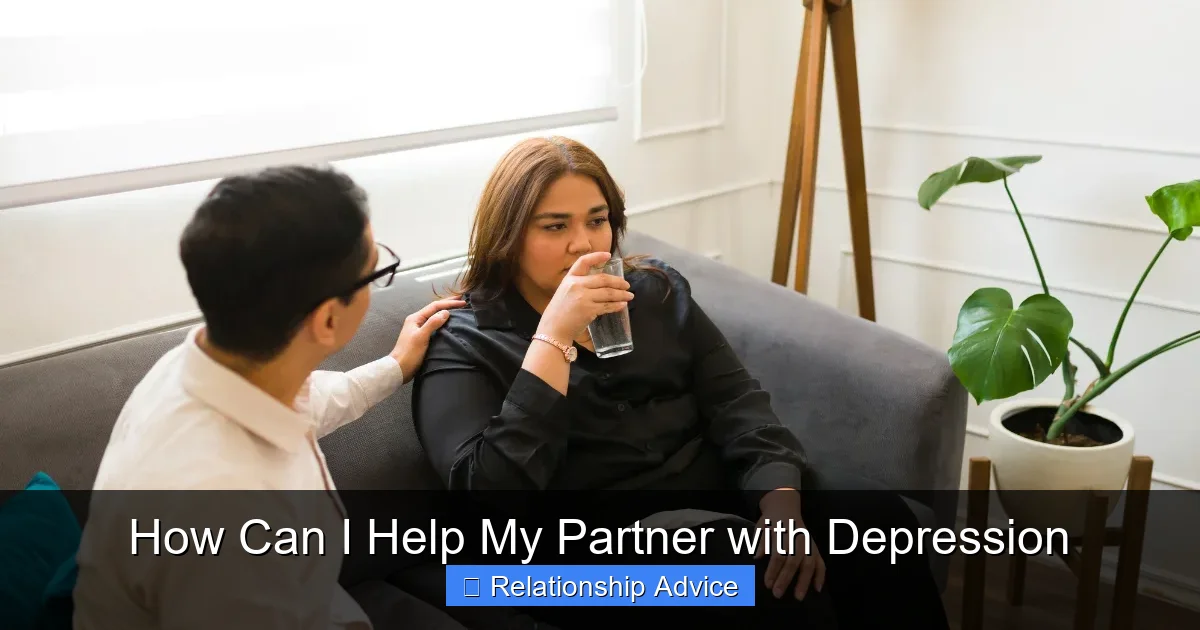
Supporting a partner with depression can feel overwhelming, but small, consistent actions make a big difference. Listen without judgment, encourage professional help, and prioritize self-care—both for them and yourself. Remember: you don’t have to fix everything; simply being present matters most.
When you discover your partner is struggling with depression, it can shift everything—your conversations, your plans, even your sense of safety in the relationship. You might notice they’re withdrawn, irritable, or distant, and suddenly the person you once knew feels unreachable. It’s natural to want to jump in and fix things, to say the right words that will snap them out of it. But depression isn’t something you can solve with pep talks or weekend getaways.
Instead, helping someone with depression means showing up with presence, patience, and a willingness to walk alongside them—even when progress feels invisible. This guide isn’t about becoming a therapist overnight (though encouraging therapy is key). It’s about how you, as a supportive partner, can create a safe emotional space where healing becomes possible. Whether you’re just starting to recognize the signs or have been navigating this journey for months, these insights will help you respond with compassion instead of confusion.
Depression affects more than mood—it alters sleep, appetite, energy levels, and even physical health. For many, daily tasks like showering, cooking, or leaving the house feel Herculean. As a partner, your role isn’t to carry their burden entirely, but to lighten it just enough so they remember they’re not alone. Think of it like walking through foggy weather: you can’t see far ahead, but holding their hand makes the path less terrifying.
One of the first steps is recognizing that depression is an illness, not a personal failing. When we assume someone should “just snap out of it,” we unintentionally blame them for their condition—which only deepens shame and isolation. Instead, approach your partner with curiosity and concern. Ask gently, “How are you really feeling?” rather than “Why aren’t you happier?” Small shifts in language open doors to deeper connection.
It’s also important to distinguish between sadness and clinical depression. Everyone feels down sometimes; what sets depression apart is its persistence and impact on functioning. If low mood lasts two weeks or longer, interferes with work or relationships, or includes thoughts of hopelessness, it’s worth taking seriously. While grief or life stress can cause temporary sadness, depression often requires professional intervention.
As you learn how to help your partner with depression, keep in mind that your own emotional needs matter too. Supporting someone through mental health struggles can be draining, especially if you’re picking up extra responsibilities without clear boundaries. That’s why self-care isn’t selfish—it’s necessary. When you recharge, you return with more patience, clarity, and capacity to be there.
Finally, remember that healing doesn’t happen overnight. There will be good days and bad days, moments of frustration, and times when your partner pushes you away—not because they don’t value you, but because depression clouds their ability to regulate emotions. Your steady presence during those tough days becomes the anchor that eventually helps them regain footing.
Key Takeaways
- Educate yourself: Understanding depression helps you respond with empathy, not frustration.
- Encourage professional support: Therapy or medication can be vital—offer gentle nudges toward treatment.
- Practice active listening: Let your partner share without interruption or unsolicited advice.
- Maintain routines together: Simple shared activities like walks or meals provide stability.
- Take care of yourself: Your well-being ensures you can show up with patience and love.
- Avoid minimizing their pain: Phrases like “just cheer up” invalidate their experience.
- Be patient: Recovery isn’t linear—celebrate small wins and stay committed.
📑 Table of Contents
- Understanding Depression: What You’re Really Facing
- How to Support Without Enabling
- The Power of Listening: How to Be a Safe Space
- Encouraging Professional Help: The Role of Therapy and Medication
- Caring for Yourself: Why Your Well-Being Matters
- Rebuilding Connection: Small Steps Toward Closeness
- When to Seek Immediate Help: Crisis Response
- Long-Term Strategies: Building a Depression-Resilient Relationship
- Conclusion: Love Is a Verb, Not a Condition
Understanding Depression: What You’re Really Facing
Depression isn’t just “feeling sad.” It’s a complex mental health disorder involving chemical imbalances, genetic predispositions, trauma, chronic stress, and environmental factors. According to the American Psychological Association, major depressive disorder affects over 280 million people worldwide. In relationships, it often manifests as emotional numbness, fatigue, irritability, or withdrawal—not because your partner is rejecting you, but because their brain is overwhelmed.
Common symptoms include:
– Persistent low mood or emptiness
– Loss of interest in activities once enjoyed
– Changes in sleep (too much or too little)
– Unexplained aches and pains
– Difficulty concentrating or making decisions
– Feelings of worthlessness or excessive guilt
– Recurrent thoughts of death or suicide
If you notice several of these signs lasting more than two weeks, it’s time to take action. Note that men often express depression differently—through anger, substance use, or risk-taking—while women may internalize it as sadness or anxiety. LGBTQ+ individuals face higher rates due to minority stress, and older adults might mask depression under complaints of memory loss or physical pain.
It’s crucial to understand that depression isn’t caused by laziness, weakness, or lack of faith. Even highly motivated people can develop it after job loss, divorce, illness, or prolonged isolation. Brain imaging studies show actual structural differences in depressed individuals’ prefrontal cortex and amygdala, proving it’s a legitimate medical condition—not a character flaw.
When you educate yourself about depression, you stop blaming your partner and start supporting them. For example, instead of thinking “Why won’t they try harder?” ask “What does my partner need from me today?” This mindset shift transforms your response from reactive to responsive.
The Difference Between Sadness and Clinical Depression
Everyone experiences sadness—a normal human emotion tied to loss or disappointment. Depression, however, is persistent, disabling, and disproportionate to the triggering event. Imagine feeling sad after a breakup for a few days versus feeling hopeless, unable to get out of bed, and believing life has no meaning for six straight weeks. That’s clinical depression.
Key distinctions include:
– Duration: Sadness fades; depression lingers
– Intensity: Sadness is manageable; depression feels crushing
– Functionality: Sadness allows normal life; depression impairs it
– Self-perception: Sad people still feel capable; depressed people feel broken
If your partner mentions suicidal thoughts, seek immediate help. Call 988 (Suicide & Crisis Lifeline) or go to the nearest ER. Never leave them alone in crisis.
How to Support Without Enabling

Visual guide about How Can I Help My Partner with Depression
Image source: realestlove.com
Supporting a depressed partner requires balance—you want to help, but not become their crutch or caretaker at the expense of your own well-being. Healthy support means encouraging independence while offering tangible assistance when needed.
Start by having an honest conversation: “I’ve noticed you’ve seemed really down lately, and I care about you. Would you be open to talking about what’s going on?” Avoid accusatory tones like “You never talk to me anymore!” which trigger defensiveness. Instead, use “I” statements: “I miss spending time with you” or “I worry when you cancel plans again.”
Practical support looks like:
– Grocery shopping when they’re too fatigued
– Driving them to therapy appointments
– Preparing simple meals
– Doing household chores without being asked
– Sending encouraging texts: “Thinking of you today”
But avoid helicopter parenting—over-helping can reinforce helplessness. Instead, ask permission: “Can I pick up milk for you?” or “Would you like company at the doctor’s office?” This respects their autonomy while showing you’re available.
Also, resist the urge to “fix” everything. Depression thrives in silence and isolation. Your role is to listen, validate, and remind them they matter—not to solve their problems. As Brené Brown says, “Vulnerability is not winning or losing; it’s having the courage to show up and be seen when we have no control over the outcome.”
Internal Link Example: Just as understanding emotional dynamics helps in any relationship challenge, learning how to deal with passive-aggressive behavior can prevent misunderstandings when depression causes withdrawal.
Setting Boundaries That Protect Both of You
While support is essential, codependency harms everyone involved. If your partner relies solely on you for motivation, you’ll burn out. Set clear boundaries early:
– Limit crisis calls to reasonable hours
– Encourage them to contact their therapist instead of you at night
– Say no gracefully: “I’d love to help, but I’m not equipped for this right now”
– Prioritize date nights where both partners engage fully
Boundaries aren’t rejection—they’re love in action. They teach your partner that support comes from multiple sources, reducing pressure on you while building their resilience.
The Power of Listening: How to Be a Safe Space
Active listening is one of the most powerful tools you have. Most people with depression feel misunderstood—their pain minimized by well-meaning but unhelpful advice like “Just focus on the positive!” or “Have you tried yoga?” These responses, while kind, dismiss their suffering.
True listening means:
– Giving full attention (put phone away)
– Nodding, maintaining eye contact
– Reflecting back what you hear: “So you’re saying you feel overwhelmed because nothing feels achievable?”
– Asking open-ended questions: “What’s hardest about today?”
– Avoiding solutions unless asked: “Want to brainstorm ideas together?”
When your partner shares dark thoughts, don’t panic or promise secrecy. Say calmly, “Thank you for trusting me. Can we call your therapist right now?” Then do it. Your calm demeanor reduces their anxiety about burdening you.
Remember, you don’t need to know what to say—sometimes silence speaks louder. Sit with them in discomfort, even if they cry or shut down. Their presence near you signals hope.
Words That Heal vs. Words That Hurt
Certain phrases accidentally reinforce isolation. Replace these toxic gems with empathetic alternatives:
❌ “Stop being so negative!” → ✅ “I notice you’ve been saying things feel hopeless. Want to talk about it?”
❌ “Others have it worse!” → ✅ “Your pain matters, even if others suffer too.”
❌ “You’re being dramatic.” → ✅ “This must feel incredibly real to you.”
❌ “Let’s go party and forget about it!” → ✅ “I’d love to spend quality time with you, whatever feels comfortable.”
Research shows validation—not fixing—builds trust. A study in *Journal of Marital and Family Therapy* found partners who validated emotions reported higher relationship satisfaction during depressive episodes.
Encouraging Professional Help: The Role of Therapy and Medication
Many people believe depression is something you overcome through willpower. In reality, like diabetes or hypertension, it often requires medical management. Therapy (especially CBT or interpersonal therapy) teaches coping skills; antidepressants regulate brain chemistry. Neither replaces your support—but they amplify its effectiveness.
Approaching treatment gently avoids stigma. Say: “I admire how brave you are for seeking help. Would you like me to find therapists near us?” Offer to research options together. If they resist medication, discuss concerns openly. Side effects are common initially, but benefits often outweigh risks.
For severe cases, hospitalization may be necessary. Don’t hesitate to intervene if suicide risk emerges. Keep emergency numbers accessible: 988, local crisis line, therapist’s direct number.
Internal Link Example: Just as addressing fault-finding patterns improves communication, learning how to deal with an insecure partner helps navigate fears that often coexist with depression.
Supporting Treatment Adherence
Depression treatment requires consistency. Help your partner by:
– Setting pill alarms together
– Attending initial therapy sessions for moral support
– Celebrating milestones: “You made it through three sessions! That’s huge.”
– Reminding them gently when doses are missed: “Ready for your meds now?”
But never nag or guilt-trip. Internalize setbacks as part of recovery—not failure. Progress is nonlinear.
Caring for Yourself: Why Your Well-Being Matters
You can’t pour from an empty cup. Burnout leads to resentment, which hurts your partner more. Schedule regular “me time”—whether it’s a weekly massage, solo hike, or video call with friends. Recharge so you can show up with joy, not exhaustion.
Seek your own support too:
– Join a caregiver support group
– Talk to a therapist about your feelings
– Practice mindfulness or meditation
Set realistic expectations. You won’t “cure” depression—but your love creates conditions where healing flourishes. Like tending a garden, nurturing takes daily effort, but small acts yield growth.
Internal Link Example: Understanding how cell phones destroy marriages highlights how digital distractions can worsen emotional disconnection during depression.
Recognizing Warning Signs of Burnout
Watch for these red flags:
– Constant irritation over minor issues
– Feeling guilty for needing space
– Neglecting your own hobbies/health
– Thinking “Why bother?” when your partner withdraws
If present, pause and refocus on self-care. Your mental health directly impacts theirs.
Rebuilding Connection: Small Steps Toward Closeness
Depression creates emotional distance. Rebuilding intimacy starts with micro-moments:
– Share a silly meme over text
– Hug without expectation of reciprocation
– Cook their favorite meal unprompted
– Watch a movie without commenting on plot
Physical touch (if welcomed) releases oxytocin—the bonding hormone. Even holding hands during walks builds neural pathways of safety.
Plan low-pressure activities:
– Walk the dog together
– Bake cookies while listening to music
– Visit a park (no agenda)
Avoid forcing affection. Let connection emerge organically. When your partner initiates, respond warmly: “I’m here for you.”
The Importance of Shared Joy
Depression dulls pleasure. Counteract this by intentionally seeking joy:
– Try new restaurants
– Attend free community events
– Revisit childhood games
Laughter truly is medicine. Watch comedy shows, play board games, or dance in the kitchen. Your enthusiasm can reignite their spark—even temporarily.
Remember, rebuilding isn’t about grand gestures. One shared laugh, one warm touch, one quiet dinner—these accumulate into emotional currency that rebuilds trust over time.
When to Seek Immediate Help: Crisis Response
Depression escalates unpredictably. Know when to act:
– Expressing specific suicide plans
– Giving away prized possessions
– Sudden calm after prolonged agitation
– Self-harm behaviors
Stay with them. Remove lethal items (knives, pills). Call 988 immediately. If unsafe, go to ER. Hospitalization isn’t failure—it’s lifesaving care.
After crisis, debrief gently: “I’m relieved you’re okay. Want to talk about what happened?” Normalize seeking help post-crisis.
Post-Crisis Recovery Tips
– Reinforce that help-seeking is strength
– Adjust treatment plan with therapist
– Create safety checklist (meds stored securely, etc.)
– Maintain routine to prevent relapse
Crisis resolution doesn’t erase underlying issues—but it buys time to heal.
Long-Term Strategies: Building a Depression-Resilient Relationship
Healing isn’t a sprint—it’s a marathon. Sustainable support includes:
– Regular couples counseling (even after improvement)
– Joint stress-reduction practices (yoga, nature walks)
– Open discussions about triggers/progress
– Celebrating non-clinical milestones (“You cleaned the kitchen!”)
Prevent relapse by spotting early warning signs: sleep changes, social withdrawal. Intervene early with gentle check-ins.
Internal Link Example: Learning how to choose a life partner according to biblical principles offers timeless wisdom on commitment during trials.
Creating a Mental Health Toolkit Together
Compile resources:
– Therapist contact info
– Calming playlist
– Emergency contacts
– Affirmations card: “I am worthy of love.”
Keep it visible. Revisit during tough days.
Conclusion: Love Is a Verb, Not a Condition
Helping your partner with depression isn’t about perfection—it’s about persistence. Some days will be hard; some days you’ll feel helpless. But your consistent presence whispers, “You matter.” And in silence, that whisper becomes a roar.
You don’t need to have all answers. Just be willing to sit beside them in the darkness, holding space until dawn breaks. True partnership isn’t avoiding storms—it’s learning to navigate them together.
And remember: when you show up for them, you’re modeling what healthy connection looks like. That ripples outward, inspiring hope beyond your relationship.
Internal Link Example: Just as understanding whether feelings can disappear helps manage attachment fears, knowing how to be vulnerable with a man strengthens emotional intimacy during recovery.
—
Frequently Asked Questions
How do I know if my partner has depression?
If your partner shows persistent sadness, loss of interest in activities, fatigue, or changes in sleep/appetite for over two weeks—and these affect daily life—it could be depression. Look for withdrawal, irritability, or hopelessness. Professional evaluation confirms diagnosis.
Should I push my partner to see a therapist?
Gently encourage therapy without pressure. Say, “I care about you and think talking to someone could help.” Offer to find providers together. If they refuse, focus on supportive listening while maintaining your own boundaries.
Can I “catch” depression from my partner?
No—depression isn’t contagious like a virus. However, living with someone in distress can increase your stress levels. Practice self-care to protect your mental health.
What if my partner says they don’t want help?
Respect their autonomy but stay connected. Say, “I’m here whenever you’re ready.” Meanwhile, build your own support network and consult a therapist about next steps.
How long does depression treatment take?
Therapy typically spans 12–20 weeks; medication effects vary. Recovery isn’t linear—expect ups/downs. Consistency matters more than speed.
Is it okay to take a break from supporting my partner?
Only if you’re burned out. Instead, seek respite through friends, hobbies, or therapy. Taking breaks isn’t abandonment—it’s self-preservation so you can return with renewed energy.
