
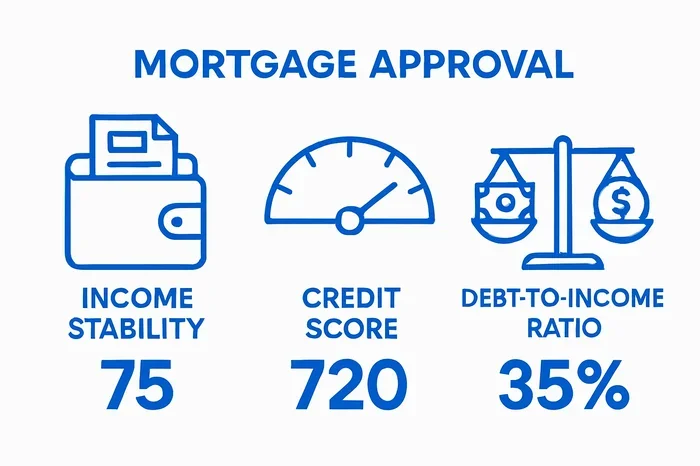
Does a mortgage preapproval affect credit score queries worry many homebuyers before they start shopping. The short answer is yes, but the impact is usually small and temporary. A single hard inquiry may drop your rating by a few points, and the mark fades quickly. Multiple applications within a short window often count as one, which helps protect your profile. This guide explains the process, the timeline, and simple steps to keep your score healthy.
Key Takeaways
- Hard inquiries cause a small dip: A mortgage preapproval usually lowers your score by a few points, not a large amount.
- Rate shopping windows help: Credit scoring models often treat multiple mortgage inquiries within a short period as a single check.
- The effect fades fast: The impact on your rating typically lasts only a few months, even though the inquiry stays on your report for two years.
- Soft checks do not hurt: A preliminary review without a full application usually does not affect your score.
- Timing matters: Applying for other credit right before or after a preapproval can add unnecessary pressure.
- Good habits matter most: On-time payments, low balances, and steady credit use outweigh a single inquiry.
- Ask about policies: Lenders may have different steps, so it helps to ask how they check your credit.
📑 Table of Contents
- Does A Mortgage Preapproval Affect Credit Score? The Short Answer
- How Credit Inquiries Work During Preapproval
- The Real Impact On Your Score
- Rate Shopping And Multiple Inquiries
- Smart Timing For Your Application
- Common Myths About Preapproval And Credit
- How To Protect Your Score While Shopping
- Expert Insights And Practical Perspective
- Final Thoughts On Preapproval And Your Credit
Does A Mortgage Preapproval Affect Credit Score? The Short Answer
Many people ask the same question when they start house hunting. Does a mortgage preapproval affect credit score results are often misunderstood, so let’s clear it up. A preapproval usually involves a hard inquiry, and a hard inquiry can lower your score by a small amount. The change is usually minor, and it often bounces back quickly. If you are careful about timing, you can limit the impact and still move forward with confidence.
A preapproval is more than a casual look. A lender checks your credit to estimate how much you may borrow. That check often leaves a mark on your report. The mark is normal, and it is not a sign of trouble. It simply shows that you applied for financing. Most buyers see a small dip, not a major drop. If your score is strong, the change is even less noticeable.
It helps to know the difference between a soft check and a hard check. A soft check happens when you review your own report or when a lender does a quick scan before a full application. That type of check usually does not affect your score. A hard check happens when you formally apply for credit. That is the type tied to a preapproval. This distinction matters because not every early step in the mortgage process creates a hard inquiry.
How Credit Inquiries Work During Preapproval
A preapproval starts with an application. You share basic details about your income, debts, and housing goals. The lender then reviews your credit file. If the lender performs a hard inquiry, the scoring model records it. The record shows that a company checked your credit for a lending decision. This is standard practice, and it is how most lenders assess risk.
The size of the impact depends on your overall credit profile. If you have a long history of on-time payments and low balances, a single inquiry usually causes a tiny change. If your file is thinner, the same inquiry may show a slightly larger shift. The reason is simple. Scoring models look at many factors, and one new inquiry is only one piece of the puzzle. Your payment history, credit use, and account age still carry more weight.
It also helps to understand that not every lender follows the exact same process. Some start with a soft review. Others move straight to a hard pull. Some may do both at different stages. If you are unsure, ask the lender how they check credit and when the hard inquiry happens. Clear questions now can prevent surprises later.
Soft Checks Versus Hard Checks
A soft check is a surface-level review. It may happen when you check your own score or when a lender does an early screen. Soft checks do not affect your rating. They are visible on your report in some cases, but they do not create a scoring penalty.
A hard check is deeper. It happens when you apply for a loan or card. The lender requests a full view of your credit file. That request can affect your score. The effect is usually small, but it is real. This is the type most people worry about when they ask whether a mortgage preapproval affects credit score.
When The Inquiry Shows Up
A hard inquiry usually appears quickly after the lender requests your file. You may see it on your report soon after the application. The record includes the date and the company name. It also shows that the check was for a mortgage-related decision. This information helps scoring models understand the context.
If you apply with more than one lender, you may see several inquiries. That can feel stressful, but the timing matters. Scoring models often treat multiple mortgage inquiries within a short window as one. This feature supports rate shopping. It allows you to compare offers without stacking penalty after penalty.
The Real Impact On Your Score
The real impact is usually modest. A single hard inquiry may reduce your score by a few points. In many cases, the change is temporary. Your score may recover in a few months as the inquiry becomes older. The record stays on your report longer, but its effect on your rating fades.
The bigger picture matters more. Your score reflects many habits and history points. Payment consistency, credit utilization, account mix, and length of history all play a role. One new inquiry rarely changes the full story. If your credit is already strong, the dip is often barely noticeable. If your score is near a threshold, even a small change can matter, so timing becomes important.
Why The Drop Is Usually Small
Scoring models are designed to avoid punishing shoppers too harshly. Mortgage inquiries are common, and many people compare lenders before choosing one. The models account for this behavior. They often group similar inquiries together when they happen close in time. That grouping limits the impact.
Your existing credit behavior still carries the most weight. A long streak of on-time payments matters a lot. Low balances relative to your limits also help. A new inquiry does not erase those strengths. It simply adds a small, temporary note to your file.
How Long The Effect Lasts
The score impact usually fades within a few months. The inquiry itself remains on your report for a longer period, often around two years. Even while it remains visible, its influence on your score declines over time. This is good news for buyers who want to move forward without long-term damage.
If you plan to apply for other credit soon, think about timing. A car loan, personal loan, or new card can add more hard inquiries. Stacking them close together may create a larger dip than a single mortgage check. Spacing things out can help you keep your score steadier.
Rate Shopping And Multiple Inquiries
Rate shopping is normal. You may want to compare interest rates, fees, and terms before you commit. That is smart. The good news is that credit scoring models generally recognize this behavior. If you submit several mortgage applications within a short window, they may count as one inquiry for scoring purposes.
The exact window can vary by model. Some treat inquiries within a short span as a single event. Others use a slightly different timeframe. The key idea is simple. If you are comparing lenders, try to keep the applications close together. That approach helps you shop without creating a long trail of separate hits.
How To Compare Lenders Wisely
Ask each lender what they need to give you a preapproval. Some may need a hard pull right away. Others may start with a softer review. Knowing this helps you plan. You can also ask whether they use a hard inquiry for the initial estimate or only later in the process.
Keep your documents ready. Income records, tax forms, bank statements, and debt details can speed up the review. When the process moves smoothly, you spend less time waiting and worrying. That makes the whole experience easier.
When Multiple Applications Make Sense
Multiple applications can make sense when you want the best rate or terms. They can also help if one lender denies the request or offers less than expected. In those cases, a second or third option may be useful. Just keep the timing tight and stay organized. That way, you can compare offers without adding unnecessary pressure to your score.
Smart Timing For Your Application
Timing can make a real difference. If you know you will apply for a mortgage soon, avoid opening new credit lines unless you need them. Try to keep balances low and payments on time. These habits support your score more than anything else. A preapproval is just one event in a much bigger picture.
If you are close to a score threshold, plan carefully. A small dip could matter if you are aiming for a specific rate or program. In that case, it may help to talk with a lender early. You can ask what score range they prefer and whether a soft review is available first. That can give you a clearer path before you commit to a hard pull.
What To Avoid Before Applying
Try not to open several new accounts in a short period. Each new account can add a hard inquiry and change your average account age. Both changes can affect your score. It is also wise to avoid large balance increases on existing cards. High utilization can reduce your score quickly.
Another thing to avoid is ignoring your credit report. Mistakes happen. A wrong balance or an account that does not belong to you can create problems. Checking your report before applying helps you catch issues early. That way, you can fix them before a lender reviews your file.
What To Do Instead
Focus on steady habits. Pay bills on time. Keep card balances manageable. Avoid unnecessary credit applications. If you are shopping for a mortgage, gather your paperwork and compare lenders in a compact timeframe. These steps help you move forward with less stress.
If you want a quick confidence check before you apply, review your own score first. That is a soft check, so it does not hurt. It gives you a baseline and helps you understand where you stand. You can also use that moment to spot anything unusual in your report.
Common Myths About Preapproval And Credit
There are several myths that create confusion. One common myth is that any mortgage-related check will destroy your score. That is not true. A single hard inquiry usually causes only a small change. Another myth is that every inquiry counts separately no matter when it happens. In reality, scoring models often group mortgage inquiries that happen close together.
Some people also believe that a preapproval permanently marks their credit. It does leave a record, but the record does not keep hurting your score for years. The impact fades. The inquiry remains visible for a while, but its effect on your rating declines. Knowing this can ease a lot of worry.
Myth: One Preapproval Will Ruin Your Score
This myth is too extreme. One preapproval is unlikely to ruin a solid score. The change is usually small. If your credit habits are strong, your score should remain healthy. The bigger risks often come from missed payments, high balances, or many new applications in a short time.
Myth: All Inquiries Are Treated The Same
Not all inquiries are alike. Mortgage inquiries are often handled with rate-shopping rules. Other types of credit may not get the same treatment. That is why it helps to understand the context. A mortgage preapproval is not the same as applying for several unrelated credit lines in one week.
How To Protect Your Score While Shopping
You can take simple steps to protect your score while you shop for a mortgage. First, ask lenders how they check credit. Second, keep your applications within a short window if you are comparing offers. Third, avoid new debt unless it is necessary. Fourth, check your own report before you apply. These habits help you stay in control.
It also helps to be prepared. Have your income details, account information, and recent statements ready. When the lender has what they need, the review can move faster. That saves time and reduces back-and-forth. A smoother process is less stressful for everyone.
Quick Tips For A Smoother Process
- Ask about the type of check before you submit personal details.
- Compare lenders in a short timeframe to reduce the chance of multiple separate impacts.
- Keep balances low on existing cards before and during the application period.
- Avoid new credit applications unless they are truly needed.
- Review your own report for errors before the lender checks it.
Common Mistakes To Avoid
- Applying for several unrelated credit lines right before a mortgage preapproval.
- Assuming every inquiry is permanent damage instead of a small, temporary mark.
- Waiting too long to compare lenders and spreading applications across many months.
- Ignoring your credit report and missing errors that could affect the review.
Expert Insights And Practical Perspective
Experts often say the same thing: a mortgage preapproval is a normal part of buying a home, and the credit impact is usually manageable. The key is to treat it as one step in a larger plan. Strong credit habits matter more than a single inquiry. A solid payment history, reasonable credit use, and careful timing usually matter far more than the preapproval check itself.
It also helps to think about your goals. If you are serious about buying soon, a preapproval can be useful. It shows sellers that you are ready to move forward. That can be helpful in a competitive market. The small score effect is often worth the benefit of being prepared. If you are still early in the process, you may want a softer initial review first.
When To Talk To A Lender Early
If your credit is close to an important threshold, early conversation can help. A lender can explain what they look for and when they check credit. That can help you decide whether to apply now or wait. It can also help you understand what changes, if any, might strengthen your application.
If you are unsure about your options, ask clear questions. For example, ask whether the preapproval uses a hard inquiry, whether multiple checks are grouped, and what documents they need. Simple questions can save you time and help you avoid unnecessary worry.
Final Thoughts On Preapproval And Your Credit
So, does a mortgage preapproval affect credit score questions have a practical answer. Yes, a preapproval can affect your score, but the effect is usually small and short-lived. A hard inquiry may lower your rating by a few points, and the impact often fades in a few months. Rate shopping rules can also help when you compare lenders in a short window.
The best approach is simple. Keep your credit habits steady, avoid unnecessary new applications, and ask lenders how they check your file. If you plan well, you can move forward with a preapproval and still protect your score. That balance gives you the clarity you need without creating extra stress.
Frequently Asked Questions
Does A Mortgage Preapproval Always Trigger A Hard Inquiry?
Not always. Some lenders start with a soft review, while others use a hard pull for a full preapproval. It depends on the lender and the stage of the process, so it helps to ask before you apply.
How Many Points Can A Preapproval Lower My Score?
A single hard inquiry usually causes a small drop, often only a few points. The exact change depends on your overall credit profile, but it is typically modest rather than dramatic.
Will Multiple Mortgage Inquiries Hurt My Score More?
They may, but scoring models often treat several mortgage inquiries within a short window as one. That means rate shopping usually has less impact than applying for many different types of credit at once.
How Long Does A Mortgage Inquiry Stay On My Credit Report?
A hard inquiry generally remains on your report for about two years. Its effect on your score usually fades much sooner, often within a few months.
Can I Check My Credit Before Applying Without Hurting My Score?
Yes. Checking your own credit is usually a soft inquiry, so it does not affect your score. It can be a helpful way to review your report before a lender checks it.
Should I Wait To Get Preapproved If My Score Is Close To A Threshold?
It may be worth talking to a lender first. They can explain when they check credit and what score range they prefer. That can help you decide whether to apply now or make a few improvements first.
