
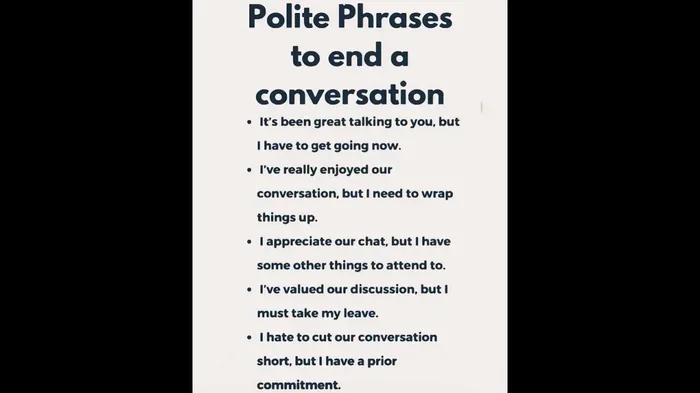
Ending a chat gracefully is a skill everyone needs. Clever phrases to wrap up a conversation help you leave politely without hurting feelings. You will learn smooth exit lines, timing tricks, and body language tips. These tools build confidence and keep relationships strong.
This is a comprehensive guide about Clever Phrases To Wrap Up A Conversation Without Coming Across As Rude.
Key Takeaways
- Timing matters: Read social cues before you speak to exit smoothly.
- Be honest but kind: Use truthful reasons that respect the other person.
- Match the vibe: Keep your tone warm and consistent with the chat.
- Body language counts: Smile, step back, and signal closure gently.
- Practice helps: Rehearse exit lines so they feel natural.
- Follow up later: Send a quick message to show you care.
- Avoid fake excuses: Honest closings build trust over time.
[FEATURED_IMAGE_PLACEHOLDER]
We all know that moment. The chat has gone on too long. You need to go. But you do not want to seem cold. Clever phrases to wrap up a conversation can save you from awkward goodbyes. They help you leave with grace and keep the bond intact. This skill matters in work, friendship, and love. A smooth exit shows respect. It also protects your time and energy.
Many people struggle here. They worry about sounding rude. They fear hurting feelings. The good news is simple. You can exit well with the right words. You just need a few ready lines. You also need to read the room. Small shifts in tone and body language make a big difference. Let us walk through practical ways to close a chat kindly.
Why clever phrases to wrap up a conversation matter so much
Words shape how people feel after you leave. A blunt exit can sting. A warm close can comfort. Clever phrases to wrap up a conversation work because they honor the other person. They show you enjoyed the talk. They also make your boundary clear. This balance is the heart of social grace.
Think about daily life. You chat with a coworker at the desk. You talk with a friend at the cafe. You catch up with family at dinner. Each setting needs a different close. The right line fits the moment. It feels natural, not forced. People remember how you left them. A kind exit leaves a good impression.
The hidden cost of a clumsy exit
A rough goodbye can linger. The other person may feel dismissed. They may wonder if you value them. Over time, this can weaken trust. Friends may pull back. Coworkers may seem distant. You do not need to stay forever to show care. You just need to leave well.
Small words carry weight. A simple thank you helps. A warm smile helps more. A clear reason helps most. When you pair these, the close feels honest. People relax. They understand you have to go. They do not take it personally.
Quick tip: Read the room first
Before you speak, pause. Watch the other person. Are they still engaged? Are they checking the time? Is the topic winding down? These signs guide your next move. If the energy is high, you may need a softer close. If the chat is fading, a clean exit works well. Timing is half the battle.
How to read social cues before you exit
Good exits start before you speak. You need to sense the mood. Clever phrases to wrap up a conversation work best when they match the moment. Reading cues helps you pick the right time. It also helps you choose the right tone. This skill grows with practice.
Look for small signals. People may yawn or glance away. They may shift their stance. They may start packing a bag. These are natural hints. They show the chat is reaching its end. You can step in with a gentle close. You do not need to wait for a perfect silence. In fact, a small pause is enough.
Signs it is time to go
Here are common cues to watch:
- Eye contact drops: The person looks around more.
- Body turns slightly: Their feet or shoulders point away.
- Short answers appear: Replies get brief and quick.
- Distractions grow: Phones, screens, or tasks pull attention.
- Topic fades: The talk repeats or slows down.
These signs do not mean rejection. They often mean the moment is ending. You can honor that flow. A smooth close feels respectful. It also keeps things light.
When to wait a little longer
Sometimes the other person still wants to talk. They may lean in. They may ask follow-up questions. They may share something personal. In these moments, rushing can feel cold. You can stay a bit more. Then you can close with care. A patient exit often lands better.
Balance is key. You do not need to stay until the energy dies. You only need to leave before it feels abrupt. A warm line at the right time works wonders.
Best clever phrases to wrap up a conversation in friendly chats
Friends want honesty wrapped in warmth. Clever phrases to wrap up a conversation with friends should feel light. They should show you care. They should also make your exit clear. The goal is simple. You want to leave without making the other person feel dropped.
Try lines that thank them first. Gratitude softens any goodbye. It also shifts focus to the good parts of the talk. After that, you can state your need. Keep it short. Keep it real. Friends appreciate truth more than fancy excuses.
Simple lines that feel natural
Here are friendly options you can use:
- “I’ve loved catching up. I need to run, but let’s do this again soon.”
- “This was so good. I’ve got to head out, but I’m really glad we talked.”
- “I don’t want to keep you. Thanks for the great chat today.”
- “I need to jump off now. Let’s continue this later this week.”
- “You’ve made my day better. I have to go, but talk soon.”
These lines work because they are clear and kind. They do not over-explain. They do not sound fake. They also leave the door open. That matters. Friends feel valued when you plan to reconnect.
Add a small follow-up plan
A follow-up makes the close feel real. You can say when you will reach out. You can suggest a next step. This turns a goodbye into a bridge. For example, you might say, “I’ll text you Thursday.” Or, “Let’s grab coffee next week.” The exact plan matters less than the intent. People feel safer when there is a next step.
This approach also helps you. You leave with a clear promise. You avoid the guilt of a vague exit. And you keep the friendship warm.
Polite ways to end a talk at work or in professional settings
Work chats need a slightly different tone. You still want warmth. You also need clarity. Clever phrases to wrap up a conversation in professional settings should respect time and tasks. They should sound confident, not apologetic. You are not doing anything wrong by ending on time.
Start with appreciation. Acknowledge the value of the talk. Then state your next task. This keeps the close focused and polite. It also shows you manage your time well. People respect that.
Lines that keep it professional and warm
Try these options:
- “Thanks for the helpful chat. I need to get back to my next task now.”
- “I appreciate your time. Let’s pick this up again tomorrow.”
- “This was useful. I’ll wrap up here and send a quick note after.”
- “I need to move on to my next meeting. Great speaking with you.”
- “Thanks for the update. I’ll let you get back to your day now.”
These phrases are clean and direct. They avoid over-sharing. They also keep the tone positive. In work settings, that balance is gold. It protects your schedule and your relationships.
Quick tip: Match the setting
A hallway chat needs a lighter close. A meeting wrap-up needs a clearer close. A video call may need a firm ending. Adjust your words to the context. The same line can feel too casual or too stiff if the setting is off. Small tweaks make a big difference.
Graceful exit lines for awkward or tense moments
Some chats feel heavy. The topic may be hard. The mood may be tense. In these moments, clever phrases to wrap up a conversation should be extra gentle. You want to reduce friction. You also want to protect the relationship. A soft close can lower the temperature.
Keep your voice calm. Keep your words simple. Avoid blame. Avoid long explanations. A short, kind close is often best. You do not need to solve everything before you leave. You only need to step away respectfully.
Soft closers that lower tension
Use these when things feel delicate:
- “I think we both need a breather. Let’s pause here and come back later.”
- “I appreciate you sharing this. I need some time to think, so I’m going to step away for now.”
- “This matters, and I want to give it the attention it deserves. Let’s continue another time.”
- “I’m going to take a quick break. I value our talk and don’t want to rush it.”
- “Let’s hit pause. I want to reflect before we go further.”
These lines show care and boundaries. They do not shut the person out. They simply create space. That space can help both sides reset. It also prevents words said in heat.
Common mistake: over-apologizing
Many people say sorry too much when they exit. They fear being rude. But too many apologies can make things awkward. It can sound like you did something wrong. You do not need to beg for permission to leave. A calm, kind close is enough. State your need. Thank them. Move on.
If you want to smooth the moment, use one sincere thank you. That is usually enough. Confidence and kindness can live together.
Body language and tone that make any goodbye feel kind
Words are only part of the message. Your face, voice, and posture matter too. Clever phrases to wrap up a conversation land better when your body matches them. A warm tone can soften a short exit. A closed stance can make a kind line feel cold. Alignment is everything.
Start with your face. A small smile helps. Soft eyes help more. Keep your voice steady. Do not rush your words. Speak like you mean what you say. That calm tone signals respect. It also helps the other person relax.
Simple signals that help you exit well
Use these cues as you close:
- Step back slightly: A small physical shift shows closure.
- Lower your pace: Slow speech feels thoughtful, not abrupt.
- Nod as you speak: It shows you are present until the end.
- Keep hands open: Open posture feels friendly and safe.
- Make brief eye contact: It connects you before you go.
These signals do not need to be dramatic. Tiny shifts work. They tell the other person you are leaving on purpose, not out of disrespect. That is the heart of a graceful exit.
Quick tip: Practice in low-stakes moments
You do not need to wait for a big moment to practice. Try these lines in easy chats. Practice with a barista, a neighbor, or a teammate. The more you use them, the more natural they feel. Soon, you will not have to think hard. The words will come smoothly.
You can also record yourself in your head. Ask, “Did that sound warm?” Ask, “Was I clear?” Small self-checks build confidence fast.
What to avoid when you want to leave politely
Even good intentions can go sideways. Some habits make exits feel rude, even when you do not mean them that way. Clever phrases to wrap up a conversation work best when you avoid common traps. A few small changes can keep your goodbye clean and kind.
One big trap is fake excuses. People can usually sense when a reason is thin. A fake excuse can create doubt. It can also make future chats awkward. Honest, simple reasons are better. You do not need a dramatic story. You only need a truthful one.
Common mistakes to skip
- Over-explaining: Long reasons can sound defensive.
- Ghosting the close: Walking away without a word feels sharp.
- Fake urgency: Pretending you are super busy can feel dishonest.
- Abrupt tone: A cold voice can undo kind words.
- Ignoring cues: Staying too long can make the exit harder.
Each of these can be fixed with a little awareness. Keep your close simple. Keep it honest. Keep it warm. That is usually enough.
Expert insight: kindness plus clarity wins
The best exits blend two things. They show care. They also show limits. Too much care without limits can feel sticky. Too much limits without care can feel cold. When you balance both, people feel respected. They understand you value them and your time. That is a mature way to relate.
If you want to grow this skill, start small. Pick one line you like. Use it this week. Notice how people respond. Adjust as needed. Over time, you will build a set of exits that feel true to you.
A simple comparison of exit styles
Different situations call for different approaches. This quick table shows how styles compare. Use it as a guide, not a rulebook.
| Exit style | Best for | Why it works | Watch out for |
|---|---|---|---|
| Warm and direct | Friends, family, casual chats | Clear, kind, and honest | Keep it brief so it stays natural |
| Professional and tidy | Work, meetings, calls | Respects time and tasks | Avoid sounding too robotic |
| Soft and paused | Tense or emotional talks | Creates space and lowers heat | Do not use it to avoid real issues forever |
| Light and playful | Close friends, easy moments | Keeps the mood upbeat | Make sure the joke fits the person |
This range gives you options. You do not need one perfect line for every moment. You need a few good ones and the sense to choose well.
Conclusion: leave well, stay connected
Ending a chat does not have to feel hard. With the right words, you can step away kindly. Clever phrases to wrap up a conversation help you protect your time and honor the other person. They reduce awkwardness. They also keep relationships healthy. That is a win for everyone.
Remember the basics. Read the room. Use a warm tone. Keep your reason honest. Add a small follow-up when you can. Avoid over-apologizing and fake excuses. These habits make your exits feel smooth and real. The more you practice, the easier it gets.
You do not need to be perfect. You only need to be thoughtful. A kind goodbye can be the part people remember most. So choose your words with care. Then leave with confidence. Your relationships will feel the difference.
Frequently Asked Questions
What are some clever phrases to wrap up a conversation without sounding rude?
Try simple lines like, “I’ve loved talking, but I need to head out now.” You can also say, “Thanks for your time, let’s continue this later.” These phrases are kind, clear, and respectful.
How do I end a conversation politely when the other person keeps talking?
Wait for a small pause, then speak calmly. Say you need to go, thank them, and keep your tone warm. A gentle close works better than interrupting.
What is the best way to leave a text chat without being rude?
Send a short note that shows appreciation. You might write, “Great chatting, I need to jump off now.” Then add a light follow-up if you want to reconnect later.
How can I exit a conversation gracefully at a party or social event?
Smile, thank the person, and mention you are going to circulate or head out. Keep it light and friendly. A warm exit helps you move on without awkwardness.
Is it okay to be honest when I want to end a talk?
Yes, honesty is usually best. You can say you have another task or need some quiet time. Truthful words feel respectful when they are said kindly.
What body language helps a goodbye feel more polite?
Use a soft smile, steady voice, and slight step back. Keep eye contact for a moment before you go. These small signals make your exit feel thoughtful and kind.
