
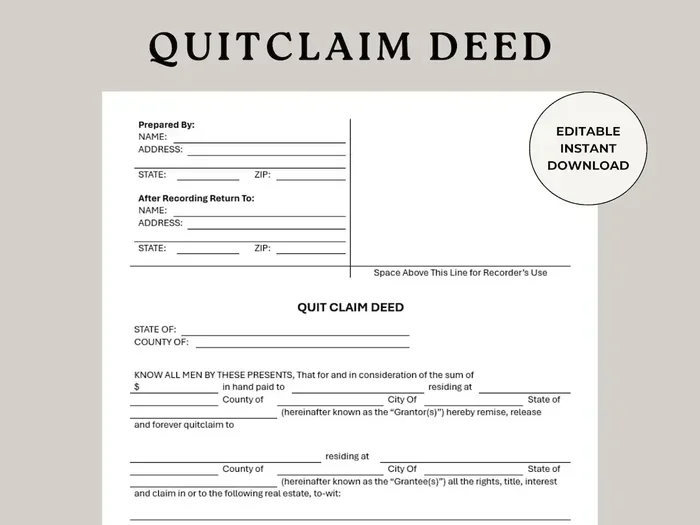
Yes, you can quitclaim a property with a mortgage, but the loan does not disappear. The original borrower remains fully responsible for the debt unless the lender formally approves a transfer. Ignoring this rule can trigger a due-on-sale clause, damage your credit, and create legal headaches. Always review your mortgage agreement, talk to your lender, and consider legal advice before signing any quitclaim deed.
Key Takeaways
- The mortgage stays with the original borrower. A quitclaim deed only transfers ownership, not the loan obligation.
- Lenders can enforce a due-on-sale clause. Transferring title without approval may require full repayment of the loan.
- Assumable mortgages are rare but possible. Some government-backed loans allow qualified buyers to take over payments.
- Title insurance and liability shift. The new owner assumes property risks, but the original owner may still face legal exposure.
- Always consult a real estate attorney. State laws vary, and improper transfers can create costly disputes.
- Document every step carefully. Keep copies of the deed, lender correspondence, and payment records.
- Explore alternatives before acting. Refinancing, selling, or negotiating with the lender may be safer options.
📑 Table of Contents
- Understanding the Basics of a Quitclaim Deed
- What Happens to the Mortgage When You Quitclaim
- Can You Actually Transfer a Mortgage With a Quitclaim
- Risks and Responsibilities After the Transfer
- How to Quitclaim a Property With a Mortgage Safely
- Alternatives to Quitclaiming When a Mortgage Exists
- Final Thoughts on Quitclaiming a Property With a Mortgage
Understanding the Basics of a Quitclaim Deed
A quitclaim deed is one of the simplest ways to transfer real estate ownership. It moves whatever interest the current owner holds to another person. No warranties, no guarantees, and no promises about clear title. That simplicity makes it popular for family transfers, divorces, and quick property adjustments. But it also creates confusion when a mortgage is involved.
Many people assume that signing a quitclaim deed removes them from the loan. That is not how it works. The deed changes who holds the title. The mortgage stays attached to the original borrower unless the lender agrees otherwise. This distinction matters because property ownership and debt responsibility are two separate legal tracks.
Here is what you need to know before you sign anything:
- A quitclaim deed transfers ownership interest, not debt. The grantor gives up their claim to the property, but the lender still looks to the original borrower for payment.
- No title guarantees are provided. The recipient gets only what the transferor actually owns. If there are liens, disputes, or unclear claims, the new owner inherits that risk.
- It works best between trusted parties. Families, spouses, and close relatives often use quitclaim deeds because trust is already established.
- It does not erase the mortgage. The loan continues exactly as written unless the lender approves a change.
If you are considering this route, start by reading your current mortgage documents. Look for language about transfer of title, due-on-sale clauses, and assumption rules. Those sections will tell you what the lender allows and what could trigger a problem.
What Happens to the Mortgage When You Quitclaim
This is the core question many homeowners ask. The short answer is that the mortgage remains untouched by the deed itself. The lender does not automatically release the original borrower. The loan contract is a separate agreement from the property title.
When you quitclaim a property, you are telling the county or local recorder that ownership has changed. The lender is not part of that recording process. Unless you notify the lender and get written approval, the original loan terms stay in place. That means the original borrower must keep making payments on time.
Key points to remember:
- The due-on-sale clause is the biggest risk. Most modern mortgages include this clause. It allows the lender to demand full repayment if ownership changes without permission.
- Late payments still hurt the original borrower. Even if someone else lives in the home and promises to pay, the loan stays in the original name. Missed payments damage that person credit.
- The lender can still foreclose. If payments stop, the lender pursues the loan holder, not just the current owner on the deed.
- Property taxes and insurance shift in practice. The new owner usually handles these costs, but the lender may require the original borrower to stay on the policy until the loan is resolved.
A practical example helps clarify this. Imagine a parent quitclaims a home to a child. The child moves in and starts paying the bill each month. The parent never tells the lender. A year later, the child misses two payments. The lender reports the late payments on the parent credit report. The parent can still be held responsible for the full loan balance. This scenario happens more often than people expect.
The Due-on-Sale Clause Explained
The due-on-sale clause is a standard provision in most residential mortgages. It gives the lender the right to call the loan due if the property transfers without consent. The clause protects the lender from unwanted changes in borrower risk.
In practice, lenders do not always enforce this clause immediately. They may not notice the transfer right away. But if payments slip, the property is sold again, or the lender discovers the change during a routine review, they can act quickly. That action can mean a demand for full repayment, higher interest, or a forced sale.
How to reduce this risk:
- Read your mortgage contract carefully. Find the exact wording about title transfer and lender consent.
- Contact the lender before recording the deed. Ask about their process for title changes and loan assumptions.
- Get any approval in writing. Verbal promises are not enough. Keep documented proof of lender consent.
- Consider a refinance instead. A new loan in the recipient name may be cleaner than trying to transfer an existing mortgage.
Can You Actually Transfer a Mortgage With a Quitclaim
Technically, you can hand over the deed, but you cannot hand over the loan without lender approval. The mortgage contract ties the debt to the original signer. A quitclaim deed does not break that contract. Only the lender can release the original borrower or approve a new one.
Some loans are assumable. That means a qualified buyer can take over the existing loan under certain conditions. Government-backed loans, such as some FHA and VA loans, sometimes allow assumptions. Conventional loans rarely do. Even when assumption is allowed, the new borrower must meet credit, income, and underwriting standards.
Important realities to consider:
- Assumable loans are the exception, not the rule. Most mortgages are not designed for simple transfer between private parties.
- Lender approval is required for a true transfer of debt. Without it, the original borrower remains on the hook.
- A quitclaim deed alone does not create a new loan obligation. The recipient does not automatically become the borrower.
- Side agreements do not override the mortgage. A private promise to pay does not change the legal loan contract.
If your goal is to move the mortgage to someone else, you need more than a deed. You need a lender-approved assumption, a refinance, or a sale that pays off the loan. Those paths are cleaner and reduce long-term risk.
Assumable Mortgages and When They Apply
An assumable mortgage lets a new buyer take over the existing loan terms. This can be attractive when current interest rates are higher than the existing rate. The new buyer keeps the old rate, the old balance, and the old payment schedule, subject to lender rules.
Assumability depends on the loan type and the lender policies. Some government-backed loans allow assumptions with credit and income review. Conventional loans usually do not. Even when allowed, the process takes time and paperwork.
What to check before pursuing an assumption:
- Loan type and program rules. Confirm whether the loan is assumable under federal or conventional guidelines.
- Credit and income requirements. The new borrower must usually qualify as if applying for a new loan.
- Fees and closing costs. Assumptions often involve processing fees, title work, and recording costs.
- Release of the original borrower. Some assumptions do not fully release the original signer unless the lender explicitly agrees.
If an assumption is possible, it can be a practical solution. If it is not, a refinance or sale may be the safer route.
Risks and Responsibilities After the Transfer
Quitclaiming a property with a mortgage creates a split between ownership and debt. That split can lead to confusion, conflict, and financial exposure. Both sides should understand exactly what they are taking on.
For the original owner, the main risk is continued liability. The loan stays in your name. If the new owner stops paying, your credit suffers. If the lender enforces the due-on-sale clause, you could face a demand for full repayment. Even if the property is occupied by someone else, the lender looks to you for performance on the loan.
For the new owner, the main risk is limited legal protection. A quitclaim deed offers no warranty of clear title. If there are hidden liens, boundary disputes, or title defects, the new owner may inherit those problems. The new owner also takes on practical responsibilities like taxes, insurance, and maintenance, even if the loan is not in their name.
Common risk areas:
- Credit exposure for the grantor. Missed payments affect the original borrower until the loan is paid off or formally transferred.
- Title defects and liens. The recipient may discover encumbrances that were not obvious at the time of transfer.
- Insurance complications. Policies may need to be updated to reflect the new owner while the lender still requires the original borrower on the loan.
- Family or relationship strain. Informal arrangements often break down when money gets tight or expectations change.
A written agreement between the parties can help, but it does not replace the mortgage contract. It can clarify who pays, who maintains the property, and what happens if the arrangement ends. Still, the lender is not bound by that private agreement.
Liability, Credit, and Foreclosure Concerns
Liability does not vanish because the deed changed hands. The original borrower remains legally responsible for the debt. That means on-time payments matter, communication matters, and documentation matters.
Credit impact is one of the most serious concerns. Payment history on the mortgage appears on the original borrower credit report. If the new owner pays late or stops paying, the original borrower takes the hit. This can affect future borrowing, interest rates, and even employment checks that review credit.
Foreclosure is another real possibility if payments fail. The lender can pursue foreclosure based on the loan, not just the deed. The original borrower may face legal costs, credit damage, and a deficiency judgment if the sale does not cover the balance. State laws vary, so local rules matter.
Ways to reduce liability exposure:
- Keep making payments until the loan is resolved. Do not assume someone else payment schedule is enough.
- Set up clear communication with the lender. Confirm who is responsible and what the lender expects.
- Use a written co-ownership or payment agreement. Spell out responsibilities, deadlines, and exit terms.
- Monitor the loan regularly. Check statements, confirm payments, and address issues early.
How to Quitclaim a Property With a Mortgage Safely
If you still want to move forward, do it carefully. A methodical approach reduces surprises and protects both sides. The goal is to transfer ownership while keeping the loan compliant and the parties informed.
Start with the mortgage documents. Find the transfer clause, due-on-sale language, and any assumption provisions. Then contact the lender. Ask what they allow, what they require, and whether they can approve a title change or loan assumption. Get the answers in writing.
Next, prepare the quitclaim deed correctly. Use the proper legal property description, correct names, and the right formatting for your state. Have it signed, notarized, and recorded with the appropriate local office. Recording gives public notice of the transfer.
A safe workflow looks like this:
- Review the mortgage contract. Identify transfer rules and lender consent requirements.
- Speak with the lender. Ask about assumptions, title transfers, and possible release options.
- Consult a real estate attorney. Confirm state requirements and reduce legal risk.
- Draft and execute the quitclaim deed. Use accurate legal descriptions and proper formalities.
- Record the deed. File it with the county or local recorder to make the transfer public.
- Update insurance and tax records. Make sure policies and billing reflect the new situation.
- Keep monitoring the loan. Track payments and maintain documentation until the loan is resolved.
Step-by-Step Process and Documentation
A clear process helps avoid mistakes. Each step builds protection for both the grantor and the recipient. Skipping steps can create delays, rejections, or future disputes.
Step 1: Gather documents. Collect the mortgage statement, deed, title report, and any existing agreements. Review the legal description of the property carefully.
Step 2: Check lender rules. Contact the loan servicer and ask about title transfer, due-on-sale enforcement, and assumption options. Request written guidance if possible.
Step 3: Decide on the best path. If the lender allows an assumption, pursue that route. If not, consider refinancing or selling the property to pay off the loan.
Step 4: Prepare the quitclaim deed. Include the grantor, grantee, property legal description, consideration statement if required, and proper signatures. Follow state formalities.
Step 5: Notarize and record. Have the deed notarized as required. File it with the local recorder office and pay any recording fees.
Step 6: Notify relevant parties. Update homeowners insurance, property tax records, and any HOA or local accounts. Keep the lender informed if required.
Step 7: Document the arrangement. Keep copies of the deed, lender correspondence, payment records, and any written agreements between the parties.
A quick tip: never rely on verbal promises. If the new owner agrees to pay the mortgage, put that in writing and track payments. Better yet, work toward a lender-approved solution that matches the loan contract.
Alternatives to Quitclaiming When a Mortgage Exists
A quitclaim deed is not always the best tool when a mortgage is involved. Other options may offer cleaner outcomes and less risk. The right choice depends on your goal, the loan type, and the relationship between the parties.
Selling the property is one common alternative. A sale can pay off the mortgage and remove the original borrower from the loan. It also gives the buyer a fresh title and a clear path to ownership. If the market is slow, a sale may still be possible with the right pricing and marketing.
Refinancing is another option. The recipient can apply for a new loan in their own name. If approved, the new loan pays off the old one and removes the original borrower. This path requires credit, income, and underwriting approval, but it creates a clean break.
Other alternatives to consider:
- Loan assumption, if allowed. This keeps the existing terms but requires lender approval and borrower qualification.
- Short sale or negotiated payoff. If the property value is lower than the loan, the lender may agree to a reduced payoff in some cases.
- Title change through a trust or entity. Some owners transfer property into a trust or LLC, but lender consent may still be required.
- Formal co-ownership agreement. If both parties will share the property, a clear legal structure can reduce confusion.
Each option has tradeoffs. A sale may be simplest if the goal is to exit the loan. A refinance may be best if the new owner wants full control. An assumption may work if the existing rate and terms are valuable. The key is matching the method to the goal while keeping the lender in the loop.
Refinancing, Selling, or Negotiating With the Lender
Refinancing creates a new loan and usually removes the original borrower from the debt. It also resets the interest rate, term, and payment structure. That can be good or bad depending on current rates and the borrower financial profile.
Selling avoids the need to transfer the mortgage at all. The proceeds pay off the existing loan, and the title moves to the buyer through a standard sale process. This is often the cleanest solution when the goal is to end the original owner involvement.
Negotiating with the lender can help in special situations. If the borrower faces hardship, the lender may offer options like modification, forbearance, or a structured exit plan. These arrangements do not transfer ownership, but they can reduce pressure while a longer-term solution is arranged.
Quick comparison:
- Quitclaim deed: Transfers title only, loan stays with original borrower, high lender risk if unapproved.
- Refinance: New loan in new borrower name, original loan paid off, requires qualification.
- Sale: Pays off mortgage, clean title transfer, may take time and market dependence.
- Assumption: Keeps existing loan terms, requires lender approval, limited to certain loan types.
Choose the path that fits your situation. If you want a simple ownership change and the lender does not approve transfers, the risk may outweigh the benefit. If you want a clean break from the loan, selling or refinancing is usually safer.
Expert Insights and Best Practices
Real estate professionals often warn against treating a quitclaim deed like a loan transfer. The deed and the mortgage serve different purposes. Mixing them up can create long-term trouble. The safest approach is to align the title change with the lender rules and the borrower goals.
Best practices to follow:
- Get legal advice early. A real estate attorney can spot state-specific issues and help structure the transfer correctly.
- Read every clause in the mortgage. Transfer language, due-on-sale rules, and assumption terms matter.
- Keep the lender informed. Silence can lead to surprises later, especially if payments change.
- Use written agreements. Clarify who pays, who maintains the property, and how to end the arrangement.
- Track everything. Save emails, letters, payment receipts, and recorded documents in one place.
A practical mindset helps too. Ask what could go wrong and plan for it. What if the new owner stops paying? What if the lender discovers the transfer? What if the property needs major repairs? Thinking through these questions before signing can save time, money, and stress.
Common Mistakes to Avoid
Many problems come from rushing the process or misunderstanding the loan. Avoid these common errors:
- Assuming the mortgage transfers with the deed. It does not, unless the lender approves otherwise.
- Ignoring the due-on-sale clause. This can lead to a demand for full repayment.
- Relying on a verbal promise to pay. Private promises do not change the loan contract.
- Skipping legal review. State laws and local recording rules can be detailed and strict.
- Failing to update insurance and taxes. This can create coverage gaps or billing confusion.
- Not documenting the arrangement. Missing records make disputes harder to resolve.
A little caution goes a long way. The more clearly you define the transfer, the fewer surprises you face later.
Final Thoughts on Quitclaiming a Property With a Mortgage
So, can you quitclaim a property with a mortgage? Yes, you can transfer the deed, but the mortgage does not automatically follow the title. The original borrower usually remains responsible for the loan unless the lender approves a transfer or the loan is paid off through sale or refinance. That is the most important fact to keep in mind.
If you are thinking about this kind of transfer, take your time. Review the mortgage, talk to the lender, and get legal guidance. Make sure the new owner understands the practical responsibilities, and make sure the original borrower understands the continued liability. Clear expectations and proper paperwork make a huge difference.
A quitclaim deed can be useful in the right situation. It is simple, direct, and often appropriate for trusted transfers. But when a mortgage is involved, simplicity should not turn into oversight. Protect yourself by treating the loan and the title as separate issues, and by choosing the path that best fits your goals.
If you want a clean break from the debt, selling or refinancing is often the safer choice. If you want to keep the existing loan terms, explore assumption options with the lender. And if you do move forward with a quitclaim deed, document every step and stay engaged with the loan until it is fully resolved.
Frequently Asked Questions
Can you quitclaim a property with a mortgage without lender permission?
Yes, you can record a quitclaim deed, but the mortgage remains in the original borrower name. The lender may still enforce a due-on-sale clause and require full repayment if the transfer violates the loan terms.
Does a quitclaim deed remove the original owner from the mortgage?
No, a quitclaim deed only transfers ownership interest. It does not remove the original borrower from the loan obligation unless the lender formally approves a release or the loan is paid off.
What is a due-on-sale clause and why does it matter?
A due-on-sale clause lets the lender demand full repayment if the property is transferred without approval. It matters because an unapproved quitclaim transfer can trigger that clause and create serious financial risk.
Can a family member take over a mortgage through a quitclaim deed?
A family member can receive the title through a quitclaim deed, but they do not automatically take over the loan. The original borrower usually stays responsible unless the lender approves an assumption or the loan is refinanced.
Is it safer to refinance instead of quitclaiming a mortgaged property?
Refinancing is often safer if the goal is to move the debt to a new borrower. It creates a new loan, pays off the old one, and can remove the original borrower from liability when the new loan is approved.
What documents should I prepare before quitclaiming a property with a mortgage?
Gather the mortgage statement, current deed, legal property description, and any lender correspondence. It is also wise to consult a real estate attorney and keep written records of any payment or ownership agreements.