
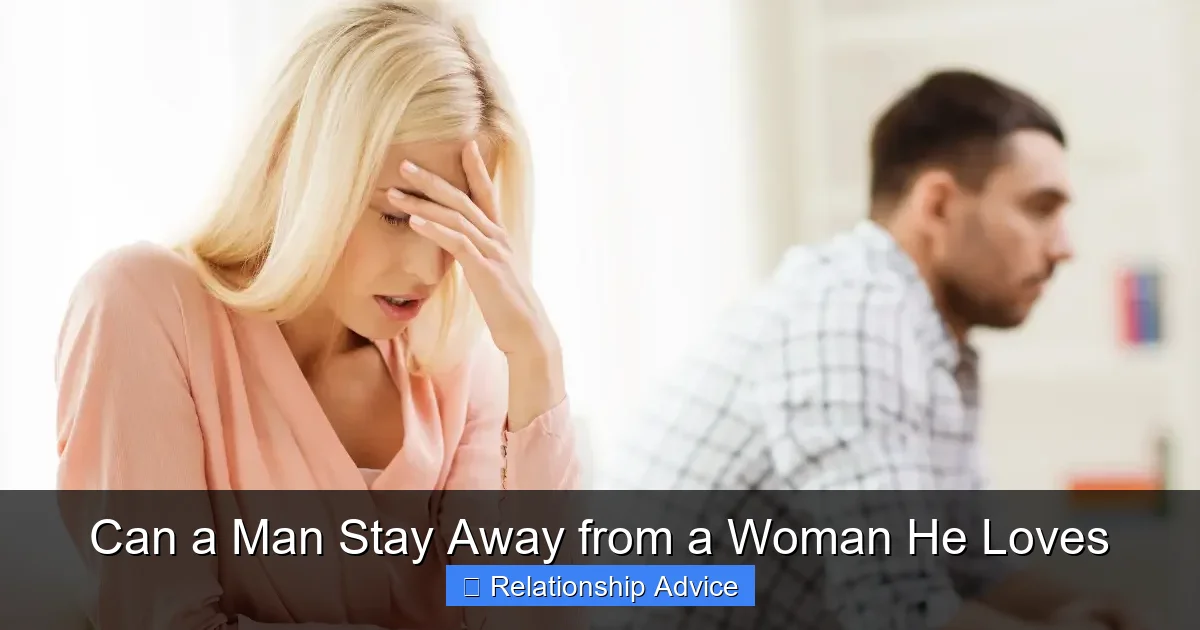
Can a man stay away from a woman he loves? It’s one of the most powerful questions in modern dating—and the answer isn’t simple. Love creates deep emotional bonds that are hard to ignore, but with self-awareness, boundaries, and purpose, it’s possible to create space even when hearts ache. This article dives into real motivations, emotional challenges, and actionable steps for navigating love without losing yourself.
Key Takeaways
- Love is powerful but not always controllable: Emotions like longing and attachment are natural, even when we try to suppress them.
- Self-respect builds boundaries: A man who values himself will create emotional and physical distance when necessary for growth or healing.
- External factors matter: Circumstances like marriage, commitment, or personal goals can make staying away both possible and responsible.
- Communication reduces pain: Honest conversations about intentions help manage expectations and prevent misunderstandings.
- Mental health plays a role: Depression, anxiety, or unresolved trauma can distort judgment and make separation feel impossible.
- Growth often requires space: Sometimes, loving someone means letting them go—not out of lack of feeling, but out of wisdom and care.
- Purpose fuels discipline: When a man has clear goals—career, faith, family—he gains the strength to stay away despite emotional pull.
📑 Table of Contents
Can a Man Stay Away from a Woman He Loves?
We’ve all been there. You meet someone special—someone who lights up your world with laughter, understanding, and quiet presence. And then life happens. Maybe she gets married. Maybe you realize your relationship is going nowhere. Or perhaps you just know that being near her would break something important inside you. The question echoes in your mind: Can a man stay away from a woman he loves?
This isn’t just a romantic dilemma—it’s a deeply human struggle. Love doesn’t come with instructions on how to handle it when circumstances demand distance. Yet countless men have faced this challenge and found ways through it. Whether you’re trying to honor a commitment, protect your peace, or simply grow as a person, the truth remains: yes, a man can stay away—even if his heart refuses to agree.
In this article, we’ll explore why men fall in love, what makes them stay away despite those feelings, and how emotional maturity transforms pain into strength. We’ll also look at real-life examples and practical tools so you don’t have to figure this out alone.
The Nature of Male Love and Attachment
Men experience love differently than women—not because they’re less capable, but because of biology, upbringing, and societal expectations. From an evolutionary standpoint, men often express love through action rather than words. Protection, provision, and consistency signal care more clearly than declarations. But beneath that exterior? Raw emotion that can be just as intense.

Visual guide about Can a Man Stay Away from a Woman He Loves
Image source: theconsideredman.org
Why Men Fall Deeply in Love
A man may fall in love when he sees qualities in a woman that align with his deepest needs: trust, stability, kindness, or even intellectual connection. These aren’t superficial attractions—they tap into core parts of who he wants to be. When a woman reflects his best self back to him, it creates a magnetic bond. That’s why leaving becomes so painful: it feels like losing a mirror that showed him his worth.
Consider Mark, a software engineer who met Elena during a weekend retreat. She challenged his ideas without judgment, supported his dreams, and made him laugh until he cried—once, during a quiet moment watching sunset over the lake. He loved her fiercely, not just for what she did for him, but for who she helped him become. When they parted ways after three months, Mark told himself he’d move on. But every time he saw her name flash across his phone, his chest tightened. Staying away felt like betrayal—of her, of himself, of their memory.
The Myth of “Not Being Able to Let Go”
Society often romanticizes obsession. Songs, movies, and social media glorify endless waiting, sleepless nights, and unwavering devotion. But true love isn’t about suffering quietly for someone else. Real love includes courage to step back when staying close would cause harm—to either party. A man who truly respects a woman won’t cling to her just because he’s hurt or lonely.
As psychologist Dr. Helen Fisher explains, romantic love activates reward centers in the brain—the same areas hit by drugs like cocaine. That’s why breaking off contact feels like withdrawal. But unlike addiction, love can be regulated by conscious choice. With awareness, men learn to redirect energy toward healthier outlets.
When Staying Away Makes Sense
There are valid reasons a man might choose distance—even when he loves the other woman. Not all of them mean he’s weak or uncaring. In fact, choosing restraint often proves greater strength.
Marriage and Commitment
Imagine David, a devoted husband of ten years. He meets Sarah at work—bright, funny, ambitious. Sparks fly instantly. But David knows his marriage is solid, built on mutual respect and shared values. He doesn’t want to risk everything for a fling. So he sets boundaries: no late-night texts, no solo dinners, no secret meetings. It’s hard. Every message from Sarah stirs old feelings. But he reminds himself: love isn’t only about desire; it’s also about loyalty.
This kind of discipline isn’t repression—it’s protection. By staying away, David honors his vows and preserves his integrity. Many men struggle here, especially if they feel unattractive or unworthy after years in a routine marriage. But true love grows stronger through sacrifice, not indulgence.
Personal Growth and Boundaries
Sometimes, love reveals flaws. Maybe a man realizes he’s chasing validation instead of connection. Or maybe he sees red flags—control, dishonesty, immaturity—that make long-term compatibility unlikely. In those cases, distance isn’t rejection; it’s self-respect.
Take Jason, who dated Maya for eight months. He adored her creativity and passion, but noticed she dismissed his opinions constantly, lied about small things, and expected constant attention. After a painful breakup, he asked himself: “Do I really want to spend my life with someone who doesn’t value honesty?” His answer was no. He blocked her number, deleted photos, and focused on rebuilding his confidence. Years later, he admitted he still cared—but now knew it wasn’t healthy love.
Cultural and Religious Constraints
In some communities, interfaith relationships or premarital intimacy carry serious consequences. A Muslim man avoiding a Christian woman out of religious conviction isn’t avoiding love—he’s honoring his faith. Similarly, a conservative father might step back from a whirlwind romance to protect his children’s future. These choices aren’t easy, but they reflect deeper commitments beyond romance.
Emotional Challenges of Distance
Staying away hurts. It’s messy, confusing, and sometimes feels like failure. Men often internalize this pain silently, fearing they’ll appear “soft” or “unmanly” for showing vulnerability. But acknowledging discomfort is the first step toward healing.
The Role of Grief
Grieving a lost connection is normal. It’s not about forgetting—it’s about accepting that things changed. Like losing a job or moving cities, heartbreak follows stages: denial, anger, bargaining, depression, acceptance. Suppressing grief only prolongs suffering. Men who allow themselves to feel—through journaling, therapy, exercise—often heal faster.
Social Pressure and Guilt
Friends might tease, “You’re still hung up?” Partners may accuse him of playing games. Society rewards persistence over prudence, making it hard to justify staying away. But guilt fades when you remember: loving someone doesn’t require proximity. True care means prioritizing her well-being—even if that means walking away.
The Risk of Self-Deception
Some men confuse loneliness with love. They stay emotionally tied because they’re afraid of being alone, not because they genuinely believe they belong together. This is especially common after divorce or prolonged singlehood. Therapy or trusted friends can help distinguish between real affection and projection.
Practical Strategies for Staying Away
If you’re facing this situation, know you’re not alone. Here’s how others have done it—and how you can too.
Create Physical and Digital Boundaries
- Delete or mute her on social media—no exceptions.
- Avoid places where she hangs out (coffee shops, gyms, events).
- Use website blockers if old messages tempt you.
- Ask mutual friends not to share updates unless necessary.
Physical distance creates mental space. Without constant reminders, thoughts lose their power.
Redirect Your Energy
- Start a new hobby—painting, hiking, coding.
- Volunteer for causes you care about.
- Set career goals and work toward them daily.
- Spend quality time with supportive friends or family.
New passions fill the void left by absence. Purpose fuels motivation far better than nostalgia.
Practice Mindfulness and Self-Talk
When urges arise—“Just text her once…”—pause. Breathe. Ask: “Will this serve me or sabotage my peace?” Replace negative self-talk with affirmations: “I am strong. I choose myself. My worth isn’t defined by her.”
Seek Professional Support
A therapist specializing in attachment or relationship issues can help unpack complex emotions safely. Group counseling or male support networks offer camaraderie too.
What Happens After Time Passes?
Most men report that while initial pain fades, traces of fondness remain. That doesn’t mean returning is wise. Instead, many discover they’ve grown into better partners—for themselves and anyone else they date later.
For instance, Carlos stayed away from Lucia for two years after college. They reconnected accidentally at a wedding. Though sparks flew again, they both acknowledged their past mistakes. Now, they’re cautiously friendly—no romance, just mutual respect. Carlos says, “I still think she’s amazing, but I’m wiser now. I know what I need in a partner.”
Time doesn’t erase love—it refines it. What seemed urgent in youth often loses its urgency when viewed through maturity.
Conclusion: Love Isn’t Only About Proximity
So, can a man stay away from a woman he loves? Yes. Not because he doesn’t care—but because he cares enough to do what’s right. Whether it’s honoring a vow, protecting his mental health, or growing into his best self, distance becomes an act of courage, not cowardice.
Remember: love isn’t measured by how much you cling—it’s measured by how wisely you act. If staying away serves truth, growth, or peace, then it’s not abandonment. It’s evolution.
And if you’re struggling right now? Be gentle with yourself. Healing takes time. But every sunrise brings new chances to choose wisely—for yourself, and for everyone you hold dear.
Frequently Asked Questions
Is it selfish for a man to stay away from a woman he loves?
No, it’s not selfish—it can be deeply selfless. Prioritizing integrity, commitment, or personal growth often protects both parties in the long run. True love sometimes means stepping back, not forward.
How long does it take to stop missing someone you love?
There’s no fixed timeline. Some miss people for weeks; others for years. Healing depends on individual circumstances, support systems, and how actively you work through emotions. Patience and self-compassion matter most.
Should a man tell the woman why he’s staying away?
Honesty builds respect. Briefly explaining your reasons (e.g., “I care about you too much to risk hurting us both”) helps closure. But avoid lengthy debates—keep it kind, clear, and final.
Can staying away damage a friendship later?
Possibly, but not always. If boundaries were respected initially, reconnection can happen maturely. However, unresolved tension may linger. Focus on your own healing first.
What if he regrets staying away?
Regret is natural, especially early on. Over time, most men realize their choice aligned with their values. Reflect regularly: “Did this decision honor my word and my peace?”
Does religion affect a man’s ability to stay away?
Yes, often positively. Faith-based teachings on chastity, duty, or forgiveness provide moral frameworks that support restraint. Prayer, scripture, or spiritual mentors can strengthen resolve.
