
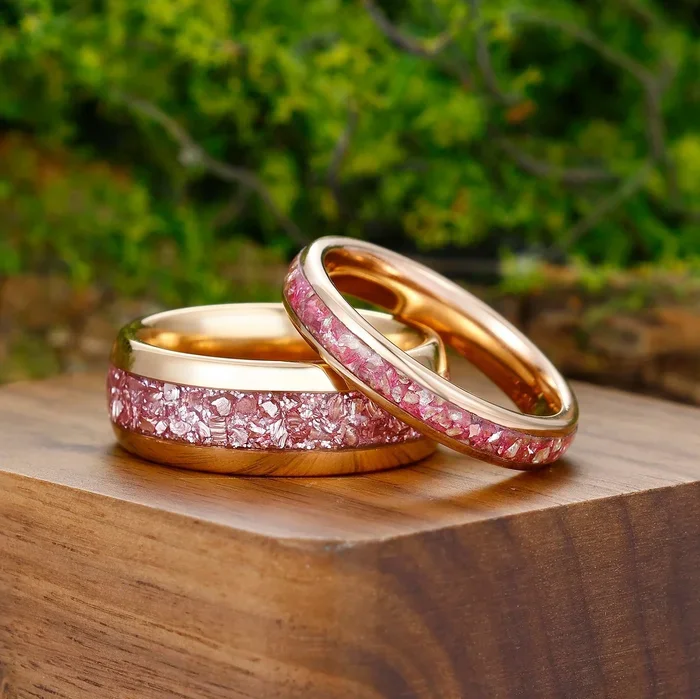
Are wedding bands supposed to match exactly for couples? The short answer is no, but many partners still choose matching sets for style and symbolism. You can mix metals, gems, and designs while keeping your rings meaningful. This guide explains what works, what matters, and how to pick rings that feel right for both of you.
Key Takeaways
- Matching is optional: Wedding bands do not have to match exactly, and many couples mix metals, widths, and styles.
- Symbolism matters: Some partners love the visual unity of matching rings, while others prefer personal expression.
- Metal choice affects compatibility: Gold, platinum, titanium, and silicone each have different looks and wear patterns.
- Fit and comfort come first: A ring should feel good every day, even if it does not perfectly match your partner’s band.
- Future upgrades are normal: Engagement rings and wedding bands can be adjusted or redesigned later for better compatibility.
- Lifestyle counts: Hands-on jobs, sports, and daily habits may influence metal choice, finish, and profile.
- Communication helps: Talking openly about budget, style, and expectations makes the decision easier and more joyful.
📑 Table of Contents
- Are Wedding Bands Supposed To Match Exactly For Couples
- Why Matching Wedding Bands Appeal To Many Couples
- The Real Meaning Behind Wedding Band Pairing
- Matching Metals, Styles, And Widths Explained
- When Mixing Wedding Bands Looks Beautiful
- Practical Considerations When Choosing Wedding Bands
- How To Decide What Feels Right For You
- Conclusion
Are Wedding Bands Supposed To Match Exactly For Couples
Choosing wedding rings is one of those sweet moments that can feel exciting and confusing at the same time. You may be wondering, are wedding bands supposed to match exactly for couples? The good news is that there is no single rule you must follow. Some couples love the clean look of matching sets. Others prefer rings that reflect their own tastes, habits, and stories. Both choices can feel beautiful and meaningful.
Wedding bands carry a lot of emotion. They mark a promise, a new chapter, and a daily reminder of partnership. Because of that, it is easy to think the rings need to look identical. But in real life, comfort, budget, and personal style often matter just as much as symmetry. A pair of rings can look harmonious without being exact copies. They can also look wonderful when they are deliberately different.
If you are trying to decide what feels right, start with what matters most to you as a couple. Do you want a classic, coordinated look? Do you want one of you to have diamonds and the other to prefer a plain band? Are you both drawn to the same metal, or do you each like different finishes? Those answers matter more than any old tradition. Your rings should fit your life, your hands, and your shared style.
Why Matching Wedding Bands Appeal To Many Couples
A matching set can feel simple and elegant. When two bands share the same metal, width, and finish, they create a balanced look on both hands. That symmetry can be especially appealing if you like a polished, coordinated style. It also makes shopping a little easier because you can compare options side by side.
For some people, matching bands also feel symbolic. They can represent unity, alignment, and the idea of walking through life together. That meaning can make the rings feel extra special every time you look down at them. If that resonates with you, a matching set may be a lovely choice.
There is also a practical side to matching bands. If both partners want similar durability, shine, and upkeep, choosing the same metal can simplify things. For example, if one person wants platinum and the other prefers yellow gold, the rings may age differently over time. Matching metals can make long-term care feel more predictable.
A Coordinated Look Without Being Identical
You do not need identical rings to create a unified appearance. Many couples choose bands that complement each other instead of copying each other. One partner might wear a plain metal band, while the other chooses a band with small stones or a textured finish. The result can still feel connected and intentional.
Think of it like coordinating an outfit. You might wear shoes that match, or you might choose colors that work well together. The goal is not always perfect matching. Sometimes the best look comes from balance. The same idea applies to wedding bands.
When Matching Makes The Most Sense
Matching bands can be a great fit if you both enjoy the same aesthetic and want a seamless look. It can also work well if you plan to wear the rings together often, such as stacking an engagement ring with a wedding band. In those cases, a coordinated design may feel more harmonious.
If you already know you want a certain metal or finish, matching can save time. It may also help if you prefer a simple shopping experience. Instead of comparing many different styles, you can focus on finding the right size and comfort for each of you.
The Real Meaning Behind Wedding Band Pairing
Wedding bands are more than accessories. They are daily symbols of commitment. That is why people often attach a lot of meaning to how the rings look together. Still, the meaning does not have to come from perfect matching. It can come from the story behind the rings, the moment you chose them, and the way they reflect your relationship.
Some couples want rings that look alike because it reinforces the feeling of partnership. Others want rings that honor their individuality within the marriage. Both approaches can be deeply meaningful. What matters is that the rings feel authentic to you.
If you are wondering are wedding bands supposed to match in every detail, the answer is no. You can share a metal family while choosing different finishes. You can both wear simple bands, but in different widths. You can even choose the same style and resize it to fit different fingers. The connection comes from the commitment, not from exact duplication.
Unity Can Come From Design, Not Duplication
A pair of rings can feel united through shared elements. Maybe you both choose rose gold. Maybe you both prefer a matte finish. Maybe you both want a comfort-fit profile for easier daily wear. Those shared choices create harmony without requiring identical rings.
This approach can be especially helpful if one partner wants something low-key and the other wants a bit more sparkle. You can still keep a cohesive feel by staying in the same metal family or design language. That way, the rings feel related without being carbon copies.
Personal Expression Within A Shared Commitment
Marriage does not erase individuality. In fact, many people want their rings to reflect who they are as well as what they share with their partner. One person may love clean lines and minimal detail. Another may enjoy engraved patterns or a vintage feel. Those differences can be part of the charm.
If you value personal expression, choose rings that feel true to you. A wedding band is something you will see and wear every day. It should feel comfortable, believable, and aligned with your taste. When both partners feel happy with their own ring, the pair often looks more genuine overall.
Matching Metals, Styles, And Widths Explained
When people ask whether wedding bands should match, they often mean metal first. Metal color is one of the easiest things to notice. Yellow gold, white gold, rose gold, platinum, and palladium all create different impressions. If you both choose the same metal, the rings may look more coordinated at a glance.
Style is another big factor. Some bands are smooth and modern. Others are twisted, brushed, milgrain-edged, or patterned. Width also changes the look. A slim band can feel delicate, while a wider band can feel more substantial. These choices affect how the rings appear next to each other.
If you are trying to decide what to do, it helps to compare the main options. The table below gives a simple overview.
Quick Comparison Of Common Ring Choices
Metal or Style can shape the overall look and feel of wedding bands. Here is a simple comparison to help you think through the options.
- Yellow gold: warm, classic, and often forgiving for matching traditional styles.
- White gold or platinum: cooler in tone, often chosen for a sleek, modern, or diamond-friendly look.
- Rose gold: soft and romantic, with a distinct color that stands out on its own.
- Titanium or stainless steel: durable and modern, but usually not resizable, so fit matters a lot.
- Silicone or alternative materials: practical for active routines, though the look is more casual.
Plain band: simple and versatile, often easy to pair with other styles.
Textured band: adds depth and interest without needing stones.
Stone-set band: brings sparkle and can match or contrast with a partner’s ring.
Thin band: understated and comfortable for many hands.
Wide band: more visible and often feels sturdier.
Same Metal, Different Design
A very common choice is to keep the metal the same while changing the design. That can make the rings feel connected without making them identical. For example, one partner may choose a polished band, while the other picks a brushed or satin finish in the same metal. From a distance, they still look like they belong together.
This is a smart option if you like harmony but want some individuality. It also helps when one person wants a plain band and the other wants more visual detail. You can keep the color consistent while letting the design differ.
Same Design, Different Metals
Sometimes couples love the same shape or profile but prefer different metal colors. That can work beautifully too. One partner may want yellow gold, while the other chooses white gold or platinum. If you are okay with a less matching look, this can still feel thoughtful and stylish.
The main thing to consider is how the metals will appear together when you stand side by side. Some couples do not mind the contrast. Others prefer a more uniform tone. There is no wrong answer, only what feels right to you.
When Mixing Wedding Bands Looks Beautiful
Mixed rings can look intentional and charming when done with care. The key is usually balance. If the rings are too different in every way, they may feel disconnected. But if they share one or two strong elements, the mix can feel stylish rather than random.
A popular approach is to match the metal family while varying the finish or detail. Another is to keep the band width similar even if the designs differ. You can also create balance by choosing complementary shapes, such as a straight band paired with a slightly rounded profile. Small points of connection often make the biggest difference.
If you are wondering are wedding bands supposed to match to create a good look, the answer is that they should feel related in some way if you want a coordinated effect. That connection might come from color, width, texture, or overall vibe. Once you find that thread, you can let the rest differ.
Intentional Contrast Can Be Stylish
Contrast is not a mistake when it is chosen on purpose. A smooth yellow gold band can look striking next to a textured white metal band if both partners like that combination. A simple platinum band can also look lovely beside a rose gold band if the difference feels joyful rather than accidental.
This works especially well when each person has a clear style preference. Maybe one partner loves cool tones and the other loves warm tones. Maybe one prefers modern minimalism and the other likes a more detailed look. Contrast can celebrate those differences while still marking the same life decision.
Complementary Designs That Still Feel Connected
If you want rings that differ but still feel like a pair, look for shared design cues. You might choose bands with similar edges, similar widths, or similar finishes. You might also choose stones with matching tones or bands with the same type of engraving. These details create a sense of belonging.
Another option is to choose a theme rather than a copy. For example, both partners might prefer vintage-inspired rings, even if one band has stones and the other does not. Or both might like modern lines, even if one is yellow gold and the other is white gold. A shared theme can hold the look together.
Practical Considerations When Choosing Wedding Bands
Style is important, but daily life matters too. Wedding bands are not just for the ceremony. They are for workdays, errands, travel, hobbies, and everything in between. That means comfort, durability, and maintenance should all be part of the decision.
If one partner works with their hands, for example, a plain band may be more practical than a heavily stone-set design. If one person is very active, a lower-profile ring may be easier to wear. If you both want a ring that stays looking fresh with less polishing, metal choice matters. These are not boring details. They are part of making the rings livable.
Budget also plays a role. Some couples want matching bands because they simplify the purchase. Others need to balance cost with preference. It is perfectly fine to choose one nicer ring and one simpler band, or to select different metals because one fits the budget better. What matters most is that both partners feel good about the choice.
Comfort, Lifestyle, And Long-Term Wear
A wedding band should feel comfortable enough to wear all day. That may sound obvious, but fit can be surprisingly important. A ring that is too tight may feel frustrating. A ring that is too loose may spin or catch. The profile of the inside of the band can also affect comfort, so it is worth trying on a few options.
Think about your routine as well. Do you wash dishes often? Do you garden, lift weights, or work around machinery? Do you prefer a ring that stays sleek, or do you not mind occasional polishing? These questions can help narrow the metal and style choices. A beautiful ring is even better when it fits your everyday life.
Budget, Upgrades, And Future Resizing
It is common to think of wedding bands as final, but life changes. Weight fluctuations, style shifts, and even engagement ring updates can affect how bands fit and look together. That is why flexibility can be helpful. If possible, choose rings that can adapt over time.
If one partner may want stones later, it can help to choose a band that leaves room for that change. If one ring may need resizing, ask about that before buying. If you are working with a tighter budget now, you can still choose something you both like and upgrade later if you want. The rings do not have to be perfect on day one to be meaningful.
How To Decide What Feels Right For You
The best way to decide is to slow down and compare what matters most. Start with the non-negotiables. Maybe one of you wants a specific metal. Maybe one of you wants a plain band only. Maybe comfort is the top priority. Once those basics are clear, the rest becomes easier to sort through.
Next, think about the look you want as a couple. Do you want the rings to read as a set, or do you want each ring to stand on its own? Do you care more about matching color, matching width, or matching overall mood? The more specific you are, the easier the choice becomes.
If you are still unsure, try this simple approach:
- Pick your metal family first. That often creates the biggest visual link.
- Choose a width range. Similar widths can make different designs feel more cohesive.
- Decide on stones. Both plain, both stone-set, or one of each can all work.
- Consider finish. Polished, brushed, and matte finishes change the feel a lot.
- Try them together. Seeing the rings side by side can make the decision clearer.
A Simple Decision Framework
If you want a clear path, use this quick framework. First, agree on the practical basics: metal, budget, and comfort. Second, decide how matched you want the rings to look. Third, choose the details that support that goal. This keeps the process focused instead of overwhelming.
For example, if you both want a closely matched look, stay in the same metal and keep the width similar. If you want a softer connection, keep one shared element and let the rest vary. If you do not care about matching at all, choose the rings that make each of you happiest. That simplicity can be freeing.
When To Choose Identical, Similar, Or Different Rings
Identical rings make sense when you both want the same exact look and feel. Similar rings work well when you want harmony with a little individuality. Different rings make sense when style, budget, or lifestyle leads you in separate directions. All three are valid.
If you are asking are wedding bands supposed to match because you feel pressure to make them identical, remember that the pressure is optional. You are choosing these rings for your own hands and your own life. That gives you more freedom than you might think.
Conclusion
So, are wedding bands supposed to match exactly for couples? Not at all. Matching bands can be beautiful, meaningful, and simple. But they are only one option among many. You can match metals, match widths, match finishes, or choose rings that look complementary instead of identical. You can even choose completely different styles if that feels more authentic to both of you.
The best wedding bands are the ones that fit your commitment, your daily life, and your personal taste. If a matching set helps you feel connected, that is a wonderful reason to choose one. If mixing metals or styles feels more like you, that can be just as special. What matters most is that the rings feel right to the people who will wear them every day.
Take your time, try on different options, and talk openly about what you both want. A good choice is not just about looks. It is about comfort, meaning, and the life you are building together. When you choose with care, your wedding bands can feel like a natural part of your story, whether they match exactly or not.
Frequently Asked Questions
Do wedding bands need to match each other?
No, wedding bands do not need to match exactly. Many couples choose rings that complement each other through shared metal, width, or style, while others prefer completely different designs. The best choice is the one that feels meaningful and comfortable for both partners.
Is it better to have matching wedding bands?
Matching wedding bands can create a clean, coordinated look and may feel symbolically unifying. They can also make shopping and long-term care simpler if both partners want the same metal and finish. Still, matching is a preference, not a requirement.
Can one wedding band be gold and the other platinum?
Yes, you can mix metals if you like the contrast. Yellow gold next to platinum or white gold can look intentional and stylish. If you want a more unified appearance, you may prefer the same metal family, but different metals are absolutely allowed.
Should engagement rings and wedding bands match?
They do not have to match perfectly, but they should work well together if you plan to wear them side by side. Many couples consider metal tone, band width, and overall style so the two pieces feel harmonious. If needed, a jeweler can also help adjust the pairing later.
What if one partner wants stones and the other wants a plain band?
That is very common and usually easy to solve. One partner can choose a plain metal band while the other selects a stone-set band, and the pair can still feel connected through shared metal or width. You do not need identical designs to have a lovely matched look.
How do I choose wedding bands that look good together?
Start by deciding what kind of connection you want, whether that is nearly identical, subtly complementary, or fully individual. Then compare metal, width, finish, and comfort. Trying the rings on together is often the easiest way to see whether the look feels right.
