
Are there 50 year mortgages on the market? Yes, they exist, but they are rare and come with unique trade-offs. This guide breaks down how they work, who they suit, and what to watch for before you decide.
This is a comprehensive guide about Are There 50 Year Mortgages.
Key Takeaways
- Rare Availability: 50-year mortgages are uncommon and often require special lenders or government-backed programs.
- Lower Monthly Payments: Spreading payments over 50 years reduces your monthly burden, which can help with cash flow.
- Higher Total Interest: You will pay significantly more interest over the life of the loan compared to a 30-year mortgage.
- Equity Builds Slowly: Home equity grows at a much slower pace, which can affect future refinancing or selling options.
- Qualification Flexibility: These loans may help some buyers qualify by lowering the monthly payment relative to income.
- Not Always the Best Fit: They work best for specific situations, such as tight budgets or long-term holding plans.
- Compare Alternatives: Always weigh a 50-year term against 30-year, 15-year, or adjustable options before committing.
[FEATURED_IMAGE_PLACEHOLDER]
Are There 50 Year Mortgages and How They Work
Many homebuyers hear about 50 year mortgages and wonder if they are real. They are real, but they are not common. Most lenders focus on 15-year and 30-year terms because those are standard and easier to manage. A 50-year loan stretches the repayment period across five decades. That longer timeline changes the math in a big way.
The basic idea is simple. You borrow a set amount of money. You pay it back over 50 years with interest. Because the term is so long, the monthly payment usually drops. That can make a pricey home feel more affordable at first glance. But the total cost of the loan rises over time. Interest has more years to build up.
You will often find these loans through niche lenders, credit unions, or special programs. Some are fixed-rate loans. Others may be adjustable. A few are structured as interest-only for a period, then shift to fully amortizing. The details matter a lot. Always read the fine print before you sign anything.
A long-term mortgage can look attractive when monthly budget pressure is high. It can also help some buyers qualify for a larger loan amount. Lenders look at your debt-to-income ratio. A smaller monthly payment can improve that ratio. That said, a lower payment does not mean a better deal overall. You still need to check the full cost.
If you are curious about 50 year mortgage rates, expect them to vary by market and lender. Rates may be slightly higher than standard 30-year loans because the lender takes on more long-term risk. The exact number depends on your credit, down payment, and the current economy. Shopping around is essential.
The Basic Math Behind a 50-Year Term
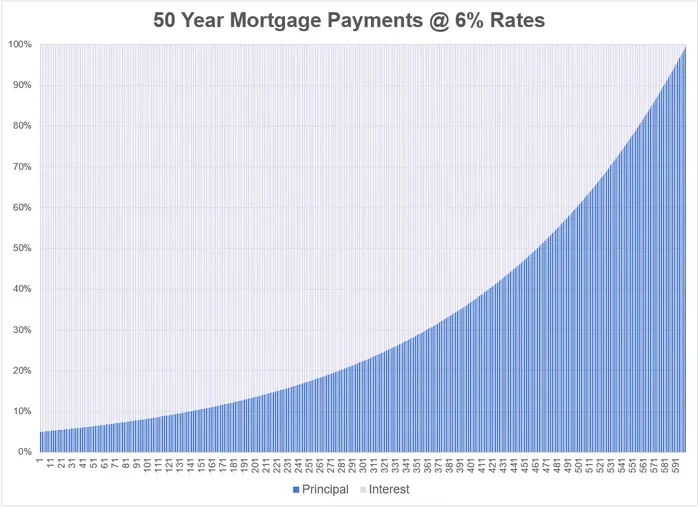
Let’s keep the math easy to understand. Imagine you borrow a large sum for a home. On a 30-year schedule, you pay it down faster. On a 50-year schedule, each payment covers less principal at the start. More of your money goes toward interest early on. That means your balance shrinks slowly.
This slow payoff can be a pro or a con. If your goal is a lower monthly bill, the long term helps. If your goal is to build equity quickly, it does not. You should decide which goal matters more. For some people, cash flow is the top priority. For others, long-term wealth building matters more.
A mortgage amortization schedule shows this clearly. In the early years, most of the payment covers interest. That effect is stronger with a 50-year term. Over time, the balance does go down, but the pace is gradual. If you plan to sell or refinance within a few years, the slow equity growth may not bother you much.
It helps to compare numbers side by side. Ask a lender to show you the monthly payment, total interest, and payoff date for different terms. A simple comparison can reveal a lot. You may see that a 30-year loan costs a bit more per month but saves a fortune over time.
Who Typically Uses These Loans
Who looks at a 50 year mortgage in the first place? Usually, it is someone who wants a lower monthly payment more than anything else. That can include first-time buyers with tight budgets. It can also include people who want to buy in a high-cost area without stretching too far.
Some buyers use this term as a stepping stone. They plan to refinance later when income rises or rates drop. Others plan to hold the home for a very long time. In those cases, the long term may make sense if the monthly savings are meaningful. The key is having a clear plan.
This loan is not usually the best choice for everyone. If you expect your income to grow quickly, a shorter term may be better. If you want to own the home free and clear sooner, a 15-year or 30-year loan may fit better. The right choice depends on your goals and your budget.
You should also think about job stability and life changes. A home loan term this long is a big commitment. Life can change in a decade, let alone five. Make sure the payment still feels comfortable if your circumstances shift. Flexibility matters.
Are There 50 Year Mortgages With Real Benefits
Yes, there are real benefits, and they can matter a lot in the right situation. The biggest advantage is the lower monthly payment. That can free up cash for other needs. You might use that extra room for savings, repairs, or everyday expenses. For some households, that breathing room is valuable.
Another benefit is easier qualification in some cases. When the monthly payment is smaller, your debt-to-income ratio may look better. That can help you get approved when a shorter term would be too tight. This does not mean the loan is cheap. It just means the monthly number is smaller.
A extended repayment plan can also help if you expect your income to rise later. You can keep payments low now and make extra payments later if you want. Some loans allow principal prepayments without penalties. That gives you some control. You can pay more when you can afford it.
There is also the comfort factor. A lower required payment can reduce stress. If money is tight, that matters. Homeownership should not leave you broke every month. For some buyers, a long amortization mortgage offers a more manageable path to owning a home.
Still, benefits only matter if they match your goals. If you want to minimize total interest, this term is not ideal. If you want to build equity fast, it is not ideal either. The best loan is the one that fits your real life, not just the one with the smallest monthly number.
Lower Monthly Payments and Cash Flow
Cash flow is one of the main reasons people consider this option. A smaller payment can make a big difference in your monthly budget. That can help you handle other costs without feeling squeezed. It can also create a cushion for unexpected repairs or job changes.
Think of it as a trade-off. You get more monthly flexibility, but you pay more over time. For some people, that trade-off is worth it. For others, it is not. The right answer depends on how long you plan to stay in the home and how tightly you manage money.
If you choose this path, consider using the savings wisely. You could build an emergency fund. You could put extra money toward principal when possible. You could invest the difference if your plan allows it. The point is to use the lower payment on purpose, not just spend it.
Easier Qualification for Some Buyers
Approval depends on many factors, not just the loan term. Still, a lower payment can help your application look stronger. Lenders care about your ability to repay. A smaller monthly obligation can support that story. This can be helpful if your income is steady but limited.
This does not mean you should stretch to buy more house than you need. Affordability is not only about approval. It is also about comfort. A mortgage qualification boost should not turn into a financial strain later. Keep your budget realistic.
Also remember that lenders still check credit, employment, and down payment size. The term is only one piece of the puzzle. A strong overall application matters more than any single feature. Work on the full picture, not just the monthly number.
Are There 50 Year Mortgages With Drawbacks
Every loan has trade-offs, and this one has some clear downsides. The biggest issue is the total interest cost. Over 50 years, interest adds up in a major way. Even a modest rate can create a huge total bill because the clock runs so long. That can make the home much more expensive in the end.
Equity growth is another concern. With a long-term home loan, your ownership stake builds slowly. Early on, most of your payment goes to interest. That means you may not gain much equity for a long time. If you need to sell or refinance early, that can be a problem.
There is also the risk of being locked into a long commitment. Life changes. Jobs change. Families grow. A 50-year schedule can feel rigid if your plans shift. You may want to refinance later, but that depends on rates and your credit at that time. Nothing is guaranteed.
Some of these loans may also come with special conditions. You might see adjustable rates, prepayment rules, or higher closing costs. Always ask questions. Make sure you understand what happens if rates change or if you want to pay early. Surprises are expensive.
Finally, think about opportunity cost. Money spent on extra interest could be used elsewhere. You might prefer a shorter term so more of your money goes toward ownership. Or you might invest the difference if you can. The best choice depends on your priorities and discipline.
More Interest Paid Over Time
This is the most important downside to understand. A longer term means more years of interest. That can dramatically increase the total cost of the loan. Even if the monthly payment feels comfortable, the long-term price can be steep.
Here is a simple way to think about it. A 30-year loan pays down the balance faster. A 50-year loan keeps the balance higher for longer. Higher balance plus more years equals more interest. That is the core issue. It is not complicated, but it is powerful.
If you want to reduce this cost, look at prepayment options. Some borrowers make extra principal payments when they can. That can shorten the effective life of the loan. It can also save money on interest. Just check whether your loan allows extra payments without fees.
Slower Equity Growth
Equity is the part of the home you truly own. With a 50 year mortgage, equity grows at a slower pace. That can matter if you plan to sell in the near future. It can also matter if you want to borrow against the home later. Slow growth can limit your options.
This does not mean you own nothing. You still build some equity over time. You also benefit if the home value rises. But the loan balance itself drops slowly. That is the key difference compared with a shorter term.
If equity speed matters to you, a shorter term may be better. If monthly comfort matters more, the long term may still work. It is a balancing act. Your personal plan should guide the decision.
Are There 50 Year Mortgages Compared to Other Terms
Comparing loan terms is the smartest way to make a decision. A 15-year loan usually has higher payments but much less interest. A 30-year loan is the most common middle ground. A 50-year loan pushes the timeline even further. Each option serves a different need.
The table below shows a simplified comparison. The numbers are illustrative, not exact quotes. Real offers depend on rate, down payment, credit, and lender terms. Use this as a framework, not a final price tag.
| Feature | 15-Year | 30-Year | 50-Year |
|---|---|---|---|
| Monthly Payment | Higher | Moderate | Lower |
| Total Interest | Lower | Moderate | Higher |
| Equity Build | Faster | Moderate | Slower |
| Qualification Ease | Tighter | Balanced | Easier in some cases |
| Best For | Fast payoff, lower total cost | Common balance of payment and cost | Lower monthly burden, long hold |
This comparison shows the main pattern. Shorter terms cost more per month but less overall. Longer terms cost less per month but more overall. The right pick depends on what you value most. There is no universal winner.
You should also compare fixed and adjustable options. A fixed rate gives stability. An adjustable rate may start lower but can change later. With a term this long, rate risk matters even more. Make sure you understand how the payment could shift over time.
When a 30-Year Loan May Be Better
For many buyers, a 30-year loan is the practical middle ground. It keeps payments manageable while avoiding the extreme length of a 50-year term. It also builds equity faster than a 50-year schedule. That balance is why it is so popular.
If you can afford the payment, a 30-year loan often makes more sense. You still get a long horizon, but not an overly long one. You also usually pay less interest than with a 50-year loan. That can be a strong advantage.
This does not mean the 30-year loan is perfect for everyone. If your budget is extremely tight, the payment may still be too high. In that case, you may need to look at other options. The goal is to find a loan that fits, not one that simply looks standard.
When a 15-Year Loan May Be Better
A 15-year loan is for people who want to own the home sooner. The payment is higher, but the total cost is usually much lower. If you can handle the monthly load, this can be a powerful choice. It is especially appealing if you want to be debt-free faster.
This term can also suit people who want to build equity quickly. If you plan to stay in the home for a long time, owning more of it sooner can feel great. It can also improve your financial flexibility later. A paid-off home is a strong position.
The challenge is the payment size. If it strains your budget, the stress may not be worth it. A loan should support your life, not overwhelm it. If the numbers feel too tight, a longer term or a smaller home may be the better move.
Are There 50 Year Mortgages and How to Decide
Deciding comes down to your goals, your budget, and your timeline. Start by asking what matters most. Is it the monthly payment? Is it the total cost? Is it paying off the home sooner? Your answer will point you in the right direction.
Next, look at your full financial picture. Include income stability, savings, other debts, and future plans. A mortgage affordability check should go beyond the payment. Think about maintenance, taxes, insurance, and life changes. Homeownership costs more than just the loan.
Then compare real offers. Ask lenders for quotes on different terms. Look at the monthly payment, the rate, the total interest, and any special rules. Do not focus on one number alone. The full picture tells the real story.
If you choose a long term, consider a plan to pay extra when possible. Even small principal payments can help over time. If you choose a shorter term, make sure the payment still leaves room for savings and emergencies. Balance is everything.
Finally, think about how long you will stay in the home. If you may move or refinance soon, the long-term cost matters less. If you plan to stay for decades, the total interest cost matters more. Your timeline changes the math a lot.
Questions to Ask Before You Choose
Before you commit, ask clear questions. What is the exact rate and payment? Are there prepayment penalties? Can the rate change? What are the closing costs? How does the total interest compare across terms? These questions protect you from surprises.
Also ask about your own comfort level. Will this payment still feel okay if your income dips? Do you have savings for repairs? Are you buying more house than you need? Honest answers help you avoid regret later.
A good rule is to choose the term that supports your life, not just the one with the lowest monthly number. The best loan is the one you can live with comfortably for the long haul.
Smart Ways to Use a Long-Term Loan
If you go with a long term, use it strategically. Keep the payment low on purpose, but do not waste the savings. Build a cushion. Pay down other debts. Make occasional principal payments if allowed. That way, you get flexibility without giving up control.
You can also treat the loan as a temporary tool. If your income is expected to rise, you may refinance later. If rates drop, you may refinance then too. Just remember that refinancing has costs and no guarantees. Plan carefully.
The smartest use is to match the loan to a real need. If the lower payment helps you buy a home you can keep and enjoy, that can be a good outcome. If it mainly lets you stretch too far, it may not be worth it. Purpose matters.
Conclusion
So, are there 50 year mortgages? Yes, they do exist, but they are not the norm. They can lower your monthly payment and help some buyers qualify. They can also make sense if you want more cash flow or plan to hold the home for a long time. At the same time, they usually cost more in total interest and build equity slowly.
The best choice depends on your priorities. If monthly comfort is your top concern, a long term may help. If total cost and faster equity matter more, a 15-year or 30-year loan may be better. Compare real quotes, read the fine print, and think about your future plans. A thoughtful choice today can save you stress later.
Take your time, ask good questions, and pick the loan that fits your life. A mortgage is a big commitment, so make sure the numbers and the timeline make sense for you.
Frequently Asked Questions
Are 50 year mortgages common?
They are not common. Most lenders offer 15-year and 30-year loans because those are standard and easier to manage. You may need to look at specialty lenders or specific programs to find a 50-year option.
Do 50 year mortgages have higher interest rates?
They can. Rates may be a bit higher than a typical 30-year loan because the lender takes on more long-term risk. The exact rate depends on your credit, down payment, and current market conditions.
Can I pay off a 50 year mortgage early?
Often yes, if the loan allows extra payments without penalties. Making additional principal payments can reduce the balance faster and save interest. Always check the loan terms before you plan to prepay.
Who might benefit from a 50 year mortgage?
Buyers who need a lower monthly payment may benefit most. This can include people with tight cash flow or those buying in a high-cost area. It may also suit buyers who plan to refinance or sell before the loan matures.
What is the biggest downside of a 50 year mortgage?
The biggest downside is the much higher total interest over the life of the loan. Equity also builds more slowly, which can limit flexibility if you want to sell or refinance early.
Should I choose a 50 year loan instead of a 30 year loan?
It depends on your goals. A 30-year loan usually offers a better balance of payment size and total cost for many buyers. A 50-year loan may make sense only if the lower monthly payment solves a real budget problem.