
The door in the face technique is a powerful psychological strategy where someone makes an unreasonable request first, gets rejected, then follows up with a smaller, more reasonable ask. This article explores the psychology behind it, how it shows up in dating and relationships, and what you need to know to protect yourself from manipulation.
Have you ever noticed how saying “no” to someone can suddenly make you feel guilty enough to say “yes” to something smaller? That’s not an accident. It’s a well-documented psychological phenomenon called the door in the face technique. This powerful persuasion strategy shows up everywhere — from sales negotiations to workplace dynamics, and yes, even in your dating life. Understanding how it works can completely change the way you navigate relationships, make decisions, and protect your emotional wellbeing. In this article, we’ll break down the psychology behind this technique, explore real-world examples, and give you practical tools to recognize and respond when someone tries to use it on you.
Key Takeaways
- The door in the face technique relies on making a large request first, expecting rejection, then following up with a smaller request that seems more reasonable by comparison.
- Reciprocal concession is the core psychological principle — when someone “gives in” by lowering their request, you feel pressured to reciprocate by saying yes.
- Guilt and social obligation play major roles in why this technique works so effectively on most people.
- In dating, this tactic can appear as testing boundaries, negotiating commitment levels, or manipulating emotional responses.
- Recognizing the pattern is the first step to protecting yourself from being manipulated by this strategy.
- Setting clear boundaries and trusting your instincts are essential skills for maintaining healthy relationship dynamics.
- Understanding persuasion psychology helps you make conscious decisions rather than reacting on autopilot.
📑 Table of Contents
- What Is The Door In The Face Technique?
- The Psychology Behind Why It Works
- How The Door In The Face Technique Shows Up In Dating
- Real-Life Examples Of The Technique In Action
- How To Recognize When Someone Is Using This Technique On You
- How To Respond When You Recognize The Technique
- Ethical Considerations: Should You Use This Technique?
- Related Psychological Principles And Techniques
- Building Resilience Against Manipulation
- Conclusion
What Is The Door In The Face Technique?
The door in the face technique (DITF) is a compliance strategy where a person starts with an intentionally large request that they expect to be rejected. Once you say no — effectively “closing the door” in their face — they follow up with a much smaller, more reasonable request. The second request is what they actually wanted all along.
This technique was first studied by psychologist Robert Cialdini in 1975. His research found that people were significantly more likely to agree to a smaller request after refusing a larger one. The numbers were striking. Participants who received the two-step approach were far more compliant than those who only heard the smaller request.
Here’s the basic structure:
- Step 1: Make an exaggerated or unreasonable request
- Step 2: Wait for the inevitable rejection
- Step 3: Present the actual, smaller request as a “compromise”
The beauty of this technique — from the persuader’s perspective — is that the second request suddenly seems reasonable by comparison. Your brain does quick math without you even realizing it. That smaller ask feels like a concession, and you feel social pressure to meet them halfway.
The Psychology Behind Why It Works
To truly understand the door in the face technique, you need to dive into the psychological principles that make it so effective. It’s not just about making two requests. It’s about exploiting deeply rooted social norms and emotional responses.
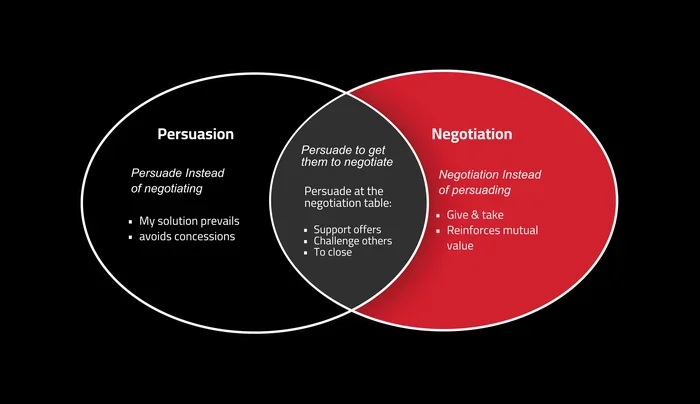
Visual guide about persuasion negotiation business concept
Image source: watershedassociates.com
Reciprocal Concession And The Norm Of Reciprocity
The biggest driver behind DITF is something called reciprocal concession. This works hand-in-hand with the broader norm of reciprocity — one of the most powerful social rules humans follow.
The norm of reciprocity says that when someone does something for us, we feel obligated to return the favor. In the door in the face scenario, the requester appears to be making a concession by lowering their demands. Even though you didn’t ask for this compromise, your brain registers it as a gift. You feel an unconscious debt.
Think of it this way. If a friend asks to borrow $500 and you say no, then they ask for $50 instead, they’ve “given up” $450. That feels like a sacrifice on their part. Now you feel like you owe them something. Saying no again feels harsher than it actually is.
Guilt As A Motivator
Guilt is another powerful force at play. When you reject someone’s first request, even if it’s unreasonable, most people experience a twinge of guilt. That guilt creates emotional discomfort. Agreeing to the second request becomes a way to relieve that discomfort.
This is especially true for people who are highly empathetic or conflict-avoidant. If you’re someone who hates letting people down, the door in the face technique can be particularly hard to resist. The emotional weight of saying no twice feels unbearable.
Perceptual Contrast Effect
Your brain evaluates things in relative terms, not absolute ones. This is known as the perceptual contrast effect. When a massive request comes first, the second request automatically seems smaller and more manageable — even if it’s still something you wouldn’t normally agree to.
For example, if someone asks you to move in together after three dates (absurdly large request), then scales back to “let’s just be exclusive” (the real goal), exclusivity suddenly feels like a reasonable middle ground. Without that initial anchor, you might have said no to exclusivity too.
The Role Of Self-Perception
There’s also a self-perception component. After rejecting the first request, you might think, “I’m the kind of person who says no to unreasonable things.” But when the smaller request comes, saying no again would contradict that self-image. To maintain consistency in how you see yourself, you’re more likely to say yes to the second ask.
How The Door In The Face Technique Shows Up In Dating
Now let’s get into where this really matters — your romantic life. The door in the face technique isn’t just a lab experiment. It plays out in dating and relationships more often than you might think. Sometimes it’s intentional manipulation. Other times, people do it without even realizing it.

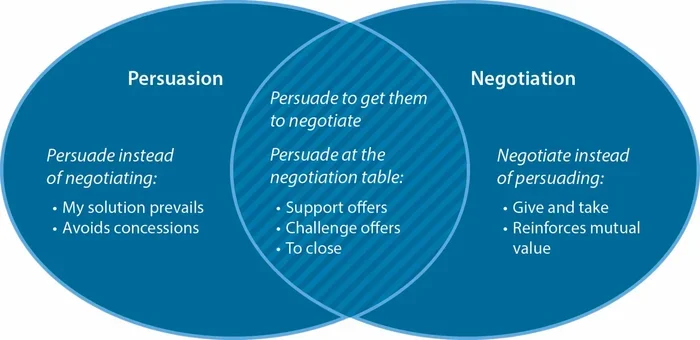
Visual guide about persuasion negotiation business concept
Image source: m.universalclass.com
Testing Boundaries Early On
In early dating, someone might test your boundaries using this approach. They might ask for something significant — like a major time commitment, meeting their entire family, or an exclusive relationship — knowing you’ll likely say no. Then they scale back to something they actually want, and you feel more comfortable agreeing.
This can be a red flag. Healthy relationships are built on mutual respect and clear communication, not psychological manipulation. If someone consistently uses pressure tactics to get what they want, that tells you something important about their character.
Understanding emotional needs you should never ignore in a relationship can help you distinguish between genuine connection and manipulative behavior.
Negotiating Commitment And Exclusivity
One of the most common dating scenarios involves commitment negotiations. Someone might push for a serious relationship or living together, and when you hesitate, they “settle” for exclusivity or more frequent dates. The problem is, you never got to make a free choice about the smaller request. Your decision was influenced by the contrast with the larger one.
Healthy commitment conversations should feel like a mutual discussion, not a negotiation where one person strategically anchors high to make their real goal seem modest.
Manipulating Emotional Responses
Some people use DITF to manipulate emotions around intimacy, time, or resources. They might ask for something extreme — like borrowing a large sum of money or making a major life sacrifice — and when you decline, they pivot to a “reasonable” alternative that’s still more than you’re comfortable giving.
This pattern can be especially damaging because it erodes trust over time. Each time you give in, you might feel a lingering sense that something isn’t right, even if you can’t pinpoint why.
Real-Life Examples Of The Technique In Action
Let’s look at some concrete examples to help you spot this technique in everyday life.

Visual guide about persuasion negotiation business concept
Image source: speakeragency.co.uk
Example 1: The Weekend Trip
Your new partner suggests a two-week international vacation together after just a month of dating. You say no — that’s way too much too soon. Then they suggest a weekend getaway instead. Suddenly a weekend trip seems reasonable compared to two weeks abroad. But would you have agreed to the weekend trip if it were presented on its own? Maybe not.
Example 2: Moving In Together
Someone you’ve been dating for a few months says, “We should just move in together.” You’re not ready for that. They follow up with, “Okay, what if I just stay over most nights then?” That’s essentially the same thing packaged differently. The initial request was designed to make the second one feel like a compromise.
Example 3: Financial Requests
A date asks to borrow $1,000 for an emergency. You decline. Then they ask for $100 to “tide them over.” You feel guilty for saying no the first time, and $100 seems manageable. But the real need was $100 all along. The $1,000 was the anchor.
Example 4: Intimacy Pressure
Someone pushes for a level of physical intimacy you’re not comfortable with yet. When you set a boundary, they back off slightly but still push past where you’d naturally be. The initial overreach was designed to make their actual target seem like a reasonable middle ground.
Learning to recognize these patterns is crucial. Our article on 10 signs you’re falling in love with the right person offers insights into what healthy relationship progression actually looks like.
How To Recognize When Someone Is Using This Technique On You
Recognition is your greatest defense. Once you know what to look for, you can catch this technique in real-time and make conscious choices instead of emotional ones.
Warning Signs To Watch For
- Extreme opening requests that seem way out of proportion to the relationship stage
- Quick pivots to a “compromise” immediately after you say no
- Emotional pressure — you feel guilty for saying no, even to unreasonable things
- Pattern recognition — this isn’t the first time someone has used this approach with you
- Artificial urgency that forces you to make quick decisions without thinking clearly
- Disproportionate disappointment when you reject the initial request, followed by a “reasonable” alternative
Trust Your Gut Instinct
Your intuition is a powerful tool. If something feels off about a request or a conversation, pay attention to that feeling. Often, your subconscious picks up on manipulation before your conscious mind can articulate why.
That uncomfortable feeling when someone makes a big ask and then quickly scales back? That’s your gut telling you something doesn’t add up. Don’t override it just because the second request seems reasonable on the surface.
Ask Yourself Key Questions
When you feel pressured, pause and ask yourself:
- Would I agree to this if it were presented alone, without the larger request first?
- Am I saying yes because I genuinely want to, or because I feel guilty?
- Is this person respecting my boundaries, or strategically working around them?
- Does this pattern show up repeatedly in our interactions?
How To Respond When You Recognize The Technique
So someone just hit you with the door in the face. What do you do? Here are practical strategies for handling it gracefully while protecting your boundaries.
Call It Out Directly (When Appropriate)
Sometimes the most powerful response is simply naming what’s happening. You can say something like:
“I notice you asked for something really big, and now you’re asking for something smaller. I want to make sure I’m making this decision based on what I actually want, not just because the second option seems easier.”
This does two things. It shows you’re aware of the tactic, and it gives the other person a chance to be honest about their intentions. How they respond tells you a lot.
Buy Yourself Time
Never feel pressured to respond immediately. Say, “Let me think about it.” This breaks the momentum of the technique. The door in the face strategy relies on quick succession — large request, rejection, immediate smaller request. Time disrupts that pattern completely.
When you step away, evaluate the second request on its own merits. Ask yourself if it’s something you genuinely want, independent of the first ask.
Reaffirm Your Boundaries Clearly
Boundary-setting is a skill that gets stronger with practice. You can be kind and firm at the same time:
“I understand where you’re coming from, but I’m not comfortable with that. My answer is no, and I’d appreciate it if we could move on.”
You don’t owe anyone a detailed explanation for your boundaries. A clear, respectful no is complete in itself.
Evaluate The Relationship Dynamic
If someone repeatedly uses manipulation tactics, that’s valuable information about the relationship. Healthy partnerships are built on honesty, respect, and genuine communication. If you constantly feel pressured or manipulated, it may be time to reevaluate whether this person has your best interests at heart.
Our resource on signs of the spirit of enmity in a relationship can help you identify when a dynamic has become toxic or adversarial.
Ethical Considerations: Should You Use This Technique?
Now let’s flip the script. You understand how powerful this technique is. You might be tempted to use it yourself. But should you?
The Case Against Using It
Using the door in the face technique in relationships comes with serious ethical concerns:
- It’s manipulative by design. You’re deliberately trying to bypass someone’s rational decision-making.
- It erodes trust. When people discover they’ve been manipulated, trust is incredibly hard to rebuild.
- It creates resentment. Even if someone doesn’t realize what happened, they may feel uneasy about the outcome.
- It undermines authentic connection. Relationships should be built on genuine mutual agreement, not psychological tricks.
Better Alternatives For Getting What You Want
There are healthier ways to negotiate in relationships:
- Direct communication: Say what you actually want and why it matters to you.
- Active listening: Understand the other person’s perspective before making requests.
- Compromise: Find genuine middle ground where both people feel heard.
- Patience: Allow decisions to unfold naturally without pressure or manipulation.
Building a relationship on manipulation is like building a house on sand. It might stand for a while, but it won’t survive real challenges.
Related Psychological Principles And Techniques
The door in the face technique doesn’t exist in isolation. It’s part of a broader family of persuasion strategies worth understanding.
Foot In The Door Technique (FITD)
This is essentially the opposite approach. Instead of starting big and scaling down, you start with a tiny, easy-to-agree-to request, then build up to the larger ask. The principle is similar — once someone says yes to something small, they’re more likely to say yes to something bigger to remain consistent with their initial agreement.
Lowballing
Lowballing involves getting someone to agree to something, then revealing additional costs or requirements after they’re committed. For example, agreeing to a date at a casual restaurant, then being told it’s actually an expensive multi-course dining experience.
Anchoring Bias
The first number or request presented serves as an “anchor” that influences all subsequent judgments. This is the foundation that makes door in the face work. The initial extreme request sets the reference point that makes everything after it seem more reasonable.
Building Resilience Against Manipulation
Understanding persuasion techniques is just the first step. Building genuine resilience requires ongoing self-work and awareness.
Develop Strong Self-Awareness
Know your values, your boundaries, and your non-negotiables. When you’re clear about what matters to you, it’s much harder for someone to manipulate you into compromising on those things.
Practice Saying No
For many people, saying no feels uncomfortable. Practice in low-stakes situations so it becomes more natural when it really counts. Start with small boundaries and build from there.
Strengthen Your Support System
Having trusted friends or family members to talk to provides valuable perspective. Sometimes an outside view can spot manipulation that’s hard to see from inside a situation.
Educate Yourself Continuously
The more you understand about psychology, persuasion, and relationship dynamics, the better equipped you’ll be to navigate them wisely. Knowledge truly is power when it comes to protecting your emotional wellbeing.
Conclusion
The door in the face technique is a fascinating and powerful psychological strategy that leverages guilt, reciprocity, and perceptual contrast to influence behavior. In dating and relationships, it can show up as boundary-testing, commitment pressure, or emotional manipulation. The good news? Once you understand how it works, you’re far less likely to fall for it.
Remember the key strategies: recognize the pattern, trust your instincts, buy yourself time, and reaffirm your boundaries clearly. Most importantly, prioritize relationships built on honest communication over those that rely on psychological tactics. You deserve connections where your yes means something because it was freely given, not cleverly extracted.
Understanding persuasion psychology isn’t about becoming cynical — it’s about becoming empowered. When you know the game, you can choose whether to play. And often, the best choice is to walk toward relationships where no games are needed at all.
Frequently Asked Questions
What exactly is the door in the face technique in psychology?
The door in the face technique is a compliance strategy where someone makes an unreasonably large request first, expects rejection, then follows up with a smaller, more reasonable request. The initial large ask makes the second request seem like a compromise, increasing the likelihood that you’ll agree to it.
Is the door in the face technique considered manipulation?
Yes, it is generally considered a form of psychological manipulation because it’s designed to bypass rational decision-making by exploiting guilt, social obligation, and perceptual contrast. While it’s not always used with malicious intent, it does involve deliberately influencing someone’s behavior through strategic pressure.
How can I tell if my partner is using this technique on me?
Watch for patterns where your partner makes extreme requests and then quickly scales back to something “more reasonable” after you decline. If you frequently feel guilty for saying no or find yourself agreeing to things you wouldn’t normally want, that’s a strong indicator the technique may be at play.
What’s the difference between door in the face and foot in the door?
Door in the face starts with a large request and scales down, relying on reciprocal concession and guilt. Foot in the door starts with a small, easy-to-agree-to request and builds up, relying on consistency and commitment. Both are persuasion techniques but work through opposite psychological mechanisms.
Can the door in the face technique be used in healthy relationships?
While it’s generally not recommended as a communication strategy, some people use it unconsciously. However, healthy relationships thrive on direct, honest communication rather than psychological tactics. If you notice this pattern, it’s worth having an open conversation about communication styles and boundaries.
How do I protect myself from this persuasion technique?
The best defense is awareness and time. Recognize the pattern when it happens, pause before responding to the second request, and evaluate it on its own merits. Ask yourself if you’d agree to the smaller request if the larger one had never been mentioned. Clear boundary-setting and trusting your gut instincts are also essential protective tools.
