
The human brain contains approximately 86 billion neurons and roughly 85 billion glial cells, totaling around 170 billion brain cells. This groundbreaking discovery overturned decades of assumptions that we had 100 billion neurons alone. Understanding your brain’s cellular makeup reveals why cognitive function, memory formation, and neural plasticity are far more complex than scientists once believed.
Have you ever wondered exactly how many brain cells you carry inside your skull? For decades, textbooks told us a nice round number: 100 billion neurons. It was one of those facts everyone repeated, from professors to television documentaries. But modern neuroscience has revealed something far more interesting. The real number surprises even seasoned researchers, and what it means for how you think, learn, and remember is truly fascinating.
The truth about your brain’s cellular population is more complex and more beautiful than that old myth suggests. Scientists now know that the human brain contains roughly 86 billion neurons and approximately 85 billion non-neuronal cells, primarily glial cells. Together, these create a network so intricate that it remains the most sophisticated structure known in the universe. Understanding what these cells do, how they interact, and what affects their health can change how you approach everything from learning new skills to protecting your cognitive future.
Key Takeaways
- The human brain contains approximately 86 billion neurons, not 100 billion as previously believed by the scientific community.
- Glial cells number around 85 billion, nearly matching neurons in total count and playing crucial support roles.
- Brain cell count varies between individuals based on age, genetics, health conditions, and environmental factors.
- Neurogenesis continues throughout life, particularly in the hippocampus, challenging old beliefs that adults cannot grow new brain cells.
- The ratio of glial cells to neurons differs by brain region, with some areas containing up to 10 times more glial cells than neurons.
- Brain cell loss is a normal part of aging, but lifestyle factors like exercise, sleep, and diet significantly influence the rate of decline.
- Neural connections matter more than raw cell count, with each neuron forming thousands of synaptic connections that define cognitive ability.
📑 Table of Contents
- The Real Number: How Many Brain Cells Does A Human Have
- Types Of Brain Cells: More Than Just Neurons
- Brain Cell Count: How Humans Compare To Other Animals
- How Brain Cells Develop And Change Over Time
- What Happens To Brain Cells As You Age
- Factors That Affect Brain Cell Health And Count
- Brain Cells And Mental Health: The Connection
- Protecting Your Brain Cells: Practical Strategies
- The Future Of Brain Cell Research
- Conclusion
The Real Number: How Many Brain Cells Does A Human Have
The human brain contains approximately 86 billion neurons and around 85 billion glial cells. This means your brain houses roughly 170 billion total cells dedicated to processing information, storing memories, and keeping your body functioning. The groundbreaking research that established this number came from neuroscientist Suzana Herculano-Houzel, who developed a method to dissolve brain tissue into a homogeneous mixture and count cell nuclei under a microscope.
Why The Old 100 Billion Figure Was Wrong
For most of the 20th century, scientists cited 100 billion neurons as the standard figure. The problem was that nobody had actually counted them properly. The number seemed to appear out of thin air, possibly originating from a rough estimate that was never rigorously verified. Researchers simply repeated it because it sounded authoritative and nobody had better data.
Herculano-Houzel’s 2009 study changed everything. By turning entire brains into what she called “brain soup,” she could count nuclei from both neurons and non-neuronal cells with unprecedented accuracy. Her findings revealed that the human brain contains about 14% fewer neurons than the myth suggested. While this might seem like a small difference, it fundamentally changed how scientists understand brain evolution and cognitive capacity.
Breaking Down The Numbers By Brain Region
Not all brain regions contain equal numbers of cells. The distribution is remarkably uneven, reflecting the specialized functions of different areas:
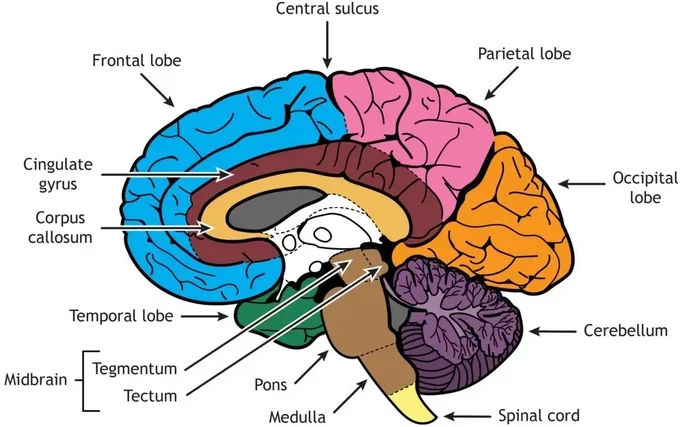
- Cerebral Cortex: Contains approximately 16 billion neurons, responsible for higher-order thinking, language, and conscious decision-making.
- Cerebellum: Houses roughly 69 billion neurons, making it the most neuron-dense region despite being only 10% of total brain volume.
- Brainstem and Diencephalon: Contains the remaining neurons, handling essential survival functions like breathing and heart rate.
- Hippocampus: Contains approximately 40 million neurons, crucial for memory formation and spatial navigation.
The cerebellum’s extraordinary neuron density explains why it can process motor coordination so quickly. Each cerebellar neuron contributes to split-second adjustments that keep you balanced and coordinated without conscious effort.
Types Of Brain Cells: More Than Just Neurons
Visual guide about human brain anatomy
Image source: med.libretexts.org
When people say “brain cells,” they usually mean neurons, but your brain contains several distinct cell types that work together in remarkable ways. Understanding these different cells reveals why brain function is so much more than simple electrical signaling.
Neurons: The Brain’s Communication Network
Neurons are the cells most people think of when they imagine the brain. These specialized cells transmit information through electrical impulses and chemical signals. Each neuron consists of a cell body, dendrites that receive signals, and an axon that sends signals to other neurons.
What makes neurons extraordinary is their connectivity. A single neuron can form between 1,000 and 10,000 synaptic connections with other neurons. This means your brain contains approximately 100 trillion synaptic connections, creating a network of staggering complexity. Every thought, memory, and emotion emerges from patterns of activity across these connections.
The cerebral cortex alone contains about 16 billion neurons, and each one connects to thousands of others. This creates a processing power that no artificial system has yet matched. Your brain can perform roughly one quadrillion synaptic operations per second, making it the most powerful computer on Earth.
Glial Cells: The Brain’s Unsung Heroes
Glial cells, also called neuroglia or glia, were long considered merely the “glue” that held neurons together. Modern research has completely overturned this assumption. These cells perform critical functions that keep neurons alive, healthy, and functioning properly.
There are several types of glial cells, each with distinct roles:
- Astrocytes: Star-shaped cells that regulate blood flow, maintain the blood-brain barrier, and control the chemical environment around neurons. They outnumber neurons in some brain regions.
- Oligodendrocytes: Produce myelin, the fatty insulation that wraps around axons and speeds up electrical signaling. A single oligodendrocyte can myelinate multiple axons simultaneously.
- Microglia: The brain’s immune cells, constantly surveying for damage, infection, or abnormal proteins. They act as the brain’s first line of defense.
- Ependymal Cells: Line the brain’s ventricles and help produce and circulate cerebrospinal fluid.
The approximately 85 billion glial cells in your brain are not passive support workers. They actively participate in information processing, modulate synaptic transmission, and play essential roles in learning and memory. Some researchers believe glial cells may contribute to cognitive function in ways science is only beginning to understand.
Brain Cell Count: How Humans Compare To Other Animals
Visual guide about human brain anatomy
Image source: as1.ftcdn.net
Having 86 billion neurons sounds impressive, but context matters when comparing across species. Brain size alone does not determine intelligence or cognitive ability. What matters more is how those neurons are organized and connected.
The Primate Advantage
Humans possess more neurons in the cerebral cortex than any other primate. Our 16 billion cortical neurons far exceed the approximately 9 billion found in gorillas and the 6-7 billion in chimpanzees. This cortical neuron advantage appears to be the primary biological basis for human cognitive superiority.
Interestingly, the elephant brain contains about 257 billion neurons total, more than three times the human count. However, the vast majority of those neurons reside in the cerebellum, not the cerebral cortex. The elephant cerebral cortex contains only about 5.6 billion neurons. This distribution difference helps explain why elephants, despite their enormous brains, do not match human cognitive abilities.
Brain Size Versus Neuron Count
The relationship between brain size and neuron count is not linear. Larger brains do not necessarily contain proportionally more neurons. Rodent brains, for example, pack neurons much more densely than primate brains. A rat brain contains about 200 million neurons in a tiny package, while a human brain spreads 86 billion neurons across a much larger volume.
This packing density difference has profound implications for brain evolution. Primates evolved a way to add neurons to larger brains without increasing individual neuron size. This scaling rule allowed humans to develop extraordinary cognitive abilities without requiring an impossibly large skull.
How Brain Cells Develop And Change Over Time
Visual guide about human brain anatomy
Image source: c8.alamy.com
Your brain is not a static organ with a fixed number of cells from birth to death. Brain cells are constantly being born, dying, and reorganizing throughout your entire lifetime. Understanding this dynamic process reveals why lifestyle choices matter so much for long-term cognitive health.
Prenatal Brain Development
Brain development begins remarkably early in pregnancy. By the fourth week of gestation, the neural tube has formed, and neurons begin generating at an astonishing rate. During peak production, the developing brain creates approximately 250,000 neurons per minute. By birth, a newborn baby already possesses nearly all the neurons they will ever have.
However, newborn brains are far from complete. The connections between neurons, called synapses, are sparse at birth. The first few years of life involve an explosion of synapse formation, creating far more connections than the brain will eventually keep. This overproduction allows the brain to adapt to whatever environment the child encounters.
Childhood And Adolescent Pruning
Between ages 2 and 10, the brain undergoes synaptic pruning, eliminating unused connections while strengthening frequently used ones. This process follows a “use it or lose it” principle. Neural pathways that get activated regularly become more efficient, while inactive connections wither away.
Adolescence brings another wave of pruning, particularly in the prefrontal cortex responsible for decision-making and impulse control. This explains why teenagers can excel at abstract reasoning but sometimes struggle with judgment and long-term planning. Their prefrontal cortex is still under construction, with pruning continuing until roughly age 25.
Adult Neurogenesis: New Brain Cells Throughout Life
For decades, scientists believed that adults could not grow new neurons. This dogma was overturned in the 1990s when researchers discovered neurogenesis in adult human brains. We now know that new neurons are born throughout life, primarily in two regions:
- The Hippocampus: New neurons form in the dentate gyrus, a region critical for learning and memory. Studies suggest approximately 700 new neurons are born daily in the adult human hippocampus.
- The Subventricular Zone: Neural stem cells here generate new cells that migrate to the olfactory bulb, contributing to smell processing.
While 700 new neurons daily may seem small compared to 86 billion existing neurons, these new cells appear disproportionately important for certain types of learning and mood regulation. Research suggests that reduced hippocampal neurogenesis may contribute to depression and age-related cognitive decline.
The discovery of adult neurogenesis has transformed how scientists approach brain health. If new neurons can be born in adulthood, then factors that promote or inhibit this process become crucial targets for maintaining cognitive function throughout life.
What Happens To Brain Cells As You Age
Brain cell loss is a normal part of aging, but the process is far more nuanced than simple cell death. Understanding how aging affects your neurons and glial cells can help you take proactive steps to protect your cognitive health.
Normal Age-Related Changes
Starting around age 30, the brain gradually loses volume and weight. By age 80, the brain has lost approximately 15% of its weight from its peak in young adulthood. However, this shrinkage does not represent wholesale neuron death. Much of the volume loss comes from:
- Reduced synaptic density: Fewer connections between remaining neurons
- Decreased myelin: Thinner insulation around axons slowing signal transmission
- Smaller neurons: Individual cells shrinking rather than dying
- Reduced blood flow: Less oxygen and nutrient delivery to brain tissue
The cerebral cortex loses approximately 10% of its neurons between ages 20 and 90. This relatively modest cell loss, combined with reduced connectivity, accounts for many normal age-related cognitive changes like slower processing speed and occasional word-finding difficulties.
When Cell Loss Becomes Pathological
Certain diseases cause dramatically accelerated brain cell loss. Alzheimer’s disease, for example, can destroy billions of neurons, particularly in the hippocampus and cerebral cortex. By the time symptoms appear, significant irreversible damage has already occurred. This is why researchers are increasingly focused on early detection and prevention strategies.
Protecting your brain cells throughout life is one of the most important investments you can make in your future quality of life. The choices you make today influence how well your brain functions decades from now.
Factors That Affect Brain Cell Health And Count
Your daily habits have a profound impact on your brain cells. Research has identified numerous factors that either promote brain cell health or accelerate their decline. Understanding these factors empowers you to make choices that support long-term cognitive function.
Exercise: The Best Thing You Can Do For Your Brain
Physical exercise is arguably the single most powerful intervention for brain health. Aerobic exercise increases blood flow to the brain, delivering oxygen and nutrients while removing waste products. It also stimulates the release of brain-derived neurotrophic factor (BDNF), a protein that promotes neuron survival and growth.
Studies show that regular aerobic exercise can actually increase hippocampal volume in older adults. This structural change corresponds to improved memory and reduced dementia risk. Even moderate exercise like brisk walking for 30 minutes daily provides measurable benefits.
Exercise stimulates neurogenesis in the hippocampus, helping you grow new brain cells even in old age. This remarkable finding means it is never too late to start protecting your brain through physical activity.
Sleep: When Your Brain Cleans House
Sleep is not merely rest for your brain. During sleep, your brain activates the glymphatic system, a waste clearance mechanism that removes toxic proteins including beta-amyloid, which accumulates in Alzheimer’s disease. Without adequate sleep, these proteins build up, potentially damaging neurons over time.
Chronic sleep deprivation has been linked to accelerated brain shrinkage and cognitive impairment. Adults who consistently sleep fewer than six hours per night show greater volume loss in key brain regions compared to those who sleep seven to eight hours. Prioritizing quality sleep is essential for long-term brain cell protection.
Nutrition And Brain Cell Health
Your brain requires substantial energy and specific nutrients to function properly. Despite comprising only 2% of body weight, the brain consumes approximately 20% of the body’s calories. The following nutrients play particularly important roles in brain cell health:
- Omega-3 fatty acids: Essential components of neuronal membranes, particularly DHA which constitutes 40% of polyunsaturated fats in the brain.
- Antioxidants: Protect brain cells from oxidative stress and free radical damage. Berries, dark chocolate, and leafy greens are excellent sources.
- B vitamins: Critical for energy production and neurotransmitter synthesis. Deficiencies in B12 and folate are linked to cognitive decline.
- Polyphenols: Plant compounds that reduce inflammation and may promote neurogenesis. Found in green tea, coffee, and colorful fruits.
The Mediterranean diet, rich in these nutrients, has been consistently associated with reduced dementia risk and better cognitive function in aging populations.
Chronic Stress And Brain Cell Damage
Chronic stress floods the brain with cortisol, which can damage hippocampal neurons and inhibit neurogenesis. Prolonged stress exposure causes dendritic retraction in the hippocampus and prefrontal cortex while paradoxically strengthening the amygdala, the brain’s fear center. This structural remodeling explains why chronic stress impairs memory while increasing anxiety.
Managing stress is not just about feeling better emotionally. It is about protecting your brain cells from structural damage. Mindfulness meditation, regular exercise, social connection, and adequate sleep all help buffer the brain against stress-related damage.
Mental Stimulation And Cognitive Reserve
Engaging in mentally stimulating activities builds what neuroscientists call cognitive reserve. This concept explains why some people maintain sharp thinking despite having brain changes associated with Alzheimer’s disease. Their extensive neural networks provide alternative pathways for completing cognitive tasks.
Learning new skills, particularly those that challenge you in novel ways, promotes synaptic growth and strengthens neural networks. Speaking multiple languages, playing musical instruments, learning new technologies, and engaging in complex problem-solving all contribute to cognitive reserve.
Just as physical exercise builds muscle, mental exercise builds neural connections that protect your brain against age-related decline.
Brain Cells And Mental Health: The Connection
The relationship between brain cell health and mental well-being is profound and bidirectional. Your thoughts, emotions, and mental states influence your brain’s cellular structure, while your brain’s cellular health determines your emotional resilience and cognitive function.
Research into how energy relates to mental health has revealed that brain cells require enormous metabolic resources to maintain emotional balance. When brain cell function is compromised by poor sleep, nutrition, or chronic stress, emotional regulation suffers. This connection explains why lifestyle interventions that support brain health often improve mental health outcomes simultaneously.
Depression has been linked to reduced hippocampal volume and impaired neurogenesis. Antidepressant medications appear to work partly by stimulating new neuron growth in the hippocampus. This discovery suggests that many effective treatments for mental health conditions work by restoring normal brain cell function and promoting neural growth.
The brain’s remarkable plasticity means that positive changes can happen at any age. Every time you learn something new, form a memory, or have an experience, your brain cells physically change. Synapses strengthen or weaken, new connections form, and in some regions, new neurons are born. This ongoing remodeling means your brain is always capable of adaptation and growth.
Protecting Your Brain Cells: Practical Strategies
Science has identified concrete steps you can take to protect and even enhance your brain cell population. These strategies work synergistically, meaning their combined effect exceeds any single intervention alone.
Daily Habits For Brain Cell Health
- Move your body regularly: Aim for at least 150 minutes of moderate aerobic exercise weekly. Include both cardio and strength training for maximum benefit.
- Prioritize sleep: Maintain a consistent sleep schedule and aim for 7-9 hours nightly. Create a dark, cool sleeping environment.
- Eat brain-healthy foods: Emphasize fatty fish, berries, leafy greens, nuts, and olive oil. Minimize processed foods and added sugars.
- Stay socially connected: Meaningful relationships stimulate brain activity and protect against cognitive decline.
- Manage stress effectively: Practice meditation, deep breathing, or yoga for at least 10 minutes daily.
- Keep learning: Challenge your brain with new skills, hobbies, or educational pursuits regularly.
- Protect your head: Wear helmets during sports and seatbelts in vehicles. Even mild concussions can damage brain cells.
- Limit alcohol and avoid smoking: Both substances are neurotoxic and accelerate brain cell loss.
What To Avoid For Brain Cell Protection
Certain habits and exposures can damage brain cells and should be minimized:
- Chronic sleep deprivation: Consistently sleeping fewer than six hours impairs the brain’s waste clearance system.
- Excessive alcohol consumption: Heavy drinking causes direct neuronal death and can lead to permanent brain damage.
- Chronic stress without management: Unchecked cortisol exposure damages hippocampal neurons over time.
- Sedentary lifestyle: Physical inactivity reduces BDNF levels and impairs neurogenesis.
- Social isolation: Loneliness has been linked to accelerated cognitive decline and increased dementia risk.
- Processed food-heavy diets: Diets high in refined sugars and unhealthy fats promote inflammation that damages brain cells.
Every choice you make either supports or undermines your brain cell health. The cumulative effect of daily habits over years and decades determines how well your brain ages.
The Future Of Brain Cell Research
Neuroscience is advancing rapidly, and our understanding of brain cells continues to evolve. Emerging technologies and research directions promise to reveal even more about how your brain cells function and how to protect them.
Single-Cell Analysis
New techniques allow scientists to analyze individual brain cells rather than studying bulk tissue. This approach has revealed far more cell diversity than previously imagined. Researchers have identified dozens of distinct neuron types, each with unique genetic profiles and functional properties. This granularity will eventually enable targeted treatments for specific brain cell populations.
Brain Mapping Initiatives
Massive international projects are working to create comprehensive maps of brain cell connections. The Human Connectome Project and similar initiatives aim to chart every neural connection in the human brain. These maps will revolutionize our understanding of how brain cells work together to produce thought, emotion, and behavior.
Regenerative Medicine
Scientists are exploring ways to replace lost brain cells through stem cell therapy. While still experimental, early research suggests that transplanted neural stem cells can integrate into existing circuits and restore function in animal models of brain disease. Human applications remain years away, but the potential to repair damaged brains is no longer science fiction.
The coming decades will likely bring treatments that can regenerate damaged brain cells, potentially reversing conditions currently considered irreversible. This prospect makes protecting your existing brain cells even more important while these therapies develop.
Conclusion
The human brain contains approximately 86 billion neurons and 85 billion glial cells, totaling roughly 170 billion brain cells working together in the most complex organ known to science. This number, while impressive, tells only part of the story. What truly matters is not how many brain cells you have, but how well they connect, communicate, and adapt throughout your lifetime.
Your brain cells are not fixed assets that slowly diminish. They are dynamic, living components of an ever-changing network that responds to everything you do. Every workout, every night of good sleep, every new skill learned, and every meaningful conversation physically shapes your brain at the cellular level. The choices you make today literally build the brain you will live with tomorrow.
The surprising truth about your brain cells is not just their number, but their remarkable capacity for renewal and adaptation. By understanding what your brain cells need to thrive, you can take concrete steps to protect your cognitive health for decades to come. Your 170 billion brain cells are counting on you to give them the care they deserve.
Frequently Asked Questions
What is How Many Brain Cells Does A Human Have?
How Many Brain Cells Does A Human Have is an important topic with many practical applications.
