

Pathological Demand Avoidance (PDA) is a profile within the autism spectrum that causes intense resistance to everyday demands. In adults, this often appears as anxiety-driven opposition, emotional dysregulation, and a need for control. Recognizing these patterns can help improve self-understanding, support needs, and interpersonal relationships.
Key Takeaways
- Anxiety is central: Unlike typical resistance, PDA stems from high levels of anxiety triggered by ordinary requests or expectations.
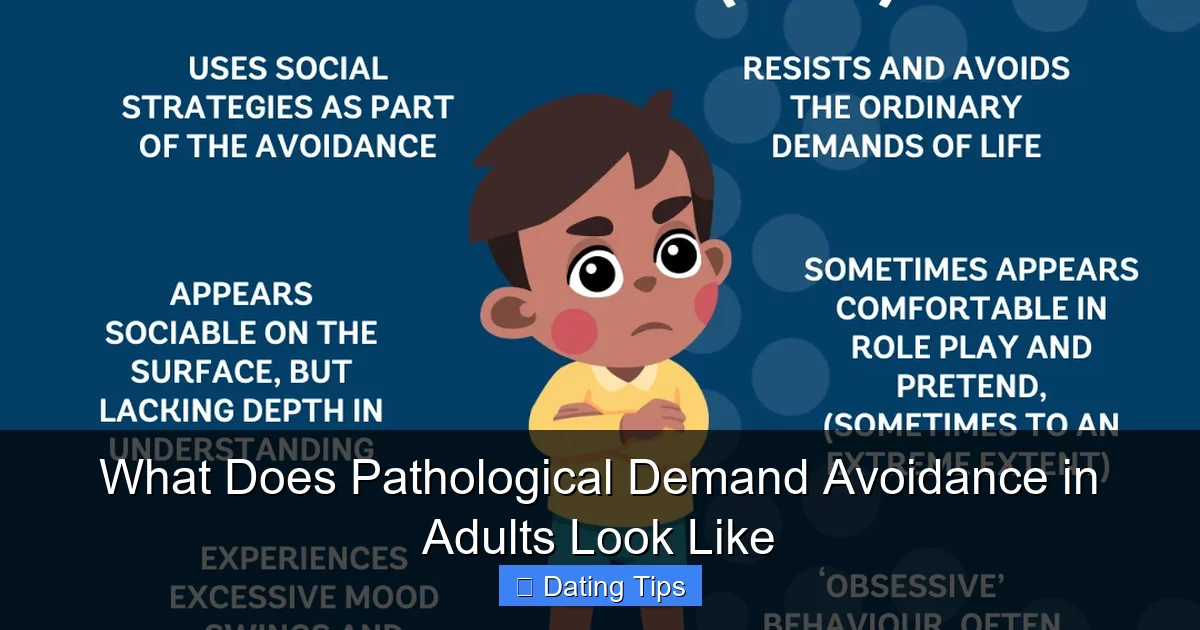
- Socially manipulative behaviors may occur: Adults with PDA might use charm, distraction, or social strategies to avoid doing what’s asked.
- Demand avoidance is pervasive: This isn’t just about chores—it affects work tasks, social plans, medical appointments, and relationship dynamics.
- Emotional outbursts are common: Meltdowns or shutdowns often happen when someone feels forced or pressured into compliance.
- Masking is frequent: Many adult PDAers hide their struggles by “faking” normal behavior in public, leading to exhaustion and isolation.
- Support looks different: Effective strategies include offering choices, using indirect language, and reducing pressure rather than enforcing rules.
- Diagnosis is often delayed: Because PDA symptoms overlap with ADHD, OCD, and personality disorders, many adults go undiagnosed well into adulthood.
📑 Table of Contents
- What Is Pathological Demand Avoidance?
- Core Features of PDA in Adults
- Common Signs of PDA in Adult Relationships
- How PDA Differs From Other Conditions
- Living With PDA: Daily Challenges
- Strategies That Help Adults With PDA
- Building Supportive Relationships
- When to Seek Professional Help
- Conclusion: Embracing Neurodiversity
What Is Pathological Demand Avoidance?
Pathological Demand Avoidance (PDA) is not a standalone diagnosis but a distinct behavioral profile recognized within autism spectrum conditions. First identified in the UK in the 1980s, PDA describes individuals who experience intense anxiety when faced with everyday demands—whether from parents, teachers, employers, or partners. This isn’t just typical stubbornness or defiance; it’s a biologically driven response rooted in deep-seated fear of loss of control and overwhelming stress.
In adults, recognizing PDA can be tricky because its presentation evolves over time. While children with PDA might throw tantrums or refuse to get dressed, adults often develop more subtle coping mechanisms. They may appear socially adept, charming, or even compliant on the surface—but internally, they’re fighting a constant battle against demands that feel threatening. Over years of managing these pressures alone, many adult PDAers learn to mask their difficulties, which makes early identification even harder.
It’s important to understand that PDA isn’t about being lazy, manipulative, or intentionally difficult. It’s a neurological response where the brain perceives ordinary requests as life-threatening threats. When someone says, “Can you take out the trash?” a person with PDA might hear, “You must obey me or something terrible will happen.” That’s why traditional approaches—like nagging, reasoning, or consequences—often backfire spectacularly.
Core Features of PDA in Adults
Anxiety-Driven Resistance
The hallmark of PDA is demand-induced anxiety. Unlike typical resistance seen in ADHD or oppositional defiant disorder, PDA reactions are directly linked to the presence of an external demand. The more direct or authoritative the request, the stronger the urge to resist. This isn’t rebellion for power—it’s survival.

Visual guide about What Does Pathological Demand Avoidance in Adults Look Like
Image source: images.justgiving.com
Imagine your partner gently suggesting you tidy up before guests arrive. For someone with PDA, this simple phrase triggers a cascade of internal panic: *Why do they always assume I should do this? What if I say no? Will they get angry? Will things fall apart?* Instead of calmly agreeing, they might procrastinate endlessly, make excuses, or suddenly become “too tired” despite having been active all day.
This kind of reaction isn’t about being difficult—it’s about protecting your mental space from what feels like an invasion of autonomy. And since most adult relationships involve mutual expectations, PDA can create ongoing friction without clear cause.
Socially Manipulative Behaviors
One surprising feature of PDA in adults is the use of social manipulation to avoid demands. Rather than outright refusal, many PDAers employ charm, humor, distraction, or guilt-tripping to sidestep obligations. This helps them maintain social harmony while secretly avoiding what they perceive as a threat.
For example, imagine a colleague asks if you can review a report by Friday. A person with PDA might respond with, “Oh wow, Friday? That’s tight—but I’ll try my best!” Then they delay, hoping the request will fade away. Or maybe they pivot the conversation entirely: “Speaking of reports… did you see that funny video I sent last week?”
This isn’t intentional deception—it’s a learned survival tactic. Over time, the brain associates direct confrontation with increased anxiety, so the safest path becomes indirect avoidance. Unfortunately, this can strain relationships when others interpret the behavior as insincerity or unreliability.
Need for Control and Autonomy
Adults with PDA often exhibit an intense need for control over their environment and decisions. This isn’t about micromanaging—it’s about minimizing unpredictable demands. When people feel in control, their anxiety decreases significantly.
Picture a couple planning a weekend trip. One partner suggests visiting a museum on Saturday morning. The other might counter with, “I’m not really into museums—what if we go hiking instead?” But if pushed to commit to the original plan, they could become visibly agitated, cancel last minute, or insist on changing every detail until it aligns with their comfort zone.
This desire for control extends beyond vacations. It influences everything from household chores to career choices. The goal isn’t to dominate others—it’s to create predictability where demands feel manageable.
Common Signs of PDA in Adult Relationships
Relationships are especially challenging for adults with PDA because they’re built on shared responsibilities, compromises, and unspoken expectations. Here’s how PDA typically shows up:
Visual guide about What Does Pathological Demand Avoidance in Adults Look Like
Image source: static.wixstatic.com
- Procrastination under pressure: Tasks pile up not due to laziness, but because initiating them triggers anxiety. Bills go unpaid, projects stall, and routines break down.
- Emotional volatility around requests: A gentle reminder can spark disproportionate anger, tears, or withdrawal. What seems like moodiness is actually fear disguised as frustration.
- Using “special interests” as escape routes: Deep engagement in favorite topics provides safe haven from unwanted demands. Others may mistake this as disinterest in the relationship.
- Difficulty accepting criticism: Feedback—even constructive—feels like another form of demand. This can lead to defensiveness or shutting down during conversations.
- Preference for digital communication: Texting or email feels safer than face-to-face discussions where immediate responses are expected.
These behaviors aren’t personal attacks. They’re automatic responses to perceived threats. When partners or friends don’t recognize this, they may label the person as “uncooperative,” “ungrateful,” or “emotionally unstable”—which only increases isolation.
How PDA Differs From Other Conditions
Because PDA shares traits with ADHD, anxiety disorders, OCD, and borderline personality traits, misdiagnosis is common. Let’s clarify key differences:

Visual guide about What Does Pathological Demand Avoidance in Adults Look Like
Image source: cdn2.psychologytoday.com
PDA vs. ADHD
While both involve executive dysfunction and impulsivity, ADHD resistance is usually task-related, not demand-based. Someone with ADHD might forget to clean because they’re distracted, not because cleaning feels threatening. With PDA, the issue isn’t the task itself—it’s the request.
PDA vs. Generalized Anxiety Disorder
GAD involves widespread worry, but PDA anxiety is specifically tied to demands. If no one makes a request, the anxiety subsides. In GAD, fears persist regardless of context.
PDA vs. Oppositional Defiant Disorder (ODD)
ODD kids deliberately provoke authority figures; PDA adults react to perceived threats. Their defiance isn’t about winning arguments—it’s about escaping discomfort.
Understanding these distinctions matters because treatment approaches differ vastly. For instance, cognitive behavioral therapy (CBT) works well for generalized anxiety but often fails with PDA unless adapted to address demand sensitivity.
Living With PDA: Daily Challenges
Adults with PDA navigate a world designed for neurotypical functioning, which means constant negotiation between their needs and societal expectations. Common daily hurdles include:
Workplace Struggles
Employers expect punctuality, meeting attendance, and task completion. For someone with PDA, even routine check-ins can feel intrusive. They might miss deadlines not because they lack skills, but because asking for clarification or starting work triggers overwhelm. Open-plan offices with constant interruptions are particularly draining.
Household Management
Shared living spaces require compromise. But when one partner repeatedly asks the other to load the dishwasher, it creates tension. The PDAer doesn’t dislike dishes—they dread being told to do them. Solutions? Offer choices: “Do you want to load dishes now or after watching TV?” Avoid direct commands.
Social Obligations
Birthdays, holidays, and group events come with implicit demands: attend, bring food, participate. Refusal can damage friendships. Yet showing up drained and irritable does too. Many PDA adults develop strict boundaries—only attending events they initiate or choosing low-pressure gatherings.
Mental Health Impact
Chronic demand avoidance leads to burnout, depression, and feelings of shame. Masking exhausts energy reserves. Without support, isolation grows. Therapy focused solely on “changing behavior” rarely succeeds—the real goal is reducing environmental triggers.
Strategies That Help Adults With PDA
Unlike rigid behavioral interventions, effective PDA support prioritizes collaboration over compliance. Here are practical tips:
Offer Choices, Don’t Give Orders
Instead of “Clean your room,” try “Would you like to start with books or clothes first?” Choice reduces perceived pressure and fosters cooperation.
Use Indirect Language
Frame requests as suggestions: “I noticed the kitchen is messy—would it help if I wiped counters later?” This preserves dignity and lowers resistance.
Reduce Sensory Demands
Bright lights, loud noises, or crowded spaces amplify anxiety. Advocate for quiet workspaces, noise-canceling headphones, or flexible schedules.
Practice Self-Regulation Tools
Deep breathing, mindfulness apps, or fidget tools can calm the nervous system before demands arise. Journaling helps identify personal triggers.
Seek PDA-Informed Therapists
Not all counselors understand PDA. Look for professionals familiar with autism profiles or demand avoidance. Group therapy with others who share experiences can reduce loneliness.
Remember: the goal isn’t to eliminate avoidance—it’s to make demands feel safe enough to engage with voluntarily. Progress looks like small wins: showing up on time once, sharing a meal without argument, or calmly declining an invitation without guilt.
Building Supportive Relationships
Romantic partnerships thrive when both people understand each other’s wiring. If you suspect your partner has PDA—or if you have PDA yourself—consider these steps:
- Educate together: Read books like “The PDA Paradox” by Elizabeth Thach or join online communities (e.g., PDA Society). Shared knowledge builds empathy.
- Set gentler expectations: Agree on realistic timelines and accept occasional cancellations without blame.
- Celebrate autonomy: Praise effort over outcome. Say, “I appreciate you trying,” not “You finally did it.”
- Create “safe zones”: Designate times or spaces where no demands are allowed—perfect for reading, gaming, or just resting.
Relationships aren’t about fixing each other—they’re about coexisting peacefully. When PDA is acknowledged, conflicts transform into opportunities for connection, not control.
When to Seek Professional Help
If daily functioning suffers—missed jobs, strained friendships, chronic stress—it’s worth consulting a clinician experienced in autism spectrum conditions. Diagnosis isn’t always necessary for support; what matters most is finding compassionate, knowledgeable allies who respect your neurotype.
Therapy can help develop personalized coping strategies, but medication isn’t typically recommended unless comorbid conditions like generalized anxiety exist. Focus groups, peer mentors, and advocacy organizations offer invaluable community support.
Above all, remember: having PDA doesn’t mean you’re broken. It means your brain processes the world differently—and that deserves understanding, not judgment.
Conclusion: Embracing Neurodiversity
Pathological demand avoidance in adults is more than a list of symptoms—it’s a way of being shaped by decades of navigating a world that often misunderstands neurodivergence. By recognizing the anxiety beneath the resistance, we open doors to compassion, accommodation, and authentic connection.
Whether you’re seeking answers for yourself or supporting a loved one, the journey begins with curiosity, not criticism. Ask questions. Listen deeply. Challenge assumptions. And above all, treat PDA not as a flaw to correct, but as a difference to honor.
In relationships—romantic, familial, or friendly—this mindset shift can turn friction into flow. When both parties feel safe expressing needs without fear of demand, magic happens. You don’t have to change who you are. You just need environments and people who let you be.
And that’s something worth celebrating.
Frequently Asked Questions
Can adults be diagnosed with Pathological Demand Avoidance?
Yes, though formal diagnosis is rare and often requires assessment by specialists familiar with autism profiles. Many adults receive retrospective confirmation after learning about PDA through self-education or support groups.
Does PDA mean someone is manipulative?
No. Socially manipulative behaviors in PDA stem from anxiety management, not malice. The person isn’t trying to deceive—they’re avoiding perceived threats using whatever tools feel safest.
Is PDA the same as autism?
PDA is considered a subtype or profile within the autism spectrum. Not everyone with autism has PDA, and not everyone with PDA meets full diagnostic criteria for autism, though overlap is common.
How can partners support someone with PDA?
Focus on collaboration, not compliance. Use indirect language, offer choices, reduce sensory stressors, and avoid direct demands. Education and patience are key.
Will PDA ever go away?
PDA doesn’t “go away,” but symptoms can become more manageable with understanding, accommodations, and self-awareness. Many adults learn to navigate demands effectively by creating supportive environments.
Are there online resources for PDA support?
Yes. Organizations like the PDA Society (UK), Autism Women’s Network, and forums such as Reddit’s r/PathologicalDemandAvoidance provide valuable information, stories, and community support.
