
Shopping for mortgage lenders is the smartest way to cut costs on your home loan. By comparing rates, fees, and service quality, you can find a deal that fits your budget. This guide shows you exactly how to shop mortgage lenders and avoid costly mistakes.
Key Takeaways
- Compare at least three lenders to find the best interest rates and terms.
- Check your credit score before applying to improve your negotiating power.
- Look beyond the interest rate and compare closing costs and fees.
- Get pre-approved to strengthen your position when buying a home.
- Read reviews and ask questions to gauge lender reliability and service.
- Understand loan types so you choose the right product for your situation.
- Lock your rate at the right time to protect against market changes.
[FEATURED_IMAGE_PLACEHOLDER]
📑 Table of Contents
- How To Shop Mortgage Lenders And Save Big Today
- Why Shopping Around Matters For Your Wallet
- Know Your Financial Picture Before You Apply
- Understanding Loan Types And Rates
- How To Compare Mortgage Offers Like A Pro
- Red Flags And Hidden Costs To Watch For
- Getting Pre-Approved And Locking Your Rate
- Making Your Final Decision With Confidence
How To Shop Mortgage Lenders And Save Big Today
Buying a home is one of the biggest financial steps you will ever take. The lender you choose can change your monthly payment by hundreds of dollars. That is why learning how to shop mortgage lenders matters so much. A small rate difference adds up to a large sum over the life of your loan.
Many buyers rush into the first offer they see. That is a costly mistake. Taking time to compare options gives you leverage. It also helps you understand what fees are normal and which ones you can negotiate. You deserve a smooth process and a fair deal.
In this guide, you will learn a simple step-by-step approach. We will cover credit prep, rate shopping, fee comparison, and red flags to watch for. By the end, you will feel confident and ready to make a smart choice.
Why Shopping Around Matters For Your Wallet
Mortgage rates and fees vary from one lender to another. Even a small difference in interest can change your budget a lot. When you shop around, you give yourself a real chance to save. You also learn what questions to ask and what answers to expect.
Some buyers think all lenders offer the same deal. That is not true. Banks, credit unions, and online lenders each have their own pricing. Their service styles can differ too. A lender with a slightly higher rate might still be a good fit if their fees are low and their communication is clear.
Shopping around also helps you spot hidden costs. Some offers look cheap at first glance. Then closing costs or lender fees make the deal less attractive. When you compare several options, the true cost becomes easier to see.
The Real Cost Of Skipping Comparison
Skipping comparison can lead to higher monthly payments. It can also mean paying more in fees at closing. Over time, those costs can grow into a large amount. You might also miss out on better loan terms that fit your goals.
Another risk is poor service. A low rate does not always mean a smooth process. Some lenders move slowly or give unclear guidance. When you talk to more than one lender, you can compare not just price, but also reliability.
Quick Tips For Smart Comparison
- Request quotes within a short time window so rates stay comparable.
- Ask for the same loan type from each lender to keep the comparison fair.
- Write down the full cost, including interest, points, and fees.
- Note the expected closing timeline so you can compare speed too.
Know Your Financial Picture Before You Apply
Before you start calling lenders, get your finances ready. A clear picture helps you ask better questions. It also helps lenders give you more accurate quotes. When you know your numbers, you can compare offers with confidence.
Start with your credit score. This number plays a big role in the rate you receive. If your score is lower than you want, take time to improve it before applying. Pay down small balances, fix errors on your report, and avoid new debt if possible.
Next, look at your income and monthly debts. Lenders care about your debt-to-income ratio. A lower ratio often opens the door to better terms. If your ratio is high, you may need to adjust your budget or choose a different loan structure.
Documents You Should Gather Early
- Pay stubs from the last few months
- Tax returns if you are self-employed or have variable income
- Bank statements to show savings and reserves
- Proof of any extra income such as bonuses or rental income
Having these documents ready can speed up the process. It also shows lenders that you are organized. That can make a good impression and reduce delays.
Common Mistakes To Avoid
- Making big purchases before closing, which can affect your approval
- Opening new credit cards or loans during the shopping period
- Changing jobs without understanding how it may impact your file
- Ignoring credit report errors that could hurt your rate
Understanding Loan Types And Rates
Not all mortgages work the same way. The best choice depends on your goals, your budget, and how long you plan to stay in the home. When you shop mortgage lenders, ask them to explain the loan types they offer in plain language.
A fixed-rate mortgage keeps the same interest rate for the life of the loan. That stability can be a big comfort. Your principal and interest payment stays predictable. This is often a strong choice if you plan to stay in the home for a long time.
An adjustable-rate mortgage may start with a lower rate. That can make the first years more affordable. But the rate can change later, which means your payment may rise. This option can make sense if you expect to move or refinance before the adjustment period.
Key Terms To Compare
- Interest rate, which affects your monthly cost
- APR, which reflects the loan cost more broadly
- Points, which are upfront fees that may lower your rate
- Loan term, such as 15 or 30 years
These terms work together. A lower rate with high points may not be the best deal for everyone. A longer term may lower your monthly payment but increase total interest. The right answer depends on your situation.
Expert Insight
Do not focus only on the headline rate. Ask how the total cost changes over time. A lender should be able to explain the trade-offs clearly. If the explanation feels confusing, that is a sign to keep asking questions.
How To Compare Mortgage Offers Like A Pro
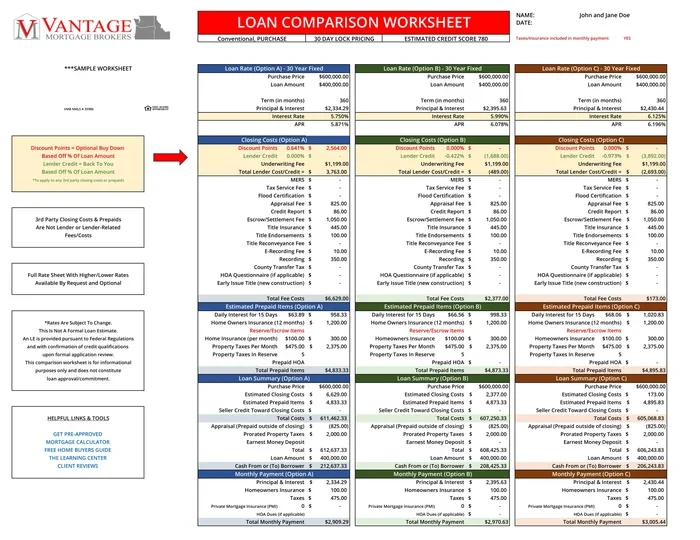
Now comes the heart of the process. To shop mortgage lenders well, you need a side-by-side comparison. Do not rely on memory or rough estimates. Write everything down so you can see the differences clearly.
Ask each lender for a loan estimate. This document gives you a standardized look at the projected costs. It helps you compare apples to apples. Pay close attention to both the rate and the closing costs.
Here is a simple way to compare offers:
Comparison Table: What To Look At
- Lender A may offer a lower rate but higher fees
- Lender B may charge more interest but fewer upfront costs
- Lender C may have a balanced mix with strong service
In practice, the best choice is not always the cheapest on paper. You want a deal that fits your cash flow and your timeline. If one lender has a slightly higher rate but much lower fees, that may be the better option.
Questions To Ask Every Lender
- What is the total estimated closing cost?
- Are there any lender fees that can be waived or reduced?
- What rate lock options are available?
- How long does closing usually take?
- Who will handle my file during the process?
These questions help you understand both price and process. They also show whether the lender is transparent. A good lender will answer clearly and without pressure.
Quick Tips
- Compare at least three offers before you decide
- Use the same loan details for each quote
- Ask for a breakdown of fees instead of a single total
- Check whether points are optional or required
Red Flags And Hidden Costs To Watch For
Some offers look great until you read the details. That is why it is important to watch for red flags. A lender may advertise a low rate but make up for it with high fees or strict terms. If something feels off, slow down and ask for clarity.
One common issue is vague pricing. If a lender cannot explain where the fees go, that is a warning sign. You should understand what you are paying for. Another concern is pressure. You should never feel rushed into signing something you do not understand.
Also watch for surprise conditions. Some quotes depend on assumptions that may not match your situation. For example, a quote might assume a perfect credit profile or a large down payment. Make sure the offer reflects your real numbers.
Hidden Costs To Question
- Application or processing fees that seem high
- Underwriting fees that vary a lot between lenders
- Escrow or reserve requirements that affect your cash to close
- Rate lock fees that may not be clearly disclosed
It is perfectly okay to ask for a plain-language explanation. A trustworthy lender will help you understand the numbers. If they brush off your questions, keep looking.
Common Mistakes
- Assuming the lowest rate is always the best deal
- Overlooking closing costs when comparing offers
- Not asking about fee waivers or discounts
- Ignoring the lender’s communication style and responsiveness
Getting Pre-Approved And Locking Your Rate
Once you narrow down your choices, think about pre-approval. A pre-approval can show sellers that you are serious. It can also help you move faster when you find the right home. Just remember that pre-approval is not the same as final approval.
Pre-approval gives you a clearer budget range. It can also reveal issues early, before you fall in love with a home you cannot afford. That saves time and stress. If something in your file needs work, you can fix it before making an offer.
Rate locks are another important piece. A rate lock keeps your interest rate steady for a set period. That can protect you if rates rise while your loan is being processed. But locks can come with conditions, so ask how they work.
What To Ask About Rate Locks
- How long is the lock period?
- Is there a fee for locking the rate?
- What happens if closing is delayed?
- Can the rate change if the loan details change?
These details matter because timing can be unpredictable. A clear lock policy gives you more peace of mind. It also helps you avoid unpleasant surprises later.
Expert Insight
Do not lock too early if your loan details are still changing. Do not wait too long if rates are moving up quickly. The right timing depends on your situation. A good lender will help you think through the trade-offs.
Making Your Final Decision With Confidence
At this point, you have done the hard work. You have compared rates, fees, loan types, and service quality. Now it is time to choose the lender that fits your needs best. The goal is not just a low number on paper. The goal is a smooth, affordable experience.
Think about the whole picture. Which lender explained things clearly? Which one had reasonable fees? Which one made you feel informed instead of pressured? These things matter because buying a home is stressful enough without poor communication.
Also consider your long-term plans. If you may move soon, a different loan structure might make more sense. If you plan to stay for many years, stability may matter more. Your lender should help you think this through, not just push one product.
Final Checklist Before You Commit
- You understand the rate, APR, and estimated closing costs
- You know what fees are included and what may change
- You are comfortable with the lender’s communication style
- You have asked about rate locks and timing
- You feel confident in the loan terms for your situation
If you can answer yes to those points, you are in a strong position. Take a breath, review the details one more time, and move forward with confidence.
Key Takeaways
- Shop more than one lender to find the best fit for your budget
- Compare the full cost, not just the interest rate
- Prepare your documents and credit before you apply
- Ask clear questions about fees, timing, and rate locks
- Choose a lender who communicates well and explains the process
Learning how to shop mortgage lenders is one of the best ways to protect your money and your peace of mind. With a little comparison and the right questions, you can make a choice that supports your future home and your budget.
Frequently Asked Questions
What does it mean to shop mortgage lenders?
It means comparing offers from different lenders so you can find the best rate, fees, and loan terms for your situation. Shopping around helps you avoid overpaying and gives you more negotiating power.
How many lenders should I compare before choosing one?
It is a good idea to compare at least three lenders. That gives you enough options to see real differences in pricing and service. More comparisons can be helpful if you want extra confidence.
Should I focus only on the lowest interest rate?
No, because a low rate can come with high fees or less favorable terms. You should look at the full cost, including closing costs and points. The best deal is the one that fits your budget and timeline.
When should I get pre-approved for a mortgage?
It helps to get pre-approved before you start seriously looking at homes. Pre-approval shows your budget and can make your offer stronger. It also helps you spot any issues early.
What is a rate lock and do I need one?
A rate lock keeps your interest rate steady for a set period while your loan is processed. It can protect you if rates rise during that time. Whether you need one depends on market conditions and your closing timeline.
What red flags should I watch for when choosing a lender?
Watch for vague fee details, pressure to decide quickly, and unclear answers about costs or timing. A good lender should be transparent and willing to explain the process. If you feel rushed or confused, keep looking.