
Breakups are hard, but when guys say hurtful things afterward, it can leave deep emotional scars. This often stems from pain, insecurity, or poor coping—not true feelings. Understanding why it happens is the first step toward healing and moving forward.
Breaking up is never easy. Whether it was a clean split or a messy unraveling, the end of a relationship leaves emotional residue. But what happens when, after the dust begins to settle, your ex starts saying things that cut deeper than the breakup itself? You might hear, “I never really loved you,” or “You were holding me back,” or worse—personal, degrading comments that feel like betrayal. These words can leave you questioning everything: your self-worth, the relationship, and even your memory of what you shared.
It’s natural to wonder, *Why do guys say hurtful things after a breakup?* Was it all a lie? Did he ever care? Or is this just how he copes? The truth is rarely as simple as “he’s a bad person.” More often, it’s a complex mix of emotional pain, poor coping mechanisms, and deeply ingrained patterns of behavior. Men, like women, feel heartbreak—but society has long taught them to express it differently. Instead of crying or talking it out, many are conditioned to respond with anger, deflection, or even cruelty.
This article dives into the psychology behind why men sometimes say cruel things after a breakup. We’ll explore emotional triggers, societal expectations, and the role of insecurity. More importantly, we’ll give you practical tools to protect your heart, understand what’s really going on, and move forward with clarity and strength. Because while his words may have hurt, they don’t define you—or the love you once shared.
Key Takeaways
- Hurtful words often come from pain, not malice: Men may lash out because they’re hurting inside and don’t know how to process emotions healthily.
- Fear of vulnerability plays a big role: Many guys were taught to suppress emotions, so they respond with anger or cruelty instead of sadness.
- It’s not always about you: His words may reflect his own insecurities, regrets, or unresolved issues—not your worth.
- Some use cruelty as a breakup strategy: A few men say hurtful things to make the breakup easier for themselves by pushing you away.
- Social conditioning affects emotional expression: Traditional masculinity discourages men from showing sadness, leading to unhealthy outlets like verbal attacks.
- Healing requires setting boundaries: Protect your peace by limiting contact and focusing on self-care after a toxic post-breakup exchange.
- Forgiveness is for you, not him: Letting go of resentment helps you heal, even if he never apologizes or changes.
📑 Table of Contents
The Emotional Aftermath of a Breakup
Breakups trigger a storm of emotions—grief, confusion, anger, relief, and sometimes even guilt. For many people, the end of a relationship feels like losing a part of themselves. But while women are often encouraged to talk about their feelings, men are frequently taught to “tough it out.” This emotional suppression can lead to a buildup of unresolved pain, which eventually finds an outlet—sometimes in the form of harsh words.
When a guy says something hurtful after a breakup, it’s rarely the whole truth. More often, it’s a distorted version of his feelings, shaped by fear, shame, or confusion. He might say, “You were too needy,” not because it’s objectively true, but because he feels guilty for not meeting your emotional needs. Or he might claim, “I’ve been happier since we broke up,” to convince himself—and you—that the relationship wasn’t meaningful.
This emotional backlash is especially common in men who struggle with vulnerability. From a young age, many boys are told to “man up,” “don’t cry,” or “be strong.” These messages create a barrier between their true feelings and their outward behavior. So when heartbreak hits, instead of processing it with sadness or regret, they may default to anger or blame. It’s not that they don’t care—it’s that they don’t know how to show it in a healthy way.
Why Pain Turns Into Poison
Imagine holding a boiling pot of water with no lid. The pressure builds until it finally overflows. That’s what happens emotionally when someone bottles up their pain. A breakup is the lid coming off. And when that happens, the emotions don’t always come out as tears or quiet reflection. Sometimes, they explode.
For example, consider Mark, a 32-year-old who ended a three-year relationship because he felt “trapped.” After the breakup, he told his ex, “You were suffocating me. I never wanted to marry you.” Months later, he admitted in therapy that he was terrified of commitment and said those things to make her hate him—so he wouldn’t have to face his own fears.
This is a classic case of emotional displacement. Instead of confronting his own insecurities, Mark projected them onto his ex. His hurtful words weren’t about her—they were about his inability to handle the vulnerability of a serious relationship. And sadly, this pattern is more common than we’d like to admit.
The Role of Regret and Self-Blame
Another reason guys say hurtful things is to avoid taking responsibility for their role in the breakup. It’s easier to blame the other person than to admit, “I messed up,” or “I wasn’t ready.” This is especially true if the breakup was initiated by the woman. Men may feel emasculated or rejected, and in response, they lash out to regain a sense of control.
For instance, if a woman ends the relationship because of emotional distance, her ex might respond with, “You never appreciated what I did for you,” or “You’re too emotional.” These statements shift the blame and protect his ego. But beneath the surface, he may be grappling with shame—shame for not being more present, for not fighting harder, or for not being the partner she deserved.
This isn’t to excuse the behavior. Hurtful words are never okay. But understanding the emotional undercurrent can help you separate his pain from your worth. You are not responsible for his inability to process grief or take accountability.
Societal Expectations and the Mask of Masculinity
Visual guide about Why Do Guys Say Hurtful Things After a Breakup
Image source: realestlove.com
One of the biggest factors behind why guys say hurtful things after a breakup is the weight of traditional masculinity. From childhood, many men are taught that showing vulnerability is a sign of weakness. Crying? Unmanly. Talking about feelings? Girly. Being emotionally available? Risky.
This cultural conditioning creates a dangerous paradox: men feel deeply, but they’re discouraged from expressing those feelings in healthy ways. So when a breakup happens—a moment that naturally calls for emotional honesty—they often default to the only outlets they’ve been allowed: anger, silence, or sarcasm.
Think about it: how often do we see men in movies or TV shows break down after a breakup? Rarely. Instead, they drink, pick fights, or make snide comments. These portrayals reinforce the idea that “real men” don’t grieve—they move on, hard and fast. And when real-life men internalize this, they may feel pressure to perform strength, even when they’re falling apart inside.
The “Tough Guy” Persona
The “tough guy” persona is a shield. It protects men from appearing weak or out of control. But after a breakup, that shield can become a weapon. Saying things like, “I never cared that much,” or “You were replaceable,” helps maintain the illusion of indifference. It’s a defense mechanism—a way to convince himself and others that the relationship didn’t matter.
But here’s the truth: if it didn’t matter, he wouldn’t be saying anything at all. The fact that he’s engaging, even negatively, shows that he’s affected. The harsher the words, the deeper the wound.
For example, Jake, a 28-year-old who prided himself on being “emotionally detached,” sent a series of angry texts to his ex after their breakup. He called her “clingy,” “dramatic,” and “the reason I avoided commitment.” But when his friend confronted him, Jake broke down and admitted, “I miss her every day. I just can’t admit it.”
His cruelty wasn’t about her—it was about his fear of being seen as weak. By tearing her down, he preserved his image of strength. But in doing so, he hurt someone he once loved, and likely deepened his own pain.
How Social Media Fuels the Fire
In today’s digital age, breakups don’t happen in private. They unfold on social media, where public perception matters. A guy might post a vague, bitter status like, “Some people don’t deserve a second chance,” or comment on an ex’s photo with a sarcastic remark. These actions aren’t just about expressing emotion—they’re about performance.
He’s not just talking to his ex. He’s talking to his friends, his followers, his ego. He wants to be seen as the “winner” of the breakup—the one who’s moved on, the one who’s unbothered. And sometimes, that means saying things he doesn’t truly believe, just to save face.
This performative cruelty is especially common among younger men who’ve grown up in a culture of online validation. Likes, comments, and shares become metrics of worth. So when a breakup happens, they may feel pressure to “win” the narrative—even if it means being hurtful.
But remember: social media is a highlight reel, not reality. His public persona doesn’t reflect his private pain. And your worth isn’t determined by his online comments.
Insecurity and the Need to Control the Narrative
Visual guide about Why Do Guys Say Hurtful Things After a Breakup
Image source: realestlove.com
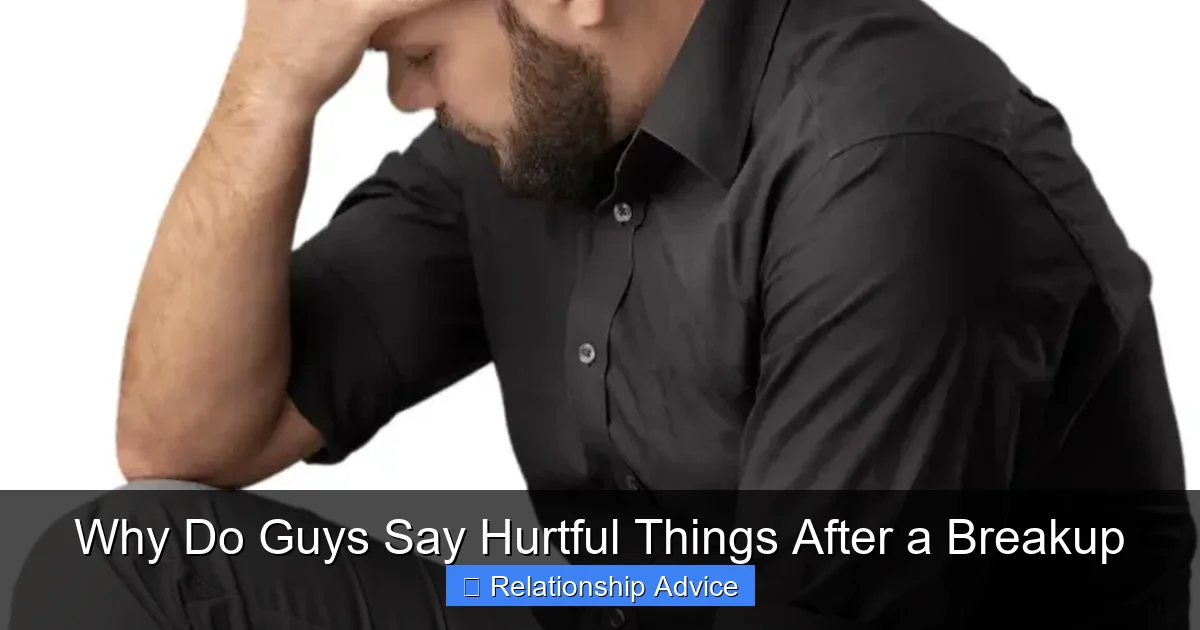
Insecurity is a silent driver of post-breakup cruelty. When a relationship ends, especially if it ends abruptly or unexpectedly, men may feel a loss of control. They didn’t see it coming. They didn’t get to say goodbye. They didn’t get to explain themselves. And in that void, insecurity takes root.
To regain a sense of power, some men rewrite the story. They convince themselves—and try to convince you—that the relationship was flawed from the start. That you were the problem. That they never really wanted it. It’s a way of flipping the script: instead of being the one who got hurt, they become the one who walked away.
This is known as narrative control. By shaping the breakup story in their favor, men protect their self-esteem. But it often comes at your expense.
Projection: Blaming You for His Feelings
Projection is a psychological defense where someone attributes their own unacceptable feelings to someone else. For example, a man who feels guilty for cheating might accuse his partner of being unfaithful. Or a man who feels insecure about his career might criticize her ambition.
After a breakup, projection can manifest as harsh criticism. He might say, “You were always criticizing me,” when in reality, he was the one who struggled with self-doubt. Or, “You never supported my dreams,” when he was the one who gave up on them.
These statements aren’t facts—they’re reflections of his inner turmoil. But they can feel like truth, especially if you’re already vulnerable.
Take Sarah’s story: her ex told mutual friends, “She was too focused on her career. She didn’t care about building a life together.” But Sarah had always encouraged him to pursue his passions. The truth? He felt overshadowed by her success and used the breakup to deflect his own insecurities.
The Fear of Being Forgotten
Another reason guys say hurtful things is the fear of being forgotten. When a relationship ends, there’s a natural worry: *Will she move on? Will she forget me?* For some men, the answer is to make sure she remembers—but in a negative way.
By saying cruel things, they ensure they stay in your mind. Even if it’s as a villain, they’d rather be remembered than erased. It’s a twisted form of attachment: “If I can’t have you, I’ll make sure you can’t forget me.”
This is especially common in relationships where one person was deeply invested and the other pulled away. The less-invested partner may feel a sudden loss of significance and respond with anger to reclaim attention.
But here’s the thing: you don’t need to remember him through pain. You can honor the good parts of the relationship without letting his hurtful words define your memory.
When Hurtful Words Are a Breakup Strategy
Visual guide about Why Do Guys Say Hurtful Things After a Breakup
Image source: realestlove.com
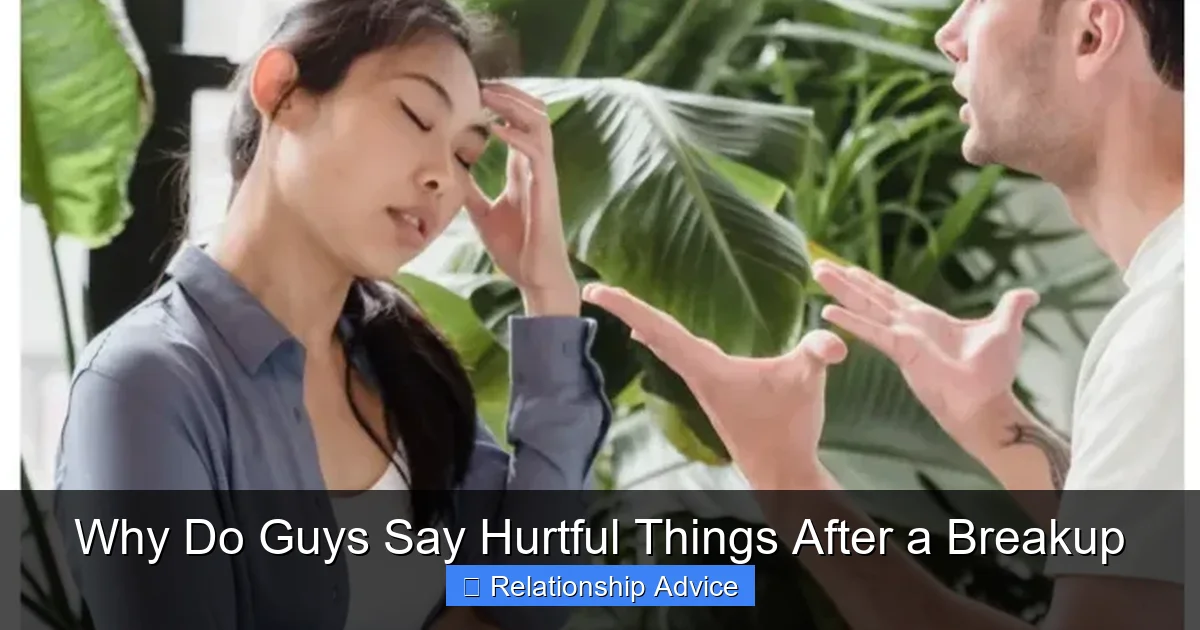
Not all post-breakup cruelty stems from pain. In some cases, men say hurtful things intentionally—to make the breakup easier, to avoid guilt, or to ensure you don’t come back.
This is particularly true in situations where the man initiated the breakup but doesn’t want to take full responsibility. Instead of saying, “I’m not ready for this,” or “I’ve fallen out of love,” he might say, “You’re too much,” or “We want different things.” These statements shift the blame and make it seem like the relationship failed because of you.
It’s a coward’s way out. But it’s also a way to protect his ego. If he can convince you (and himself) that you were the problem, he doesn’t have to face the discomfort of admitting he changed his mind.
The “Clean Break” Mentality
Some men believe that a harsh breakup is cleaner than a gradual one. They think, “If I hurt her now, she’ll move on faster.” Or, “If she hates me, she won’t try to get back together.”
While this may seem logical on the surface, it’s deeply flawed. Hurtful words don’t speed up healing—they complicate it. They create confusion, resentment, and emotional baggage that can linger for years.
And often, the man who thinks he’s being “efficient” ends up regretting his words later. He may realize he overcorrected, that he caused unnecessary pain, or that he damaged a connection that could have ended with mutual respect.
Manipulation and Emotional Control
In more troubling cases, hurtful words are a form of emotional manipulation. Some men use cruelty to maintain control, even after the relationship is over. They might say things like, “No one will ever love you like I did,” or “You’ll regret this.”
These statements are designed to instill doubt and dependency. They’re not about honesty—they’re about power.
If you’re hearing these kinds of messages, it’s important to recognize them for what they are: red flags. Healthy breakups don’t involve threats, guilt-tripping, or attempts to undermine your confidence. They involve clarity, respect, and space.
How to Respond and Protect Your Peace
So what do you do when your ex says something that cuts deep? How do you protect your heart without getting pulled into a cycle of anger or self-doubt?
The first step is to pause. Don’t react immediately. Hurtful words are designed to provoke a response. If you reply in anger or sadness, you’re giving him power over your emotions.
Instead, take a breath. Remind yourself: *This is about him, not me.* His words reflect his state of mind, not your worth.
Set Clear Boundaries
One of the most powerful things you can do is set boundaries. If your ex is sending hurtful messages, consider blocking or muting him. You don’t owe him access to your emotional space.
You might say, “I need space to heal. Please don’t contact me.” Or, if you’re not ready for no contact, limit communication to essential matters only—no personal conversations, no rehashing the past.
Boundaries aren’t punishment. They’re self-protection. And they send a clear message: *I respect myself too much to tolerate cruelty.*
Focus on Self-Care
After a breakup—especially a painful one—self-care isn’t selfish. It’s essential. Do things that make you feel grounded: take a walk, journal, call a friend, listen to music, or treat yourself to something small but meaningful.
When someone says hurtful things, it’s easy to internalize their words. But you know your truth. You know the love you gave, the effort you put in, the person you are. Don’t let his pain erase your light.
Talk to Someone You Trust
Don’t go through this alone. Share your feelings with a friend, family member, or therapist. Talking helps you process what happened and gain perspective.
A good friend might say, “That was really unfair,” or “You didn’t deserve that.” And hearing those words from someone who cares about you can help counteract the damage of his cruelty.
Therapy, in particular, can be incredibly healing. A professional can help you unpack the emotions, rebuild your confidence, and develop healthier relationship patterns in the future.
Moving Forward with Strength and Clarity
Healing from a breakup—especially one marked by hurtful words—takes time. But it is possible. And the journey can make you stronger, wiser, and more resilient.
Remember: his words don’t define the relationship. They don’t define you. What matters is how you choose to respond. Will you let his pain control your peace? Or will you rise above it?
You have the power to rewrite your story. Not as a victim, but as a survivor. Not as someone who was broken, but as someone who learned, grew, and moved on.
And when you do, you’ll realize something powerful: the most hurtful words often come from the most broken people. And their pain is not your burden to carry.
Frequently Asked Questions
Why do guys say hurtful things after a breakup?
Men often say hurtful things after a breakup because they’re struggling to process their emotions. Societal expectations discourage vulnerability, so they may express pain through anger or blame instead of sadness or regret.
Does it mean he never loved me if he says cruel things?
Not necessarily. Hurtful words are often a sign of inner conflict, not a reflection of past feelings. He may have cared deeply but lacked the emotional tools to handle the breakup maturely.
Should I confront him about what he said?
It’s usually best to avoid confrontation. Responding can escalate the situation and reopen emotional wounds. Focus on your healing instead of seeking validation or an apology.
How can I stop taking his words personally?
Remind yourself that his comments stem from his pain, not your worth. Practice self-compassion and surround yourself with supportive people who affirm your value.
Is it normal for guys to act cold after a breakup?
Yes, emotional withdrawal is common, especially among men socialized to suppress feelings. Coldness doesn’t always mean indifference—it can be a defense mechanism.
Can a relationship recover after hurtful post-breakup comments?
It’s possible, but only if both people take responsibility, communicate openly, and commit to change. Without accountability, the same patterns are likely to repeat.