
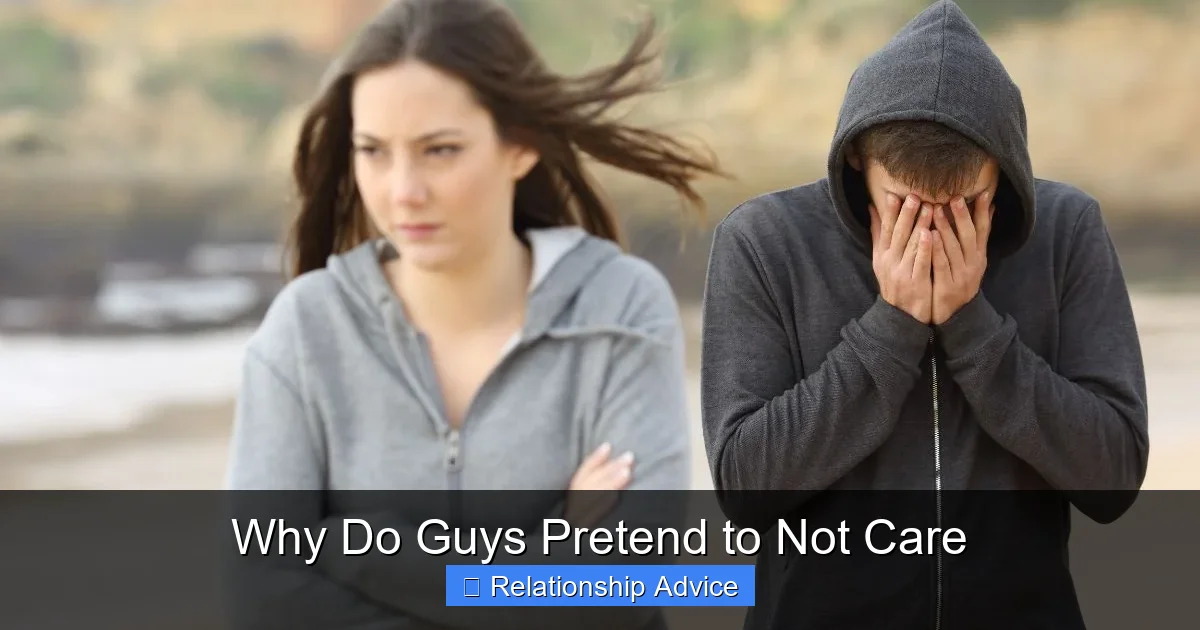
Many guys pretend to not care as a defense mechanism rooted in fear, upbringing, or societal expectations. This behavior often masks deep emotions and can create confusion in relationships—but understanding the “why” helps foster empathy and better communication.
Key Takeaways
- Emotional suppression is often learned early: Many men are raised to avoid showing vulnerability, leading them to act indifferent even when they care deeply.
- Fear of rejection drives emotional distance: Pretending not to care can feel safer than risking heartbreak or embarrassment.
- Societal norms pressure men to appear “strong”: Cultural expectations often equate emotional openness with weakness, pushing guys to hide their true feelings.
- It’s not always about you: A guy acting aloof may be dealing with personal stress, past trauma, or self-doubt—not a lack of interest in you.
- Communication gaps fuel misunderstandings: Without clear dialogue, assumptions grow, making it harder to connect authentically.
- Small gestures often reveal true feelings: Pay attention to actions over words—consistent effort, attention, and care usually signal real investment.
- Patience and empathy go a long way: Creating a safe space for emotional expression encourages honesty and deeper intimacy.
📑 Table of Contents
- Why Do Guys Pretend to Not Care? Understanding the Emotional Mask
- The Roots of Emotional Suppression: How Upbringing Shapes Behavior
- Fear of Rejection: The Silent Saboteur
- Societal Expectations and the Pressure to Be “Strong”
- It’s Not Always About You: Understanding Personal Triggers
- Signs He Actually Cares—Even When He Acts Like He Doesn’t
- How to Respond When He Pretends to Not Care
- When to Walk Away: Recognizing Emotional Unavailability
- Building Healthier Connections: Encouraging Emotional Honesty
- Conclusion: It’s Not About the Act—It’s About the Heart
Why Do Guys Pretend to Not Care? Understanding the Emotional Mask
Let’s be real—there’s nothing more confusing than when a guy acts like he couldn’t care less about something… when you *know* he does. Maybe he brushes off your texts, acts bored during deep conversations, or shrugs when you ask how he feels. You’re left wondering: *Does he even like me? Is he just playing games?*
But here’s the truth: most of the time, it’s not about you. It’s about him.
Guys pretend to not care for a variety of emotional, psychological, and social reasons—many of which have nothing to do with their actual feelings. In fact, the more a guy cares, the more likely he is to put up a wall. It’s counterintuitive, but it makes sense when you dig into the psychology behind it.
This behavior isn’t about manipulation or disinterest. It’s often a survival tactic—a way to protect themselves from getting hurt, looking “weak,” or facing rejection. And while it can feel frustrating or even hurtful, understanding *why* it happens is the first step toward building a healthier, more honest connection.
So, let’s unpack the layers. Why do guys pretend to not care? And more importantly—what can you do about it?
The Roots of Emotional Suppression: How Upbringing Shapes Behavior
Visual guide about Why Do Guys Pretend to Not Care
Image source: realestlove.com
A lot of this behavior starts way before dating even enters the picture. From a young age, many boys are taught—directly or indirectly—that showing emotion is a sign of weakness.
Think about it: How often have you heard phrases like “boys don’t cry,” “man up,” or “don’t be so sensitive”? These messages are everywhere—in families, schools, sports teams, and even in movies and TV shows. Over time, they shape how boys see themselves and how they’re expected to behave.
“Tough Love” and the Emotional Void
Many men grow up in environments where emotional expression wasn’t encouraged. Maybe their fathers were stoic, their friends mocked vulnerability, or they were punished for showing fear or sadness. As a result, they learn to shut down emotionally as a form of self-protection.
This doesn’t mean they don’t *feel* things—it means they’ve been trained to hide it. So when they start dating or forming close relationships, that old programming kicks in. Instead of saying, “I really like you and I’m nervous,” they might say, “Whatever, it’s no big deal.”
It’s not that they don’t care. It’s that they don’t know how to show it in a way that feels safe.
The Fear of Being “Too Much”
Another common fear is being seen as “too emotional” or “clingy.” Many guys worry that if they show too much interest, they’ll come across as desperate or lose their edge. So they play it cool—even when they’re overthinking every text, every date, every word you say.
This is especially true in the early stages of dating. The pressure to seem confident and in control can be overwhelming. Admitting that they’re excited, nervous, or deeply attracted to someone feels risky. So they pretend it’s all casual—even if their heart is racing every time you’re near.
And here’s the irony: the more they care, the more they try to act like they don’t. It’s like a reverse signal. The guy who’s totally into you might be the one acting the most aloof.
Fear of Rejection: The Silent Saboteur
Visual guide about Why Do Guys Pretend to Not Care
Image source: realestlove.com
Let’s talk about rejection—because it’s one of the biggest reasons guys pretend to not care.
Rejection hurts. A lot. And for many men, the fear of being rejected is paralyzing. It’s not just about not getting a date or being turned down for a kiss. It’s deeper than that. It’s the fear of being unworthy, unlovable, or not “good enough.”
The Armor of Indifference
So what do they do? They build armor. They act like they don’t care so that if things don’t work out, it won’t hurt as much. It’s a psychological defense mechanism: *If I don’t care, then getting rejected won’t matter.*
This is why you might see a guy act distant after a great date. He had a good time—maybe even a *really* good time—but now he’s overthinking everything. *Did she have a good time? Does she like me? What if I seem too eager?*
Instead of texting you right away, he waits three days. Instead of saying he had fun, he says, “Yeah, it was okay.” It’s not that he didn’t enjoy it. It’s that he’s trying to protect himself from the possibility of disappointment.
The “Cool Guy” Persona
This ties into the idea of the “cool guy”—the one who plays it smooth, never seems too invested, and always has options. It’s a persona that’s been glorified in pop culture for decades. Think James Bond, Jordan from *The Great Gatsby*, or even Chandler Bing in the early seasons of *Friends*.
But here’s the thing: that “cool” act is often a performance. Behind the sarcasm and the aloofness, there’s usually someone who’s deeply afraid of being seen as vulnerable.
And the more a guy buys into that persona, the harder it becomes to drop the act—even with someone he really likes.
Societal Expectations and the Pressure to Be “Strong”
Visual guide about Why Do Guys Pretend to Not Care
Image source: realestlove.com
We can’t talk about why guys pretend to not care without talking about society.
From a young age, men are taught to be strong, stoic, and in control. Emotions like sadness, fear, or insecurity are often seen as weaknesses—especially in romantic contexts. Showing too much feeling? That’s “unmanly.” Caring too much? That’s “needy.”
The Myth of the “Strong, Silent Type”
There’s a cultural ideal of the strong, silent man—the one who doesn’t need to talk about his feelings because he’s just *that* confident. But this myth does more harm than good. It pressures men to suppress their emotions, avoid vulnerability, and pretend everything is fine—even when it’s not.
And when they’re in relationships, this pressure doesn’t disappear. In fact, it can get worse. Now they’re not just trying to live up to societal standards—they’re also trying to impress a partner, avoid looking weak, and maintain control.
So instead of saying, “I miss you,” they say, “I’ve been busy.” Instead of admitting they’re jealous, they act like they don’t care who you talk to. It’s not honesty—it’s self-protection wrapped in silence.
The Cost of Emotional Silence
But here’s the problem: pretending not to care doesn’t make the feelings go away. They just get buried. And over time, that emotional suppression can lead to resentment, distance, or even outbursts when the pressure finally builds up.
It also makes it harder to build real intimacy. Relationships thrive on honesty, vulnerability, and emotional connection. When one person is constantly hiding how they feel, it creates a gap—one that can be hard to bridge.
And the worst part? Many guys don’t even realize they’re doing it. It’s so ingrained in them that it feels normal. They think they’re being strong, when really, they’re just scared.
It’s Not Always About You: Understanding Personal Triggers
One of the most important things to remember is this: when a guy pretends to not care, it’s rarely about *you*.
It’s about *him*.
He might be dealing with stress at work, anxiety about money, unresolved family issues, or past relationship trauma. Maybe he’s insecure about his appearance, his career, or his ability to be a good partner. All of these things can make it hard to open up—even to someone he really likes.
Past Relationships and Emotional Baggage
If a guy has been hurt before—especially if he opened up and got rejected—he might be extra cautious this time around. He’s not trying to push you away. He’s trying to avoid getting hurt again.
So he acts distant. He doesn’t text first. He avoids deep conversations. It’s not that he doesn’t want connection—it’s that he’s afraid of it.
And if you’ve been hurt before too, this dynamic can create a cycle: both of you pulling back, both afraid to be the first to care, both pretending it’s no big deal.
Self-Esteem and the Fear of Not Being Enough
Low self-esteem is another big factor. A guy who doesn’t feel worthy of love might assume you’ll lose interest if he shows too much. So he keeps his guard up, convinced that if you *really* knew how much he cared, you’d be turned off.
It’s a self-fulfilling prophecy: the more he hides, the less connected you feel—and the more he convinces himself that he’s not enough.
But here’s the truth: real connection doesn’t come from playing it cool. It comes from being real.
Signs He Actually Cares—Even When He Acts Like He Doesn’t
So how do you know if a guy really cares, even when he’s pretending not to?
Look at his actions—not his words.
Words can be misleading. But behavior? That’s where the truth lives.
He Shows Up—Consistently
Does he make time for you? Even when he acts busy or distracted, does he still prioritize you in small ways? Maybe he remembers your coffee order, checks in after a tough day, or shows up to events that matter to you.
These aren’t the actions of someone who doesn’t care. They’re the actions of someone who’s trying to care—but doesn’t know how to say it.
He Pays Attention to the Little Things
Notice how he listens. Does he remember things you’ve said weeks ago? Does he notice when you’re upset, even if you don’t say it? Does he adjust his behavior based on your needs?
These subtle signs show emotional investment. They prove that he’s paying attention—even if he’s not vocal about it.
He Gets Jealous (But Tries to Hide It)
Jealousy isn’t always a red flag. In moderation, it can be a sign of care. If a guy acts annoyed when you talk about other guys, or gets quiet when you mention a date with a friend, it might mean he’s feeling insecure—not that he doesn’t care.
Of course, unhealthy jealousy is a different story. But mild, occasional jealousy? That’s often a clue that he’s emotionally involved.
He Makes an Effort—Even When It’s Hard
Does he go out of his way to do things for you? Even small gestures—like bringing you soup when you’re sick, or driving across town to see you—show that he’s invested.
And if he’s doing these things while acting like it’s “no big deal,” that’s even more telling. He’s trying to downplay his care, but his actions give him away.
How to Respond When He Pretends to Not Care
So what can you do when you’re dealing with a guy who acts indifferent—but you suspect he actually cares?
First, don’t take it personally. Second, don’t play the same game. And third, create space for honesty.
Communicate with Curiosity, Not Confrontation
Instead of saying, “Why are you acting like you don’t care?” try, “I’ve noticed you seem a little distant lately. Is everything okay?”
This opens the door without putting him on the defensive. It shows you care—and that you’re willing to listen.
Model Vulnerability
Sometimes, the best way to get someone to open up is to go first. Share how *you* feel—your fears, your hopes, your insecurities. When you’re honest, it gives him permission to be honest too.
You don’t have to overshare. Just small moments of vulnerability—like saying, “I was really nervous about our first date,” or “I miss you when we don’t talk for a few days”—can make a big difference.
Give Him Space—But Stay Present
If he’s pulling away, don’t chase. But don’t disappear either. Stay calm, stay kind, and stay available. Let him know you’re there—without pressure.
Sometimes, the best thing you can do is simply be consistent. Show up. Be kind. Be patient. And let him come to you when he’s ready.
Pay Attention to Patterns
Is this a one-time thing, or a recurring pattern? Does he pull away after getting close? Does he act aloof only when things get serious?
If it’s a pattern, it might be a sign of deeper emotional blocks. And while you can’t fix him, you can decide whether you’re willing to work through it—or whether it’s time to move on.
When to Walk Away: Recognizing Emotional Unavailability
Not every guy who pretends to not care is worth the wait.
Sometimes, the behavior isn’t about fear or upbringing—it’s about emotional unavailability. And that’s a different story.
Signs He’s Not Ready for Real Connection
– He never initiates deep conversations.
– He avoids defining the relationship.
– He’s inconsistent—hot one day, cold the next.
– He dismisses your feelings or makes you feel guilty for wanting more.
– He’s still emotionally tied to an ex or stuck in past trauma.
If you see these signs, it might be time to reevaluate.
You deserve someone who can meet you halfway—someone who’s willing to be honest, vulnerable, and present. Pretending not to care might be a phase for some guys. But for others, it’s a permanent barrier.
And that’s okay. Your emotional well-being matters.
Building Healthier Connections: Encouraging Emotional Honesty
The good news? Many guys *want* to open up—they just don’t know how.
And you can help create the conditions for that to happen.
Create a Safe Emotional Space
Let him know it’s safe to be vulnerable. That means no judgment, no teasing, no using his feelings against him. When he shares something personal, respond with empathy—not sarcasm or dismissal.
Even small moments matter. If he says, “I’ve been stressed at work,” respond with, “That sounds tough. Want to talk about it?” instead of, “Everyone’s stressed.”
Be Patient—But Set Boundaries
Change takes time. Don’t expect him to open up overnight. But also, don’t tolerate emotional neglect.
Set boundaries. Let him know what you need—whether it’s more communication, more effort, or more emotional availability. And be willing to walk away if those needs aren’t met.
Celebrate Small Wins
When he does open up—even a little—acknowledge it. Say, “I really appreciate you sharing that with me.” It reinforces the behavior and makes him more likely to do it again.
Emotional growth is a journey. And every step forward counts.
Conclusion: It’s Not About the Act—It’s About the Heart
So, why do guys pretend to not care?
Because they’re scared. Because they’ve been taught to hide. Because they’re afraid of being hurt, rejected, or seen as weak.
But beneath the act, there’s often a heart that cares deeply—one that just doesn’t know how to show it.
Understanding this doesn’t mean you have to tolerate emotional games or inconsistency. It means you can respond with empathy, clarity, and self-respect.
You can’t force someone to be vulnerable. But you can create a space where vulnerability feels possible. And if he’s willing to meet you there? That’s where real connection begins.
And if he’s not? That’s okay too. You deserve someone who doesn’t just *pretend* to care—but shows it, every single day.
Frequently Asked Questions
Why do guys act like they don’t care after a great date?
This is often a fear-based response. He may have had a wonderful time but is now overthinking and afraid of seeming too eager or getting rejected. Acting aloof feels safer than risking emotional exposure.
Is pretending not to care a sign of manipulation?
Not usually. While some people use indifference as a game, most guys who act this way are genuinely struggling with vulnerability, not trying to manipulate. It’s more about self-protection than control.
How can I get a guy to open up if he pretends not to care?
Start by modeling vulnerability yourself, communicate with kindness, and create a safe space for honesty. Avoid pressuring him—instead, encourage openness through consistency and empathy.
Should I confront him about pretending not to care?
Confrontation can backfire. Instead, use gentle, curious language like, “I’ve noticed you seem distant—want to talk about it?” This invites dialogue without putting him on the defensive.
Can a guy who pretends not to care actually be in love?
Yes. Many emotionally guarded men deeply care but struggle to express it. Look for consistent actions—effort, attention, and care—as signs of real investment, even if his words are quiet.
When should I stop waiting for him to open up?
If he consistently avoids emotional connection, dismisses your feelings, or shows no effort to change, it may be time to move on. You deserve someone who can meet you with honesty and presence.